AC Replacement Cost in Scottsdale AZ (2026 Real Numbers)
AC Replacement Cost in Scottsdale AZ (2026 Real Numbers)
TL;DR: A full AC replacement in Scottsdale typically runs $7,500–$14,000+ installed through a traditional contractor. The unit itself is $2,500–$6,000 depending on size and brand — the rest is labor, overhead, and dealer markup. Scottsdale homes tend to skew larger (2,500–4,500 sq ft is common), which means bigger systems and higher quotes than Phoenix averages. If your system is 10–12 years old and repairs are stacking up, replacement almost always pencils out. Get quotes from at least three contractors before committing.
Let's cut straight to it: Scottsdale is not a cheap market for AC replacement. You're not in the Valley because you're trying to save money on housing, and your HVAC contractor knows that too.
The average quote for a new central air system in Scottsdale runs meaningfully higher than other Maricopa County cities — not because the equipment costs more, but because the homes are larger, the systems more complex, and the contractor overhead in 85251 reflects the market it operates in. That's not a criticism; it's just how pricing works. But it does mean Scottsdale homeowners need to be more careful about what they're comparing when quotes come in.
Here's an honest breakdown of what AC replacement actually costs here in 2026, what legitimately drives the price up, and what's just margin.
What Drives Up AC Costs in Scottsdale Specifically
Before the numbers, it helps to understand what makes Scottsdale quotes land where they do.
Square footage. The median home in Scottsdale is around 2,200 square feet, but McCormick Ranch, DC Ranch, Gainey Ranch, and the Scottsdale Ranch developments frequently run 3,000–5,000+. A larger home needs a larger system — a 4-ton or 5-ton unit instead of a 3-ton — and that jump in tonnage meaningfully increases both equipment and labor cost.
Luxury homes and complex installs. Older luxury homes in central Scottsdale — the mid-century and 1980s builds near Old Town and the McDowell Sonoran area — were designed before HVAC efficiency standards existed. Many have undersized ductwork, multiple zones, or layouts that require creative installation work. That complexity is real and adds cost. (When a contractor says "your attic is a nightmare," believe them — sometimes it genuinely is.)
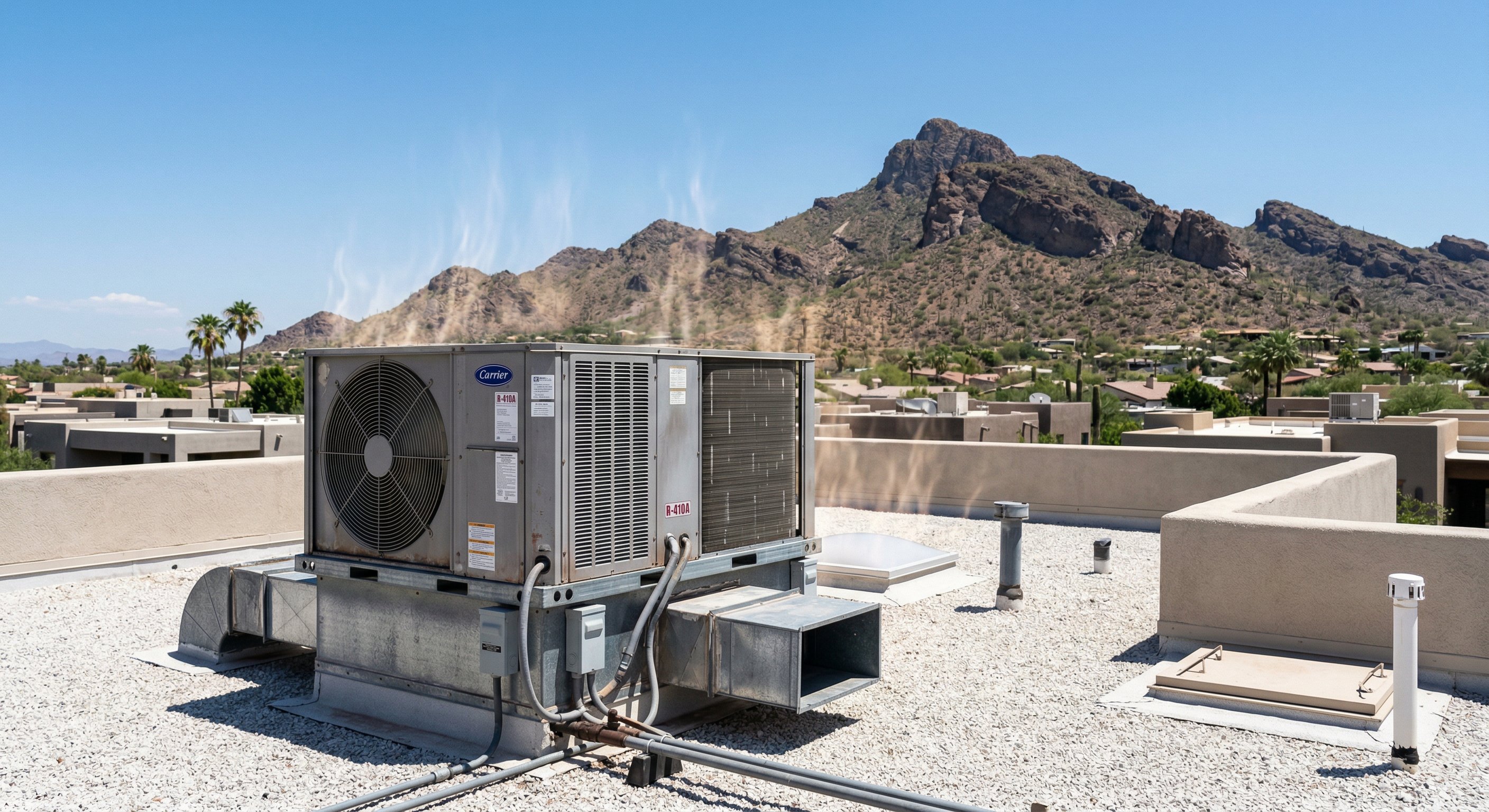
Rooftop package units. A lot of Scottsdale homes, particularly in older developments and active adult communities, run rooftop packaged units instead of split systems. If you're replacing one of these, the unit itself is different equipment and requires a crane or lift to install. Expect quotes to run $500–$1,200 higher than a comparable ground-level split system install.
Premium contractor overhead. This one is what it is. Contractors operating in Scottsdale carry higher overhead — office, trucks, marketing, licensing — and price accordingly. Some of that is legitimate. Some of it is margin.
Scottsdale AC Replacement Cost by System Size (2026)
These ranges reflect full installed cost through a traditional Scottsdale contractor — equipment, refrigerant, electrical connections, haul-away of the old unit, and standard installation:
| Home Size | Recommended Tonnage | Installed Cost Range |
|---|---|---|
| 1,200–1,600 sq ft | 2.5–3 ton | $6,500–$9,000 |
| 1,600–2,400 sq ft | 3–3.5 ton | $7,500–$11,000 |
| 2,400–3,500 sq ft | 4 ton | $9,000–$13,000 |
| 3,500–5,000 sq ft | 5 ton | $11,000–$15,500 |
| 5,000+ sq ft / complex | Multiple zones or 5+ ton | $13,000–$20,000+ |
These are Scottsdale market ranges — not national averages, not builder-grade estimates. If you're in McCormick Ranch with a 4,000-square-foot home on SRP power, budget toward the upper end of the 4-ton range.
Rooftop packaged units add $800–$1,500 to whichever range applies, plus confirm your contractor has crane experience — not all do.
What the Quote Is Actually Made Of
A $12,000 Scottsdale AC installation doesn't mean you're getting $12,000 worth of equipment. Here's roughly how that breaks down:
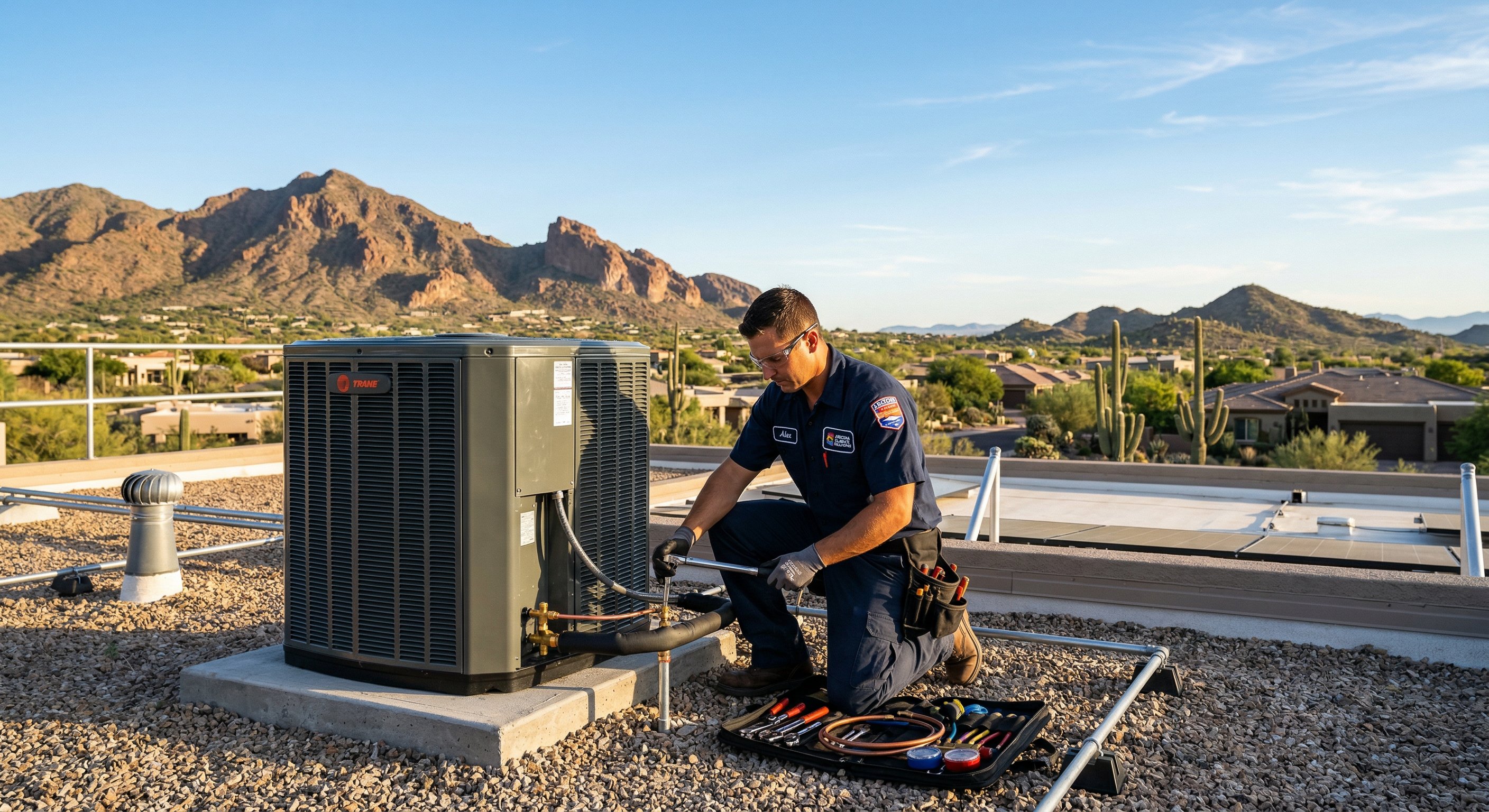
The equipment: A quality 4-ton 16 SEER2 system (Trane, Carrier, Lennox, Daikin — the real brands, not builder-grade rebrands) retails through distributors for $3,000–$5,000 for the unit itself. The condenser, air handler, coil, and refrigerant charge. That's what you're getting.
Labor and materials: Refrigerant lines, electrical connections, disconnect box, mounting pad, permits if required, and the actual install work. Call it $1,500–$3,000 for a standard residential swap with no surprises.
Overhead and margin: The rest — overhead, dispatch, warranty administration, truck costs, marketing, and profit — accounts for a surprisingly large chunk of a traditional contractor's pricing. For some contractors, it's 40–60% of the total job. This is the part that varies most dramatically between quotes, and it's the part that has nothing to do with what equipment goes in your house.
This is also why two contractors with the same equipment can quote $10,000 versus $13,000 for the same job. They're not installing different things — they're charging different margins.
Skip the dealer markup
See What a New AC Actually Costs in Scottsdale, AZ
AC Rebel shows you the real equipment price — no sales pitch, no inflated quote. Get matched with a licensed installer and keep $3,000–$5,000 in your pocket.
Get My Direct Price →Getting an Accurate Quote in Scottsdale
Three things every homeowner should do before signing anything:
Get three quotes minimum. In a market where contractor overhead varies this much, the spread between a high and low quote on the same job is often $2,000–$4,000. Call it doing your homework. Two quotes isn't enough — you don't know if you have the high one and the medium one, or the medium and the low. Three gives you a real picture.
Ask for a Manual J calculation. This is the industry-standard load calculation that determines what size system your home actually needs. If a contractor sizes your system by walking around your house for five minutes and guessing, that's a problem. In Scottsdale's heat — where we reliably see 110°F+ for weeks at a stretch — an undersized system runs constantly and still can't cool the house. An oversized system short-cycles and creates humidity problems during monsoon. The right size matters.
Get the equipment model numbers in writing. Every quote should include the specific make, model, and SEER2 rating of what's being installed. "A Trane system" is not specific enough. XR15 and XR20 are dramatically different prices and performance levels. If the contractor won't put the model numbers in the quote, that's a tell.
The SRP Rebate Most Scottsdale Homeowners Miss
Most of Scottsdale falls within SRP territory, and SRP currently offers rebates through their Cool Cash program for qualifying heat pump systems: $75–$225 per ton depending on efficiency rating.
On a 4-ton heat pump system qualifying at the top tier, that's up to $900 off your install cost — real money, delivered as a bill credit. The catch: the unit needs to be installed by an SRP-approved contractor, and you need to apply before installation, not after.
If you're already replacing your AC and you're in SRP territory, it's worth asking your contractor specifically about the Cool Cash program. Not all contractors will mention it proactively. Some aren't registered for it and would rather you didn't ask.
One more thing on the heat pump angle: Scottsdale's climate is at the edge of where heat pumps make sense. They work well in Arizona's mild winters and deliver serious efficiency gains over conventional AC. If your old system is a traditional split, and you're in a home you plan to stay in for 10+ years, the heat pump conversation is worth having — both for rebates and for long-term SRP bill reduction.
When the Quote Feels Wrong
If you're sitting with a quote in hand and something feels off, here's how to read it:
Lower than everything else by $2,000+: Ask what equipment. Get the model number. Budget units from secondary brands are real, and so are contractors who cut corners on refrigerant line sizing or skip permits. Low quotes aren't automatically bad — but they need an explanation.
Vague equipment specs: If the quote says "3-ton Carrier unit" with no model number, that's not a real quote. Push back.
Same-day pressure: "This price is only good today" is a negotiating tactic, not an emergency. In the middle of summer when you're without AC, it's harder to push back — which is exactly why replacing before you're in crisis mode makes financial sense.
No mention of permit: Scottsdale requires permits for HVAC replacement, and a contractor who proposes skipping it is creating a liability for you, not saving you money.
What I'd Do If It Were My House
If I were a Scottsdale homeowner replacing a 15-year-old 4-ton system in a 3,200-square-foot house, here's my actual playbook:
- Get three quotes with specific equipment model numbers in each
- Check which contractor is SRP Cool Cash registered if I'm doing a heat pump
- Look up the SEER2 rating on each unit and run the electricity savings math against my SRP summer bills — sometimes the premium efficiency tier pays back in 3–4 years
- Ask each contractor specifically: "What's the system you'd put in your own house, and why?"
- Don't choose the lowest quote without understanding why it's lowest; don't choose the highest without knowing what extra I'm actually getting
The goal isn't the cheapest quote. It's the best value for a system that needs to keep a Scottsdale home survivable at 115°F for the next 12–15 years.
If you want to see actual unit prices before you start calling contractors — what the equipment costs before anyone adds their markup — you can browse directly on AC Rebel. The 7-step quote wizard takes about 2 minutes, and it shows you the real unit cost broken out from installation. It won't replace talking to a contractor, but it gives you a reference point that changes every conversation you have after.
Frequently Asked Questions
Q: How much does a typical AC replacement cost in Scottsdale?
Most Scottsdale homeowners pay $7,500–$13,000 for a full central AC replacement, with larger homes and premium systems pushing toward $15,000+. The wide range is driven by home size, system complexity, and how much margin the contractor is adding.
Q: Do Scottsdale homes need bigger AC systems than other Valley cities?
Often, yes. Scottsdale's median home is larger than Phoenix's, and many neighborhoods feature 3,000–5,000 sq ft homes that require 4-ton or 5-ton systems. That increase in system size meaningfully raises both equipment and installation costs.
Q: Does SRP offer rebates on new AC systems in Scottsdale?
SRP's Cool Cash program offers rebates of $75–$225 per ton on qualifying heat pump systems. On a 4-ton system, that's up to $900 back. You must apply before installation, and the contractor must be SRP-registered. Most of Scottsdale is SRP territory — check your utility bill to confirm.
Q: How long should an AC unit last in Scottsdale?
Realistically, 10–14 years. The Phoenix metro's extreme heat cycles, dust exposure, and hard water all reduce system lifespan compared to national averages. Homes with heavy-shade landscaping and well-maintained ductwork typically see the longer end of that range. If your system is past 12 years and pulling multiple repairs, replacement math usually wins.
Q: What SEER2 rating makes sense for a Scottsdale home?
Minimum 15 SEER2 for any new install (it's now the federal minimum for Arizona anyway). For a home you plan to stay in long-term, 17–19 SEER2 is worth pricing out — Scottsdale's long cooling season and high SRP summer rates mean efficiency pays back faster here than almost anywhere else in the country.
Q: Is it worth getting a heat pump instead of a standard AC in Scottsdale?
Increasingly, yes. Heat pumps have improved significantly for hot climates, and Scottsdale's mild winters mean you get genuine efficiency gains through the shoulder seasons. The SRP rebate makes them financially competitive with traditional AC. Worth getting a quote that includes both options side by side.
Ready to stop overpaying?
See Your Direct AC Price in 2 Minutes
Skip the dealer. Buy your AC unit at direct pricing and pay a vetted local installer only for the installation. No sales calls. No hidden markup. Most homeowners save $3,000–$5,000+ compared to a traditional quote.
Get My Direct Price — No Credit Card2-minute quote · Licensed installers · 10-year warranty options