
AC Maintenance Before Arizona Monsoon Season: A Prep Guide

AC Maintenance Before Arizona Monsoon Season: A Prep Guide
TL;DR: Monsoon season (July through September) hits Arizona AC systems with a triple threat: humidity spikes from 10% to 50%+, dust storms that clog coils and filters within hours, and power fluctuations that fry capacitors and circuit boards. Pre-monsoon maintenance in June focuses on four critical areas: clearing condensate drains that will handle 3x normal moisture, sealing and protecting outdoor units from dust, installing surge protection, and upgrading to high-capacity filters. A system that survives monsoon season without emergency repairs was almost certainly prepped in June, not fixed in August.
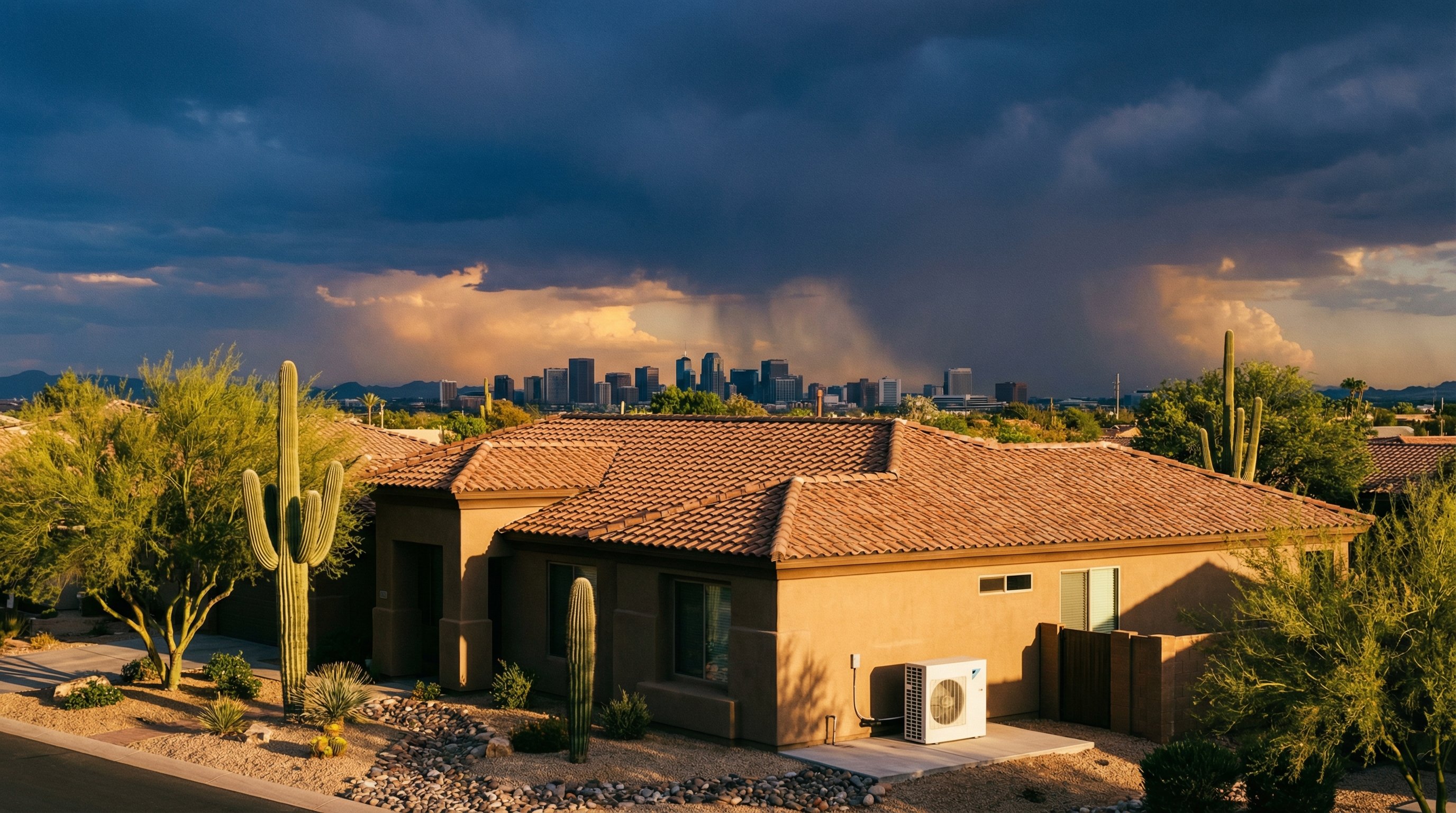
June in Phoenix. The mercury is pushing 110°F daily, and every Arizona homeowner is already running their AC hard. But the real test has not arrived yet.
Monsoon season officially starts June 15 and runs through September. What begins as dry furnace-like heat transforms into something else entirely: sudden humidity spikes that make 105°F feel like 115°F, massive dust storms (haboobs) that reduce visibility to zero and coat everything in fine particulate, and violent thunderstorms that send power surges through neighborhood grids.
Your air conditioner is designed for dry heat. It is not designed for what comes next.
Arizona's normal climate hovers around 10-20% relative humidity. During monsoon, that can spike to 50% or higher in minutes when a storm cell rolls through. Your AC suddenly has to remove three to five times more moisture from the air while simultaneously fighting dust-clogged coils and fluctuating power. Systems that were "fine" in June fail catastrophically in July.
This is not a general maintenance checklist. This is specifically about preparing your AC for the unique stresses of Arizona monsoon season. Do this work in June. August is too late.
What Monsoon Season Actually Does to Your AC
Most AC systems in the Phoenix metro are sized and configured for the region's famously dry climate. Manufacturers calculate cooling loads based on local weather patterns. When those patterns suddenly shift for two to three months, the math changes.
Humidity overload: In dry conditions, your evaporator coil removes some moisture as a side effect of cooling. During monsoon, moisture removal becomes a primary job. The condensate drain line that barely dripped in May becomes a steady stream in July. If that line is partially clogged (and many are), water backs up into the drain pan, overflows, and damages ceilings, walls, or attic spaces.
Dust infiltration: A haboob can drop visibility to near-zero and deposit a fine layer of dust on every outdoor surface. That dust settles on your condenser coils within hours. Coils designed to transfer heat efficiently become insulated by dust. Your system works harder, runs longer, and eventually overheats.
Power instability: Monsoon thunderstorms generate frequent lightning strikes and grid fluctuations. Your AC's capacitors and control boards are vulnerable. A power surge that lasts milliseconds can destroy a $300 capacitor or a $1,200 control board. The compressor trying to restart after a brownout can overheat and fail entirely.
Understanding these three threats (humidity, dust, power) shapes what you do in June to prepare.
Critical Task 1: Condensate Drain Line Deep Clean
This is the number one cause of monsoon-season water damage in Arizona homes.
Your condensate drain line carries moisture away from the evaporator coil. In normal dry conditions, the flow is minimal. During monsoon, when your AC is pulling 3-5 times more moisture from the air, that flow becomes substantial.
If the line is partially blocked by algae, mineral deposits, or debris, the water backs up. The drain pan overflows. In many Phoenix metro homes, the air handler is in the attic or a closet with finished ceilings below. The result: water stains, drywall damage, mold risk, and expensive repairs.
What to do:
Locate your condensate drain line. It is typically a white PVC pipe running from the indoor air handler to an exterior wall or floor drain.
Find the access cap (usually a threaded PVC cap near the air handler). Remove it.
Pour one cup of distilled white vinegar into the line. Let it sit 30 minutes. The vinegar kills algae and helps dissolve mineral buildup.
Flush the line with warm water. You should hear it flowing freely through to the exterior drain point.
Check the exterior drain. Water should exit cleanly. If it trickles or backs up, the clog is deeper. Use a wet/dry vacuum on the exterior drain end to pull debris out.
Install a condensate safety switch if you do not have one. This device shuts down your AC if the drain pan starts to overflow, preventing water damage.
Do this in June, not when you notice water stains on your ceiling in August.
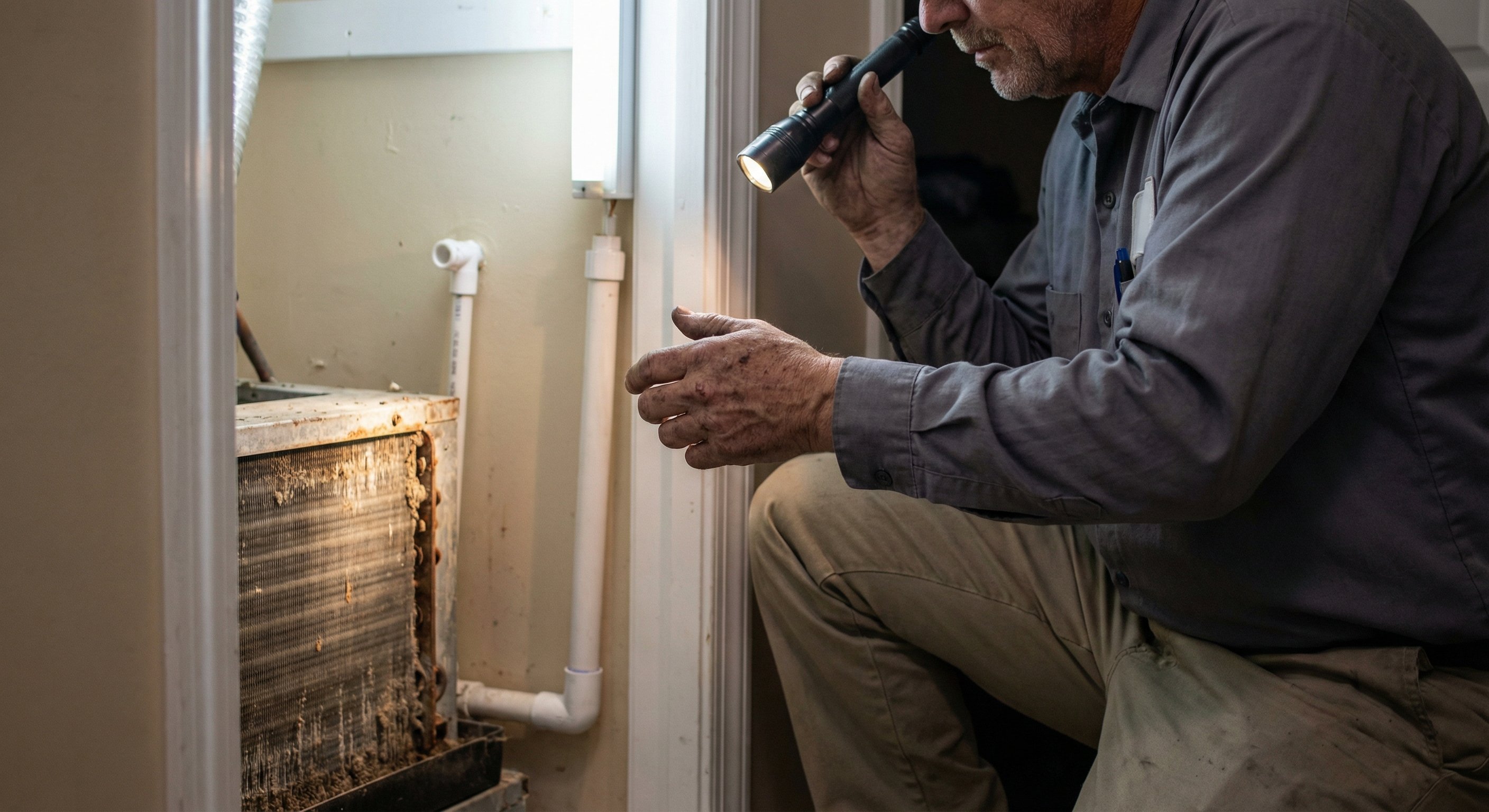
Critical Task 2: Coil Cleaning and Protection
Your condenser coils (outdoor unit) and evaporator coils (indoor unit) need to be pristine before monsoon season. Dust and debris on coils acts as insulation, preventing proper heat transfer. In monsoon conditions, where your system is already working harder due to humidity, dirty coils push equipment past its limits.
Outdoor condenser coils:
Turn off power at the disconnect box. Remove the fan grille if accessible. Rinse the coils from the inside out using a garden hose with a gentle spray (not a pressure washer, which bends the delicate aluminum fins). Work from the interior of the unit outward, pushing debris out rather than deeper in.
Straighten any bent fins with a fin comb. Bent fins block airflow and reduce efficiency.
Clear a two-foot perimeter around the unit. Remove vegetation, debris, and anything that restricts airflow. In monsoon season, you want maximum airflow through that unit.
Indoor evaporator coils:
These are harder to access and typically require a technician. If you have not had your evaporator coils cleaned in the past year, book a professional cleaning before monsoon. Dust and biofilm on indoor coils not only reduce efficiency but can create musty odors when humidity spikes.
Consider a UV light system installed near the evaporator coil. Monsoon humidity creates conditions where mold and bacteria can grow on wet coils. UV light inhibits this growth, improving air quality and system efficiency.
Skip the dealer markup
See What a New AC Actually Costs in Phoenix Metro, AZ
AC Rebel shows you the real equipment price — no sales pitch, no inflated quote. Get matched with a licensed installer and keep $3,000–$5,000 in your pocket.
Get My Direct Price →Critical Task 3: Filter Upgrade and Monitoring
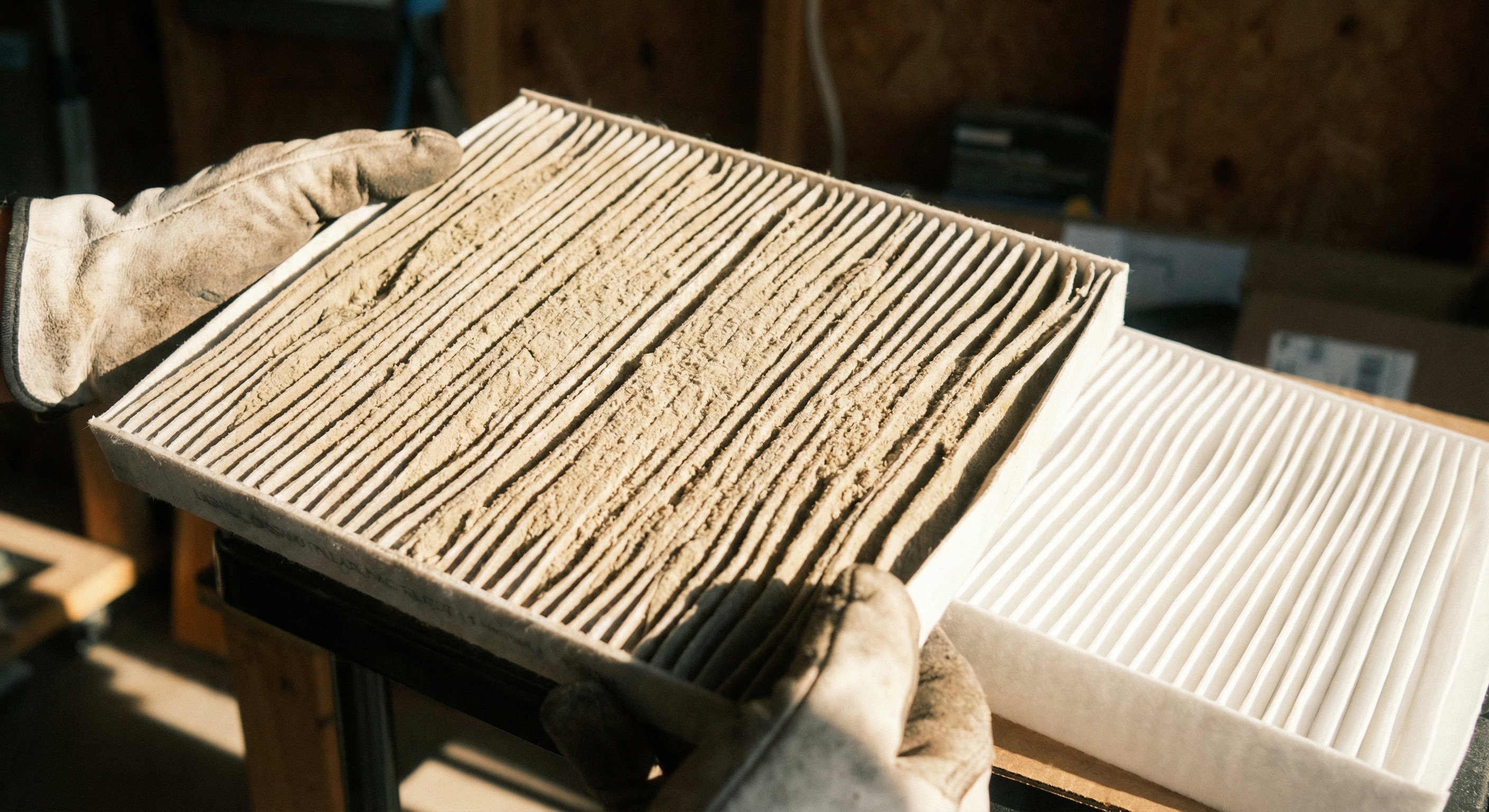
Standard one-inch filters are barely adequate for normal Arizona conditions. During monsoon, when dust storms can load a filter in days rather than weeks, they are insufficient.
Upgrade your filtration strategy:
If you are using basic fiberglass filters (the cheap blue ones), upgrade to pleated MERV 8 or MERV 11 filters before monsoon. The increased surface area of pleated filters captures more dust before it reaches your coils.
MERV 8 is the minimum for monsoon season. MERV 11 offers better dust capture without excessive airflow restriction in most systems. Avoid MERV 13+ unless your system was specifically designed for high-MERV filtration.
Check filters weekly during monsoon season, not monthly. After a major dust storm, inspect immediately. A clogged filter reduces airflow, strains the blower motor, and can cause the evaporator coil to freeze.
Consider a media air cleaner (4-5 inch thick filter) if your system can accommodate one. These have significantly more surface area and can handle heavy dust loads longer than standard one-inch filters.
Critical Task 4: Surge Protection Installation
Power surges during monsoon storms are a leading cause of AC failures in Arizona. A single lightning strike miles away can send a surge through the grid that destroys your system's control board or capacitors.
Whole-house surge protection:
Install a whole-house surge protector at your electrical panel. This device sits between your home and the grid, absorbing surge energy before it reaches your appliances. Cost is typically $200-400 installed. It protects your AC, but also your refrigerator, electronics, and other appliances.
HVAC-specific surge protection:
Add a dedicated surge protector at your AC disconnect box. These are designed specifically for HVAC systems and handle the high inductive loads of compressors and motors. Cost is $100-200 installed.
The combination of whole-house and HVAC-specific protection provides layered defense against the power instability that comes with monsoon storms.
During storms:
If you know severe weather is approaching, you can turn off your AC at the thermostat. This prevents the system from trying to restart during power fluctuations, which is when most surge damage occurs. Turn it back on once the storm passes.
Critical Task 5: Electrical Connection Inspection
Heat, vibration, and power fluctuations loosen electrical connections over time. Loose connections create resistance, which generates heat, which creates more resistance. The cycle ends with failed components or, in worst cases, electrical fires.
This is primarily a task for a licensed technician, but you should know what to ask for.
What a pre-monsoon electrical inspection covers:
Capacitor testing: Your AC has start and run capacitors that help motors begin and continue running. Arizona's heat cycles are hard on these components. A tech should measure microfarad ratings and replace any reading below 90% of rated capacity.
Contactor inspection: The contactor is a high-voltage switch that cycles your compressor. Pitting or carbon buildup on contacts creates resistance. A tech should inspect and replace if needed.
Connection torque: All electrical connections should be checked and properly torqued. Vibration from thousands of run hours loosens terminals.
Wire insulation: Check for heat damage or rodent damage to low-voltage wiring. Exposed wires can short during humid conditions.
Habooob-Specific Protection Strategies
Haboobs (dust storms) are unique to desert regions and present specific challenges for AC systems.
Pre-storm:
If you have warning that a dust storm is approaching, turn off your AC at the thermostat. This prevents the system from pulling dust through the outdoor unit and into your home during the storm.
Post-storm:
After the storm passes, inspect your outdoor unit before restarting. If it is visibly coated in dust, rinse the coils with a garden hose before turning the system back on. Running the AC with dust-coated coils forces the system to work harder and can push dust into your home.
Check and likely replace your air filter immediately after a major dust storm. The filter will be loaded with fine particulate that reduces airflow and efficiency.
Long-term:
If you live in an area particularly prone to dust storms (south and west Phoenix metro areas), consider having your contractor install a hail guard or mesh cover over the condenser. These protect against both dust and the occasional monsoon hail that can damage fins.
When to Call a Professional
Some monsoon prep tasks are reasonable DIY projects. Others require a licensed HVAC technician.
DIY-appropriate:
- Filter replacement and monitoring
- Condensate drain cleaning and vinegar flush
- Visual inspection of outdoor unit and debris removal
- Coiling garden hose rinse of condenser (gentle pressure only)
- Turning system off during storms
Call a professional:
- Refrigerant level checking (requires EPA certification)
- Evaporator coil cleaning (requires access panel removal and chemical handling)
- Electrical connection inspection and capacitor replacement
- Surge protector installation (electrical work)
- UV light installation
- Ductwork inspection and sealing
- Any repair work involving wiring or refrigerant lines
The cost of a pre-monsoon inspection and tune-up ($100-200) is minimal compared to emergency repairs during a July storm ($500-2,000+) or water damage remediation from an overflowing drain pan ($1,000-5,000+).
The Monsoon Timeline: When to Do What
Early June (now):
Schedule your professional pre-monsoon inspection. HVAC companies are less busy now than they will be in July. Book early.
Mid-June:
Complete DIY tasks: deep clean condensate drain, upgrade filters, clear around outdoor unit, install surge protectors.
Late June:
Final inspection: run the system on a hot day and verify it is cycling properly, cooling effectively, and draining normally. Address any issues now.
July through September (monsoon season):
Weekly filter checks. Immediate post-storm inspections and cleaning. Monitor condensate drain flow. Keep vegetation and debris clear around outdoor units despite summer growth.
October:
Post-monsoon inspection. Check for dust accumulation on coils, assess filter condition, and address any issues before switching to heating season.
What If Your System Is Already Struggling?
If your AC is showing signs of distress in June (not cooling effectively, short cycling, unusual noises, ice formation on lines), monsoon season will likely finish it off.
Running a struggling system through monsoon humidity and dust storms is gambling with emergency failure. The worst time for your AC to die in Arizona is mid-July during a humid storm cell, when every HVAC company is booked two weeks out and emergency rates apply.
If your system is 12 years or older and showing strain, consider whether replacement before monsoon makes sense. A new system installed in June gives you confidence going into the hardest season. A system replaced in emergency conditions in July often means rushed decisions, limited contractor availability, and higher costs.
The average traditional contractor quote for a 3-ton system in the Phoenix metro runs $8,000-12,000 installed. A significant portion of that is dealer markup on the equipment.
AC Rebel offers a different model. You buy the unit directly at near-wholesale pricing (seeing exactly what the equipment costs before any markup) and get matched with a vetted local installer for labor. Most Phoenix homeowners save $2,000-4,000 compared to traditional dealer quotes.
If your pre-monsoon inspection reveals your system is living on borrowed time, get your free quote on AC Rebel and see actual unit prices. Takes 2 minutes. Much better to make this decision in comfortable June weather than during a 110°F July emergency.
Frequently Asked Questions
Q: How is monsoon AC maintenance different from spring tune-up?
Spring tune-ups focus on general readiness for cooling season: refrigerant levels, basic cleaning, and component checks. Monsoon-specific maintenance addresses the unique stresses of July-September: condensate drainage capacity for humidity spikes, dust storm protection, and power surge resilience. The timing is different (June vs March/April) and the problems are different.
Q: When should I do monsoon AC maintenance in Arizona?
The ideal window is mid-May through mid-June, before monsoon season officially starts on June 15. This gives you time to address any issues found during inspection before the humidity and storms arrive. HVAC companies have better availability in late spring than during the peak summer rush.
Q: Can I run my AC during a dust storm?
If possible, turn off your AC before a dust storm hits. Running the system during a haboob pulls dust through the outdoor unit and into your home. After the storm passes, inspect and rinse the outdoor coils before restarting. Check and likely replace your air filter immediately after a major dust storm.
Q: Why does my AC drip more water during monsoon?
Your AC removes humidity from the air as it cools. Arizona's normal 10-20% humidity produces minimal condensate. During monsoon, humidity can spike to 50%+, meaning your system removes 3-5 times more moisture. That extra water flows through your condensate drain line. If the line is partially clogged, the drain pan overflows and causes water damage.
Q: Do I need a surge protector for my AC?
Highly recommended in Arizona. Monsoon thunderstorms create power fluctuations that can destroy capacitors and control boards. A whole-house surge protector ($200-400) combined with an HVAC-specific surge protector ($100-200) provides layered protection against the power instability that comes with summer storms.
Q: How often should I check my filter during monsoon?
Weekly inspections are recommended during monsoon season (July-September). A major dust storm can load a filter in hours rather than weeks. A clogged filter reduces airflow, strains your blower motor, and can cause the evaporator coil to freeze. Replace filters whenever they appear visibly dirty or after any significant dust storm.
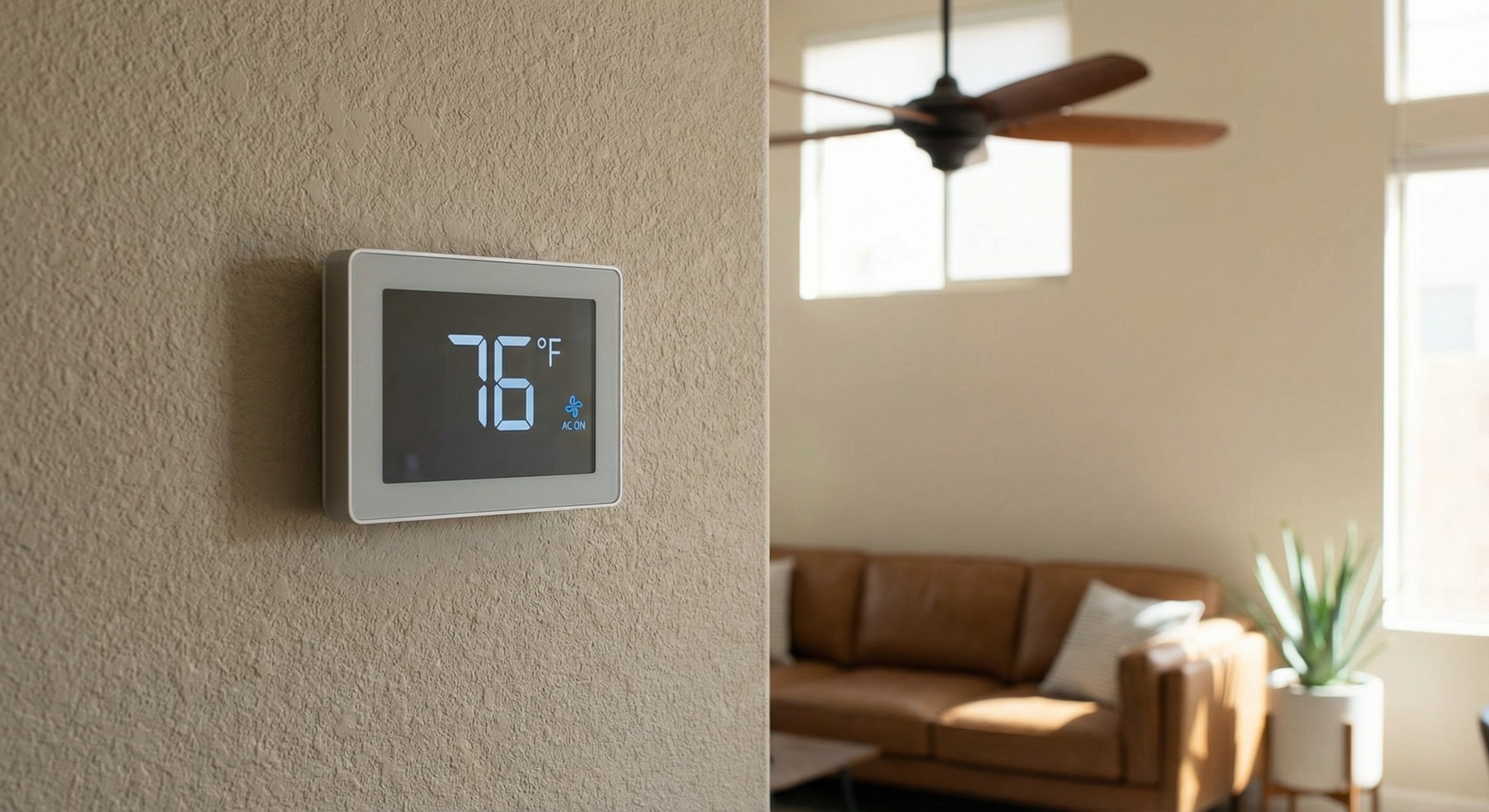
Q: What temperature should my AC blow during monsoon?
The air coming from your vents should be 15-20°F cooler than the return air temperature, regardless of outdoor humidity. If you measure 75°F at the return grille, expect 55-60°F at the supply vents. If the temperature difference is less than 15°F, your system may be low on refrigerant, have dirty coils, or be struggling with the humidity load. Call a technician.
AC Rebel is a direct-to-consumer HVAC marketplace helping Phoenix metro homeowners see real unit prices before making a replacement decision. If your pre-monsoon inspection reveals it's time to replace, see what your next system actually costs — without the dealer markup baked in.
Ready to stop overpaying?
See Your Direct AC Price in 2 Minutes
Skip the dealer. Buy your AC unit at direct pricing and pay a vetted local installer only for the installation. No sales calls. No hidden markup. Most homeowners save $3,000–$5,000+ compared to a traditional quote.
Get My Direct Price — No Credit Card2-minute quote · Licensed installers · 10-year warranty options