
AC Replacement Cost in Casa Grande AZ (2026 Real Numbers)

AC Replacement Cost in Casa Grande AZ (2026 Real Numbers)
TL;DR: AC replacement in Casa Grande AZ costs $7,200 to $13,500 depending on system size and tier. A 3-ton unit at Good/Better tier runs $7,800-$10,500 installed. The primary variable is whether you buy through a traditional contractor (who adds $3,000-$5,000 in markup) or through a direct-to-consumer model. Always get at least two written quotes, ask for the unit model number, and confirm the permit is included.
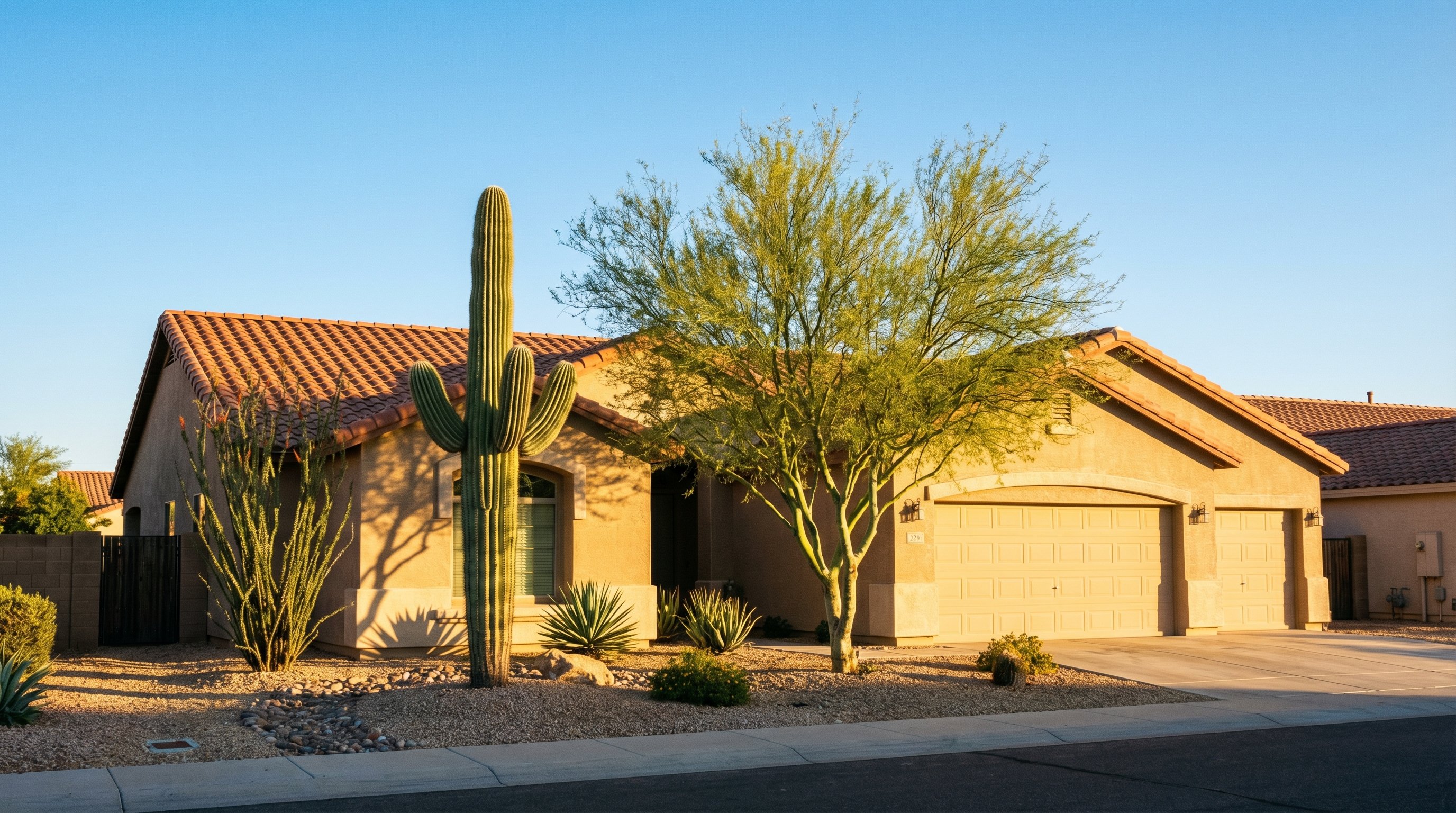
Your AC died in Casa Grande. It is 106 degrees outside and you need answers fast.
You are not looking for a philosophy lesson. You need to know what a new AC costs in this city right now, what separates a fair price from a gouge, and whether you have any leverage as a buyer.
Here are the real numbers.
Why Casa Grande AC Costs Are Different
Casa Grande is one of the fastest-growing cities in Arizona. The 2020 census counted around 55,000 people. By 2026 that number is closer to 70,000, and new subdivisions are pushing outward toward I-10 and the Florence Highway. That growth brings two things that directly affect your AC replacement cost.
First, contractor availability is tight. When a heat wave hits the Phoenix metro, every HVAC contractor in Maricopa County gets booked solid. Casa Grande sits far enough from Phoenix that you are not automatically in the service radius of the big metro companies. That means fewer bids and sometimes higher prices because the contractors who do come out here are not competing as hard for the work.
Second, many Casa Grande homes were built in the 1980s and 1990s. That era of construction brought a lot of affordable, modestly-sized homes with 2-3 ton AC units that were considered standard at the time. A 1,400 square foot home from 1987 was probably equipped with a 2-ton unit that is now 35-40 years past its designed lifespan. Replacement in that context is not just about swapping a unit. It may involve ductwork modifications, electrical upgrades, or refrigerant line replacements that add $800-$2,000 to the total.
The third factor is the microclimate. Casa Grande sits in the Gila River Valley and can actually run a few degrees hotter than Phoenix on some summer afternoons. The dry heat does less damage to equipment than Phoenix humidity, but the sustained high temperatures mean your system works harder than it would in a milder climate.
What You Actually Pay: The Real Cost Breakdown
Here is what Casa Grande homeowners paid for full AC replacement in 2025 and early 2026, based on real quotes and completed installations.
2-ton systems (adequate for 1,000-1,300 sq ft):
- Good tier: $6,800-$8,200 installed
- Better tier: $8,500-$10,200 installed
- Best tier: $10,500-$12,800 installed
3-ton systems (adequate for 1,400-1,800 sq ft):
- Good tier: $7,800-$9,500 installed
- Better tier: $9,800-$11,500 installed
- Best tier: $12,000-$14,500 installed
4-ton systems (adequate for 2,000-2,500 sq ft):
- Good tier: $9,200-$11,000 installed
- Better tier: $11,500-$13,500 installed
- Best tier: $14,000-$17,000 installed
These prices include the unit, labor, standard installation supplies (refrigerant, electrical connections, duct adapters), and the Arizona state sales tax. They do not include any necessary ductwork repair or structural modifications.
Where the markup lives is important to understand. In the traditional contractor model, the unit cost you see on the quote is rarely what the contractor paid for it. Distributors add 10-15 percent and suppliers add another 15 percent before the contractor applies their 40-50 percent markup. That is how a $3,800 Goodman unit becomes a $9,500 line item on your quote.
What Good, Better, and Best Actually Mean
HVAC manufacturers sell to distributors in three performance tiers. Understanding the tiers lets you comparison shop without getting lost in model numbers.
Good tier units are the value brands: Goodman, Amana, and comparable lines. They carry 10-year parts warranties, are widely available, and use standard-efficiency compressors. A Good tier 3-ton unit in 2026 retails for $2,400-$3,200 depending on the exact model. If a contractor quotes you $7,800 for a Goodman 3-ton installed, that is a reasonable price. If they quote $11,000 for the same unit, you are paying their markup twice.
Better tier units are mid-range performance: Carrier, Bryant, Trane, and Lennox mid-lines fall here. They typically offer slightly higher SEER ratings (16-18 SEER vs 14-15 for Good tier), better compressor technology, and longer warranties. A Better tier 3-ton unit retails for $3,500-$5,000.
Best tier units are the premium performance models: high-efficiency Trane and Lennox units, Carrier Infinity series, and similar. These run 20-25 SEER and include variable-speed compressors that modulate output rather than running full blast or shutting off completely. A Best tier 3-ton unit retails for $5,500-$8,000.
For most Casa Grande homes, the Better tier hits the sweet spot between cost and performance. You are not paying premium prices for a system that will outlast the value of your home, but you are getting meaningfully better efficiency than the Good tier.
Skip the dealer markup
See What a New AC Actually Costs
AC Rebel shows you the real equipment price — no sales pitch, no inflated quote. Get matched with a licensed installer and keep $3,000–$5,000 in your pocket.
Get My Direct Price →What Actually Drives Your Total Cost Up
The unit price is one number. The installed price is another. Here is what most homeowners miss when they compare quotes.
Electrical upgrades. If your home was built before 2000, there is a good chance your outdoor disconnect and wiring are rated for 30 amps. New units, especially higher-efficiency models, sometimes require 40-50 amp circuits. Upgrading the electrical panel or subpanel can add $400-$1,200.
Ductwork modifications. This is the most common surprise. Many older Casa Grande homes have flexible ductwork with degraded insulation or improperly sealed connections. If the new unit is larger than the old one, the ducts may not be sized to handle the airflow. A proper duct modification runs $600-$2,500 depending on scope.
Permit fees. Maricopa County requires mechanical permits for AC replacement. The fee is typically $250-$450 depending on the valuation of the work. Some contractors include this. Many do not. Ask specifically.
Refrigerant type. Older units use R-22, which is no longer manufactured and costs $150-$300 per pound to recharge. New units use R-410A, which is significantly cheaper and more environmentally stable. If someone quotes you on a new R-22 system, walk away. R-22 has not been produced since 2020. Any new unit using it is either salvaged or fraudulent.
Removal and disposal. Hauling away the old unit typically costs $150-$350. Some contractors fold this into their quote, others charge it as a surprise line item on installation day.
When Replacement Makes More Sense Than Repair
A good rule of thumb: if your AC is more than 12 years old and the repair estimate exceeds $1,500, seriously consider replacement.
Here is why. A new 16 SEER unit in a 1,600 square foot Casa Grande home will reduce your summer electric bill by roughly 20-30 percent compared to a 12-year-old 10 SEER system. On a typical summer APS or SRP bill of $280-$380, that is $60-$110 per month in savings. Over a five-month cooling season, you save $300-$550 annually. A $2,500 repair on a 14-year-old unit makes no financial sense when you will need another repair in 2-3 years.
Specific scenarios where replacement wins:
- The compressor is failing. This is the heart of the AC and replacement costs $3,500-$6,000 alone, nearly the cost of a full new unit installed.
- The unit uses R-22 refrigerant. Recharging R-22 costs $500-$1,200 and the unit will likely fail again within 2 years.
- You have had two or more significant repairs in the past three years. The unit is telling you something.
- Your electric bills have climbed steadily over the past five years without explanation. Old units lose efficiency as they age.
How to Avoid Overpaying in Casa Grande
The single most effective thing you can do is get at least three written quotes. Not verbal estimates, not "I will send you a number." Written quotes with the unit model number, the SEER rating, and a line-item breakdown.

When you receive a quote, ask these questions:
- What unit model are you quoting? Write it down and check it against the manufacturer website. Some contractors quote a model that is discontinued or not available in your area.
- Is the permit included? If not, how much extra?
- What is your labor warranty? Most reputable contractors warrant their installation work for 1-2 years minimum.
- Do you handle the APS or SRP rebate paperwork? Some contractors will help you file for utility rebates which can be $300-$750 depending on the unit efficiency.
The other move is to check what direct pricing looks like before you commit to any contractor quote. AC Rebel's marketplace shows you unit costs directly so you can see exactly what you are paying for the equipment versus the installation. A contractor who quotes $11,500 for a 3-ton unit that you can buy for $4,200 is marking up the equipment by $7,300. That is where the leverage is.
Get a free instant quote at acrebel.com and see what your AC costs without the dealer markup.
Frequently Asked Questions
Q: How long does AC installation take in Casa Grande?
A straightforward AC replacement takes one full day, typically 8-10 hours. The old unit is removed, the new one is set and connected, the electrical is verified, the refrigerant lines are charged, and the system is tested. If ductwork modifications are needed, add half a day to a full day.
Q: Does my Casa Grande homeowners insurance cover AC replacement?
Standard homeowners policies cover AC replacement if the damage was caused by a covered peril such as fire, vandalism, or a fallen tree. Normal wear and tear, age, and mechanical failure are not covered. Flood damage depends on whether you have flood insurance, which is separate from standard homeowners coverage.
Q: What SEER rating do I need for Casa Grande?
Arizona's minimum SEER for new installations is 14 SEER. For a Casa Grande home, 15-17 SEER is the practical sweet spot. Going above 18 SEER increases equipment cost significantly without proportional efficiency gains in this climate, since the real-world operating conditions rarely allow units to hit their maximum rated efficiency.
Q: Can I install a bigger unit to cool my home faster?
No, and this is a common mistake. An oversized unit short-cycles, meaning it turns on, cools the house quickly, and shuts off before properly dehumidifying the air. The result is a clammy feeling inside even when the thermostat reads 72 degrees. Undersizing is also a problem. Match the unit size to a proper load calculation using ACCA Manual J, which most reputable contractors will perform before quoting.
Q: What is the average lifespan of an AC unit in Casa Grande?
Most AC units last 12-15 years in the Casa Grande climate. The dry air is easier on equipment than Phoenix humidity, but the extreme summer temperatures and dust exposure take their toll. Units over 15 years old are operating well past their designed efficiency and typically cost more to repair than they are worth.
Q: Are there APS or SRP rebates available for new AC units in 2026?
Yes. Both utilities offer rebates on high-efficiency units. APS typically offers $300-$600 on qualifying systems of 16 SEER or higher. SRP offers similar programs through its shades program and efficiencyrebates. The amounts change annually, so check the current utility websites before purchasing. Rebates apply to the installed cost and can meaningfully shift the economics of a higher-efficiency unit.
Q: Should I replace my AC before summer or wait?
If your unit is over 12 years old and showing signs of failure, replace before summer. Emergency replacement in July or August in Casa Grande means paying peak-season prices and waiting weeks for an available installer. Scheduling in April or May typically gives you faster installation, better contractor availability, and sometimes off-season pricing.
Ready to stop overpaying?
See Your Direct AC Price in 2 Minutes
Skip the dealer. Buy your AC unit at direct pricing and pay a vetted local installer only for the installation. No sales calls. No hidden markup. Most homeowners save $3,000–$5,000+ compared to a traditional quote.
Get My Direct Price — No Credit Card2-minute quote · Licensed installers · 10-year warranty options