
Heat Pump vs. AC in Arizona: Which Is Better for the Desert?

Heat Pump vs. AC in Arizona: Which Is Better for the Desert?
TL;DR: In most of Arizona, a standard central AC system outperforms a traditional heat pump on cooling efficiency during peak summer heat (100°F+). However, modern high-efficiency heat pumps — specifically inverter-driven units — now handle Arizona summers better than ever and deliver significant savings on heating costs in winter. If your home needs both heating and cooling and your home was built after 2000, a heat pump is worth serious consideration. If you're replacing cooling-only in an older home, central AC is still the simpler, more cost-effective path. Read the full breakdown to see which fits your situation.
You're replacing your HVAC system and suddenly everyone has an opinion. Your neighbor says heat pumps are the future. Your contractor quotes you a central AC with a furnace. Your brother-in-law in Seattle says he loves his heat pump. But here's the thing: your brother-in-law doesn't live in Gilbert. He doesn't have three straight weeks over 110°F. And that changes the whole calculation.
Let's break down what actually matters for Arizona homeowners — not just the national talking points.
The Core Difference (Explained Simply)
A central AC system does one thing: cool your home. It runs a refrigerant cycle to pull heat out of your house and dump it outside.
A heat pump does the same thing — but it can run the process in reverse. In winter, it extracts heat from outside air and brings it inside to heat your home. One system, two functions.
The efficiency question is where it gets complicated.
In heating mode, heat pumps are extremely efficient — typically 2x to 3x more efficient than a gas furnace or electric resistance heat. For every unit of electricity used, they deliver 2-3 units of heat.
In cooling mode, this is where Arizona creates a real challenge.
Heat pump efficiency ratings are measured as SEER (Seasonal Energy Efficiency Ratio) for cooling, and HSPF (Heating Seasonal Performance Factor) for heating. A heat pump and a central AC unit with the same SEER rating will perform identically at cooling your home — same refrigerant cycle, same efficiency.
The issue is performance at extreme temperatures.
The Arizona Factor: Heat Pumps and 115°F Days
Here's the dirty secret contractors don't always explain upfront: traditional heat pumps — the kind sold nationwide — have an efficiency sweet spot. As outdoor temps climb past 95–100°F, their COP (Coefficient of Performance) drops. When temps hit 115°F, they're working against themselves.
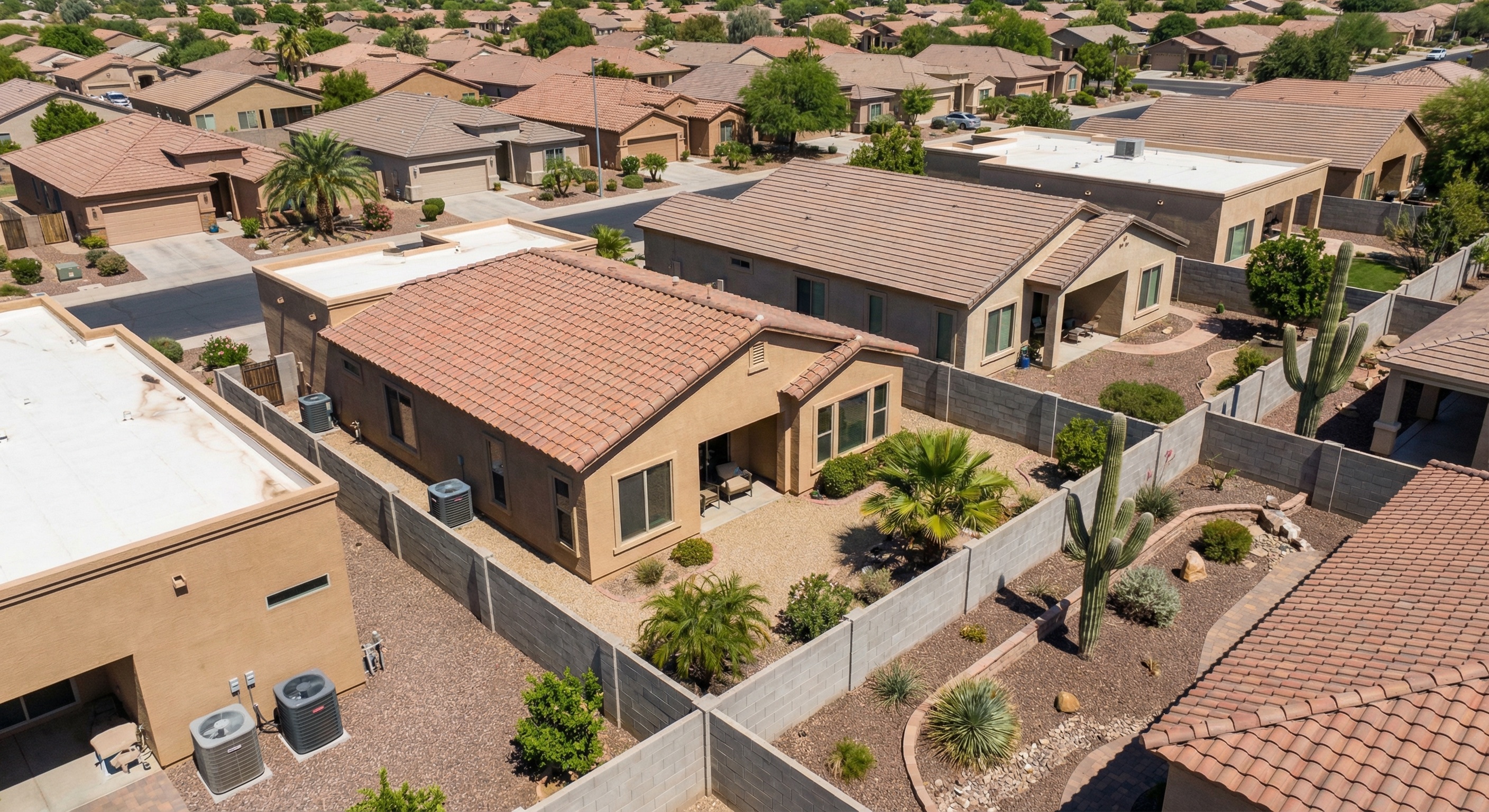
Phoenix sees 30+ days above 110°F each year. Mesa, Chandler, Goodyear — same story.
The old rule of thumb: In climates with sustained triple-digit heat, central AC was the more reliable choice because it was designed purely for cooling, with no compromises for dual-mode operation.
That rule has changed significantly in the last 2-3 years.
Modern Inverter Heat Pumps: The Game Changer
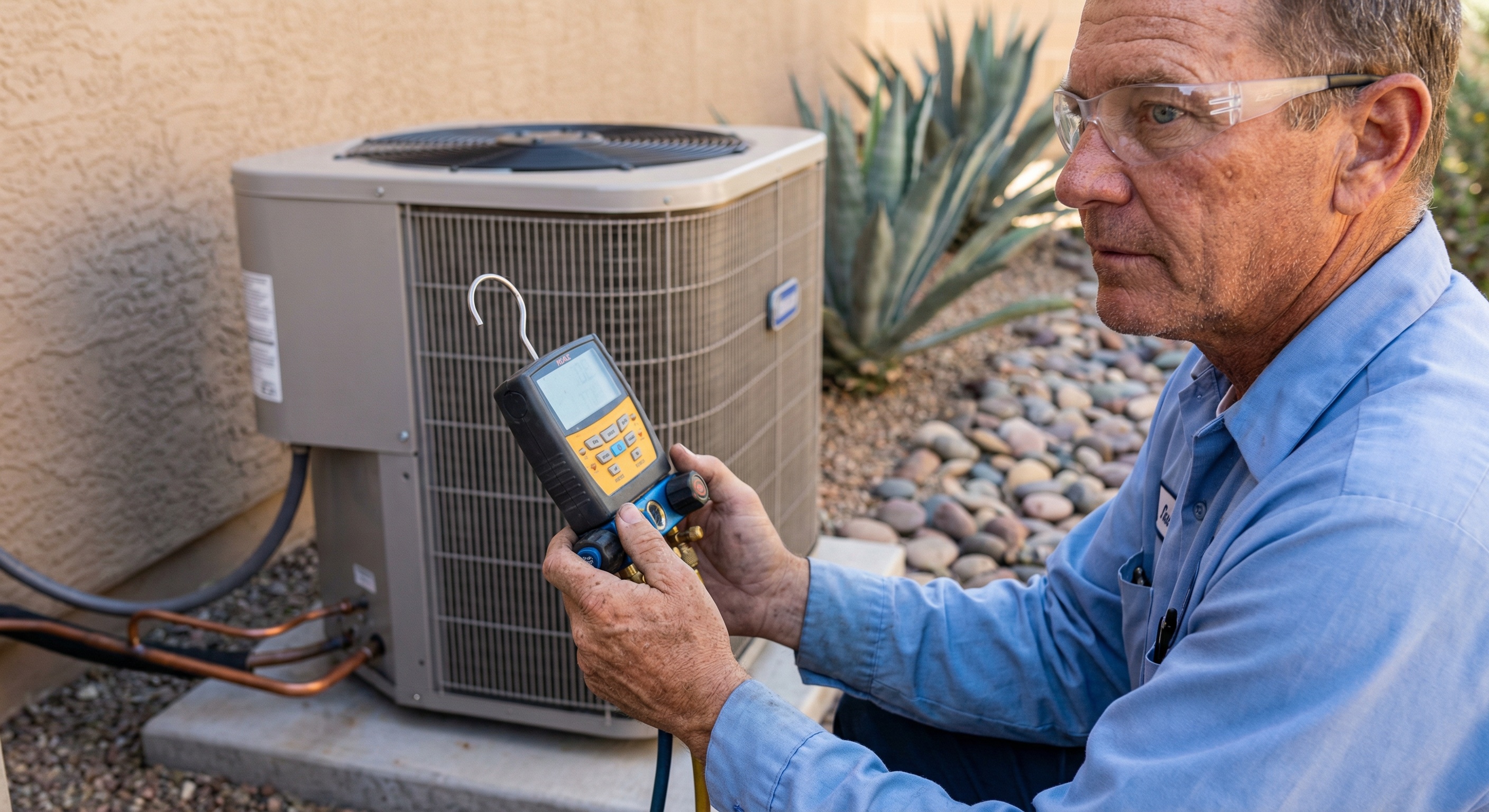
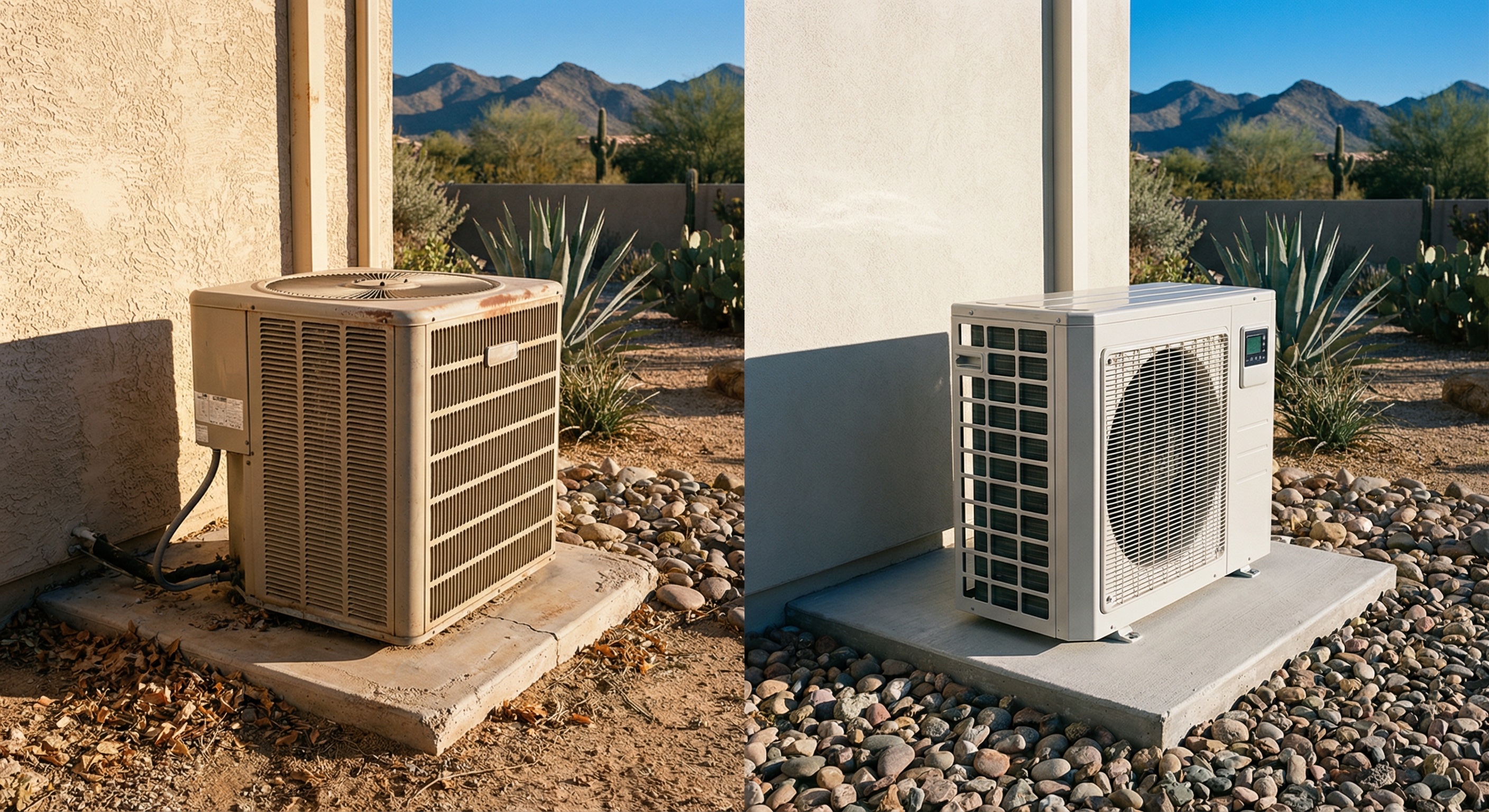
Today's inverter-driven heat pumps — brands like Mitsubishi, Daikin, Bosch, and newer Carrier and Trane units — use variable-speed compressors that adjust output continuously rather than cycling on/off at full capacity.
The practical effect: they handle high ambient temperatures much better than single-stage systems. Inverter heat pumps rated for up to 130°F ambient operation are now available. Some models tested in Arizona conditions maintain better than 80% of rated efficiency at 115°F.
For Arizona homeowners, this means the old "heat pumps don't work well here" advice is outdated — but only when you're buying the right heat pump. A basic single-stage heat pump at a big-box price point still struggles. An inverter unit from a reputable brand is a different product entirely.
Skip the dealer markup
See What a New AC Actually Costs in Phoenix, AZ / Maricopa County
AC Rebel shows you the real equipment price — no sales pitch, no inflated quote. Get matched with a licensed installer and keep $3,000–$5,000 in your pocket.
Get My Direct Price →Cost Comparison: Heat Pump vs. Central AC in Arizona
Here's what real numbers look like for a typical 2,000 sq ft home in Maricopa County:
| System Type | Installed Cost | Annual Cooling Cost (est.) | Annual Heating Cost (est.) | 10-Year Total |
|---|---|---|---|---|
| Central AC (16 SEER2) + gas furnace | $7,500–$11,500 | $1,200–$1,800 | $400–$700 | $19,500–$29,500 |
| Central AC (16 SEER2) + electric heat strips | $6,500–$9,500 | $1,200–$1,800 | $800–$1,400 | $20,500–$32,500 |
| Standard heat pump (16 SEER2) | $7,000–$11,000 | $1,200–$1,800 | $300–$500 | $19,500–$28,500 |
| Inverter heat pump (20+ SEER2) | $9,500–$14,000 | $900–$1,400 | $200–$400 | $19,500–$28,000 |
Cost estimates based on 2026 Maricopa County market pricing. SRP/APS average rates applied. Installation includes labor, permits, and haul-away.
Key takeaway: The upfront price is higher for a quality inverter heat pump, but the operating cost advantage — particularly on heating — narrows that gap over 10 years. If you're in a home you'll own for 10+ years, the math often favors the heat pump.
If you're renting the home, selling in 5 years, or the installation is driven purely by an emergency AC failure, a central AC system makes more financial sense.
Arizona Winters Are Mild — Does Heating Efficiency Actually Matter?
This is the argument most used against heat pumps in Phoenix: "We barely heat our homes anyway."
It's partially true. Phoenix averages only 150–200 degree-days of heating annually compared to 3,000+ in Chicago. But "barely" isn't "never."
January nights in the East Valley regularly drop to 38–45°F. Gilbert, Queen Creek, Buckeye — if your house has electric heat strips and they run at 100% efficiency, you're paying 3x what a heat pump would cost for the same warmth.
Homeowners with older systems and electric heat strips are often shocked by January utility bills. A heat pump cuts that cost by 50–70%.
If your current system has gas heat, the calculation is different — gas is cheap enough in Arizona that the efficiency advantage of a heat pump over a well-maintained furnace is less dramatic. But if you're all-electric (common in homes built 1995–2010 with heat strips), a heat pump is a clear winner.
Home Age and Ductwork: What Often Gets Ignored
Heat pump performance in Arizona isn't just about the unit — it's about your home.
Pre-2000 homes often have undersized ductwork. Older duct systems were designed for single-speed systems. Inverter heat pumps vary their output continuously, and if ducts are restrictive, you lose the efficiency advantage. Before installing any premium heat pump, a duct pressure test is worth the $150–$300 — it could save you from a $12,000 decision you'll regret.
Flat-roof homes with rooftop package units are common in Phoenix — especially older ranches and commercial-residential properties. Most rooftop package units ARE heat pumps. If you have one, you already know the technology works here. The question is whether to upgrade to a higher-SEER model or add supplemental heat strips for the coldest nights.
Attic-installed air handlers should be checked for insulation and duct sealing before any system replacement. An air handler sitting in an unconditioned attic that hits 140°F on a July afternoon is fighting an uphill battle regardless of what you install outside.
The Rebate Factor (2026)
Federal tax credits under the Inflation Reduction Act still apply through at least 2032:
- Qualifying heat pumps: 30% federal tax credit, up to $2,000
- High-efficiency central AC upgrades: 30% federal tax credit, up to $600
The heat pump credit ceiling is more than 3x higher than for AC alone. On a $12,000 heat pump installation, that's $2,000 back vs. $600 for a comparable AC system.
SRP and APS also run periodic equipment rebates — check their websites before purchasing, as rebate amounts change seasonally. These are first-come, first-served and often expire before most homeowners know they exist.
Most of what you're paying for a new HVAC system is markup layered on markup — manufacturer to distributor to contractor, each adding their cut. The equipment cost is a fraction of what shows up on a traditional quote. That's exactly why browsing direct pricing before you talk to a contractor puts you in a fundamentally different negotiating position.
Ready to see real equipment pricing without the dealer markup? Explore direct AC and heat pump pricing on AC Rebel — get a quote in 2 minutes and see what the unit actually costs before anyone adds their margin.
Which Should You Choose?
Run through this:
Choose central AC (+ separate heating) if:
- You have natural gas heat that still works well
- You're replacing a failed AC and need it done fast (emergency replacement)
- Your home has older, undersized ductwork that hasn't been evaluated
- Budget is the primary constraint — you're optimizing for lowest installed cost
- You plan to sell within 5 years
Choose a heat pump if:
- Your current heating is electric (heat strips or old resistance heat)
- You want one system for both cooling and heating
- You're in a home you'll own for 10+ years
- You want to maximize the federal tax credit
- Your home has modern ductwork (2005+) or you're willing to evaluate it
Choose an inverter heat pump if:
- Any of the above, plus you want top efficiency for Arizona's sustained heat
- You're willing to spend $1,500–$2,500 more upfront for better long-term performance
- You want the most durable option for Phoenix metro conditions
One Thing Worth Knowing Before Any Quote
The biggest risk in the Arizona HVAC market isn't picking the wrong system type — it's paying $3,000–$5,000 more than you need to for the same equipment.
Traditional contractor pricing includes the unit cost, plus distributor markup, plus contractor markup. By the time a quote lands on your kitchen table, you're often looking at 2–3x the equipment cost. The system you're deciding between costs the same to manufacture whether it shows up in a contractor's truck or directly to your door.
Getting at least one direct-pricing baseline before signing anything isn't about going cheap — it's about knowing what you're actually paying for.
Frequently Asked Questions
Q: Do heat pumps work in Arizona's extreme summer heat?
Modern inverter heat pumps are designed to operate in extreme heat and work effectively in Arizona. Variable-speed compressors maintain efficiency at high ambient temperatures better than older single-stage systems. That said, proper sizing and quality installation matter — a budget single-stage heat pump may struggle during sustained 115°F+ heat waves in ways that a quality inverter unit won't.
Q: Is a heat pump more expensive to install than a central AC in Arizona?
Heat pumps typically cost $500–$2,500 more to install than a comparable-SEER central AC system. However, federal tax credits of up to $2,000 for qualifying heat pumps can offset much of that difference. Over a 10-year ownership period, the heating efficiency savings often close the remaining gap.
Q: What brands make the best heat pumps for Arizona?
For Arizona conditions specifically, look at Mitsubishi, Daikin, Bosch, Carrier Infinity, and Trane XV series — all offer inverter-driven models rated for high ambient operation. Budget brands and basic single-stage units from any manufacturer will have more difficulty maintaining efficiency during sustained extreme heat.
Q: Should I get a heat pump if my home has gas heat?
If your gas furnace works and is less than 10 years old, the efficiency math for replacing it with a heat pump is usually marginal — gas is cheap enough in Arizona that the savings are modest. However, if your furnace is nearing end of life AND your AC needs replacement, converting to an all-electric heat pump for both functions can simplify your system and takes full advantage of the federal tax credit.
Q: Does Arizona's dry desert climate affect heat pump performance?
Dry desert air (low humidity) actually benefits heat pump performance. Heat pumps work harder in humid climates because humidity complicates the heat exchange process. Arizona's low summer humidity — outside of monsoon season — is ideal for heat pump operation. The challenge is temperature, not humidity.
Pricing estimates are based on 2026 Maricopa County market data. Equipment costs, labor rates, and utility pricing vary. Federal tax credit details based on IRS guidelines effective 2024–2032; consult a tax professional for eligibility.
Ready to stop overpaying?
See Your Direct AC Price in 2 Minutes
Skip the dealer. Buy your AC unit at direct pricing and pay a vetted local installer only for the installation. No sales calls. No hidden markup. Most homeowners save $3,000–$5,000+ compared to a traditional quote.
Get My Direct Price — No Credit Card2-minute quote · Licensed installers · 10-year warranty options