
Preventive AC Maintenance in Phoenix: A Month-by-Month Schedule for Arizona Homeowners

Preventive AC Maintenance in Phoenix: A Month-by-Month Schedule for Arizona Homeowners
TL;DR: Phoenix heat, desert dust, and monsoon humidity stress AC systems differently than standard maintenance schedules assume. A month-by-month plan starting in February catches filter-clogging dust, coil-insulating sand, and monsoon drain backups before they become failures. Most homeowners can handle monthly filter checks and condensate cleaning. Schedule a professional tune-up in April before peak season. Following this consistently can extend your system life by 3 to 5 years and cut summer electric bills by 10 to 20 percent.
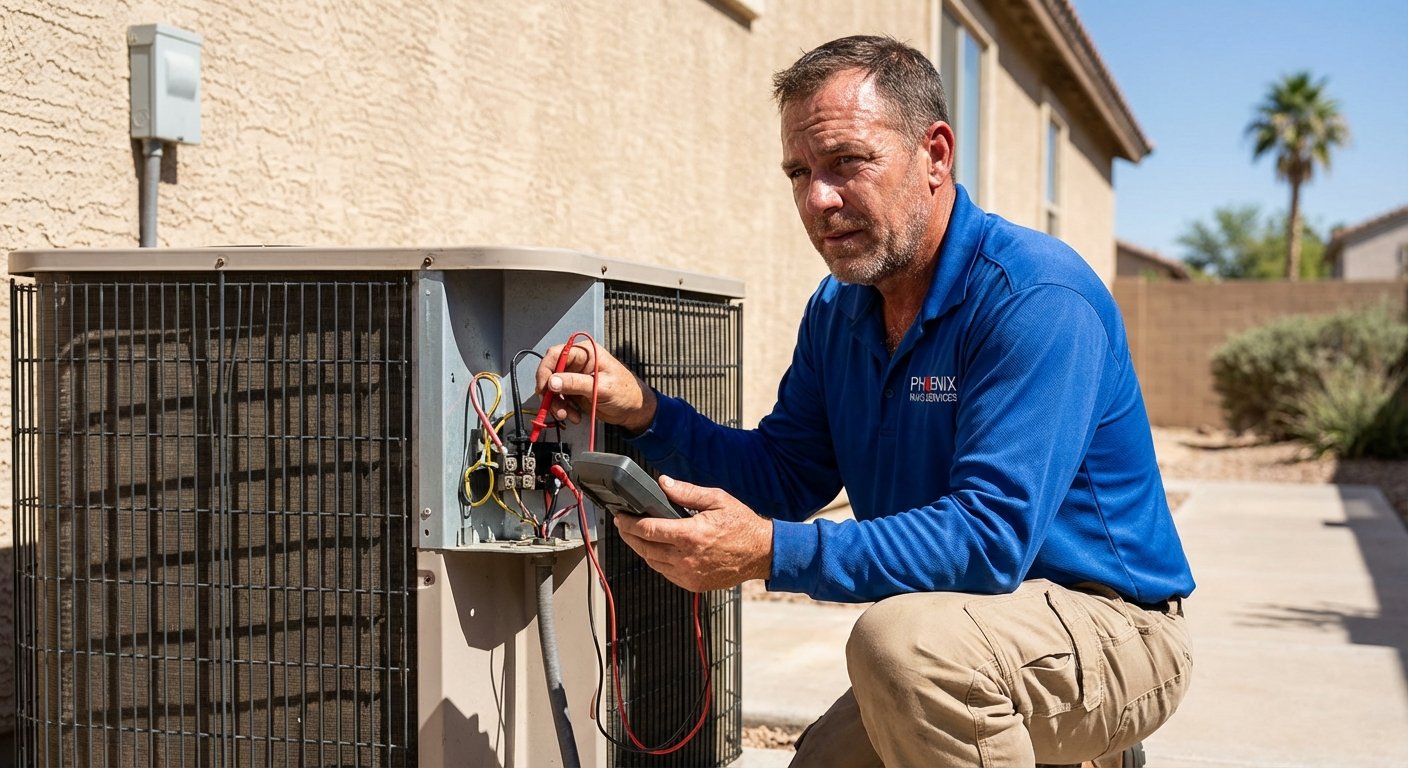
Your AC in Phoenix is not the same as an AC in Ohio. It runs harder, longer, and in a harsher environment. Most maintenance advice online comes from authors who have never felt a July monsoon roll into the Valley and watched their system stall in 90 percent humidity. Phoenix AC maintenance has its own calendar, and most Phoenix homeowners only call an HVAC contractor when the system stops working. By then, the repair costs more and the wait is longer.
Why Phoenix ACs Need Extra Attention
Three factors accelerate AC wear in Phoenix in ways standard maintenance advice ignores.
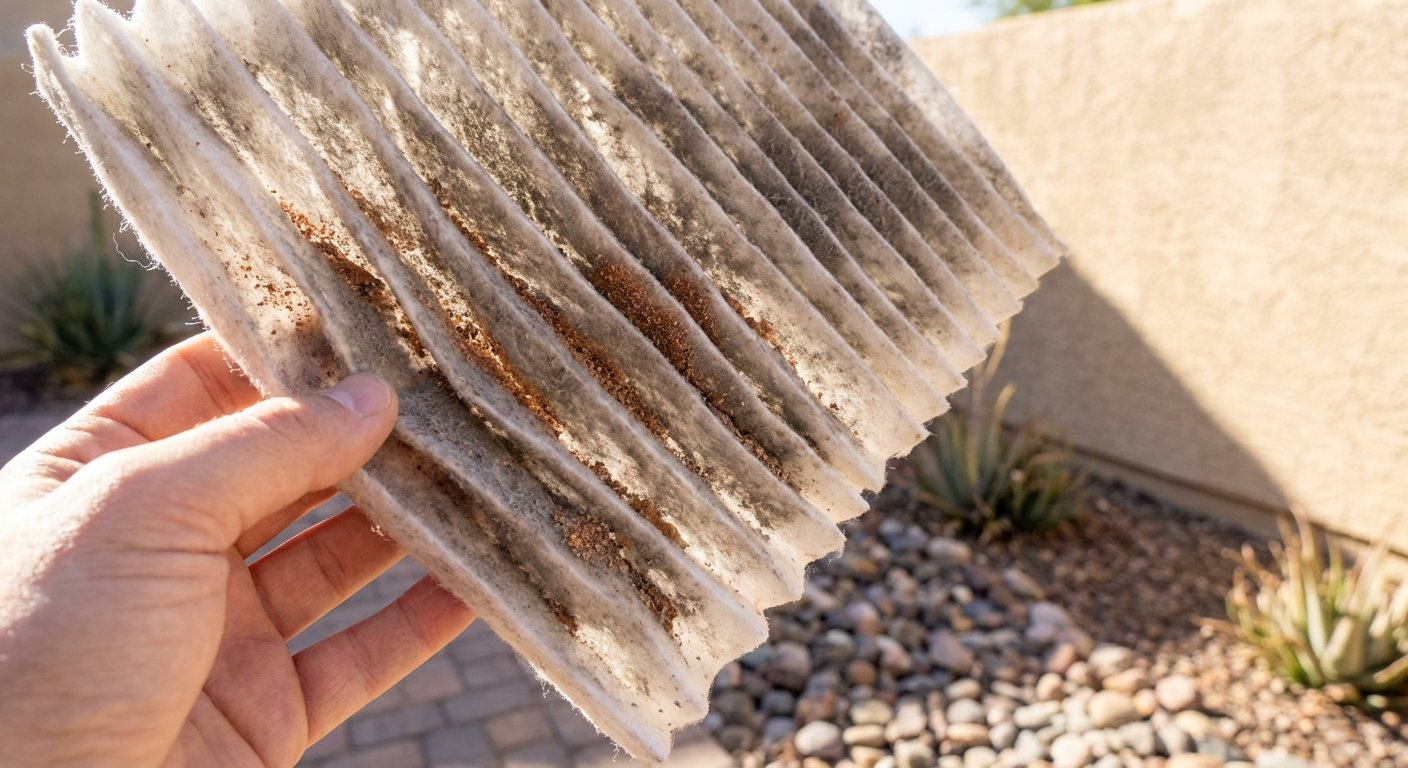
Desert dust. Fine particulate settles on condenser coils and clogs filters faster than anywhere else in the country. A standard 1-inch pleated filter that lasts three months in a humid climate needs monthly checks starting in February in Phoenix.
Monsoon humidity. July through September brings sudden humidity spikes that overwhelm evaporator coils and clog drain lines with algae and sediment. A drain line that works perfectly in June can back up in the first week of July monsoon season and trip your float switch.
Hard water scale. Phoenix has some of the hardest water in the country. Mineral residue on evaporator coils reduces heat exchange and forces your system to work harder and run hotter.
February Through April: Filter Season and Pre-Season Prep
February and March: Filter checks begin. February is when desert dust season kicks in. Check your air filter and replace it even if it does not look heavily loaded. Switch to a MERV 11 or MERV 13 rated filter. Walk around your outdoor condenser and remove debris. By late March, temperatures push toward 90 degrees and HVAC companies book two to three weeks out.
April: Professional tune-up. April is the last calm month before peak season. This is when you want a professional to do the inspection you cannot do yourself. Deep clean the condenser coil, check fin alignment, verify 24 inches of clearance on all sides of the unit, and inspect the evaporator coil.
A professional tune-up in Phoenix runs $120 to $200. An emergency service call in July runs $250 to $450 for the same work, plus markup on parts.
May Through July: Peak Load Preparation
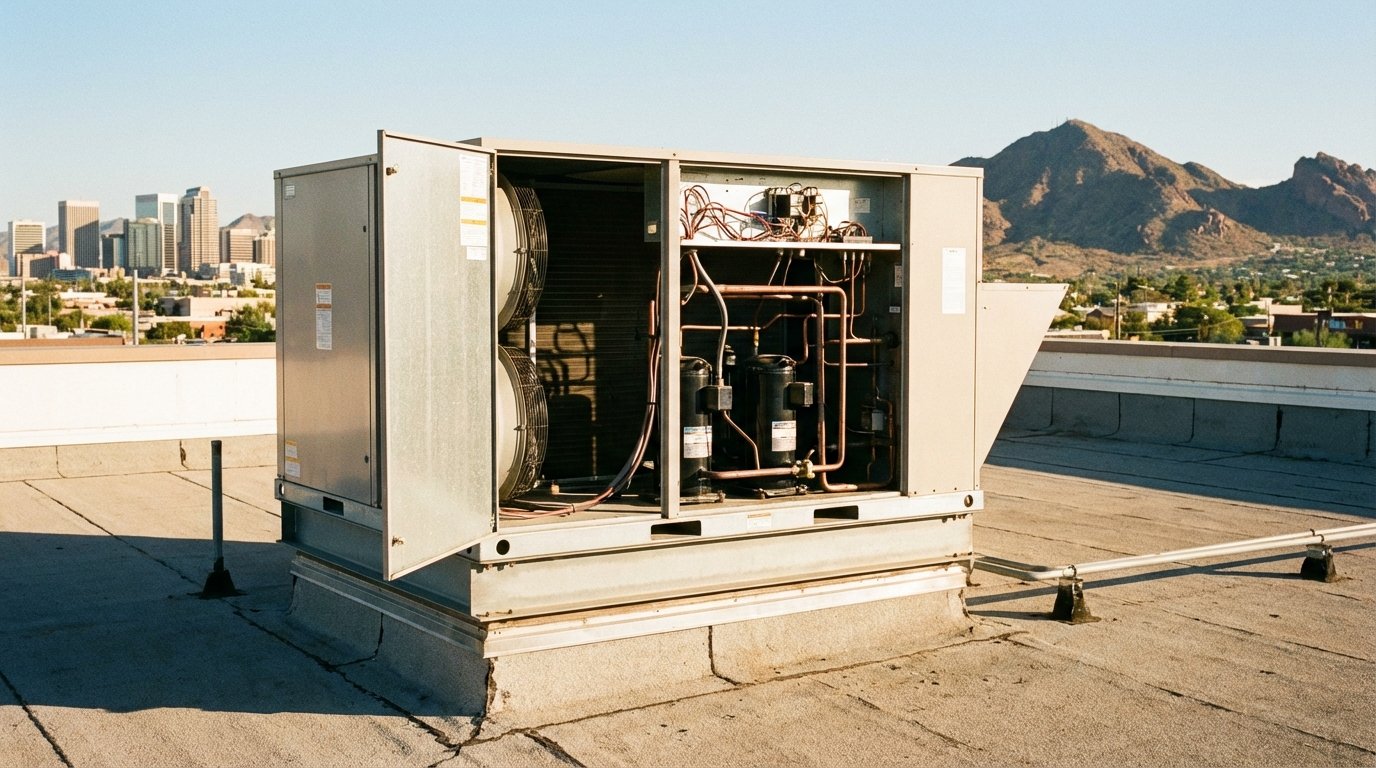
May: Capacitor and refrigerant check. May is when Phoenix homeowners start feeling real heat. Your system is about to go into sustained high-load operation. Have a professional check refrigerant pressure, test capacitors, inspect contactor points, and verify electrical connections.
Capacitors deserve special attention. A failing capacitor does not always announce itself. Your system might run fine in the morning and trip the breaker in the afternoon when ambient temperature rises. Phoenix HVAC companies see more capacitor failures in June and July than any other single issue. Capacitors are rated for certain operating hours at a certain temperature. Running continuously in 110-degree heat shortens their lifespan dramatically.
If your capacitor is more than five years old, ask whether replacement makes sense as preventive maintenance. The cost is $150 to $350. The cost of a July emergency call plus rushed replacement is significantly higher.
June: Condensate drain cleaning. June is when monsoon season sometimes starts early. Your condensate drain line is about to get tested. Pour a cup of distilled white vinegar down the drain line monthly from June through September. This kills algae and prevents slime buildup. If you live in a Phoenix home and the drain clogs, water starts leaking from ceiling vents, soaking insulation and creating mold risk in the ductwork.
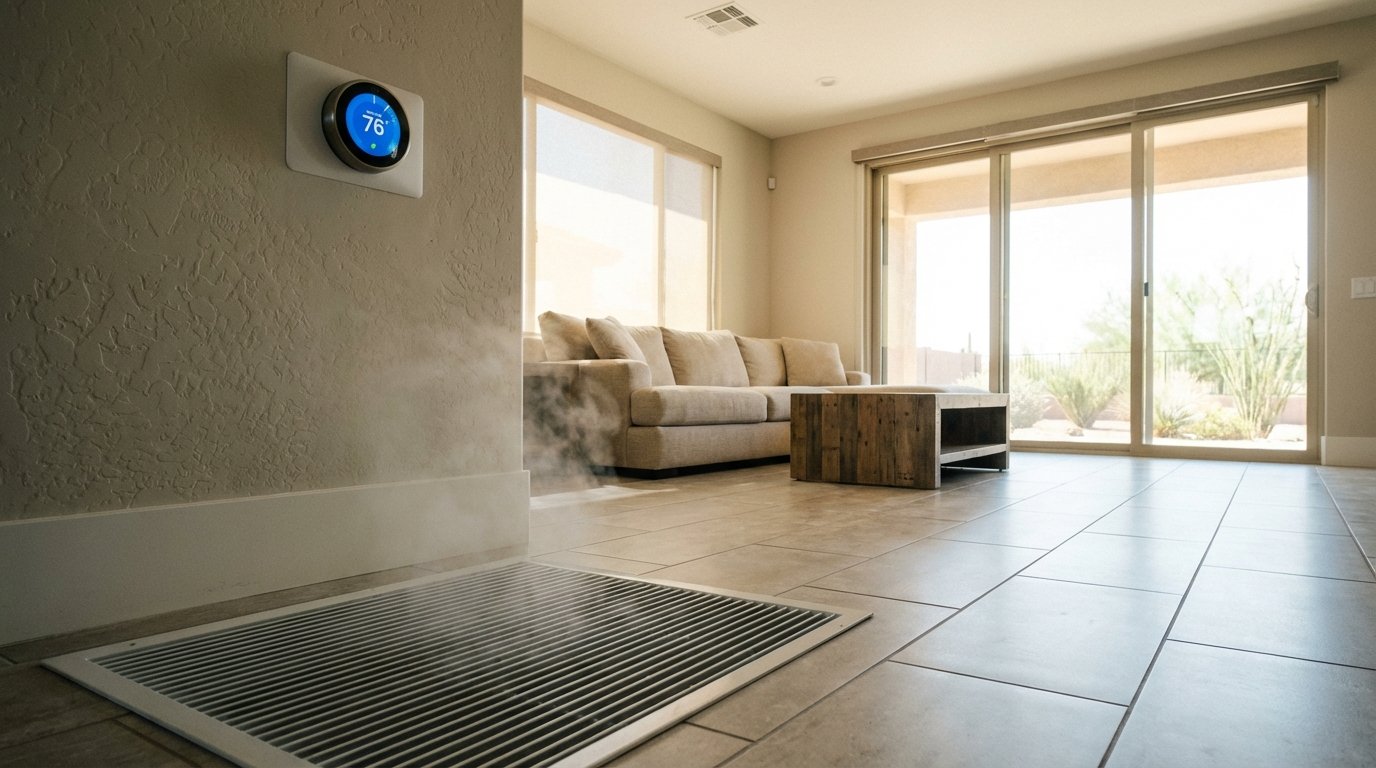
Also calibrate your thermostat in June. A thermostat that reads two degrees off causes your system to overwork.
Skip the dealer markup
See What a New AC Actually Costs
AC Rebel shows you the real equipment price — no sales pitch, no inflated quote. Get matched with a licensed installer and keep $3,000–$5,000 in your pocket.
Get My Direct Price →July and August: Monsoon Season Monitoring
July and August are peak cooling months and peak failure months. Your maintenance focus shifts from prevention to monitoring.
Weekly checks during monsoon season:
- Check the condensate drain line exit point for water flow while the system runs
- Listen for clicking sounds when the thermostat calls for cooling
- Look for ice on refrigerant lines or evaporator coil
- Verify your return air filter is not saturated with humidity-driven moisture
If your system is running but not cooling and you see ice on refrigerant lines, turn the system off at the thermostat and call a technician. Running a system with low refrigerant that is icing over damages the compressor. A compressor replacement in Phoenix runs $2,500 to $4,500 installed.
Keep the area around your outdoor condenser clear of monsoon debris. If your yard floods during a storm, check that water has not pooled around the unit pad.
September and October: Post-Summer Inspection
Once monsoon season ends, your system has been running hard for four to five months straight. September is the second most important month for a professional inspection.
What to have a professional check in September:
- Overall system condition after peak load
- Capacitor health
- Refrigerant level
- Evaporator coil and drain line patency
- Blower motor and belt condition
September catches issues while there is still time to schedule repairs at normal rates. October in Phoenix is still warm enough that you may need cooling. Waiting until October means risking a breakdown.
Review your maintenance log. If your electric bills spiked in July or August, consider whether capacitor testing in April could have prevented the efficiency loss. A system running on a weak capacitor draws 20 to 30 percent more electricity for the same cooling output.

Signs Your AC Needs a Professional
Call a professional if you notice ice on refrigerant lines, hissing or bubbling sounds from refrigerant lines, circuit breaker trips every time the unit starts, a burning smell when the system starts, water leaking from the indoor unit, the outdoor unit running while the indoor fan is not, or electric bills significantly higher than the same period last year.
If your system is low on refrigerant, a professional must find and repair the leak before recharging. If a technician offers to top off your system without investigating the leak, decline. You will be back for the same call within a month.
What Most Contractors Skip
Most contractors do not tell you what they skip, because homeowners do not ask.
Things routinely skipped on maintenance calls:
- Condensate drain line cleaning
- Capacitor testing
- Refrigerant leak checks
- Thermostat calibration
- Condenser clearance verification
Ask your contractor specifically whether they perform each of these tasks. If they do not clean the condensate drain line, hire someone who does. The drain line is the most common cause of emergency AC calls in Phoenix during July and August.
Key Takeaways
- Phoenix AC maintenance follows a different calendar than temperate-climate schedules. Start filter checks in February when dust season begins.
- Check filters monthly from February through October. Phoenix dust loads filters faster than standard schedules account for.
- Schedule professional tune-ups in April and September. May through September is peak load season.
- Clean condensate drain lines with distilled white vinegar every month June through September.
- Capacitor failure is the most common July and August breakdown cause. Ask your technician to test capacitors in May and September.
- Clear 24 inches of space around your outdoor unit.
- If your system shows ice on refrigerant lines, unusual electrical sounds, or water leaks, call a professional immediately.
Get your free instant AC quote at acrebel.com and see how much you save buying direct, without the dealer markup.
Frequently Asked Questions
Q: How often should I replace my AC filter in Phoenix?
Check your filter every month from February through October. Replace it at least every 60 to 90 days during normal dust season, and monthly during high-dust periods in spring and fall. If you live near construction areas or unpaved roads, monthly replacement is not excessive.
Q: Can I clean my AC condenser coil myself?
You can rinse the condenser coil with a garden hose, but a deep clean requires coil cleaner solution and a fin comb. If the coil is heavily caked with desert dust, a professional cleaning in April before peak season is worth the $120 to $200 cost.
Q: When should I schedule professional AC maintenance in Phoenix?
April and September are the two most important months. April catches problems before peak cooling season. September catches problems after five months of hard use. Booking in May or June means competing with emergency calls from broken systems.
Q: How do I unclog my AC condensate drain line?
Pour one cup of distilled white vinegar down the secondary drain line monthly from June through September. If the line is already clogged, a technician can clear it with a wet-dry vac or drain cleaning tool. Never use bleach.
Q: Does preventive AC maintenance actually extend system life?
Yes. The U.S. Department of Energy states that regular maintenance can extend an AC unit lifespan by 5 to 10 years in harsh climates. Phoenix heat, dust, and monsoon humidity make maintenance particularly impactful here.
Q: What is the most common AC failure in Phoenix during summer?
Capacitor failure is the most common breakdown cause during Phoenix summers. Capacitors degrade faster in extreme heat and sustained high temperatures cause them to fail earlier than rated lifespan. The second most common is clogged condensate drain lines during monsoon season.
Q: How much does a professional AC tune-up cost in Phoenix?
A standard tune-up runs $120 to $200. Emergency same-day service during summer months runs $250 to $450 for the same work. Compare that to a compressor replacement at $2,500 to $4,500 installed.
Sources: ENERGY STAR HVAC Maintenance Guide , U.S. Department of Energy AC Maintenance , EPA Clean Cooler Cities AC Efficiency
Ready to stop overpaying?
See Your Direct AC Price in 2 Minutes
Skip the dealer. Buy your AC unit at direct pricing and pay a vetted local installer only for the installation. No sales calls. No hidden markup. Most homeowners save $3,000–$5,000+ compared to a traditional quote.
Get My Direct Price — No Credit Card2-minute quote · Licensed installers · 10-year warranty options