Same Brands. Direct Pricing.Carrier · Lennox · Trane · Goodman · Rheem · Daikin
Phoenix HVAC Guide · Updated 2026
AC Replacement Cost in Phoenix: Real Numbers
Your AC died in July. It's 116°F. You don't have time to play games with three contractors and a bait-and-switch quote. Here's what a new system actually costs in the Phoenix metro — by tonnage, efficiency, and system type — so you can walk into any conversation knowing your numbers.
TL;DR
A standard 3-ton, 16-SEER split system with full installation in Phoenix runs $4,000–$5,000. A high-efficiency 4-ton, 18-SEER system runs $6,000–$8,500. These numbers include equipment, labor, permits, and old unit disposal — which many contractors quote separately to look cheaper upfront. In Phoenix's 9-month cooling season, upgrading efficiency typically pays back in 3–6 years through lower electric bills. SRP customers may also qualify for up to $675 in rebates on qualifying heat pumps.
What Actually Drives AC Cost in Phoenix
Before we get into numbers: AC pricing has three real variables. Everything else is noise.
Tonnage — how much cooling capacity you need (determined by your home size, insulation, and Arizona's solar load)
SEER rating — how efficiently it uses electricity (higher = lower monthly bills)
System type — split system, package unit (rooftop), or heat pump
Labor and permits are relatively fixed. Installation in the Phoenix metro typically runs $900–$1,400 regardless of which unit you pick. Permits add $250–$500 depending on your city. These shouldn't be quoted separately — they should be baked in.
AC Replacement Cost by Tonnage (Phoenix, 2026)
These are all-in numbers: equipment + installation labor + permits + old unit disposal. Prices reflect 2026 Phoenix market rates.
Tonnage
Typical Home Size
16 SEER (Good)
16–18 SEER (Better)
20–22 SEER (Best)
2 ton
800–1,100 sq ft
$2,800–$3,600
$3,500–$4,800
$5,000–$6,500
3 ton
1,100–1,800 sq ft
$3,500–$4,500
$4,400–$5,800
$6,200–$7,800
4 ton
1,800–2,500 sq ft
$4,200–$5,400
$5,200–$6,900
$7,200–$9,000
5 ton
2,500–3,500 sq ft
$5,000–$6,500
$6,200–$8,200
$8,500–$11,000
* All-in pricing including equipment, installation labor, city permit, and old unit disposal. Phoenix metro 2026 market rates. Prices vary by contractor, brand, and job complexity.
Why Tonnage Sizing Matters More in Phoenix Than Anywhere Else
The standard rule of thumb — 1 ton per 400–500 sq ft — gets dangerous in Phoenix. Here's why:
Arizona's solar load is brutal. A south or west-facing home in Chandler or Peoria absorbs significantly more radiant heat than a shaded home of identical square footage in, say, Charlotte. Old Tempe bungalows with original single-pane windows and minimal attic insulation routinely need 15–20% more tonnage than the square footage alone would suggest.
Undersizing is a slow disaster: the system runs continuously, can't pull the temperature down on 115°F days, burns out the compressor 3–5 years early, and your summer bills are still sky-high because the unit is maxed out. A properly sized system from a Manual J calculation costs the same to install and lasts years longer.
Always ask: “Did you do a Manual J load calculation?” If the answer is “we just replace it with the same size,” walk away. That's not sizing — that's hoping your previous installer was competent.
Cost by SEER Rating — And Why Efficiency Math Hits Different Here
SEER (Seasonal Energy Efficiency Ratio) is the miles-per-gallon for your AC. The federal minimum in Arizona is 15 SEER2 (~16 SEER). Every tier up cuts your cooling electricity usage by roughly 6–12%.
Here's the part that matters for Phoenix: you run your AC 9–10 months a year. Possibly around the clock from June through September. SRP customers regularly see $350–$500/month summer bills on a 2,000 sq ft home with an aging 10-SEER system. The ROI on efficiency upgrades is faster here than almost anywhere in the U.S.
Based on ~$0.13/kWh average and 14-hour daily runtime Jun–Sep
10 SEER (old system)
~$1,800/yr estimated cooling cost
$420–$500/mo
Replace it
16 SEER (Good tier)
~$1,000/yr estimated cooling cost
$230–$290/mo
Good start
16–18 SEER (Better tier)
~$870/yr estimated cooling cost
$200–$250/mo
Popular choice
20–22 SEER (Best tier)
~$680/yr estimated cooling cost
$155–$195/mo
Maximum savings
* Estimates only. Your actual costs depend on thermostat settings, home insulation, occupancy, and utility rate tier. SRP and APS use tiered/time-of-use rates that can significantly affect actual bills.
Good / Better / Best: What You Actually Get at Each Price Point
These aren't marketing categories — they represent meaningfully different hardware. Here's what changes at each tier:
Good Tier: $3,200–$5,000 installed (16 SEER)
Single-stage compressor. Turns on at 100%, runs until the thermostat is satisfied, shuts off. Reliable, proven technology. A good choice if you're renting the home, planning to sell soon, or budget is the primary driver. Will cool your house. Won't be quiet about it.
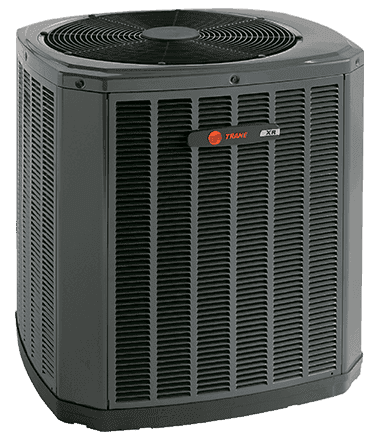
Brands in this tier: Carrier Performance, Lennox Merit, Trane XR13/14, Rheem Classic. 10-year manufacturer parts warranty standard.
Better Tier: $4,400–$8,200 installed (16–18 SEER)
Two-stage or variable-speed compressor. Runs at lower speed most of the time, only kicks to full capacity on the hottest days. Results: noticeably quieter, better humidity control (relevant during Phoenix monsoon season July–September), and meaningfully lower bills. This is the sweet spot for most Phoenix homeowners.
Also the tier that typically qualifies for SRP utility rebates ($225–$675 depending on tonnage) and federal 25C tax credits (up to $600 for AC, up to $2,000 for heat pumps).
Best Tier: $6,200–$11,000 installed (20–22 SEER)
True variable-speed inverter technology. Communicates with a smart thermostat and modulates continuously — 40% capacity, 65%, 100% — whatever the moment requires. The result is near-constant temperature, extremely low noise (comparable to a refrigerator hum), and the lowest operating costs achievable with current refrigerant-based technology.
Best tier units like the Lennox XC21, Carrier Infinity, or Trane XV20i are engineered for the long game: they're more complex, but when maintained properly, they regularly hit 20+ year lifespans. The payback math on a Best-tier system works well in Phoenix precisely because of the long cooling season.
System Type: Split System vs. Package Unit vs. Heat Pump
Split Systems (most Phoenix homes)
The standard two-piece setup: outdoor condenser pad (usually on the side of the house) + indoor air handler in the attic, garage, or mechanical closet. This is what most Phoenix homes built since 1985 have. Split systems offer the widest selection, best efficiency ceiling, and most competitive pricing.
Package Units (flat-roof homes and older builds)
Phoenix has a higher-than-average concentration of homes with package (rooftop) units — all-in-one boxes that sit on a flat roof or a concrete pad and connect to the duct system through the roof decking. Common in 1970s–1990s ranch homes and commercial buildings that got converted. Package units are generally 10–15% less efficient than split systems at the same price point, but if your home is designed for one, retrofitting to a split system costs $2,000–$4,000 extra in structural modifications. Usually not worth it unless the ductwork needs a full replacement anyway.
Package unit replacement: add $200–$500 to split-system prices for equivalent tonnage and SEER, reflecting crane/roof-access costs.
Heat Pumps (the efficiency and rebate choice)
A heat pump does everything a standard AC does in summer, and replaces your furnace in winter by running the refrigerant cycle in reverse. In Phoenix's mild winters — lows rarely below 32°F except at elevation — heat pumps work exceptionally well. They're 2–3x more efficient for heating than gas furnaces at moderate temperatures.
The rebate case for heat pumps is strong: SRP offers $75–$225/ton for qualifying heat pumps (vs. zero for standard AC replacement). The federal 25C tax credit caps at $2,000 for heat pumps vs. $600 for standard AC. If you're replacing an aging system and your home currently has a gas furnace, the math for going full heat pump is worth running seriously.
See your actual price
What Would This Cost for Your Phoenix Home?
Answer 8 questions about your home and get a real, itemized quote — equipment, labor, permits, and disposal included. No call required.
Installation Cost Breakdown: What You're Actually Paying For
The equipment is roughly 55–70% of your total cost. The rest is legitimate labor and compliance costs that should always be included in your quote. Here's what each line item actually represents:
Here's the part the HVAC industry doesn't advertise: the same Carrier or Trane unit that costs you $4,500 through a traditional contractor typically traveled through a chain that looks like this:
Traditional AC Supply Chain
Manufacturer
Carrier, Trane, Lennox
Distributor
Regional wholesale
+$400–800
Supplier
Local HVAC supply house
+$300–600
Contractor
Marks up 40–80%
+$800–2,000
You
Pay the full stack
$8,000–14,000
Direct-to-homeowner models skip 2–3 layers of markup. The equipment is identical — the path to your home is shorter.
This isn't about any contractor being dishonest. The markup is structural — it's how the industry is built. Every layer adds cost. The equipment that costs $900 at the manufacturer level arrives at your home with $3,000+ of margin stacked on top before a single wrench is turned.
Some platforms (AC Rebel is one) buy closer to the supply chain and pass that margin back as lower prices — while still using the same licensed local crews for installation. The unit is the same. The license is the same. The price is different because fewer hands touched the transaction.
Rebates Available to Phoenix Homeowners in 2026
Rebates in Arizona are utility-specific. Which utility you're on matters more than your city.
SRP (Salt River Project) — Active Rebates
SRP offers $75–$225 per ton for qualifying heat pump replacements. A 3-ton system qualifies for $225–$675 depending on efficiency tier. Heat pumps only — standard AC replacement doesn't qualify. Most East Valley and East Phoenix zip codes (852, 853, 857).
APS (Arizona Public Service) — No Equipment Rebates
APS does not currently offer rebates for AC or heat pump replacement. They have a Cool Rewards demand-response program ($85/year) and smart thermostat discounts at marketplace.aps.com, but nothing for new equipment installation. If someone quotes you an APS rebate on a new AC, they're either misinformed or you're misreading their Cool Rewards program.
Federal 25C Tax Credit — Stackable
The Inflation Reduction Act's 25C credit gives you 30% of equipment cost, capped at $600 for standard AC or $2,000 for heat pumps. Annual cap — you can use it every year you make a qualifying upgrade. No income limit. You claim it on your federal tax return. This stacks with any utility rebate you qualify for.
Rebate amounts are estimates. Programs change. Always verify directly with your utility before making purchasing decisions based on rebate amounts. Final rebate eligibility depends on your utility's current program requirements.
Phoenix-Specific Factors That Affect Your Quote
If you've gotten quotes that seem wildly different from each other, these factors are usually why:
Desert dust and coil cleaning
Phoenix dust is relentless. Condenser coils clog faster here than anywhere in the country. A dirty condenser runs 15–25% less efficiently and puts stress on the compressor. If your system is 10+ years old and has never had a professional coil cleaning, assume it's needed. Ask to see it done before you decide replacement vs. repair.
Hard water scale on refrigerant lines
Phoenix water hardness runs 200–300 ppm (very hard). Over time, mineral scale builds up where refrigerant lines are exposed to water spray or condensation. Not a structural concern, but worth a look during any installation inspection.
Monsoon preparation
The July–September monsoon season brings 40–60% humidity — abnormal for Phoenix, and a real comfort problem if your system isn't sized for latent heat removal. Higher-SEER systems with variable-speed compressors handle monsoon humidity significantly better than single-stage units because they run longer at lower capacity, which pulls more moisture out of the air.
Older home ductwork
Pre-1990 Phoenix homes frequently have undersized return air ducts, deteriorated flex duct, or original metal ductwork with unsealed joints leaking 20–30% of your conditioned air into the attic. No new AC unit will perform to spec in a home with leaky ducts. If multiple contractors have noted ductwork concerns, take it seriously. A duct pressure test (blower door + duct leakage test) costs $200–$400 and tells you definitively how bad it is.
Flat roofs and package units
Scottsdale, Tempe, and older Glendale neighborhoods have a concentration of homes with rooftop package units. Replacement requires either a crane or a specialized boom truck — add $200–$400 for crane access to any rooftop package unit replacement quote. This should already be included in any legitimate all-in quote.
When to Repair vs. Replace
The contractor's 5,000-rule is a reasonable starting point: if the repair cost × the unit age in years exceeds $5,000, replace it. A $400 repair on a 10-year-old unit: maybe repair. A $1,500 repair on a 14-year-old unit: replace.
In Phoenix specifically, the calculus tilts toward replacement earlier because of the extreme runtime hours. A Phoenix AC runs 2–3x the annual hours of a unit in a temperate climate. That 12-year-old unit has the equivalent wear of an 18-year-old unit in Denver. Compressors fail when pushed hardest — usually during July's first 115°F stretch.
Replace if any of these are true:
→System is 12+ years old (10+ if it's a package unit on a flat roof — those run hotter)
→SEER rating is under 12 and you have a long-term ownership horizon
→Multiple major repairs in the last 3 years
What to Ask Every Contractor Before Signing
Four questions that separate legitimate quotes from bait-and-switch operations:
Is the permit included? Arizona law requires a permit for AC replacement. It should be in the quote, not billed separately.
Did you do a Manual J load calculation? “We're just replacing it with the same size” is not an acceptable answer for a home where temperatures and ductwork may have changed.
What's the all-in price? Equipment + labor + permit + old unit disposal. Get it in writing before the truck arrives.
What warranty do you carry on labor? Manufacturer warranties cover the equipment. The installer is responsible for labor defects. One year minimum is standard; two years is better.
Bottom Line
A new AC in Phoenix costs $3,500–$8,500 for most homes — more for larger systems, high-efficiency tiers, or complex jobs with ductwork issues. The number you see in a quote should be the number on your invoice. If permits and disposal are listed separately, you're looking at a bait-and-switch pricing model.
In Phoenix's climate, the efficiency upgrade argument is unusually strong. You run your AC more than almost anyone in the country. The payback on a Better-tier system vs. a Good-tier system is typically 3–5 years — after which you're just saving money every month for the next 15+ years.
If you want a real, itemized number for your specific home without a sales call, AC Rebel's quote wizard walks through your home details and produces a line-item quote in about 4 minutes — equipment, labor, permits, and disposal, all in.
Frequently Asked Questions
Q: How much does AC replacement cost in Phoenix?
A full AC replacement in Phoenix runs $4,000–$5,000 for a standard 3-ton, 16-SEER split system with full installation. A high-efficiency 4-ton, 18-SEER system runs $6,000–$8,500. These numbers include equipment, labor, permits, and old unit disposal.
Q: What size AC do I need for my Phoenix home?
A rough starting point is 1 ton per 400–500 sq ft, but Phoenix's solar load, attic insulation quality, and window situation all affect this significantly. A proper Manual J calculation is the right answer — ask any contractor you're evaluating whether they perform one.
Q: Is high-efficiency (high SEER) worth it in Phoenix?
More so than almost anywhere. Phoenix runs AC 9–10 months per year. SRP and APS summer bills regularly hit $400+/month on older systems. Upgrading from 16 to 18 SEER can cut cooling costs 15–25%. The payback period in Phoenix is typically 3–6 years.
Q: Are SRP or APS rebates available for AC replacement?
SRP offers $75–$225/ton for qualifying heat pump replacements. APS has no AC or heat pump replacement rebates as of 2026 — only a $85/year demand-response program and smart thermostat discounts. The federal 25C tax credit is available to all homeowners: 30% of cost, capped at $600 for AC or $2,000 for heat pumps.
Q: Should I replace the air handler (indoor unit) at the same time?
Usually yes, especially if the indoor unit is 10+ years old or close in age to the outdoor unit. Mismatched systems lose efficiency, may void warranties, and often don't qualify for utility rebates. The incremental labor cost of replacing both units in one visit is minimal.
Get Your Phoenix AC Quote
Equipment + labor + permits + disposal — all in one number. No call required.