
AC Replacement Cost in Buckeye, AZ (2026 Real Numbers)

AC Replacement Cost in Buckeye, AZ (2026 Real Numbers)
TL;DR: A full AC replacement in Buckeye, AZ runs $7,200–$13,500 installed, depending on system size and brand tier. Most Buckeye homes (1,800–2,800 sq ft in the newer master-planned communities) land on a 3-ton or 4-ton system, putting the typical installed cost at $8,000–$10,500. The fastest-growing city in America deserves straight answers — not the vague "it depends" you'll get from every contractor who hasn't quoted you yet.
Buckeye is on fire. Not just in July when it's 114°F — but as a city. The fastest-growing city in America has added tens of thousands of homes in neighborhoods like Verrado, Sun City Festival, and Tartesso. Which means a lot of Buckeye homeowners are somewhere between "just moved into a new build with a builder-grade AC" and "this 10-year-old unit is starting to struggle."
Either way, you'll face the same conversation: a contractor shows up, looks at your unit, and gives you a number between $8,000 and $14,000 with almost no explanation of where that figure came from.
Here's the breakdown.
What AC Replacement Actually Costs in Buckeye
These are total installed costs — unit + labor + permits + refrigerant charge. They assume a standard replacement (same location, existing ductwork in usable condition, no major electrical panel work needed).
| System Size | Home Size | Good Tier | Better Tier | Best Tier |
|---|---|---|---|---|
| 3-ton | ~1,600–2,200 sq ft | $7,200–$8,500 | $8,800–$10,200 | $10,500–$12,500 |
| 4-ton | ~2,200–3,000 sq ft | $8,200–$9,500 | $9,800–$11,500 | $12,000–$14,000 |
| 5-ton | ~3,000–3,800 sq ft | $9,500–$11,000 | $11,500–$13,500 | $13,500–$16,500 |
Most Buckeye homes in Verrado and Sun City Festival land in the 3-ton or 4-ton range. If you're in one of Buckeye's older neighborhoods west of Yuma Road, you might have a smaller footprint — or an older unit that's a different size entirely.
What drives the difference between Good, Better, and Best:
- SEER rating — Good tier starts at 15–16 SEER2. Better gets into 17–18. Best is 18–20+ SEER2, which cuts your SRP or APS summer bill noticeably over time.
- Brand tier — Lennox and Carrier flagship lines run more than Payne, Ruud, or private-label units. Performance differences at the top end are real but modest. At the bottom end, brand matters more for warranty support.
- Variable speed vs. single stage — Budget units are single-stage (full blast or off). Variable speed systems modulate to match load, which is quieter, more efficient, and better at humidity control — relevant during Buckeye's monsoon season.
Why Buckeye Is Different From the Rest of the Valley
Buckeye isn't Mesa or Chandler — and that changes a few things about your AC situation:
Newer housing stock. The majority of Buckeye's growth is post-2010. That means newer homes often have better insulation, tighter building envelopes, and ductwork designed for modern systems. Good news: fewer "gotchas" when replacing. A standard swap is usually just that.
Package units are common. Many Buckeye homes — especially single-story ranch homes in master-planned communities — run rooftop package units instead of split systems. The replacement cost is in the same ballpark, but the equipment is different. Make sure any quote you get specifies which system type they're pricing.
Distance from the valley core. Some HVAC contractors charge a trip fee for west Buckeye. It's rare but worth asking upfront. Most established companies serving Avondale, Goodyear, and Litchfield Park will include Buckeye in their service area without surcharges.
Summer here hits different. Buckeye consistently ranks among the hottest cities in the Valley — because it's farther from any moderating urban heat island effect near the core. Highs above 112°F in July and August are normal. An undersized system or an old low-efficiency unit won't just run your bill up — it won't keep up with the load on the worst days.
The Markup You're Not Seeing
Here's the thing most Buckeye homeowners don't know: a large chunk of what a traditional contractor quotes you isn't for the equipment or the labor. It's channel markup.
The traditional supply chain looks like this: Manufacturer → Distributor (+10%) → Dealer (+15%) → Contractor (+40%)
By the time that unit gets quoted to you, the retail markup can add $3,000–$5,000+ to what the unit actually costs. The contractor's margin on equipment is often higher than their margin on labor.
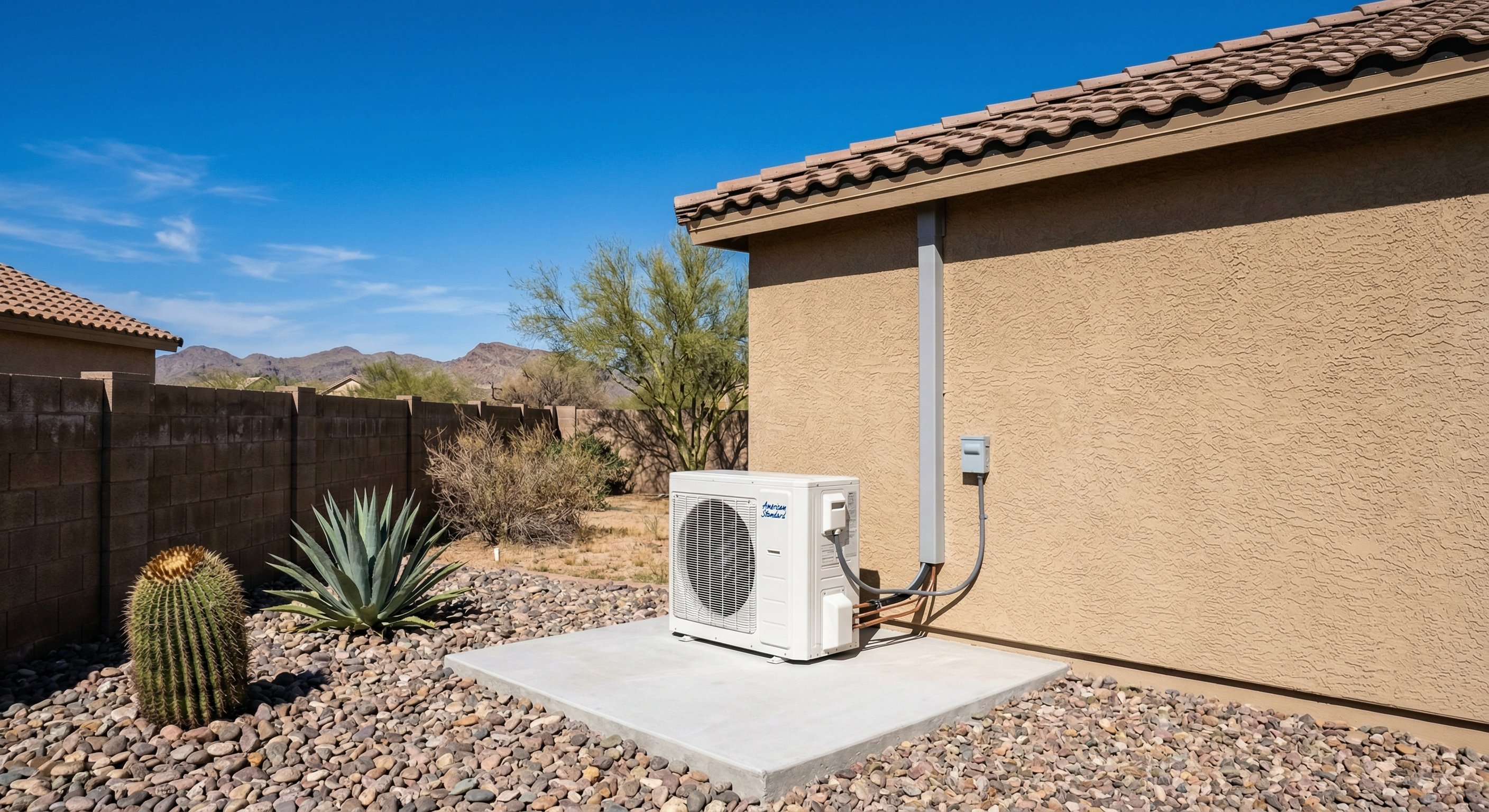
That's the model AC Rebel was built to disrupt. Homeowners can browse units at direct pricing — what you'd pay without three layers of markup — then get connected with a vetted local installer who does the actual work. The installer makes money on labor (fair), and you stop funding everyone else's margin on equipment you could have bought differently.
If you've gotten a contractor quote in Buckeye recently that seemed high, this is usually why.
Skip the dealer markup
See What a New AC Actually Costs in Buckeye, AZ
AC Rebel shows you the real equipment price — no sales pitch, no inflated quote. Get matched with a licensed installer and keep $3,000–$5,000 in your pocket.
Get My Direct Price →What to Actually Ask When Getting Quotes
When you get a quote in Buckeye, these are the questions that separate good contractors from ones who'll give you the runaround:
1. What's the make and model number? If they won't tell you, that's a red flag. You should be able to look up the unit online and understand what you're buying. Vague answers like "top-of-the-line Carrier" without a model number means they don't want you comparison shopping.
2. What SEER2 rating are you quoting? In Arizona, 15 SEER2 is the federally mandated minimum as of 2023. Anything lower is outdated equipment. For Buckeye's extreme summers, 17–18 SEER2 often pays back the premium in 4–6 years on your SRP or APS bill.
3. What size are you recommending, and why? A proper Manual J load calculation takes your home's square footage, insulation, window placement, orientation, and ceiling height into account. If a contractor gives you a size recommendation after a 2-minute phone call, they guessed. Buckeye's newer homes are generally well-insulated, so don't assume you need the biggest unit — oversized systems short-cycle and wear out faster.
4. Is this a split system or a package unit? Know which one you have. Many Buckeye homes with flat roofs use rooftop package units. If you have a split system (condenser outside, air handler in garage or attic), that's a different replacement.
5. What's included in labor? Standard replacement should include: removing the old unit, installing the new one, vacuum and refrigerant charge, startup and testing. Ask what's NOT included — ductwork, electrical, permits — so you're not surprised.
Financing a New AC in Buckeye
A $9,000–$11,000 AC replacement isn't a small number for most families. Here's what your options look like:
GreenSky financing — Payments can start as low as $47–$87/month depending on the system tier and loan term. Available through AC Rebel's checkout. This is deferred-interest financing, so paying it off early matters.
Manufacturer rebates — Carrier, Trane, Lennox, and others often run seasonal rebates through authorized dealers. These are typically $100–$500 and require the unit to be installed by a certified contractor. Worth asking about.
APS and SRP efficiency rebates — Both major utilities offer rebates for upgrading to higher-efficiency systems. SRP's current rebate program offers up to $200–$500 for qualifying 16+ SEER2 units. APS has a similar program. These change annually — check both utility websites before you buy.
Home equity / HELOC — If you have equity in your Buckeye home (and many Verrado and Sun City Festival owners do, given the appreciation), a HELOC often carries lower interest than HVAC financing. Worth the comparison.
When Repair Stops Making Sense
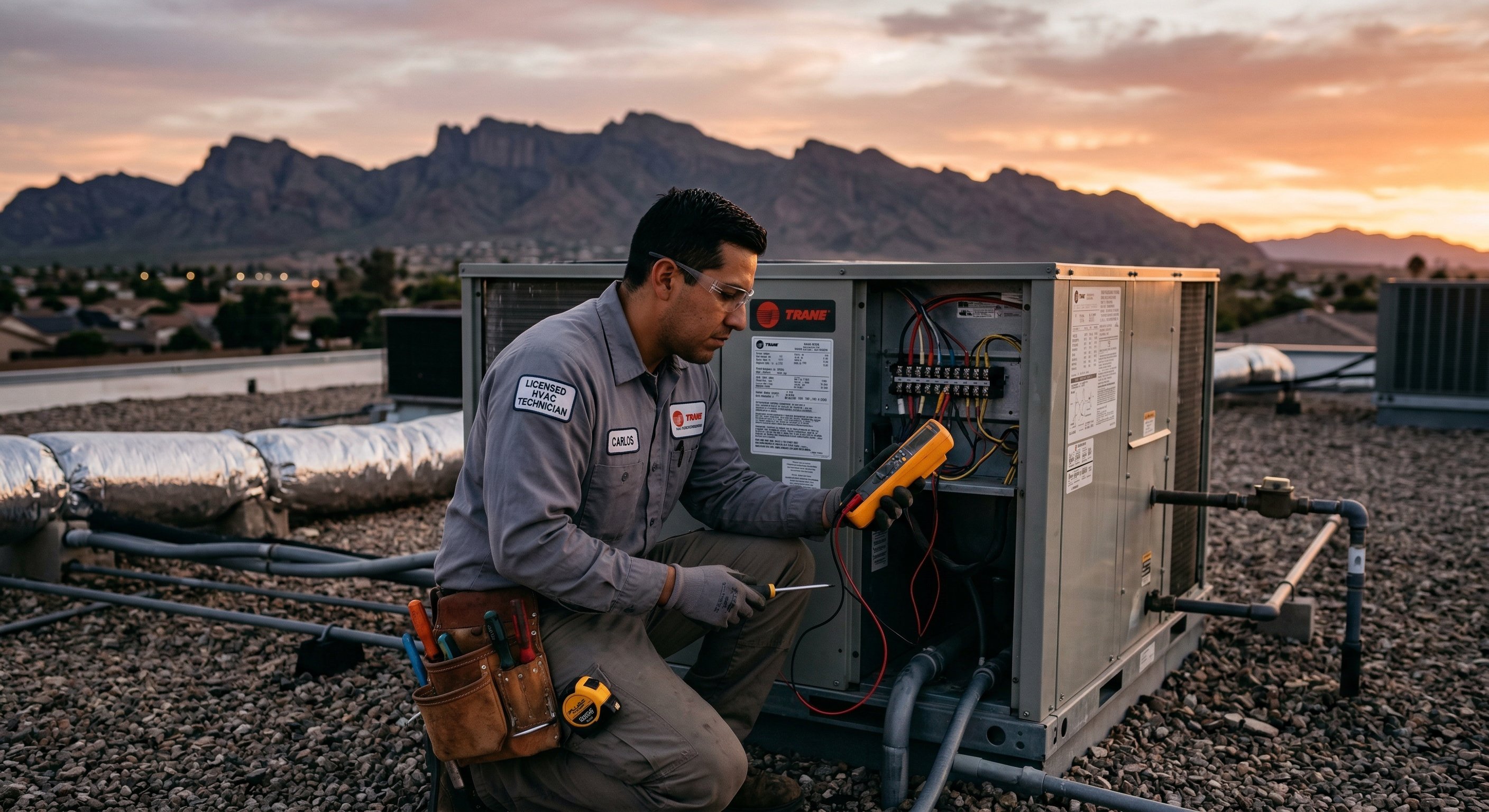
Buckeye's growth means a lot of homes have 8–12 year old units — right in the window where the repair vs. replace decision gets interesting.
Use the 5,000 rule: multiply the repair cost by the system age in years. If that number exceeds $5,000, replace. A $700 compressor repair on a 9-year-old unit is $700 × 9 = $6,300 — replace. A $200 capacitor on a 9-year-old unit is $200 × 9 = $1,800 — repair.
One exception: if your system uses R-22 (Freon), the calculus changes. R-22 was phased out in 2020. What's left in the supply chain is recycled refrigerant running $50–$150 per pound, and most older systems need 2–5 pounds to recharge. A $400+ refrigerant charge on a 12-year-old R-22 system is almost always money you won't recoup. That's your signal to replace.
The Right Time to Buy in Buckeye
In the Phoenix metro, every HVAC contractor has the same two seasons: slammed (May–August) and available (September–April).
You're reading this in early March. That's your window.
The difference between an off-season replacement and an emergency July replacement isn't small. In peak season, you're competing with hundreds of Buckeye and Goodyear homeowners whose AC just died in 110°F heat. Lead times stretch. Contractors get selective. Emergency pricing is real — not necessarily because contractors are gouging you, but because their schedule has zero slack.
A spring replacement gets you first pick of installation slots, normal pricing, and the unit fully tested before the heat arrives.
See what a 3-ton or 4-ton system costs at direct pricing — before the summer markup season hits. AC Rebel shows you the actual unit cost (not the contractor's retail price) so you know what you're working with before anyone shows up at your door. Get a free quote in 2 minutes at AC Rebel.

Buckeye's Fastest-Growing Neighborhoods: AC Notes
Verrado — Newer homes (mostly post-2005) with tighter envelopes. Many 3-ton systems here. If your home is under 15 years old, ductwork is probably in good shape. Standard replacement is usually straightforward.
Sun City Festival — Active-adult community with homes ranging from 1,400–2,200 sq ft. Many on the smaller end of the 3-ton range. Rooftop package units are more common here due to the home designs.
Tartesso — Newer master-planned community, 2010s construction. Expect 4-ton systems on the larger floor plans. Similar to Verrado in terms of building quality.
West Buckeye / older core — Homes from the 1980s–1990s with potentially older ductwork, smaller load calculations, and R-22 systems. If you're here, factor a ductwork inspection into your quote process.
Frequently Asked Questions
How much does AC replacement cost in Buckeye, AZ?
A full AC replacement in Buckeye runs $7,200–$13,500 installed, depending on system size (3-ton to 5-ton) and efficiency tier. Most Buckeye homes need a 3-ton or 4-ton system, which lands at $8,000–$11,500 for mid-range units. These numbers include the unit, labor, permits, and refrigerant.
What size AC do I need for my Buckeye home?
Most Buckeye homes in the 1,600–2,200 sq ft range need a 3-ton system. Homes from 2,200–3,000 sq ft typically need 4 tons. A proper Manual J calculation from your HVAC contractor confirms the right size — oversized units short-cycle and cause humidity issues, especially during monsoon season.
What SEER rating should I get in Buckeye, AZ?
Minimum is 15 SEER2 (federal requirement as of 2023). For Buckeye's extreme summers, 17–18 SEER2 typically pays back in 4–6 years through lower SRP or APS bills. High-efficiency 20+ SEER2 makes sense for large homes or people planning to stay 10+ years.
Is it better to repair or replace my AC in Buckeye?
Use the 5,000 rule: repair cost × system age in years. Under $5,000 = repair. Over $5,000 = replace. If your system uses R-22 refrigerant, replace regardless of age — R-22 is scarce and expensive, and repair costs rarely make sense.
Does AC Rebel work in Buckeye, AZ?
Yes. AC Rebel connects Buckeye homeowners with vetted local contractors for installation, while letting you buy the unit at direct pricing. The platform covers the full Phoenix metro including Buckeye, Goodyear, and west Valley cities.
AC costs listed are 2026 estimates based on Phoenix metro market data. Actual costs vary based on home characteristics, site conditions, and contractor pricing. Always get 3 quotes before committing.
Ready to get a real AC price for your Buckeye, AZ home?
AC Rebel quotes are direct-to-homeowner with no contractor markup.
See Buckeye, AZ Pricing →Ready to stop overpaying?
See Your Direct AC Price in 2 Minutes
Skip the dealer. Buy your AC unit at direct pricing and pay a vetted local installer only for the installation. No sales calls. No hidden markup. Most homeowners save $3,000–$5,000+ compared to a traditional quote.
Get My Direct Price — No Credit Card2-minute quote · Licensed installers · 10-year warranty options