AC Replacement Cost in Chandler, AZ (2026 Real Numbers)
AC Replacement Cost in Chandler, AZ (2026 Real Numbers)
TL;DR: A full AC replacement in Chandler, AZ typically runs $7,000–$13,500 installed, depending on system size, efficiency rating, and brand. Most Chandler homes (1,800–2,600 sq ft) land between $8,000–$10,500 with a standard split system. The biggest variable most homeowners don't control: the dealer markup, which adds $2,500–$5,000 to almost every traditional contractor quote before you've even picked a unit.
If your AC just quit in Chandler, you have roughly 12–18 hours before the inside of your house becomes genuinely dangerous. That's not an exaggeration — on a 110°F June afternoon, an un-cooled home hits dangerous indoor temps inside of a day. So let's skip the fluff and get straight to what this is going to cost you, and what actually moves that number.
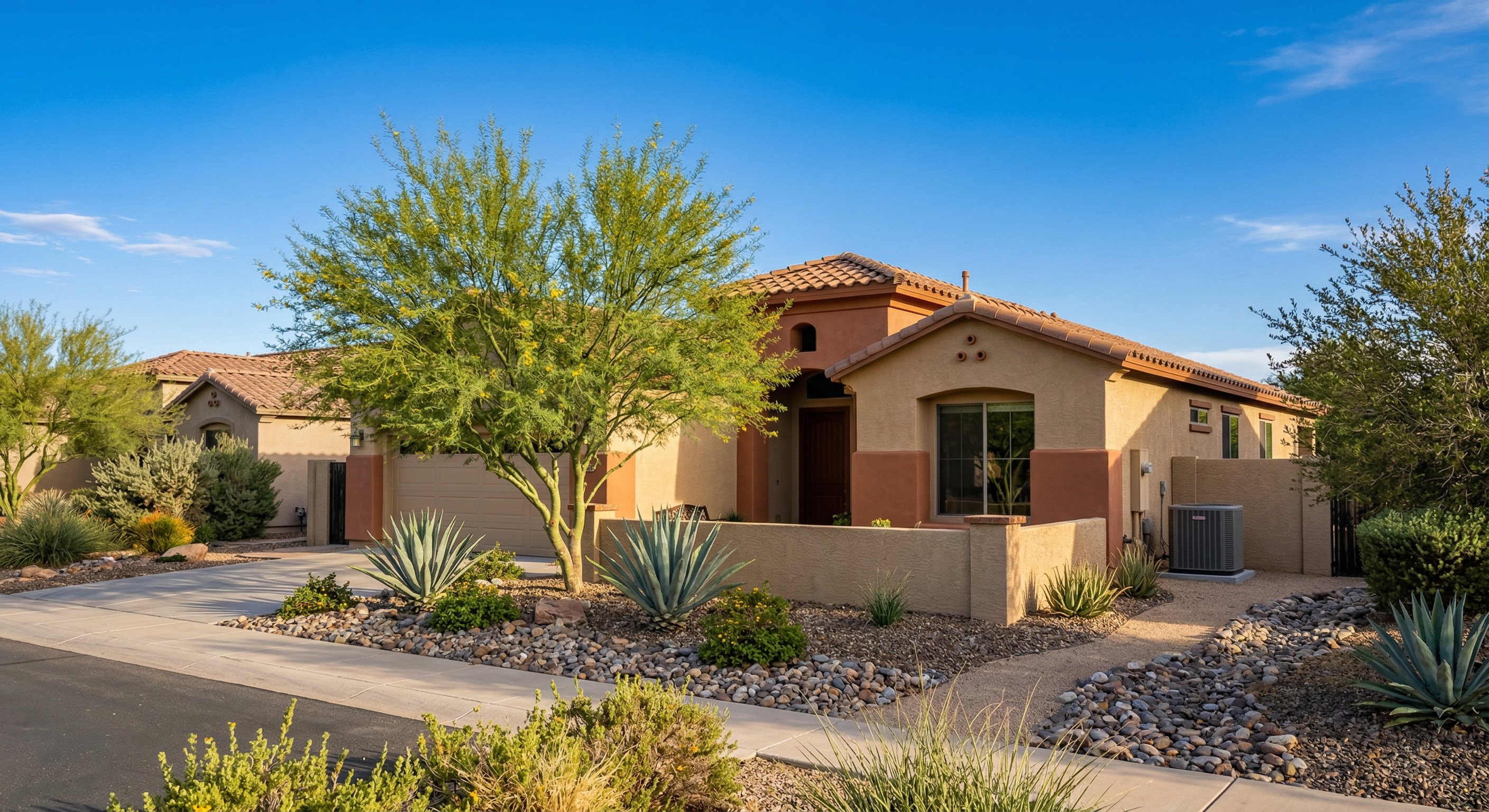
What AC Replacement Actually Costs in Chandler in 2026
Here's the honest breakdown. These are all-in installed prices — unit plus labor plus refrigerant plus permits (Chandler requires permits for system replacements; budget $150–$350 for that).
| System Type | Home Size | Installed Cost Range |
|---|---|---|
| 3-ton split system (14–16 SEER2) | 1,400–1,800 sq ft | $7,000–$9,000 |
| 3.5-ton split system (14–16 SEER2) | 1,800–2,200 sq ft | $7,800–$10,000 |
| 4-ton split system (14–16 SEER2) | 2,200–2,800 sq ft | $8,500–$11,000 |
| 4-ton split system (18–20 SEER2) | 2,200–2,800 sq ft | $10,500–$13,500 |
| 5-ton split system (14–16 SEER2) | 2,800–3,500 sq ft | $10,000–$13,000 |
| Package unit (rooftop, 3–5 ton) | Any | $8,000–$12,500 |
Most Chandler homes — the master-planned subdivisions in Ocotillo, Fulton Ranch, Sun Lakes, and newer Dobson Ranch builds — run between 1,800 and 2,600 square feet. That puts the typical replacement squarely in the $8,500–$11,500 range. If you're getting quoted significantly outside that window, something is driving it up (or down) and you should ask exactly what.
Why Chandler Has Its Own Cost Reality
Chandler isn't Phoenix. It's not Scottsdale. The cost dynamics here are shaped by a few specific factors:
1. The homes are newer, which helps — until the ductwork doesn't match. A lot of Chandler was built in the 1990s–2000s during the big Valley expansion. Those systems are hitting their 15–20 year end of life right now. The good news: newer construction typically has better ductwork sizing than older central Phoenix homes. The bad news: if your original system was undersized (common in builder-grade tract homes), your contractor might try to upsize — that's legitimate if true, but always get a Manual J calculation to verify.
2. Summer demand spikes the labor rate. In June, July, and August, HVAC contractors in Chandler are running at full capacity. That means labor rates go up — some contractors charge 10–20% more during peak season — and the timeline for installation stretches from next-day to sometimes a week out. If you're in emergency mode, that's leverage lost. Replacing your system in March (like right now) gets you better pricing, faster scheduling, and a contractor who isn't rushing your install between three other emergency calls.
3. The east Valley has above-average dust and hard water. Chandler sits near agricultural land and bare desert — more particulate in the air than Scottsdale's northern corridors. That means coils clog faster, filters need more frequent changing, and systems work harder to maintain setpoints. Reliability matters here. Systems with poor heat exchanger construction fail faster in this environment.
What's Driving Your Quote Up
If you got a quote north of $12,000 for a standard Chandler home, one of these is probably in it:
- High-efficiency system (18+ SEER2): Legitimate for energy savings if you're staying in the house long-term. Do the math: a 4-ton upgrade from 14 to 19 SEER2 saves roughly $300–$500/year on APS bills. That's a 5–8 year payback on the premium. Worth it if you're staying; less clear if you're selling in 3 years.
- Ductwork repair or replacement: If your ducts are leaking (common in older Chandler homes), fixing them adds $1,500–$4,000 but is often worth it — leaky ducts can waste 20–30% of conditioned air.
- Electrical panel upgrade: Older homes on Dobson or Rural Road corridors sometimes need a panel upgrade to handle a modern system. That's $1,500–$2,500 additional.
- Dealer markup: This is the big one. The traditional quote structure — manufacturer to distributor to supplier to contractor to you — adds 2–3x markup on the equipment itself. The unit your contractor installs might be $2,800 wholesale. By the time it's on the truck, the markup can push that to $5,000–$7,000 before labor.
Skip the dealer markup
See What a New AC Actually Costs in Chandler, AZ
AC Rebel shows you the real equipment price — no sales pitch, no inflated quote. Get matched with a licensed installer and keep $3,000–$5,000 in your pocket.
Get My Direct Price →What Should Actually Be in Your Quote
Ask for a line-item breakdown. You want to see:
- Equipment cost (unit model, make, and SEER2 rating)
- Labor (installation, removal of old unit)
- Refrigerant charge
- Electrical disconnect/whip upgrade if needed
- City of Chandler permit fee
- Warranty terms
Any contractor who won't give you this breakdown is hiding something. Usually the equipment margin.
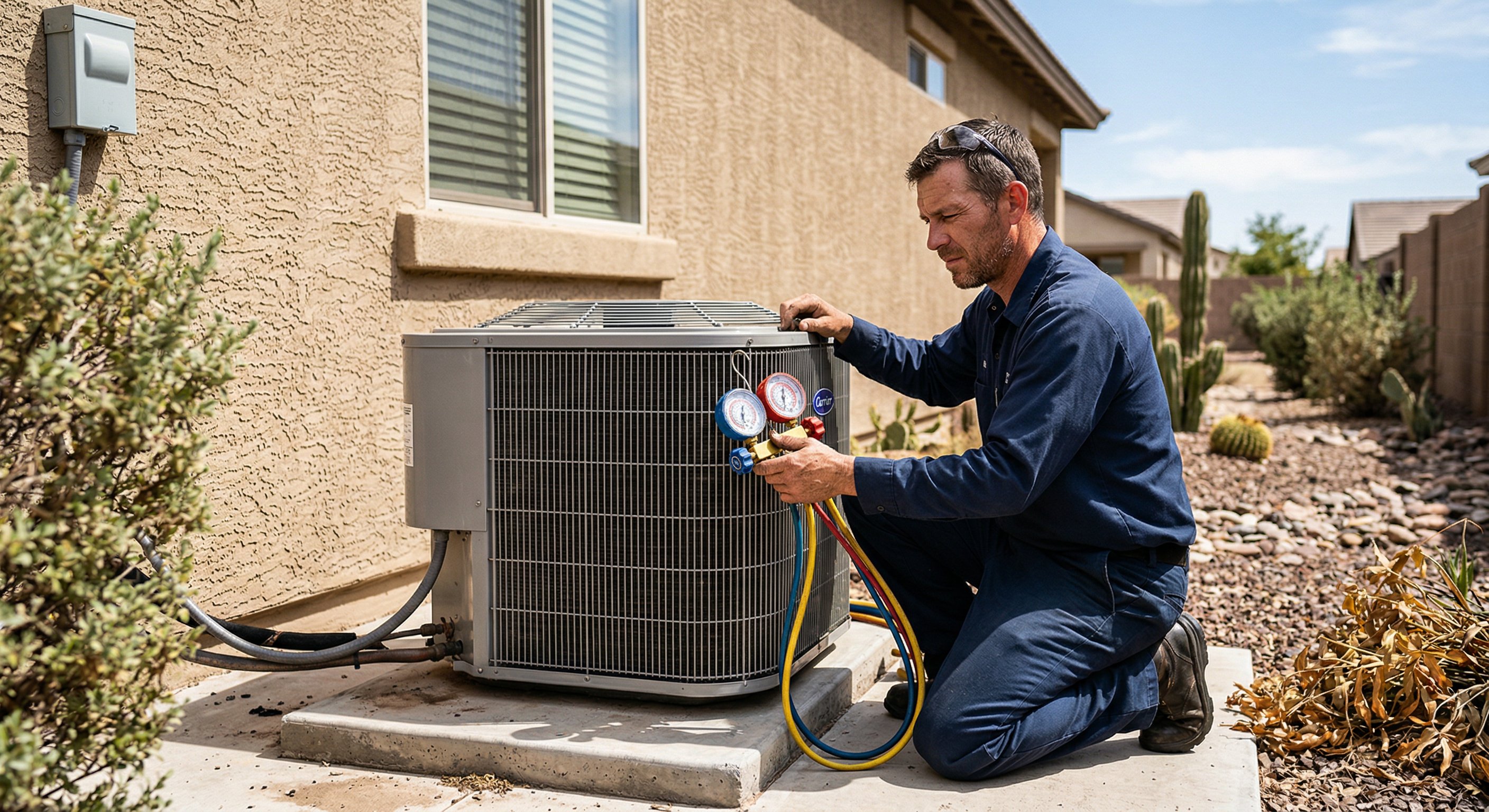
The Markup Problem Is Real — and Bigger Than You Think
Here's how the traditional HVAC supply chain works in Chandler:
Manufacturer → Distributor (+10–15%) → Supplier (+15–20%) → Contractor (+35–50%) → You
That means a Carrier 3-ton unit with a manufacturer cost of roughly $1,800–$2,200 can arrive on your final invoice marked up to $4,500–$6,000 — before a single hour of labor. That's not fraud. That's just how the traditional industry is structured. Every link in the chain takes a margin.
The contractor isn't doing anything wrong — they built their business model around equipment margin, and labor is where they make the real money. But you're the one paying for it.
Most homeowners don't know that buying the equipment separately — at direct pricing closer to wholesale — and paying a licensed installer labor-only is even an option. That's exactly how AC Rebel works: you buy the unit at near-direct pricing, then we connect you with a vetted Chandler-area installer for the labor portion. The difference on a 4-ton system can be $2,500–$4,000 out of your pocket.
See direct pricing on AC units for Chandler homes → acrebel.com
How to Size Your System Right
Wrong sizing is one of the most expensive mistakes in HVAC. Too small, and your system runs constantly and still can't cool the house on 115°F days. Too large, and it short-cycles — cooling the air without removing enough humidity, leaving you with a clammy, inefficient house and a compressor that wears out prematurely.
The correct approach is a Manual J load calculation — an actual engineering assessment of your home's heat gain based on square footage, insulation levels, window placement, roof type, and local climate data. Any reputable contractor will do this. If someone's quoting you based purely on square footage without seeing the house, that's a flag.
General Chandler sizing guidelines (verify with Manual J):
- 1,200–1,600 sq ft: 2.5–3 ton
- 1,600–2,200 sq ft: 3–3.5 ton
- 2,200–2,800 sq ft: 3.5–4 ton
- 2,800–3,500 sq ft: 4–5 ton
- 3,500+ sq ft: 5 ton or multi-zone
Single-story homes in Chandler almost always run hotter than multi-story (more roof exposure per square foot). Add about 0.5 tons to your sizing estimate if you're single-story with a west-facing exposure and minimal attic insulation.

SEER2 — What Rating Makes Sense in Chandler
Arizona switched to the SEER2 standard (updated testing methodology) in 2023. The minimum allowed is now 14.3 SEER2 for split systems in the Southwest. That's the floor, not the ceiling.
For Chandler specifically:
- 14–15 SEER2: Budget-conscious, makes sense if you're selling in 1–3 years or working with a tight cash budget
- 16–17 SEER2: Sweet spot for most homeowners — meaningful efficiency gains, reasonable price premium, ~3–5 year payback on energy savings vs. 14 SEER2
- 18–21 SEER2: Worth it if you run APS bills over $400/month in summer, planning to stay 7+ years, or qualify for the federal 25C tax credit (up to $600 for qualifying high-efficiency systems)
The federal Inflation Reduction Act tax credits for HVAC are still active in 2026. If your new system qualifies (typically 16+ SEER2 with certain heat pump configurations), you can claim up to $600 back on your federal return. Your contractor should be able to tell you if a specific unit qualifies.
What to Do If It's an Emergency
Your AC died today. It's 108°F. Here's the fastest path through:
- Don't panic-sign the first quote you get. Even a 30-minute price check can save you $2,000+.
- Get at least 2 quotes — even in emergency mode, most Chandler contractors can give you a number over the phone with your model info.
- Ask for next-day installation explicitly — some contractors hold emergency slots. If they quote you a week out, call the next one.
- Consider portable or window units for the interim — $300–$500 buys you 48 hours to think without sweating out every decision.
- Check financing before you commit — GreenSky and similar HVAC financing programs can turn an $8,000 bill into payments you can handle. Many contractors offer it, or you can arrange it independently.
Financing a Chandler AC Replacement
You don't have to pay $8,000–$11,000 upfront. Most Chandler homeowners replace AC systems on financing:
- GreenSky: Commonly offered by HVAC contractors, 12–60 month terms, rates vary by credit score
- Personal loan: If you have good credit, personal loan rates can beat contractor-arranged financing
- Home equity: If you have equity and time (not ideal for emergency replacement), HELOC rates can be lower than unsecured options
- Manufacturer promotions: Carrier, Trane, Lennox all run 0% financing promotions seasonally — usually spring and fall
- AC Rebel financing: Payments as low as $47–$87/month depending on system size and term
The key rule: don't let financing pressure push you into a more expensive system than you need. A 14 SEER2 on a 60-month plan beats a 19 SEER2 you can't comfortably afford.
The Bottom Line on Chandler AC Replacement
Most Chandler homeowners replace AC units every 12–15 years (yes, shorter than the national average — Phoenix heat is harder on equipment than Ohio summer). You'll likely do this 2–3 times in a given home. Which means the markup structure isn't a one-time problem — it compounds.
The average Chandler household overpays $2,500–$4,500 on each replacement when going through a traditional contractor chain. Over two replacements, that's real money.
Understanding what's in your quote — and what's markup — is the only way to push back intelligently. Get the line-item breakdown. Verify the sizing recommendation. And know that buying the unit at direct pricing and paying labor-only is an option, not a secret.
Ready to see what a Chandler-area replacement actually costs without the dealer markup? Get your free quote in 2 minutes on AC Rebel — real unit pricing, vetted installers, no runaround.
Frequently Asked Questions
Q: How much does AC replacement cost in Chandler, AZ in 2026?
Most Chandler homeowners pay between $8,000 and $11,500 for a full central AC replacement with a standard split system. Smaller homes (under 1,600 sq ft) can land closer to $7,000, while larger homes with high-efficiency systems can exceed $13,000. Permits, ductwork condition, and whether you're replacing just the condenser or the entire system all affect the final number.
Q: What size AC unit do I need for a Chandler home?
Most Chandler homes between 1,800–2,600 sq ft need a 3.5- to 4-ton system. Single-story homes with high roof exposure often need more capacity than the square footage alone suggests. A proper Manual J load calculation from your installer is the only accurate way to determine the right size — shortcuts based on square footage alone regularly result in undersized or oversized systems.
Q: How long do AC units last in Chandler?
Expect 12–15 years for a well-maintained system in Chandler. That's shorter than the national average of 15–20 years — extreme heat, desert dust, and monsoon humidity put more stress on HVAC equipment than most US climates. Regular filter changes, annual coil cleaning, and shade for the outdoor unit extend lifespan.
Q: Is it better to repair or replace my AC in Chandler?
Use the 5,000 rule: multiply the unit's age by the repair cost. If the result exceeds $5,000, replacement is almost always the better investment. An 11-year-old system needing a $600 repair (11 × $600 = $6,600) is approaching the zone where replacement makes more financial sense — especially with newer units offering significantly lower energy costs.
Q: When is the best time to replace AC in Chandler?
Winter and early spring (November through March) are the best times. Contractors are less busy, often offering off-season pricing, and installation schedules are shorter. Replacing in March before the summer heat wave hits also gives you peace of mind heading into the highest-demand months. Emergency summer replacements cost more in both price and stress.
Ready to stop overpaying?
See Your Direct AC Price in 2 Minutes
Skip the dealer. Buy your AC unit at direct pricing and pay a vetted local installer only for the installation. No sales calls. No hidden markup. Most homeowners save $3,000–$5,000+ compared to a traditional quote.
Get My Direct Price — No Credit Card2-minute quote · Licensed installers · 10-year warranty options