AC Replacement Cost in Mesa, AZ (2026 Real Numbers)
AC Replacement Cost in Mesa, AZ (2026 Real Numbers)
TL;DR: In Mesa, AZ, a full AC replacement runs $7,200–$10,500 installed for a typical 3-ton system in a 1,600–2,200 sq ft home. Larger homes (2,500+ sq ft) needing a 4- or 5-ton unit hit $9,500–$13,000+. What you pay depends on unit size, efficiency rating, brand, and whether your contractor is buying the unit at wholesale or marking it up 40–60%. Mesa's extreme summer heat means undersizing is never the right call — get the math right the first time.
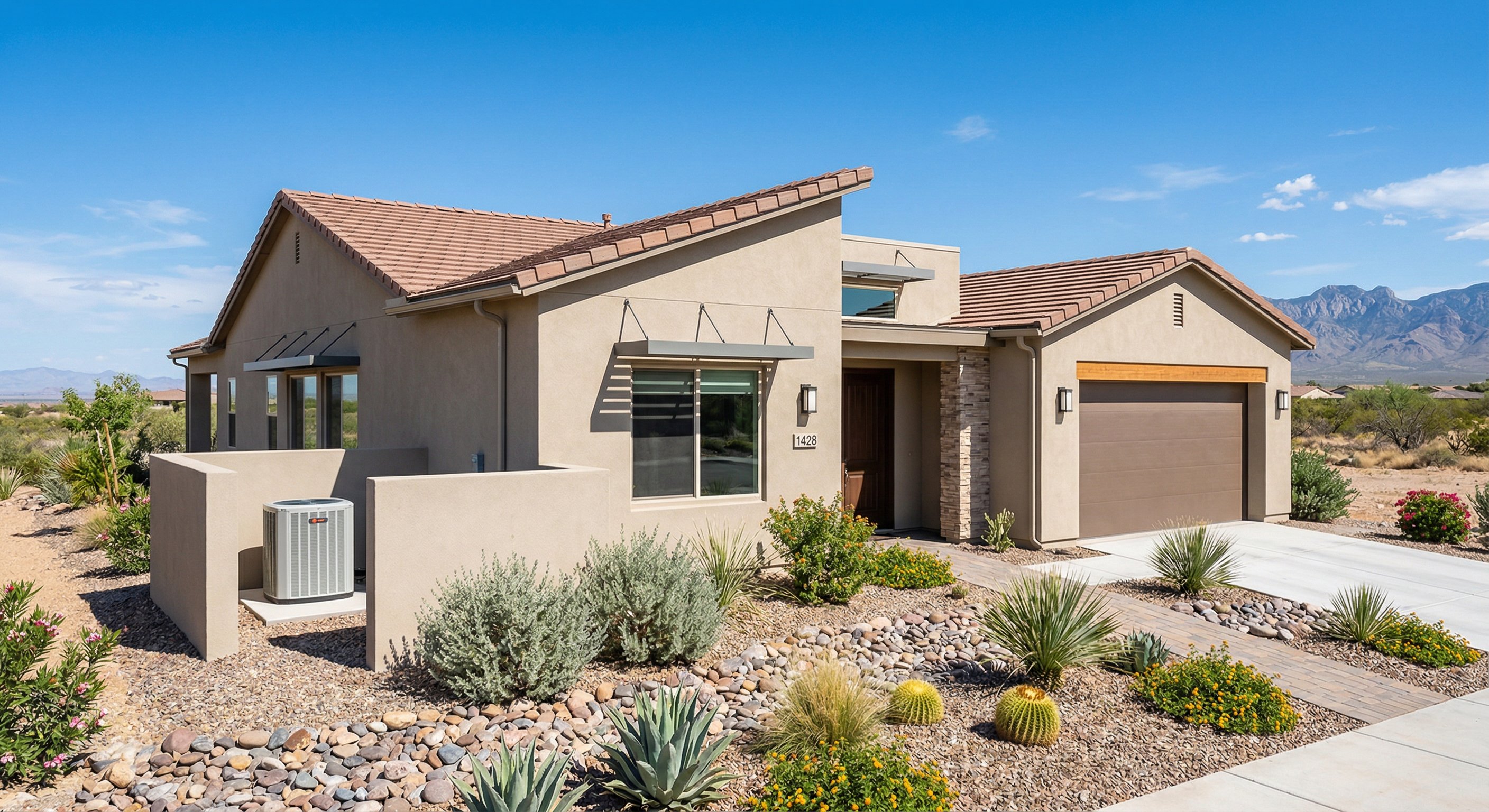
Your AC died — or it's limping through spring and you know it won't survive another Mesa summer. Now you're getting quotes and they range from $6,800 to $12,400 for what sounds like the same system. That spread isn't random. It reflects equipment cost, labor, and a whole lot of contractor margin.
Here's what's actually driving that number, and what a fair price looks like in Mesa right now.
What AC Replacement Actually Costs in Mesa, AZ
Let's start with real numbers. Not national averages from some HVAC blog in Ohio — Mesa-specific estimates based on common home sizes and system types:
| Home Size | Recommended Ton | Typical Installed Cost |
|---|---|---|
| 1,000–1,400 sq ft | 2.5 ton | $6,200–$8,500 |
| 1,400–2,200 sq ft | 3 ton | $7,200–$10,500 |
| 2,200–2,800 sq ft | 4 ton | $8,800–$12,000 |
| 2,800–3,500 sq ft | 5 ton | $10,500–$14,000 |
These include the condenser (outside unit), air handler or evaporator coil (inside unit), labor, permits, and refrigerant. They assume existing ductwork is in decent shape. If your ducts need work, add $1,500–$4,000+ depending on scope.
Mesa's heat — summer days that regularly hit 110–115°F — means your AC system works harder and longer than in nearly every other US market. That's not a reason to overbuy, but it IS a reason to make sure you're not getting a system that's too small for your square footage.
Why Mesa Quotes Are Often Higher Than the National Average
The national average for AC replacement floats around $5,500–$8,000. Mesa quotes frequently land above that. A few reasons:
1. Runtime is brutal. In most US cities, your AC runs 4–6 months a year. In Mesa, you're running it 8+ months and at full capacity from May through September. Contractors know the stakes — a callback in July at 112°F is expensive for everyone. Some of that price reflects legitimate quality and warranty service. Some of it is just margin.
2. Bigger systems are standard. A 2-ton unit that works fine in a 1,500 sq ft Denver home doesn't cut it in Mesa. The Manual J load calculation (the right way to size a system) accounts for solar gain, ceiling height, insulation, and local design temperatures. Mesa's design temperature is 110°F+. You'll consistently need more tonnage than the same square footage elsewhere.
3. The markup chain. Traditional HVAC goes: manufacturer → distributor → contractor. Each step adds 15–40%. By the time a contractor quotes your job, the unit cost has often doubled from what they paid for it. That's the industry norm — not a conspiracy, just how it's structured.
What Actually Moves the Price
Unit efficiency (SEER2 rating)
The higher the SEER2 rating, the more efficient the unit — and the more you pay upfront.
- 14.3 SEER2 (minimum for Arizona): $7,200–$9,000 installed for a 3-ton
- 16–18 SEER2: $8,500–$11,500 installed for a 3-ton
- 20+ SEER2 (variable speed): $10,000–$14,000+ for a 3-ton
The payback math matters here. Higher-efficiency units cut your APS or SRP summer bill — sometimes by $80–$150/month at peak usage. In Mesa's climate, you'll often recoup the premium in 4–7 years. If you're staying in the home long-term, going from a 14 SEER2 to a 17 SEER2 usually makes financial sense.
Brand
Trane, Lennox, and Carrier sit at the top on both price and reputation. Rheem, Ruud, and Goodman offer solid reliability at lower price points. All of them make units capable of surviving Mesa summers — the brand matters less than proper sizing, installation quality, and airflow design.
Don't let a contractor upsell you into a premium brand if the fundamentals of the install aren't right. A Trane in an oversized return plenum performs worse than a properly installed Goodman.
Age of your existing system and refrigerant type
If your current unit uses R-22 refrigerant (systems installed before roughly 2010), there's no recharging it cheaply. R-22 was phased out and now costs $100–$150 per pound on the open market. Most older units need 3–8 lbs when low. You can recharge once or twice in an emergency, but a failing R-22 system is a slow-motion replacement — you're eventually paying for a new system AND all those refrigerant bills.
On R-22? Price out replacement now, before August rolls around and you're making decisions in 115°F heat.
Labor and permit costs in Mesa
Labor runs $75–$125/hour for qualified HVAC installers in the East Valley. A standard replacement takes 4–8 hours. Maricopa County permit fees add $150–$400 depending on system size. Don't skip the permit — it protects you when you sell the home and ensures the work is inspected.
Skip the dealer markup
See What a New AC Actually Costs in Mesa, AZ
AC Rebel shows you the real equipment price — no sales pitch, no inflated quote. Get matched with a licensed installer and keep $3,000–$5,000 in your pocket.
Get My Direct Price →The Parts of Your Quote You Should Question
When you get quotes, here's what to look for:
"What brand and model is this unit?" — Get the exact model number. Look it up. A legitimate contractor won't hesitate to tell you. If they're vague about the equipment, ask why.
"Is this a matched system?" — The condenser (outside) and evaporator coil (inside) should be from the same brand family for peak efficiency and warranty coverage. Mixing brands works but usually voids the manufacturer's efficiency rating.
"What's the Manual J showing for my home?" — A proper HVAC contractor performs a load calculation before sizing your system, not after. If your contractor is eyeballing it or just matching what you currently have, that's a flag.
"What does the warranty cover?" — Manufacturer warranties on compressors typically run 5–10 years. Some brands require professional registration within 60–90 days of installation or the warranty reverts to shorter coverage. Confirm who handles warranty claims and whether labor is included.
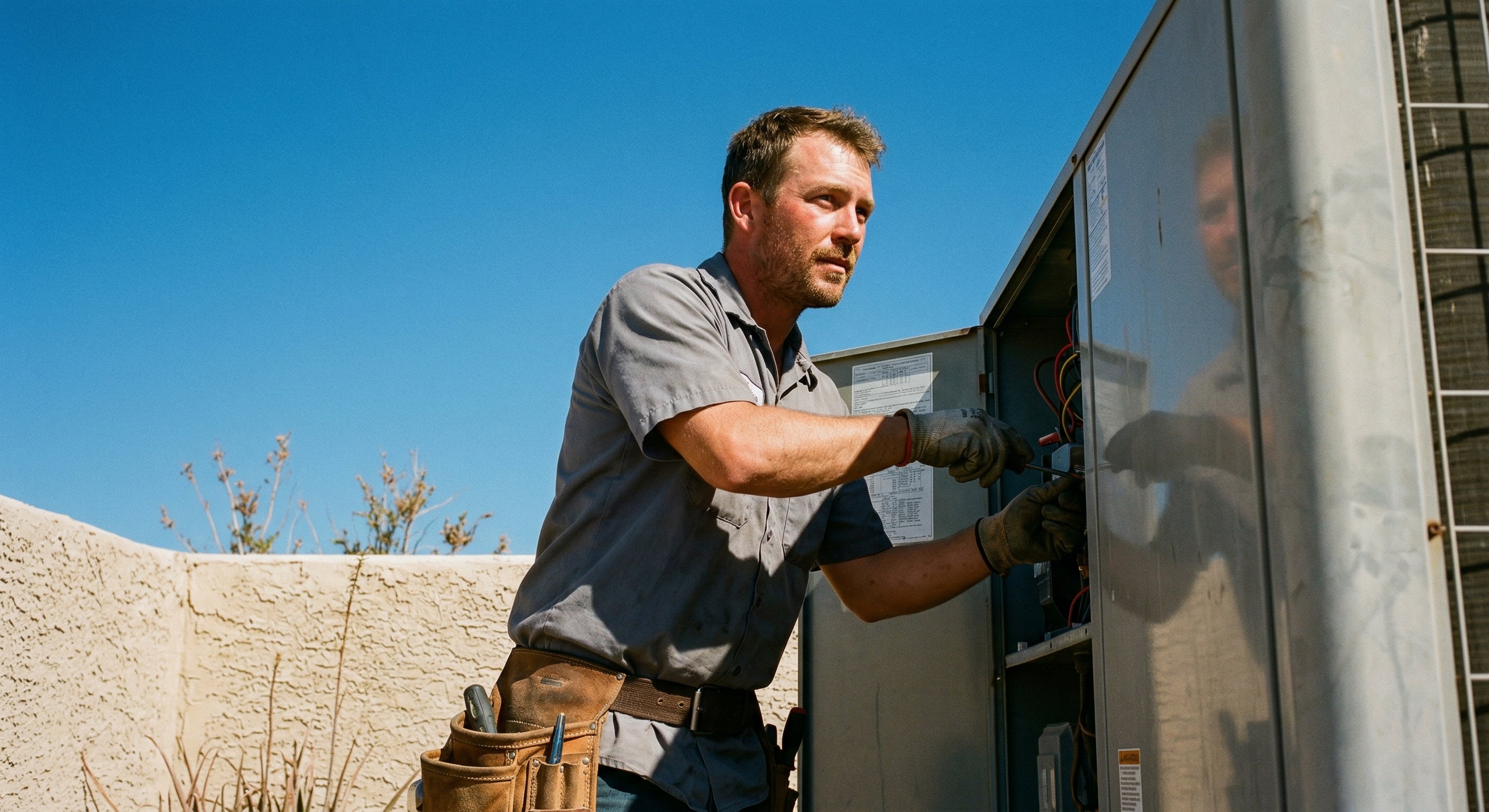
Mesa-Specific Factors That Can Add to Your Project
Flat roofs and rooftop package units. Many Mesa homes — especially those built in the 1970s–1990s — use a packaged rooftop unit instead of a split system. Rooftop units bundle the compressor, evaporator, and air handler into a single cabinet that sits on your roof. Replacement is simpler in some ways (one unit, one crane if needed), but crane costs ($400–$800) and elevated labor add to the total.
Hard water and scale buildup. Mesa's water is notoriously hard. Over time, mineral scale accumulates on evaporator coils, reducing efficiency. When replacing a system in Mesa, a good installer will check and flush your existing line set and coil connections to avoid carrying over contamination.
Ductwork age. Mesa has a lot of housing stock from the 1960s–1990s with undersized or deteriorating duct systems. If your old system was undersized (or you're stepping up in efficiency), your ductwork may need modifications to handle proper airflow. Ask your contractor to check static pressure before finalizing the scope.
Monsoon season humidity. July through September brings humidity that Arizona homes aren't built for. A properly sized system handles latent heat (humidity removal) as well as sensible heat (temperature drop). Oversized systems cool too fast and don't run long enough to dehumidify — leaving you with a cold, clammy house. Size right.
What a Fair Quote Looks Like
Here's a reality check for a 3-ton system in a typical Mesa home (1,600–2,200 sq ft):
| Line Item | What's Reasonable |
|---|---|
| Equipment (condenser + coil) | $2,800–$4,500 |
| Labor (4–8 hrs) | $600–$1,000 |
| Refrigerant (R-410A, typical charge) | $150–$300 |
| Permit + inspection | $150–$400 |
| Misc (supplies, line set, disconnect) | $200–$400 |
| Total | $3,900–$6,600 |
Notice the gap: cost to do the job is $3,900–$6,600. Installed prices in Mesa run $7,200–$10,500 for the same 3-ton system. The difference is markup on equipment, overhead, and profit margin — some legitimate, some not.
The way traditional HVAC works, you never know what the contractor paid for your unit. Most are buying it at distributor pricing and billing you retail-or-above. It's not hidden — it's just how the industry operates. Transparency isn't the norm.
If you want to see what the equipment actually costs before factoring in any markup, AC Rebel shows you direct pricing — the unit cost, separate from installation. You pick the equipment at transparent pricing, then a vetted local installer handles the labor. It's a different model than the traditional all-in quote, and for a lot of Mesa homeowners it ends up being $2,000–$4,000 less for the same quality system.
Financing a New AC in Mesa
Replacing an AC in Mesa isn't optional — it's infrastructure. And $8,000–$10,000 out of pocket is a lot for most households, especially when the system fails in July with no warning.
Options to know about:
GreenSky HVAC financing: Monthly payments as low as $47–$87/month depending on loan amount and term. Many programs offer 0% interest for 12–24 months if paid in full. Available directly through AC Rebel at checkout.
APS and SRP rebates: Both Arizona utility providers offer rebates for qualifying high-efficiency HVAC systems. APS offers up to $450 for qualifying 16 SEER2+ equipment. SRP's program varies but has historically offered $200–$600. Check current program terms at your utility's website — these change annually.
HVAC contractor financing: Most contractors offer financing but often through third-party lenders at 15–25% APR. Read the fine print before signing anything that bundles the financing with the equipment quote.

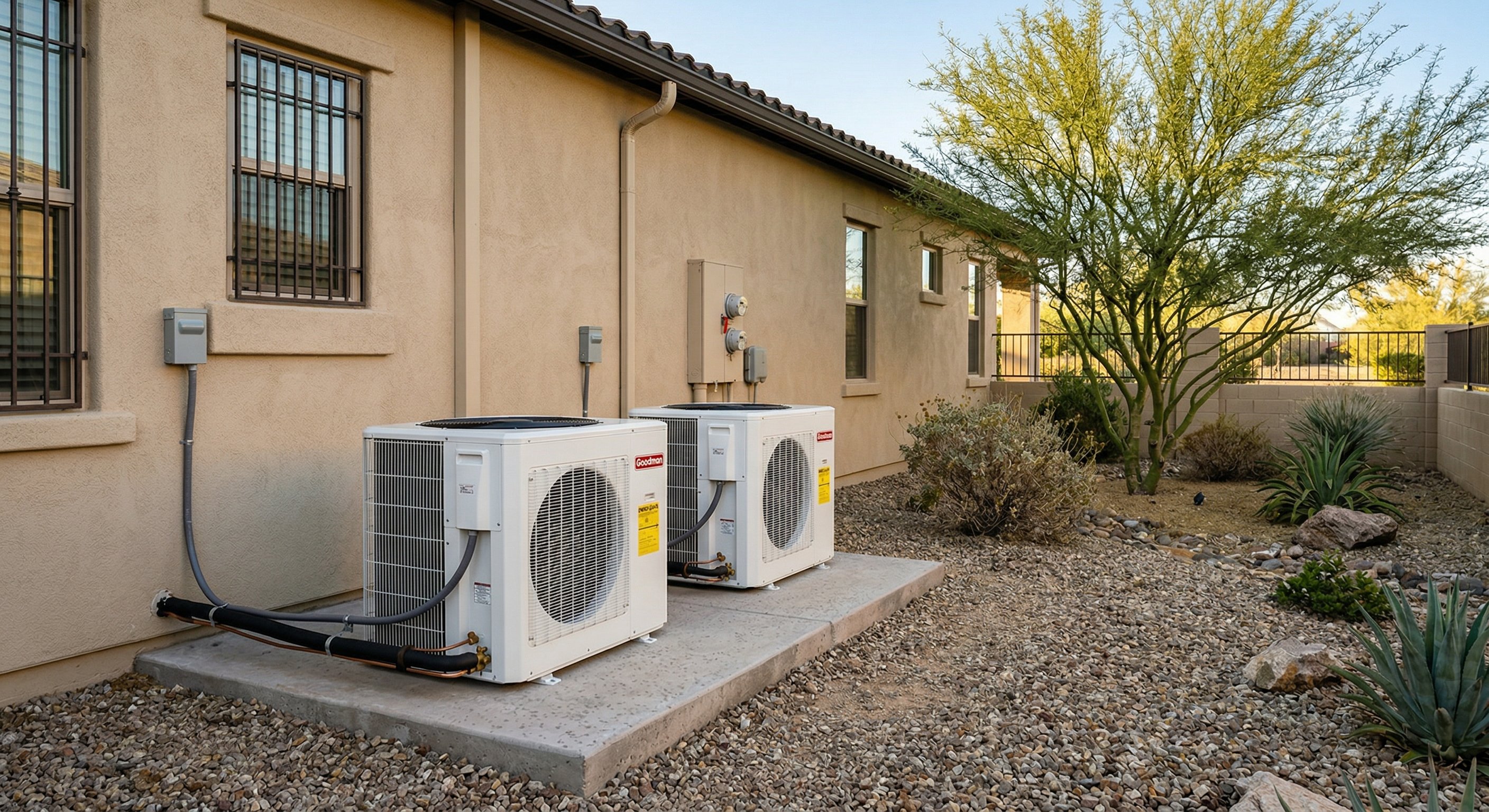
When to Replace vs. Repair
A useful rule of thumb for Mesa homeowners: multiply the repair cost by the system's age. If that number exceeds $5,000, replacement usually wins.
Example: System is 9 years old, compressor replacement quote is $1,800. $1,800 × 9 = $16,200. That's well above $5,000 — replacement makes more sense, especially since a 9-year-old system in Mesa's climate has used up more than half its useful life.
Arizona heat shortens system lifespans compared to national averages. Nationally, AC units last 15–20 years. In Mesa — running longer hours, under higher load, with dust and monsoon stress — expect 10–14 years if well-maintained, 8–12 if neglected.
Signs that replacement beats repair:
- Refrigerant leak requiring recharge more than once in two years
- Compressor failure on a unit over 8 years old
- R-22 system with any significant mechanical problem
- System more than 12 years old with frequent service calls
Frequently Asked Questions
How much does a 3-ton AC replacement cost in Mesa, AZ?
A 3-ton AC replacement in Mesa typically runs $7,200–$10,500 fully installed, including the condenser, evaporator coil, labor, refrigerant, and permit. The wide range reflects equipment quality, efficiency rating (SEER2), brand, and installer markup.
What size AC do I need for my Mesa home?
Most Mesa homes need more capacity than the same square footage elsewhere because of extreme summer heat. A 1,600 sq ft Mesa home often needs a 3-ton system. A 2,400 sq ft home typically needs 4 tons. Get a Manual J load calculation from your installer — not a rule-of-thumb guess based on square footage alone.
How long do AC units last in Mesa, AZ?
Expect 10–14 years for a well-maintained system in Mesa. Arizona's heat means units run longer and harder than national averages (15–20 years), shortening the lifespan. Units that aren't serviced annually — coils cleaned, filters changed, refrigerant checked — often fail at 8–10 years.
What is a fair price for AC installation in Mesa?
A reasonable all-in price for a 3-ton system installed in Mesa is $7,200–$9,500 for a standard efficiency (14.3–16 SEER2) unit from a reputable brand. Quotes above $10,500 warrant scrutiny unless the scope includes ductwork or a premium variable-speed system.
Are APS or SRP rebates available for new AC units in Mesa?
Yes. Both APS and SRP offer rebates for qualifying high-efficiency equipment. APS rebates run up to $450 for 16+ SEER2 systems. SRP programs vary by year. Check current eligibility at your utility's website before purchasing, as equipment must meet specific minimum efficiency thresholds.
What's the difference between a package unit and a split system?
A split system has two components — an outdoor condenser and an indoor air handler. A package unit combines everything in a single cabinet, typically installed on the roof. Many older Mesa homes use rooftop package units. Both work well in the Arizona climate; the difference is installation method and where service access happens.
Ready to stop overpaying?
See Your Direct AC Price in 2 Minutes
Skip the dealer. Buy your AC unit at direct pricing and pay a vetted local installer only for the installation. No sales calls. No hidden markup. Most homeowners save $3,000–$5,000+ compared to a traditional quote.
Get My Direct Price — No Credit Card2-minute quote · Licensed installers · 10-year warranty options