AC Replacement Cost in Tempe, AZ (2026 Real Numbers)
AC Replacement Cost in Tempe, AZ (2026 Real Numbers)
TL;DR: AC replacement in Tempe, AZ typically runs $6,500–$12,500 depending on system size, efficiency, and installation complexity. Most Tempe homes — which skew older and smaller than neighboring Chandler or Gilbert — need a 3-ton or 4-ton system. Expect to pay $7,200–$9,800 for a mid-efficiency system fully installed. Tempe's urban heat island effect and a high percentage of pre-2000 housing stock mean your system works harder than average — which makes the right sizing and efficiency rating a bigger financial decision than most homeowners realize.
Your AC died. Or it's on its last legs and you know it. Either way, you're here looking for a number, not a runaround.
Here's what AC replacement actually costs in Tempe in 2026 — real quotes broken down by system size, efficiency, and what's specific to this city that changes the math compared to Scottsdale or Phoenix.
Why Tempe Is Different From Other Valley Cities
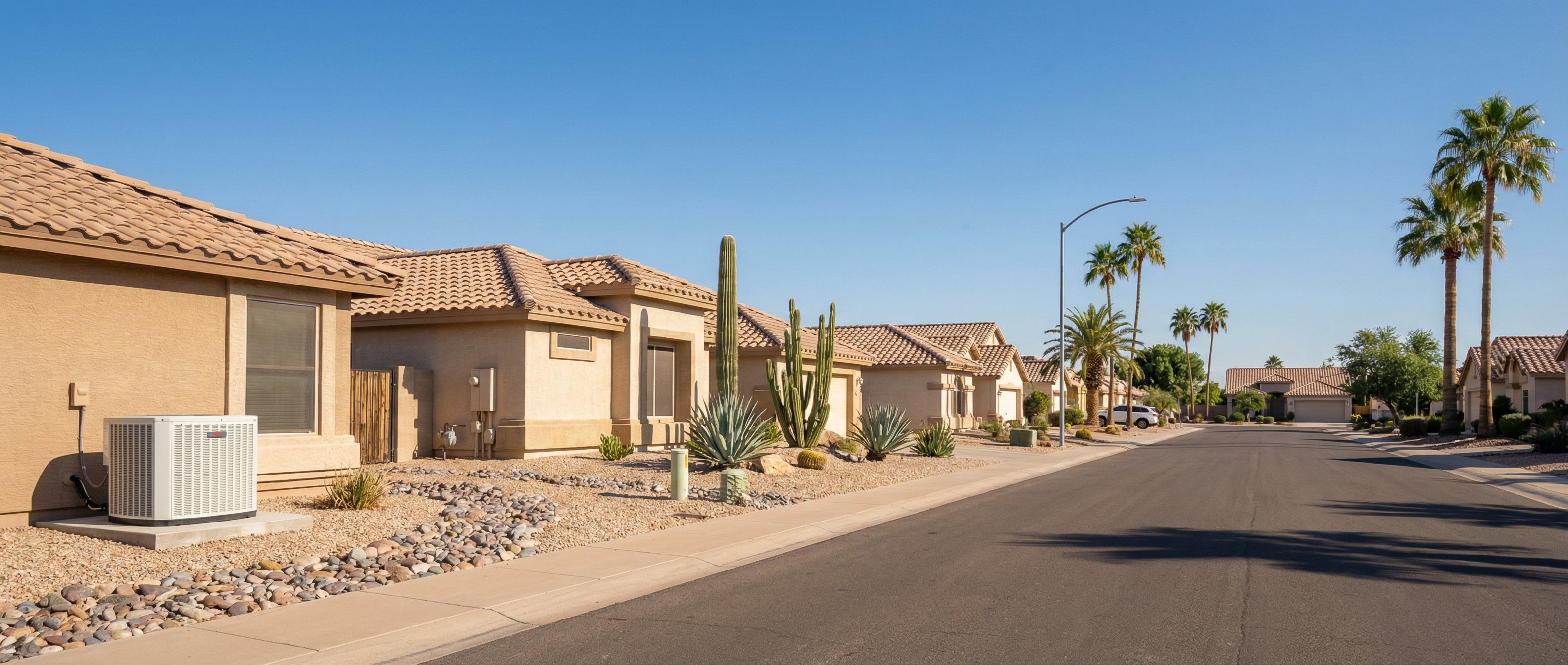
Tempe sits in the geographic center of the Valley — sandwiched between Phoenix, Mesa, Scottsdale, and Chandler — but it has a housing stock and climate profile that's genuinely distinct.
Older homes, smaller lots. A large portion of Tempe's housing was built in the 1960s through the 1980s. That means original ductwork that's often undersized, narrower crawl spaces, and homes that weren't designed with modern HVAC load calculations in mind. It also means R-22 (Freon) systems are more common here than in newer suburban cities. If your system uses R-22, that's a separate cost conversation we'll get to below.
Urban heat island effect. Tempe is one of the most heat-dense areas in the Valley. Between ASU's dense campus, miles of asphalt, and the Sun Devil Stadium concrete, Tempe retains heat at night more than Surprise or Queen Creek. That thermal load matters — it's one reason Tempe homes often need to run their AC longer daily than equivalent homes in outer suburbs.
Flat roofs and package units. Like much of central Phoenix, a significant number of Tempe homes — particularly older ranch-style properties — use rooftop package units instead of split systems. If you have one of these, replacement logistics (crane access, roof penetration, duct reconnection) can add $400–$800 to a project compared to a standard split system.
All of this shapes what you should actually budget.
Tempe AC Replacement Cost by System Size
Most Tempe homes are 1,000–2,200 sq ft. That puts the majority of replacements in the 2.5-ton to 4-ton range. Here's what you're looking at:
| System Size | Home Size | Installed Cost (Mid-Efficiency) | Installed Cost (High-Efficiency) |
|---|---|---|---|
| 2.5-ton | 1,000–1,400 sq ft | $6,000–$7,800 | $8,500–$10,500 |
| 3-ton | 1,400–1,800 sq ft | $7,000–$9,000 | $9,500–$12,000 |
| 4-ton | 1,800–2,400 sq ft | $8,200–$10,500 | $11,000–$14,000 |
| 5-ton | 2,400–3,000 sq ft | $9,500–$12,500 | $13,000–$16,000 |
"Mid-efficiency" means 16–18 SEER2 — the current minimum federal standard plus one step up. For Tempe's climate, that's the floor worth installing, not the ceiling.
"High-efficiency" means 19–22 SEER2 — meaningfully more expensive upfront, but in a city where your AC runs 8–10 months a year, the payback period on utility savings is real. APS and SRP summer bills in Tempe can hit $350–$450/month with an older system. A new high-efficiency unit can cut that by 30–40%.
The R-22 Problem (Specific to Older Tempe Homes)
If your home was built before 2005 and you've never replaced the AC, there's a real chance you're running an R-22 system. R-22 refrigerant was phased out federally in 2020 — it's no longer manufactured in the US. Remaining supply is recycled and expensive: recharging an R-22 system can run $600–$1,200+ depending on how much refrigerant it needs.
This changes your repair-vs-replace math significantly. If your R-22 system is losing refrigerant and needs a recharge, that's money you're putting into a dead-end system. In most cases, it makes more financial sense to replace the entire system now while you have control over the timing — not in July when you have no leverage and every contractor is booked.
The good news: replacing an R-22 system isn't just an AC upgrade, it's a transition to modern refrigerants (R-410A or the newer R-454B) that run more efficiently and won't face the same supply chain issues.
Skip the dealer markup
See What a New AC Actually Costs in Tempe, AZ
AC Rebel shows you the real equipment price — no sales pitch, no inflated quote. Get matched with a licensed installer and keep $3,000–$5,000 in your pocket.
Get My Direct Price →What's Actually Included in Those Numbers
A full AC replacement in Tempe should include:
- New outdoor condenser unit (what most people think of as "the AC")
- New indoor air handler or coil (the indoor half of a split system)
- New refrigerant line set (if existing lines are old or incompatible)
- Electrical disconnect and wiring upgrades as needed
- Permits — Tempe requires permits for AC replacement, and any licensed contractor should pull them. If they don't offer to pull permits, that's a red flag.
- Removal and haul-away of old equipment
- Start-up and commissioning — the contractor should test the system, check refrigerant charge, and verify airflow before leaving
What's often NOT included unless you negotiate it:
- Duct inspection or sealing — If your ducts are 25–40 years old (common in older Tempe homes), they may be leaking 20–30% of conditioned air into your attic. This is one of the most cost-effective upgrades you can make alongside a replacement.
- Thermostat upgrade — A new smart thermostat costs $150–$300 installed and can save 10–15% on cooling costs.
- Air handler replacement — Some contractors quote only the outdoor unit. Always ask if the indoor coil or air handler is included.
SEER2 Ratings: What Makes Sense for Tempe
SEER2 (the updated efficiency rating replacing SEER) measures how efficiently a system cools per unit of energy. In Arizona, higher SEER2 matters more than nearly anywhere in the country — because your AC runs almost year-round.
16 SEER2: The federal minimum for new installs in the Southwest. Fine if you're budget-constrained, but you'll feel it on your utility bill.
18 SEER2: The sweet spot for most Tempe homeowners. Meaningfully more efficient than 16, without the premium jump of going to 20+.
20+ SEER2: Worth considering if you have a newer well-insulated home, are planning to stay 10+ years, or are pairing with solar. The upfront cost is higher, but APS and SRP offer rebates for high-efficiency equipment — typically $100–$300 per qualifying unit.
Check for current utility rebates before you buy. Both APS and SRP update their rebate programs annually, and 2026 programs are still available. A $200–$300 rebate on a unit you were already going to buy is just free money.

Why Quotes for the Same System Vary by $3,000+
It's not unusual to get three quotes on a Tempe AC replacement and see a $3,000–$4,000 spread for what sounds like the same job. Here's why that happens, and how to read it:
The unit itself is often the same. Trane, Carrier, Lennox, Rheem, Goodman — the actual equipment is available to any contractor. The brand markup isn't the main driver.
Labor costs vary significantly. An established multi-truck company with full-time dispatchers and office staff has higher overhead than an owner-operator HVAC tech. Neither is automatically better or worse — but you're paying for different things.
What's included vs. quoted separately. Some contractors quote the outdoor unit only. Others include the air handler, refrigerant, electrical work, and permits in one number. Always ask what the quote covers before comparing.
Brand loyalty markup. Some contractors are "authorized dealers" for Trane or Carrier, which comes with perks (extended warranties, manufacturer support) but also a price premium. Those systems aren't inherently better — you're paying for the certification layer.
The markup in the traditional chain is real. The typical path from manufacturer to your house is: manufacturer → regional distributor → contractor → you. Each step adds margin. An online marketplace model that lets you buy the unit direct and pay a contractor for installation only removes two of those margin layers — which is exactly why a 3-ton Carrier at a traditional dealer can run $2,500–$3,000 more than the same unit bought direct.
Getting to a Real Number for Your Tempe Home
Here's a practical way to approach this:
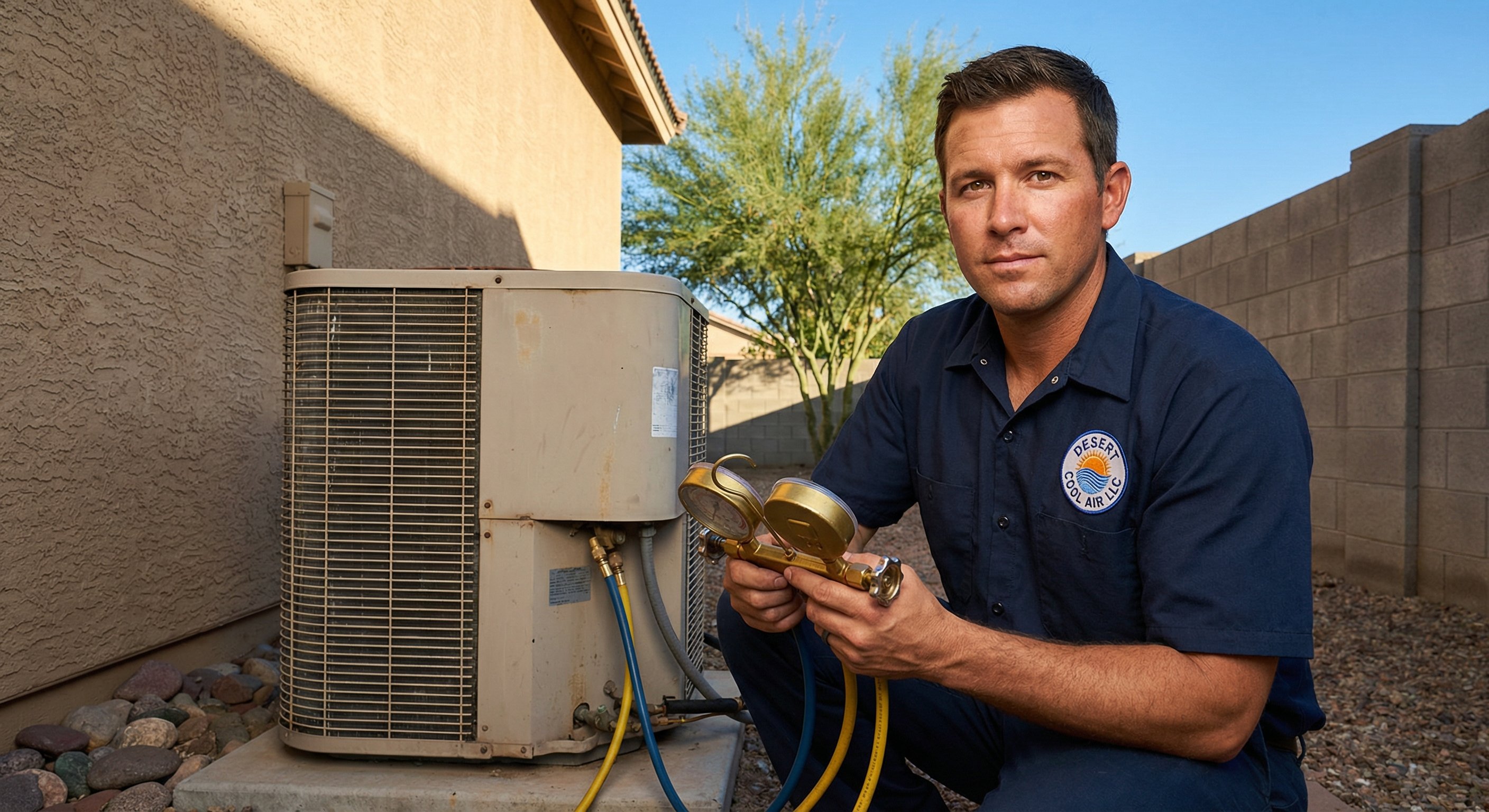
- Know your current system's age and refrigerant type. Check the data plate on the outdoor unit. If it's 12+ years old and using R-22, replacement is almost certainly the right call.
- Get at least two quotes — one from a mid-size company and one from a smaller operator. The spread will tell you a lot about what's padding vs. what's real cost.
- Ask what's included in each quote explicitly: indoor unit/coil, permits, electrical work, haul-away.
- Don't let the brand steer you. Focus on warranty, SEER2 rating, and installer reputation — not the logo on the box.
- Check utility rebates before committing — APS and SRP both offer rebates that can reduce your net cost.
The difference between a homeowner who pays $9,500 and one who pays $7,200 for the same outcome often comes down to one thing: taking the time to understand what they're actually buying.
Most of what you pay for a new AC through a traditional HVAC contractor is dealer markup. See what actual unit prices look like — and what installation should cost separately — before you accept the first quote you get. Browse direct AC pricing on AC Rebel to see real numbers without the runaround.
The Bottom Line for Tempe Homeowners
For most Tempe homes replacing a central split system:
- Budget: $7,000–$9,000 for a 3-ton mid-efficiency (18 SEER2) fully installed
- Better value: $9,500–$12,000 for high-efficiency (20 SEER2) with utility rebates and lower operating costs over 10+ years
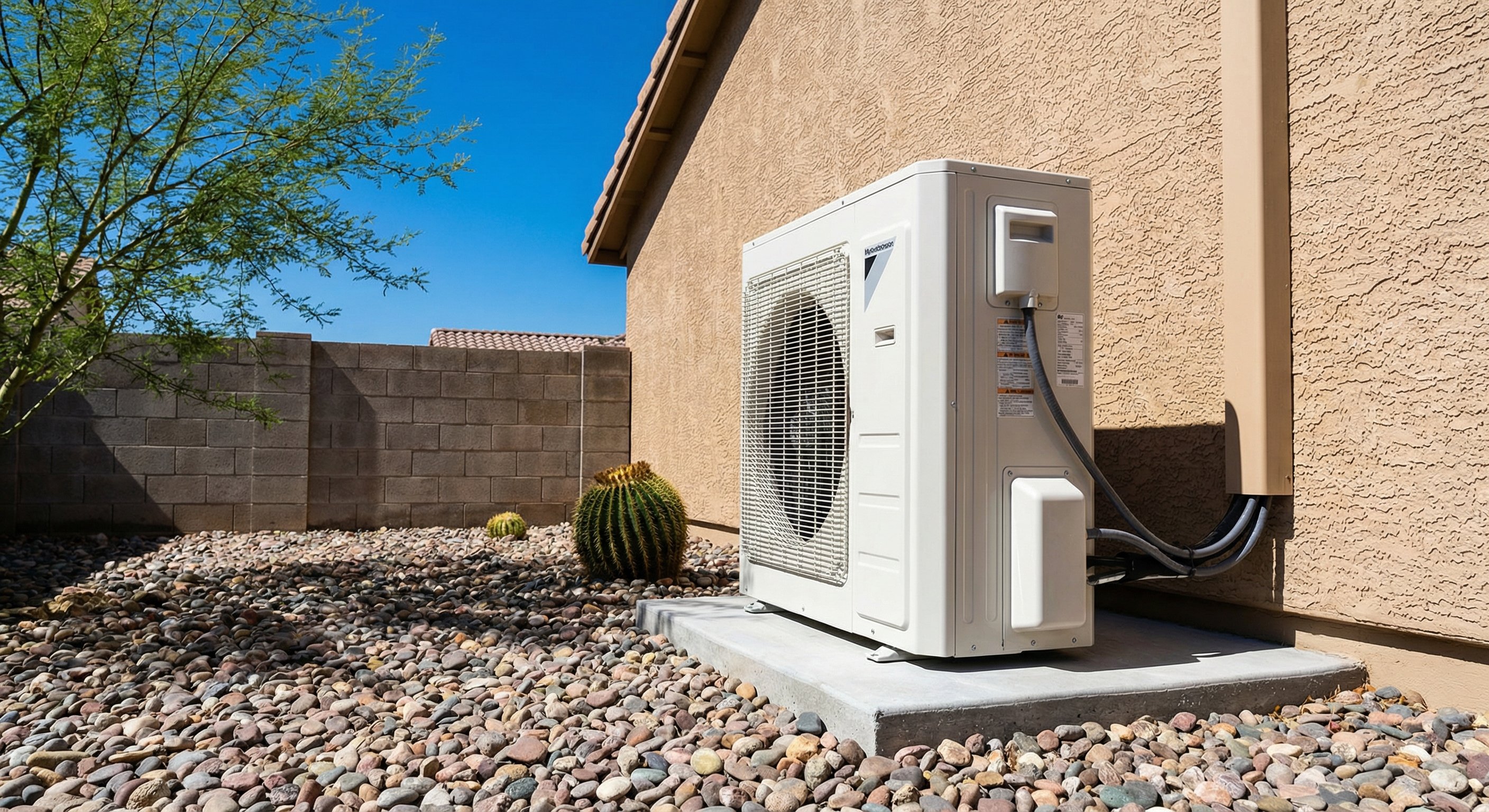
- Rooftop package unit: Add $400–$800 to any estimate for access and roof work
- Old ductwork: Budget $800–$2,000 if you want it sealed or partially replaced — it's often worth it
The other thing nobody tells you: the best time to replace your Tempe AC is March or April, not July. Contractors have availability, pricing is negotiable, and you have the leverage that evaporates the moment temperatures hit 110°F and every homeowner in the East Valley is calling the same five companies.
If your system is over 12 years old, get quotes now. The decision you make in March is a completely different one than the decision you're forced to make in August.
Frequently Asked Questions
Q: What is the average cost to replace an AC unit in Tempe, AZ?
Most Tempe homeowners pay between $7,200 and $9,800 for a full AC replacement (3-ton, 18 SEER2, split system, fully installed including permits). Larger homes or high-efficiency upgrades push that range to $10,000–$14,000. Smaller homes or budget units can come in at $6,000–$7,500.
Q: How long does a new AC unit last in Tempe, Arizona?
In Tempe's climate — with its urban heat island effect and near-year-round operation — expect 10–15 years from a quality system with regular maintenance. The Arizona average (12–15 years) is shorter than the national average (15–20 years) because AC systems here run far more hours per year. Skipping annual maintenance accelerates degradation significantly.
Q: Does Tempe require permits for AC replacement?
Yes. Tempe requires a mechanical permit for AC replacement. Your licensed contractor should pull this permit automatically — it's included in a legitimate installation quote. Permits protect you: they ensure the work is inspected and documented, which matters for home resale.
Q: What SEER rating should I get for a Tempe home?
The minimum is 16 SEER2 (federal requirement for Southwest installs). Most Tempe homeowners are better served by 18–20 SEER2 given how long the cooling season runs. Check current APS or SRP rebate programs — efficiency upgrades often qualify for $100–$300 back, which narrows the cost gap.
Q: How much does it cost to replace an R-22 AC system in Tempe?
Replacing an R-22 system in Tempe is essentially the same as any standard replacement — $6,500–$12,000 depending on size and efficiency. The urgency is higher because R-22 is no longer manufactured in the US, making repairs increasingly expensive. If your R-22 system is losing refrigerant and over 10 years old, replacement is almost always more economical than repair.
Ready to stop overpaying?
See Your Direct AC Price in 2 Minutes
Skip the dealer. Buy your AC unit at direct pricing and pay a vetted local installer only for the installation. No sales calls. No hidden markup. Most homeowners save $3,000–$5,000+ compared to a traditional quote.
Get My Direct Price — No Credit Card2-minute quote · Licensed installers · 10-year warranty options