
Why Does My Phoenix AC Smell Weird? (And What Each Odor Means)

Why Does My Phoenix AC Smell Weird? (And What Each Odor Means)
TL;DR: Phoenix AC smells fall into a few distinct categories. A musty odor usually means algae or bacteria in the drain pan or evaporator coil, especially during monsoon season. A rotten egg smell requires an immediate evacuation and 911 call, as it usually signals a gas leak. Burning smells are often dust burning off a heating element, but can signal a failing motor or capacitor. Phoenix's combination of monsoon humidity and year-round dust makes certain odor problems more severe here than in other climates.

You fire up your AC on a July evening in Phoenix. Instead of cool air, a wave of something foul rolls out of your vents.
You check the trash. Nothing. You check the fridge. Nothing. So it is coming from inside the ductwork.
This is not your imagination. Phoenix homes develop certain AC smells faster and more severely than homes in most other parts of the country. Here is what each smell means and what to do about it.
Why Phoenix Makes This Worse Than Other Cities
Phoenix creates two distinct problems that work against your AC in different seasons. From May through mid-June, the air is extremely dry. Dust and pollen accumulate in your filter and on your evaporator coil. When you finally run the AC hard after a mild spring, that accumulated debris burns off and produces a stale smell through the vents.
Then monsoon season arrives, typically in early July. Humidity shoots up overnight. That moisture hits the cool surfaces inside your ductwork and coil, and if there is any organic material present, it becomes a growth medium for algae and bacteria. The drain pan stays wet for weeks during monsoon season. In Phoenix, hard water deposits also coat the drain line, narrowing it and trapping water long enough for biological growth to take hold.
A homeowner in Dallas might deal with one of these problems. A Phoenix homeowner deals with both, in the same summer.
Musty or Moldy Smell From the Vents
This is the most common complaint from Phoenix homeowners and the one most often misdiagnosed.
The smell almost always traces back to one of three places. The evaporator coil inside your air handler accumulates dust and organic particles on its fins. When enough moisture sits there during monsoon season, bacteria and algae colonize the surface and the smell gets pushed through your ductwork every time the fan runs.
The drain pan underneath the air handler is the second culprit. This pan collects condensation, and during monsoon season it stays damp for weeks. Even small amounts of standing water develop a biofilm that smells exactly like what you are describing.
The third source is less obvious. The condensate drain line itself can grow algae internally, especially in Phoenix where the water running through it is mineral-heavy from our hard water supply. The line narrows from scale buildup, water sits longer in the pipe, and biological growth takes hold upstream of what you can see.
If the smell is strongest when the fan first turns on and fades after a few minutes, it is most likely the drain pan or line. If the smell persists all day and is worse in rooms furthest from the air handler, the coil itself is the source.
For a mild case, replacing your air filter with a MERV 11 or MERV 13 filter catches more particles before they reach the coil. Running the fan on the "on" position rather than "auto" keeps air moving through the coil and reduces moisture accumulation between cycles.
If the smell is strong and persistent, the coil needs professional cleaning. Expect to pay $150 to $300 for a coil cleaning in the Phoenix metro. Do not let a contractor talk you into replacing the entire system for a smelly coil. If the coil is cooling fine, cleaning is the fix, not replacement.
Rotten Egg or Sewage Smell
If you walk into your home and it smells like rotten eggs, your first move is to evacuate everyone, including pets. Do not look for the source. Get out and call 911.
The smell can come from a gas leak, a malfunctioning water heater, or a dead animal in the ductwork. In the Phoenix area, sulfur odors from the gas infrastructure are a documented issue. Arizona Public Service and Southwest Gas respond to these calls as emergencies.
Phoenix homeowners on Reddit describe the situation clearly. One homeowner noticed the smell coming from the air vents and found a dead bird had gotten into the return ductwork. The decomposition smell was indistinguishable from a gas leak until professional testing ruled out methane.
If the gas company clears your home and the smell still returns when the AC runs, the problem is almost certainly biological. A dead animal stuck in a duct elbow, usually a mouse, rat, or bird, produces a sulfurous smell for three to five days as it decomposes. The smell intensifies when airflow from the fan pushes it through the house.
Finding and removing the animal requires a technician who can access your ductwork and locate the source. Expect to pay $150 to $350 for removal and duct sanitization.
One Phoenix-specific note. During monsoon season, barometric pressure changes can cause sewer gases to backflow through floor drains and into your ductwork if the p-traps have dried out. If the smell is worst in rooms with floor drains, try pouring a bucket of water down each drain to refill the p-trap seal. That alone sometimes solves the problem.
Skip the dealer markup
See What a New AC Actually Costs
AC Rebel shows you the real equipment price — no sales pitch, no inflated quote. Get matched with a licensed installer and keep $3,000–$5,000 in your pocket.
Get My Direct Price →Burning or Electrical Smell When the AC Starts
A burning smell when your AC first kicks on for the season is one of the most common and least dangerous odors. Dust accumulated on the heating element during months of cooling-only operation burns off the first few times heating runs. This smell typically lasts 15 minutes to an hour the first few cycles. It is not dangerous and usually resolves on its own.
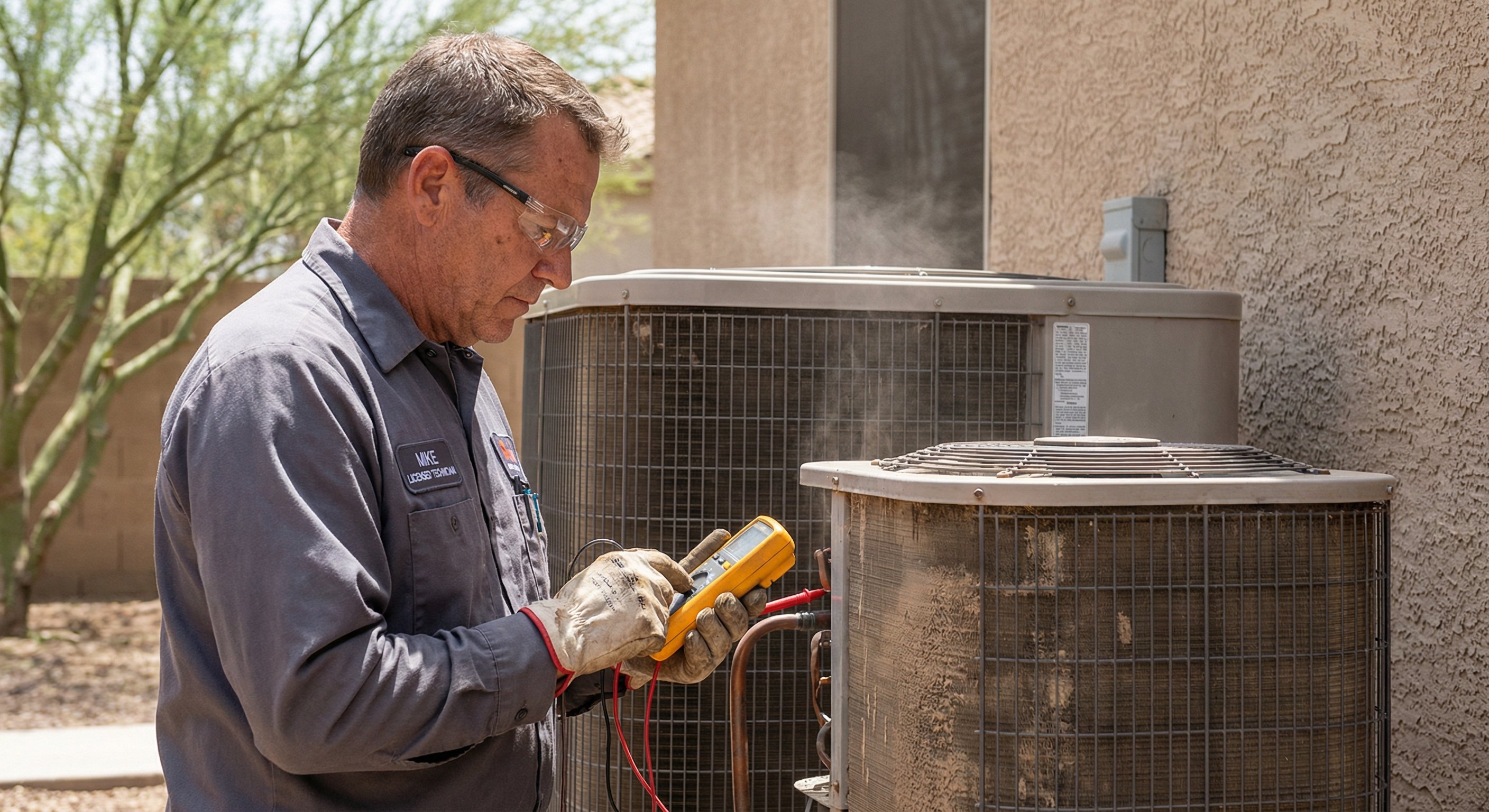
However, there is a more serious version of this smell. If the burning odor is persistent, gets stronger over time, and is accompanied by a humming, grinding, or clicking noise from the outdoor unit, you likely have a motor problem. The capacitor, which stores electricity to start the compressor and fan motors, can fail and cause the motor to overheat. This produces a burning smell that will not go away.
Phoenix accelerates this failure mode. Our summers push AC systems to maximum capacity for months at a time. A capacitor that would last eight years in Michigan might fail in four in Phoenix, especially on units that are not properly sized for the load.
If the burning smell is new, loud, and not going away, turn the system off and call a technician. A failing capacitor is one of the most common reasons an AC stops working entirely in Phoenix heat. Replacing a capacitor runs $150 to $400 depending on the system size and contractor. Left unchecked, a failed capacitor can damage the compressor, which is a $4,000 to $8,000 replacement.
Fish, Ammonia, or Urine Smell
These three odors point to different problems even though homeowners sometimes group them together.
A persistent fishy smell, especially from the outdoor unit, most commonly indicates an electrical problem. Burning insulation on a motor winding produces an odor that homeowners consistently describe as fishy or chemical. Turn the system off and schedule service immediately. The risk is an electrical fire.
A sweet, chemical smell, sometimes described as antiseptic or like new plastic, points to a refrigerant leak. If you notice this smell and your AC is not cooling properly, or if you see ice forming on the refrigerant lines outside, you likely have a leak. Finding and repairing the leak, then recharging the system, runs $200 to $600 for the repair plus $100 to $300 for the recharge. Some contractors will simply recharge without fixing the leak. Make sure you understand what you are paying for.
An ammonia smell is unusual in an AC context. More commonly, if the smell resembles urine, it is a dried p-trap issue as described above.
Quick Reference: Phoenix AC Smells
| Smell | Most Likely Cause | Urgency | Typical Repair Cost |
|---|---|---|---|
| Musty, moldy | Drain pan algae, dirty coil, clogged drain line | Medium | $150 to $300 for cleaning |
| Rotten egg, sulfur | Dead animal in ductwork, gas leak | Immediate | $150 to $350 for animal removal |
| Burning dust | Dust burning off heating element | Low | None, usually resolves |
| Burning, persistent plus noise | Failing motor or capacitor | High | $150 to $400 for capacitor |
| Fishy, chemical | Electrical short, refrigerant leak | Immediate | $200 to $600 depending on cause |
| Sewage, urine | Dried p-trap, drain line backup | Medium | Often DIY; $150 plus if professional |
What Actually Keeps Smells From Coming Back
In Phoenix, prevention means a few things specific to our climate.
Replace your air filter every 30 to 60 days during cooling season. Phoenix dust is fine and penetrates filters easily. A clogged filter forces air through the coil at higher speeds, which increases moisture accumulation on the coil surface.
Flush your condensate drain line once per year, ideally in May before monsoon season. A plumber's snake or a shop vac pulled through the line removes the algae buildup that narrows it over time.
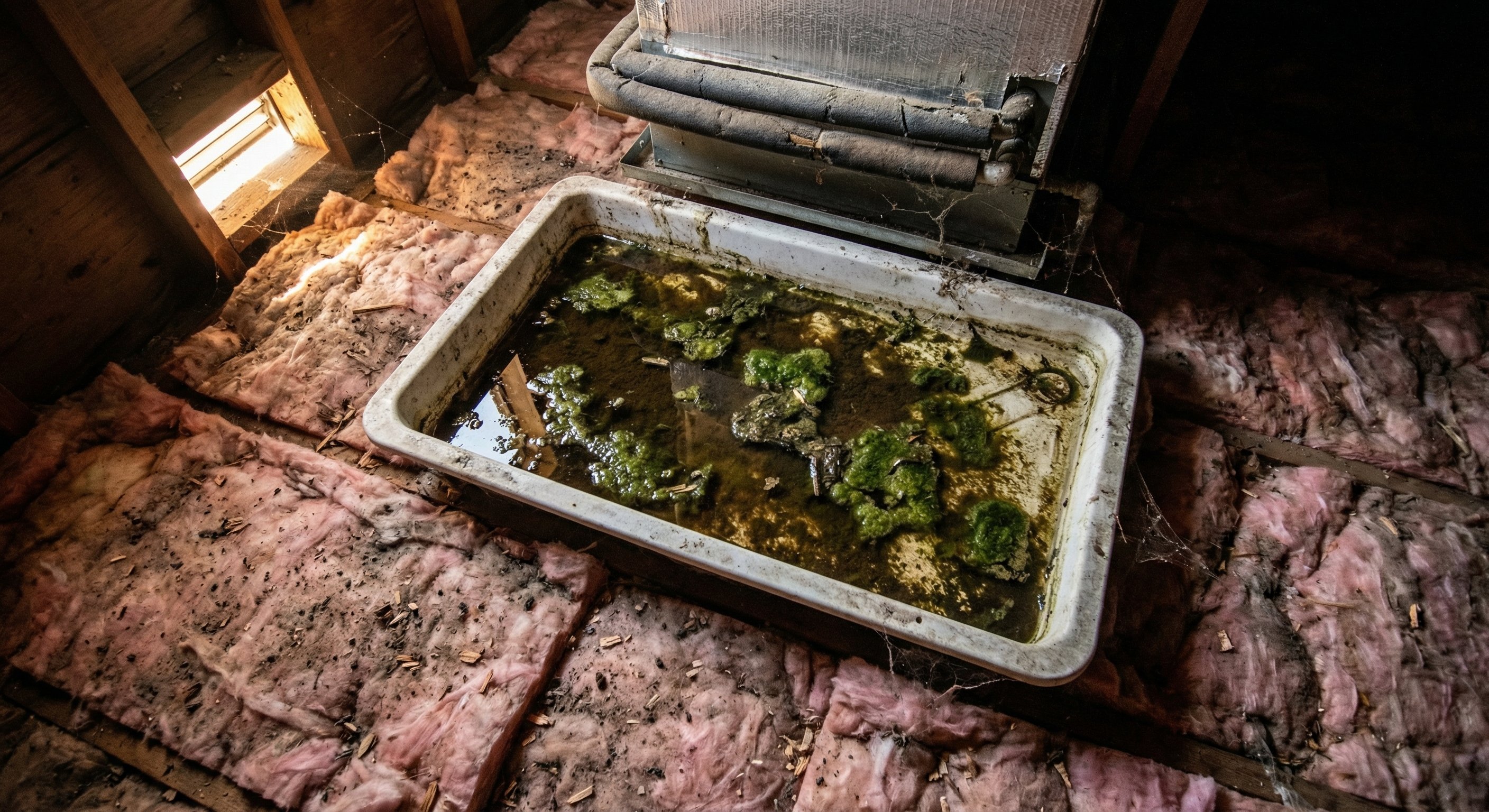
Have your coil professionally inspected every two to three years. A technician can clean the coil before biological growth becomes entrenched.
Keep the area around your outdoor unit clear. Grass clippings, dust, and debris accumulate on the condenser fins and reduce airflow, which stresses the system and contributes to motor wear.
If your system is more than 10 years old with recurring smell problems, evaluate whether replacement makes more sense than another year of patching. Newer systems have better drainage design and improved coil coatings that resist biological growth. For most Phoenix homeowners, a system in the $3,800 to $5,200 range through direct pricing will outperform a 12-year-old unit that has been repaired three times.
Get a free instant quote at acrebel.com to see what a new system costs without the dealer markup.
Frequently Asked Questions
Why does my AC only smell bad when it first turns on in the morning?
This is almost always dust accumulated on the heating element. When the system has not run for several hours, dust settles on the warm element. The first cycle burns it off and the smell dissipates. This is normal and not dangerous. It typically stops happening after the first few heating cycles of the season.
Can a dirty AC filter cause a smell in Phoenix?
Yes. A clogged filter allows more dust and organic particles to reach the evaporator coil and drain pan, where they feed bacteria growth. A MERV 11 or higher filter in Phoenix homes makes a real difference in keeping the system clean.
Is a rotten egg smell from my AC an emergency?
Yes. Evacuate the home and call your gas company first. Once they rule out a gas leak, call an HVAC technician to check for a dead animal in the ductwork.
How often should I flush my AC drain line in Phoenix?
Once per year minimum, ideally in May before monsoon season. Phoenix hard water narrows drain lines faster due to mineral buildup, so an annual flush keeps biological growth from blocking the line.
Why does my AC smell worse during monsoon season?
Monsoon humidity adds moisture to the cooling process at exactly the same time biological growth thrives. Wet, warm conditions inside your ductwork and pressure changes that pull outside air in create ideal conditions for algae and bacteria. That is why musty smells peak in August in Phoenix homes.
Can I use essential oils or air fresheners to mask AC smells?
You can, but it is like spraying perfume on a gas leak. The smell is a symptom, not the problem. Once the system is clean, a whole-home air purifier with a UV light component can help prevent biological growth from returning.
Ready to stop overpaying?
See Your Direct AC Price in 2 Minutes
Skip the dealer. Buy your AC unit at direct pricing and pay a vetted local installer only for the installation. No sales calls. No hidden markup. Most homeowners save $3,000–$5,000+ compared to a traditional quote.
Get My Direct Price — No Credit Card2-minute quote · Licensed installers · 10-year warranty options