
Heat Strips in Arizona: What They Cost, Why Contractors Mark Them Up, and How to Know If You Actually Need Them

Heat Strips in Arizona: What They Cost, Why Contractors Mark Them Up, and How to Know If You Actually Need Them
TL;DR: Heat strips are electric heating elements inside your heat pump that serve as backup heat when outdoor temperatures drop below roughly 40 degrees. In Arizona, heat strip replacement costs $400 to $1,200 total when fairly priced. Phoenix homeowners routinely receive quotes of $1,500 to $2,500 for this work. The difference is not parts cost. It is how contractors bundle labor, overhead, and margin into a number designed to be hard to question.
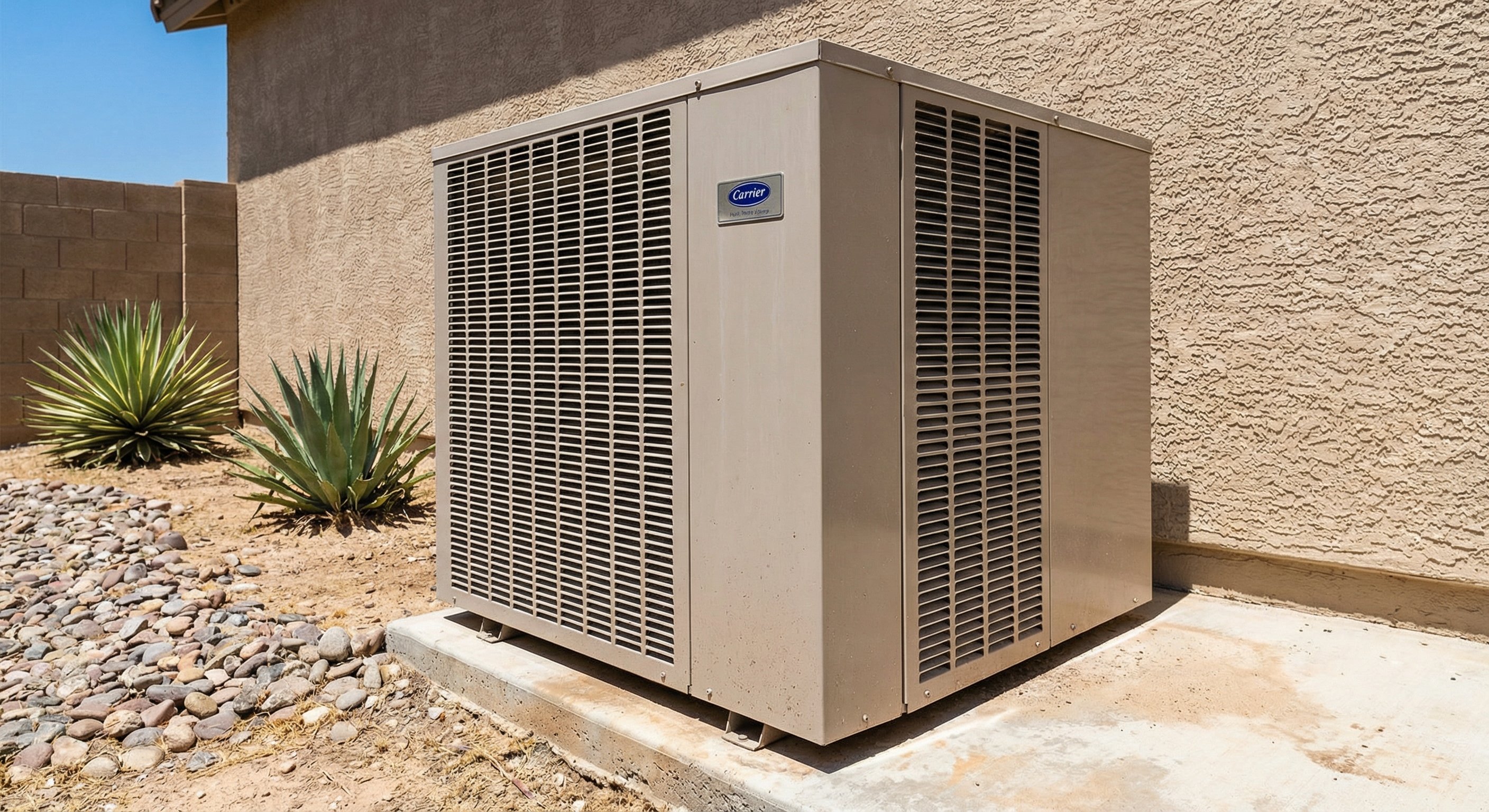
It is December in Gilbert. Your heat pump is running but the house is cold. The thermostat shows a small snowflake icon or the words "Aux Heat." You call an HVAC company and someone tells you the heat strips are bad. The quote: $1,800.
You have never heard of a heat strip. Nobody has given you a line-item breakdown.
This is one of the most common ways Phoenix homeowners get overcharged on heat pump service calls. Not because the repair is complicated, but because it is easy to obscure behind technical language and bundled pricing. Here is what you need to know before you agree to anything.

What Heat Strips Actually Are
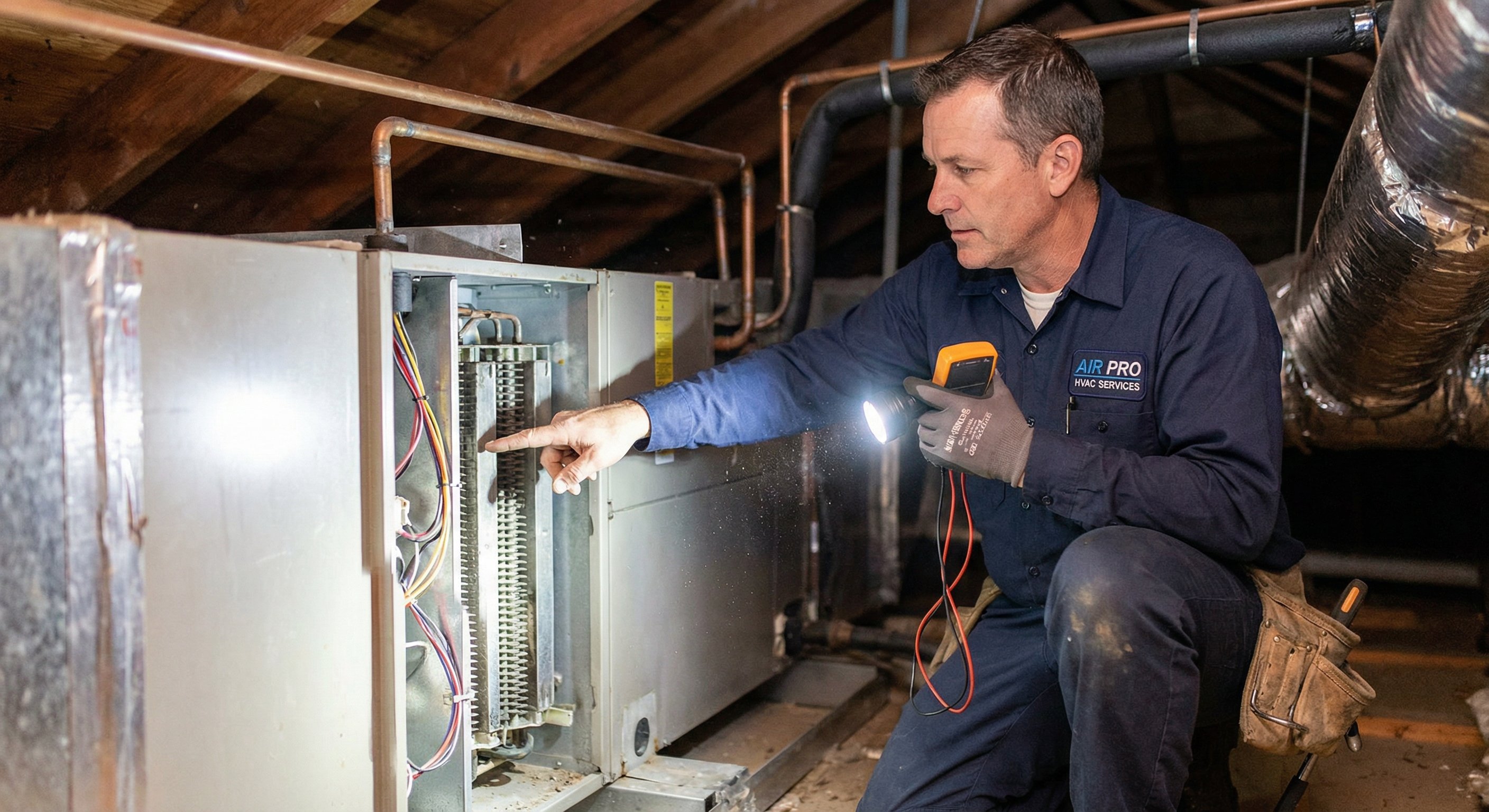
Heat strips are electric resistance heating elements inside your heat pump's air handler. They look like the coils in a toaster. When outdoor temperatures drop too low for the heat pump to extract enough warmth from the air, these strips turn on and draw electric current through metal coils to generate heat.
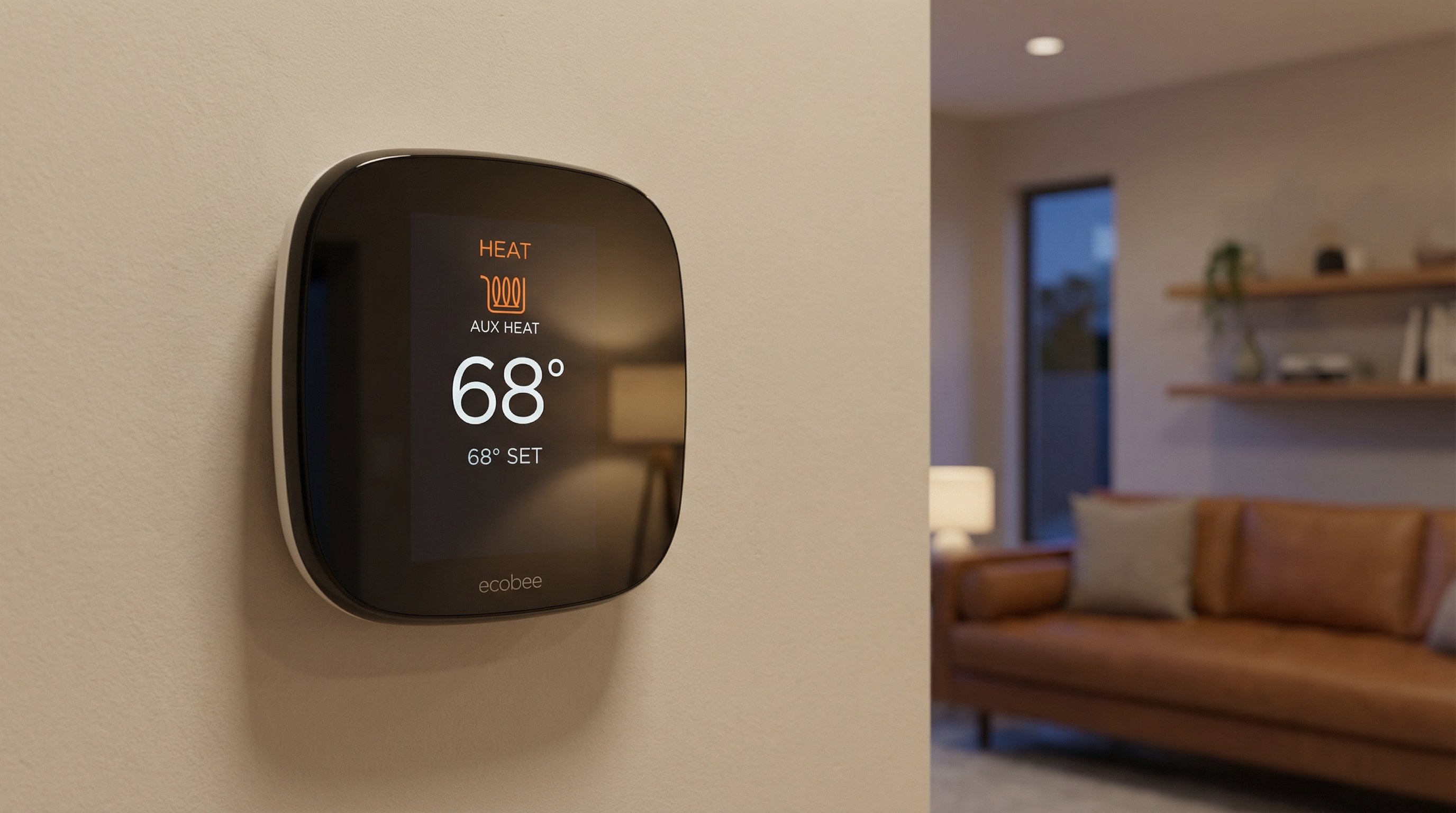
This is called auxiliary heat, or aux heat. You will see it indicated on your thermostat when the outside temperature falls below about 40 degrees Fahrenheit.
In Phoenix, this matters more than most homeowners realize. Overnight lows in December and January regularly drop into the mid-30s across the East Valley, North Phoenix, Anthem, and Queen Creek. If your heat pump is older or slightly undersized for your home, the aux heat runs more than it should.
The aux heat indicator lighting up during a cold snap is not automatically a problem. Heat strips are a normal part of every heat pump system. They are designed to run occasionally.
How to Tell If Your Heat Strips Are Actually Failing
The aux heat runs but no warm air comes out. If your thermostat shows aux heat engaged and you feel cold air from the vents, one or more heat strip elements may be burned out.
Your APS or SRP bill spikes during a cold period without a corresponding temperature change. Heat strips draw significant electricity. A sudden spike when the weather has not changed is worth investigating.
A burning smell that persists beyond the first minute of aux heat operation. A faint smell on the first cold-weather start of the season is normal, caused by dust on the coils. If it lasts more than a minute or two, turn the system off and call someone.
Only some rooms stay cold. This may indicate a duct problem, not a heat strip problem. Do not pay for heat strip replacement until airflow has been checked throughout the system.
The breaker trips when aux heat runs. Heat strips draw 20 to 60 amps depending on your system size. A breaker that trips repeatedly suggests a short or failed element that needs attention.
The Real Cost of Heat Strip Replacement in Arizona
Here is where Phoenix homeowners get the worst of it.
A single heat strip element costs $50 to $150 at wholesale. A complete kit with the housing, relays, and wiring runs $150 to $400 for most residential systems. Labor to replace them takes a competent technician two to four hours.
That puts fair-priced heat strip replacement at $400 to $1,200 total, including labor.
What do Phoenix HVAC companies actually charge? On the low end, independent contractors in the Phoenix market charge $600 to $900 for straightforward heat strip element replacement. The major HVAC chains routinely quote $1,500 to $2,500 for the same work.
The difference is not expertise. It is overhead and margin. A technician from a large HVAC company has a trip charge, a truck fee, an overhead allocation, and a company profit margin built into every line item. Heat strips are not actually expensive. The labor rate applied to a two-hour job is where the number gets inflated.
Phoenix homeowners have described this pattern on local forums. One East Valley homeowner was quoted $2,200 for heat strip replacement by a company that also attempted to sell a full system replacement during the same visit. Another described paying $850 for an element that a parts supplier later confirmed cost the contractor $95.
Skip the dealer markup
See What a New AC Actually Costs in Arizona
AC Rebel shows you the real equipment price — no sales pitch, no inflated quote. Get matched with a licensed installer and keep $3,000–$5,000 in your pocket.
Get My Direct Price →When Replacing Heat Strips Does Not Make Financial Sense
There is one scenario where paying for heat strip replacement is the wrong call. If your heat pump is more than 12 years old, uses R-410A refrigerant, and has needed multiple repairs in the past three years, the math changes.
A new 3-ton heat pump installed in Phoenix costs $5,200 to $8,500 depending on the brand and efficiency rating. If you are spending $1,500 to repair a declining system, you may be delaying an inevitable replacement while burning repair money that could go toward a new unit.
A practical rule: if the heat strip repair exceeds 20 percent of a full replacement estimate, and your system is older than 10 years, get a replacement quote first. For newer systems or homeowners who plan to stay in the home for more than seven years, repairing the heat strips is usually the right call. The components themselves are not expensive, and a proper repair extends the life of a system that still has real useful years remaining.
The Warranty Question That Contractors Often Skip
Most heat pump heat strips carry a manufacturer warranty of five to 10 years. If your heat strips failed and your system is within that window, the replacement parts should be covered at no material cost to you. The contractor charges only for labor.
Some Phoenix contractors do not mention this. They quote full price for parts and labor on a component that the manufacturer would provide at no charge. You pay $1,200 when you should have paid $400 for labor only. The contractor collects the parts margin and keeps the difference.
Before agreeing to any heat strip repair, ask the contractor two specific questions. First, what is the warranty status on the heat strip components in my system? Second, can you show me the manufacturer's warranty coverage for this model? A reputable contractor has this information immediately available. A contractor who gets defensive about warranty questions is telling you something about how they do business.
Take five minutes to look up your air handler model number on the manufacturer's website yourself. This tells you exactly what the warranty covers and for how long.
How to Verify You Actually Need Heat Strip Work
Before you call anyone, do this basic check. Set your thermostat to heat mode and raise it 5 degrees above the current room temperature. Within 30 to 60 seconds, you should hear a soft click inside the air handler and feel warm air from the vents. The aux heat indicator should appear on the thermostat when the strips are running.
If the indicator shows but no warm air arrives after two minutes, something is wrong. If the indicator never appears but your home stays cold despite the thermostat calling for heat, the problem may be elsewhere in the system entirely.
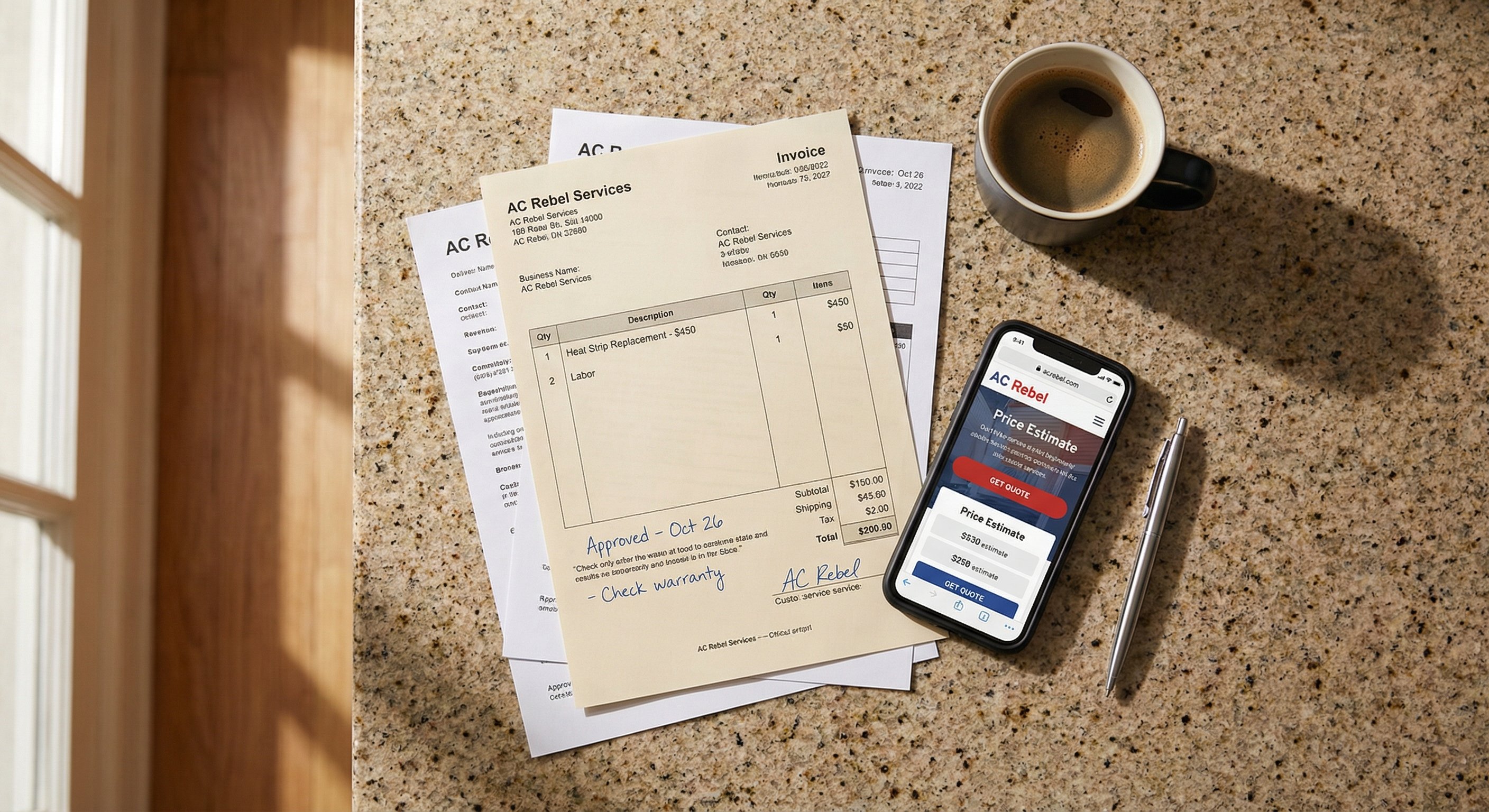
When you do call a contractor, demand a written itemized quote before any work begins. The quote must list each component by name and part number, the cost per part, and the labor charge separately. A quote that says "heat strip replacement" with a single total and no breakdown is not a real quote. It is a number designed to avoid scrutiny.
Take a photo of your air handler's data plate, which is the metal label showing the model and serial number. This makes it harder for a contractor to invent a need for parts you do not actually require.
What This Means for Phoenix Homeowners
Heat strips are a normal, necessary component of every heat pump in Arizona. When they fail, the repair is straightforward and the parts are not expensive. The reason Phoenix homeowners end up paying too much is that the repair is easy to obscure behind bundled pricing and technical language.
Ask questions before you agree to anything. What is the exact failure? What specific parts are needed? What is the warranty on those parts? Can I get a line-item quote in writing? If a contractor cannot answer those questions clearly and upfront, that tells you what you need to know about working with them.
AC Rebel shows you the actual unit cost before you talk to a contractor. That transparency exists because the alternative is a market where homeowners pay whatever number a salesperson decides to write down. See what fair pricing looks like for heat pump components before anyone tells you what you need to pay.
Get a free instant quote at acrebel.com and see the actual cost of heat pump parts and installation before you commit to anything.
Frequently Asked Questions
Q: How much do heat strips cost to replace in Arizona?
Fair pricing for heat strip replacement in Phoenix runs $400 to $1,200 total, including parts and labor. If you are quoted $1,500 or more, ask for a line-item breakdown and get a second opinion. The parts themselves are not expensive. The gap between fair pricing and high quotes comes from overhead markup and bundled labor rates.
Q: Do heat pumps in Phoenix actually need heat strips?
Yes. When overnight temperatures drop below roughly 40 degrees Fahrenheit, a heat pump cannot extract enough warmth from outdoor air to heat your home efficiently. The heat strips fill that gap. This matters in Phoenix. Even areas like North Phoenix, Anthem, and Queen Creek see overnight lows in the 30s during December and January, triggering aux heat in most residential heat pump systems.
Q: How long do heat pump heat strips last?
Heat strips typically last 10 to 20 years depending on usage frequency and the quality of the elements. Systems that run aux heat heavily during cold winters, or that have had electrical issues in the past, tend to wear through elements faster. Annual HVAC maintenance helps catch deterioration before it causes complete failure.
Q: Can I run my heat pump without heat strips in Arizona?
During mild Phoenix winters, your heat pump heats your home fine without the strips running. But when overnight temperatures fall below 40 degrees, the heat pump needs the strips to maintain your set temperature. Without functioning heat strips, your home will not reach or hold your desired temperature on cold nights.
Q: Are heat strip components covered under warranty?
Most heat strip kits carry a manufacturer warranty of five to 10 years. If your heat pump is within that window and the strips have failed, the replacement parts should be provided at no charge. You pay only for labor. Always ask about warranty status before agreeing to a heat strip repair.
Ready to stop overpaying?
See Your Direct AC Price in 2 Minutes
Skip the dealer. Buy your AC unit at direct pricing and pay a vetted local installer only for the installation. No sales calls. No hidden markup. Most homeowners save $3,000–$5,000+ compared to a traditional quote.
Get My Direct Price — No Credit Card2-minute quote · Licensed installers · 10-year warranty options