
Is a Higher SEER Rating Worth It in Arizona? Here's the Real Math

Is a Higher SEER Rating Worth It in Arizona? Here's the Real Math
TL;DR: In Arizona's climate, a higher SEER unit pays back faster than anywhere else in the country because your system runs longer and harder. A 16 SEER versus 22 SEER unit on a 2,500 sq ft Gilbert home saves roughly $55-95 per month during peak summer, meaning the efficiency premium typically breaks even in 5-9 years depending on utility provider. If you plan to stay in your home 10+ years, the upgrade almost always makes sense. SRP and APS customers should factor in their specific rate structures when running the math.
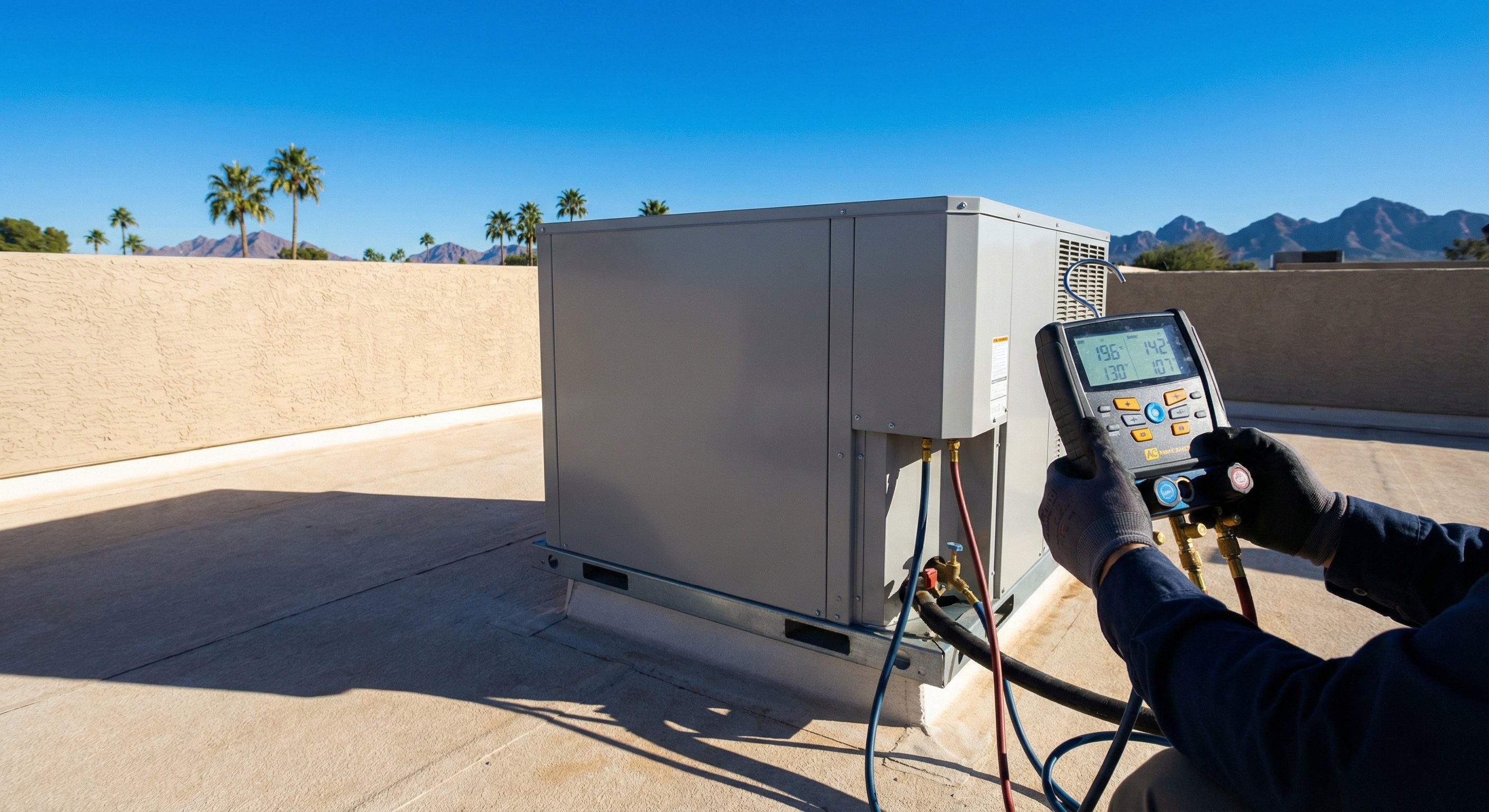
Your contractor hands you two quotes. Same brand, same size system. One is $7,800 with a 14 SEER rating. The other is $11,200 with a 22 SEER rating. The difference is $3,400.
Is the upgrade worth it?
Most homeowners in Phoenix hear a recommendation and take it on faith. But this is a math problem, not a faith problem. The answer depends on three things: how much you run your AC, what your utility charges, and how long you plan to stay in the house. We can calculate all three.
What SEER Actually Means When Your AC Runs 8 Months a Year
SEER stands for Seasonal Energy Efficiency Ratio. It's the ratio of cooling output (in BTUs) over a full season, divided by the energy consumed (in watt-hours). Higher number = more cooling per unit of electricity = less money spent.
The federal minimum for new split-system AC units in the US is 15 SEER as of 2023. Most contractor entry-level quotes you'll see in Phoenix are 14-15 SEER. The premium tier tops out around 22-24 SEER for residential systems currently available.
Here's the part that changes everything for Arizona homeowners: SEER measures seasonal efficiency across an entire cooling year. That means the rating already accounts for the fact that your system runs more hours in Phoenix than it does in Denver or Chicago. In Phoenix, cooling season runs March through October. That's eight months. A unit that rates well on SEER is specifically valuable in a long-season climate like ours.
The other number worth knowing is EER (Energy Efficiency Ratio), which measures efficiency at a specific outdoor temperature, typically 95 degrees Fahrenheit. For Phoenix homeowners, a high EER matters more than in other markets because our units spend significant time operating above 105 degrees. A unit that keeps its efficiency together at 115 degrees is worth paying attention to.
The Three Tiers You Actually Choose Between
When you're buying a new AC system, you encounter three rough efficiency tiers in the Phoenix market:
Good (14-15 SEER): The federal minimum standard. These units are efficient enough to meet code and carry an Energy Star rating. They're what most contractors lead with because they're the cheapest to install. A 3-ton, 15 SEER unit typically runs $2,800-$3,500 for the equipment alone before installation.
Better (16-18 SEER): The sweet spot for most Phoenix homeowners. These units use more advanced compressor technology, often two-stage or variable-speed, which means they run at partial capacity most of the time rather than cycling fully on and fully off. That matters in Phoenix because two-stage units handle our overnight temperature swings (105 during the day dropping to 85 at 2 a.m.) more gracefully than single-stage units. A 3-ton, 17 SEER unit typically costs $3,500-$4,500 for equipment.
Best (20-24 SEER): Variable-speed inverter-driven units with the highest efficiency ratings available in residential systems. These are premium products with premium pricing. A 3-ton, 22 SEER inverter unit typically runs $4,500-$6,000 for equipment alone.
Installation adds $3,000-$5,000 on top of equipment in the Phoenix market depending on the complexity of the job, so those equipment numbers matter for the upgrade delta, not the total.
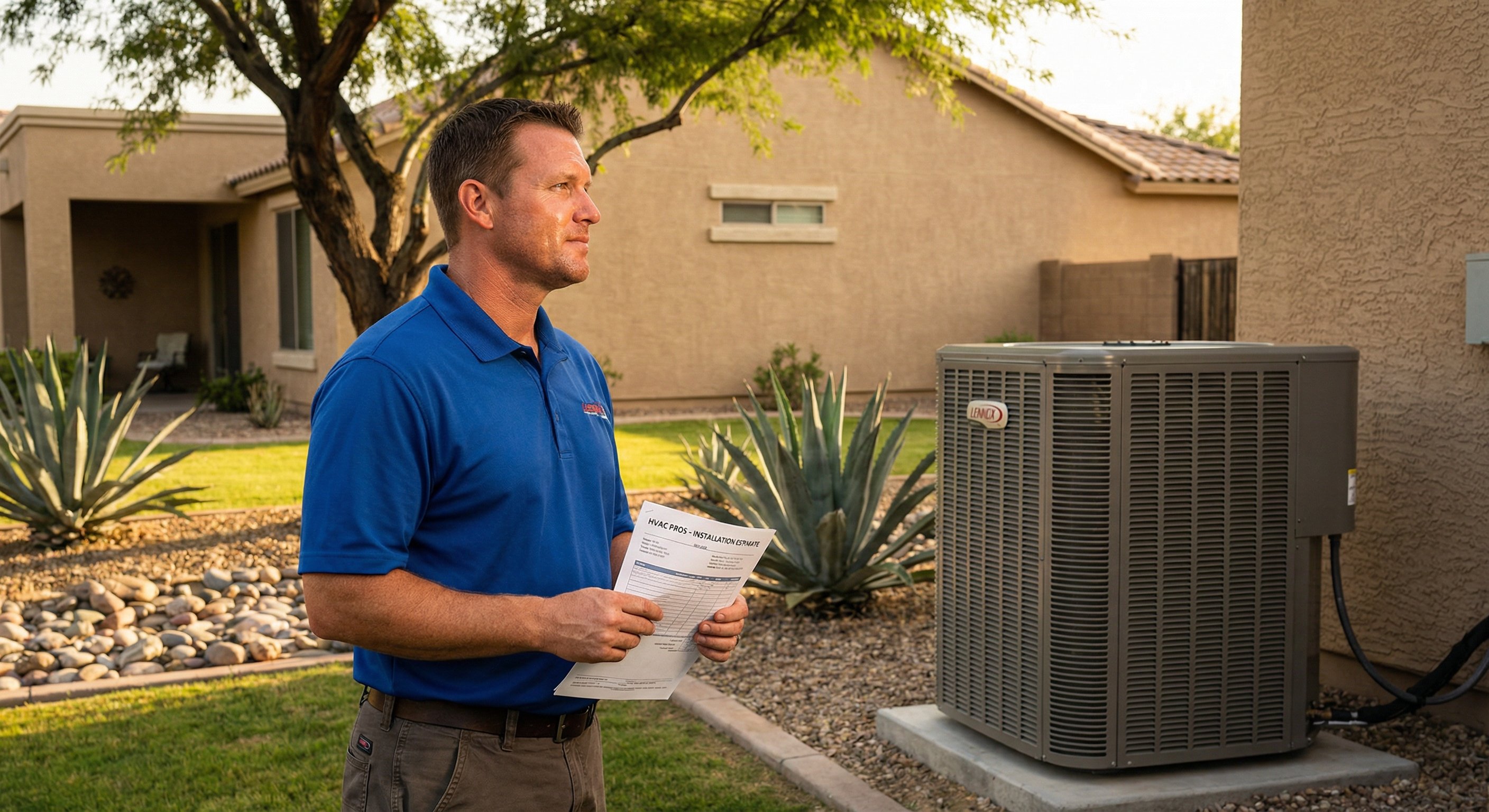
The Math: Running the Numbers on Arizona Cooling Costs
Let's use a real Phoenix scenario. You own a 2,500 square foot single-story home in Gilbert with a 4-ton system (slightly oversized for the insulation and ductwork common in Valley homes built before 2005).
Your system runs about 2,800 hours during a typical cooling season in Maricopa County. That's March through October, 8 months. It's not running at full blast every hour, but it's running.
A 15 SEER 4-ton unit draws about 3.5 kilowatts at peak. A 22 SEER inverter unit of the same size draws about 2.4 kilowatts at peak. The difference sounds small, but across 2,800 hours, it compounds.
Here is the actual difference in electricity consumption during cooling season:
- 15 SEER: ~9,800 kWh per season
- 22 SEER: ~6,700 kWh per season
- Difference: ~3,100 kWh saved per season with the high-efficiency unit
Now apply your utility rate. APS residential rates in Phoenix run approximately $0.12-$0.18 per kWh depending on your plan and usage tier. SRP住宅 plans (E-27) run around $0.10-$0.14 per kWh in the summer months. Let's use $0.13 per kWh as a middle estimate.
3,100 kWh x $0.13 = $403 saved in electricity per cooling season with the 22 SEER unit versus the 15 SEER unit. During the hottest months (June, July, August), that savings runs roughly $55-$95 per month.
The equipment premium for the higher SEER unit is about $2,000-$2,500 more at the installed tier. Simple payback: roughly 5 to 6 years. If you stay in the home 10 years, you come out roughly $1,000 ahead on the upgrade, not counting future electricity rate increases.
And rates will go up. APS has filed for increases multiple times in the past decade. SRP raised its residential heat rate 23% between 2019 and 2024. Every dollar increase in your per-kilowatt rate makes the efficiency upgrade more valuable.
Skip the dealer markup
See What a New AC Actually Costs in Arizona
AC Rebel shows you the real equipment price — no sales pitch, no inflated quote. Get matched with a licensed installer and keep $3,000–$5,000 in your pocket.
Get My Direct Price →When the Upgrade Makes Sense
The higher SEER, higher-efficiency unit is the right call in three scenarios:
You are staying in the home 8+ years. The math above assumes a 5-6 year payback. Add in the time value of money, future electricity rate increases, and the fact that high-efficiency units typically have longer compressor warranties (10 years standard versus 5-7 on entry-level units), and the break-even point is closer to 7-8 years for the typical Phoenix homeowner. If your timeline is longer than that, the upgrade pays.
Your current system is 10+ years old and you're replacing anyway. If you're already in the market for a new unit, buying the higher-efficiency model now locks in the savings for the entire life of the system. Retrofitting a more efficient unit into an old home later is expensive; buying it now as part of a replacement is standard.
You have a two-story home or rooms that run hot. Two-stage and variable-speed units (which are what you get at the 17+ SEER tier) modulate their output instead of running at full blast or turning off completely. That means fewer hot and cold swings in your upstairs bedrooms in Queen Creek or your west-facing living room in Chandler. The comfort improvement is real, not just a marketing claim.
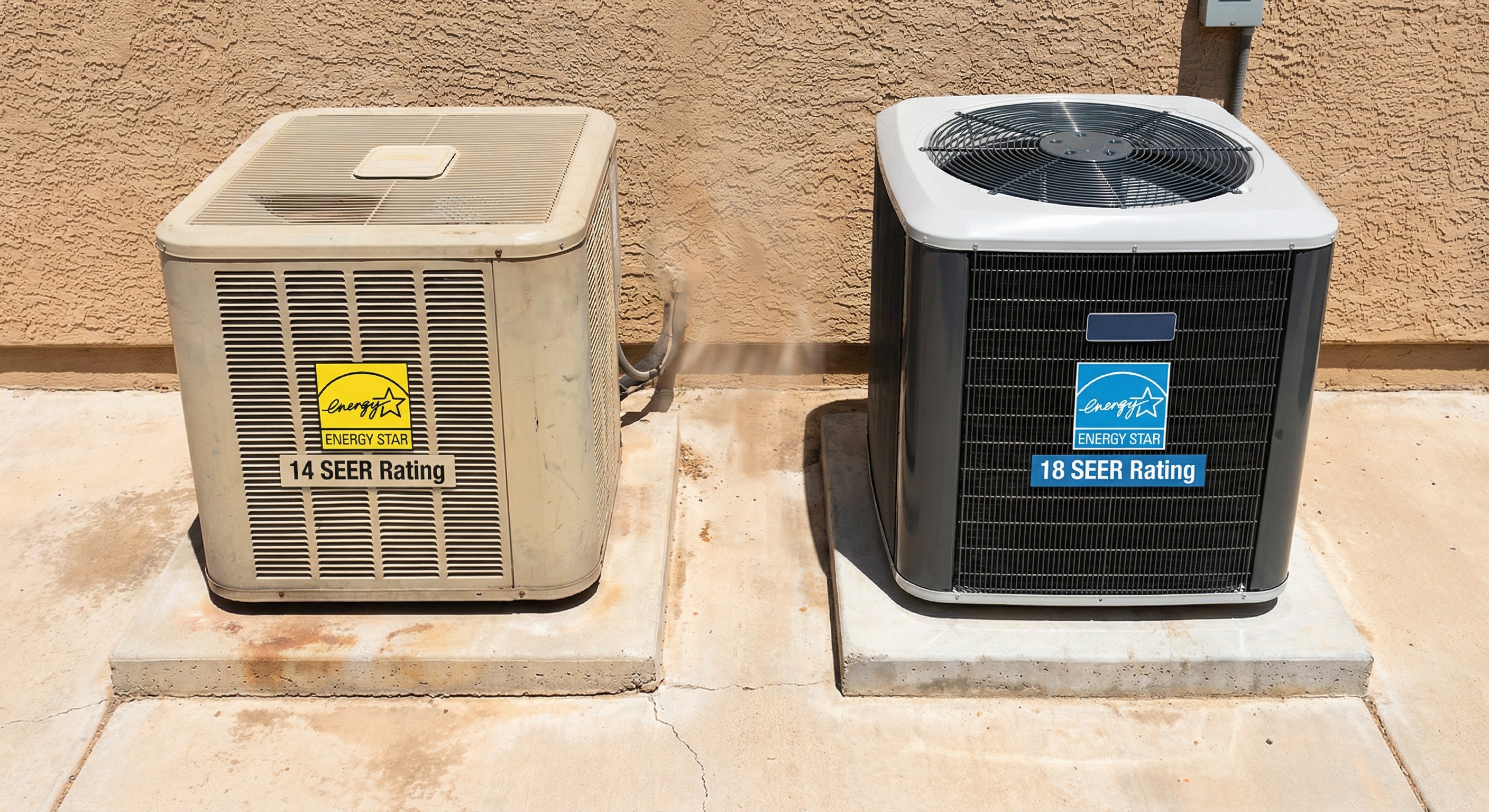
When to Skip It
Higher SEER is not always the right answer. Here is where the math breaks down:
You're replacing a system in a rental property. The payback calculation assumes you capture the electricity savings. If you're a landlord replacing a unit in a renter-occupied property, you may not be able to charge enough rent to recover a $2,500+ equipment premium. Standard efficiency units make more sense for investment properties.
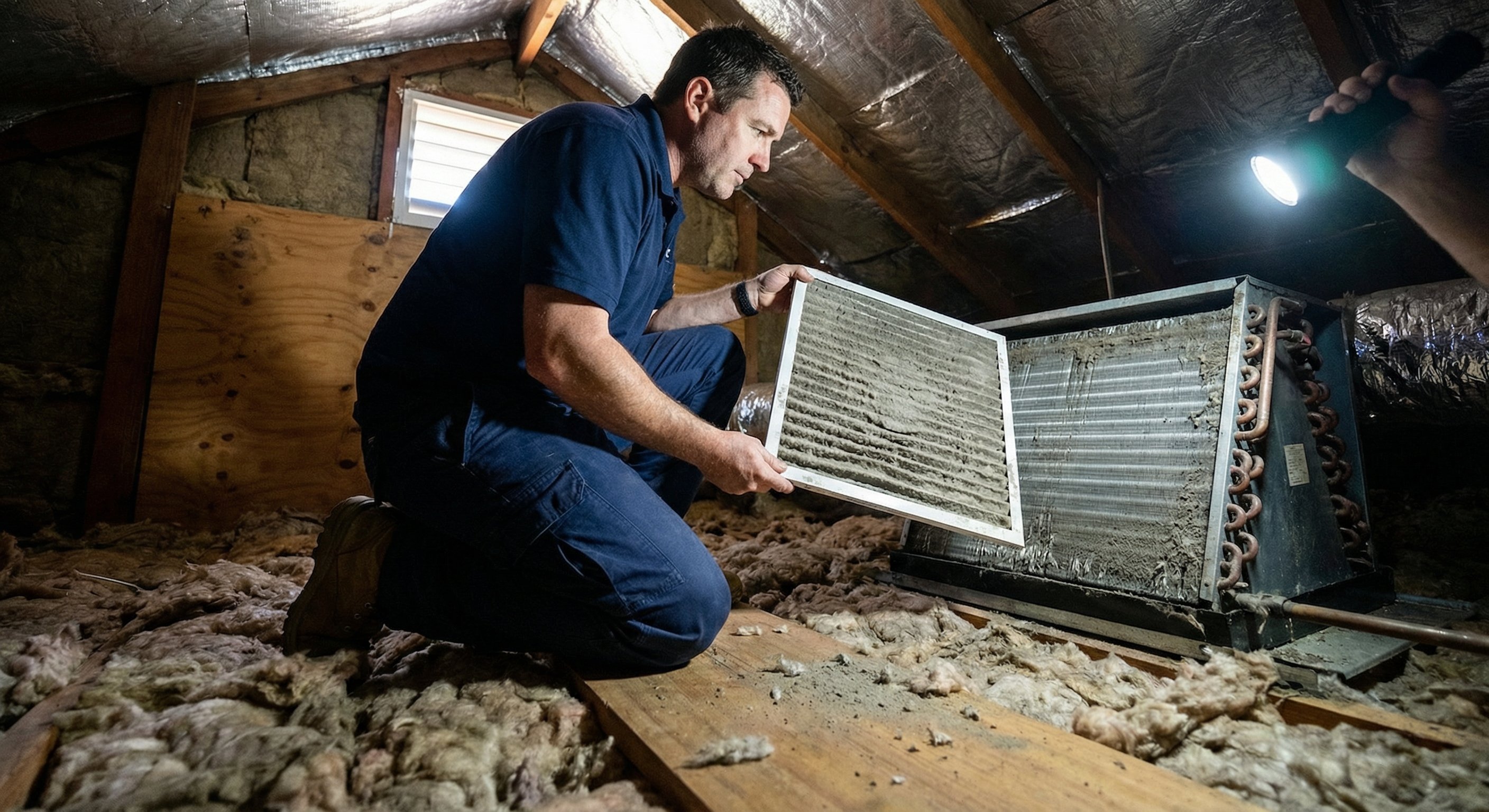
Your home has serious envelope problems. If your Mesa home has 4 inches of attic insulation (when the current recommendation for Maricopa County is R-38 or higher), or your ductwork loses 30-40% of its airflow to leaks and disconnected joints, the efficiency upgrade gives you less benefit. The unit performs better but the house still loses most of that cooling to the attic. Fix the envelope first, then buy the efficient unit.
You are on an SRP demand response plan. SRP's E-27 plan charges based on peak demand during the top 4 hours of the month, not just total kilowatt-hours. On that plan, a higher SEER unit reduces your peak demand charge somewhat, but not as dramatically as the total kWh savings would suggest. Run your specific SRP plan numbers before assuming the payback works.
The Hidden Bonus: Longer Compressor Life
High-efficiency inverter units tend to outlast standard single-stage compressors in Phoenix. A single-stage compressor cycles on and off at full speed every call for cooling. In our heat, that wear compounds faster than in moderate climates.
An inverter-driven compressor idles down to 20-30% capacity when your home is near temperature, then ramps smoothly. That modulation reduces mechanical stress. Industry data suggests inverter compressors last 15-18 years in Arizona versus 10-14 years for standard units. A compressor replacement in Phoenix runs $3,500-$6,500 installed.
How Rebates and Tax Credits Change the Payback
The math above does not include available incentives, which in 2026 are more favorable than they have been in years.
Federal tax credit: The Inflation Reduction Act extended a 30% tax credit for qualifying high-efficiency heat pumps and air conditioners through 2032. For a new AC system, this applies to air-source heat pumps that meet SEER2 and HSPF2 thresholds. The credit is up to $2,000 for qualifying installations. Check the ENERGY STAR qualified products list for current eligibility.
SRP rebates: SRP offers rebates for qualifying high-efficiency cooling equipment on certain residential plans. amounts vary by tier and plan year, so check srpnet.com for the current year's offerings.
APS rebates: APS has offered rebates on high-efficiency cooling equipment in past years through its Cool Rewards program. Availability and amounts change year to year, so verify before budgeting.
When you layer federal tax credits and utility rebates, the effective payback period on a 20+ SEER unit versus a 15 SEER unit can drop to 3-5 years for Phoenix homeowners who qualify. That is a different investment entirely.
What to Ask Your Installer Before You Sign
If a contractor recommends a specific efficiency tier without asking about your utility provider, your home's insulation, or how long you plan to stay, they are selling you a unit, not solving your problem.
Ask specifically: what SEER rating does your specific home support, are they pricing a variable-speed unit and why, what are this year's SRP and APS rebate eligibility requirements, does the unit qualify for the current federal tax credit, and what is the compressor warranty? A contractor who answers all five clearly is worth trusting.
Making the Call
If you are replacing a failed or aging system, buying at the 17-18 SEER tier gives you the best balance of upfront cost and long-term savings for our climate. The jump to 22+ SEER is worth it if you plan to stay 10+ years, your insulation and ductwork are in reasonable condition, and you are on a standard APS or SRP rate plan.
The 14 SEER entry-level unit makes sense only for investment properties or situations where budget constraints make the upgrade genuinely impossible.
Buy the efficiency tier deliberately. Run your own numbers. The difference between a 15 SEER and 18 SEER unit over 10 years in Arizona's heat is your money.
See how AC Rebel structures direct pricing on high-efficiency units and compare what different efficiency tiers actually cost before you talk to a contractor.
Frequently Asked Questions
Q: Does a higher SEER rating cool my home better, or just use less electricity?
A higher SEER rating means the unit produces the same cooling output (BTUs) while using less electricity. It does not necessarily make your home cooler. What it does is lower your electricity bill while delivering the same cooling performance. Inverter-driven high-SEER units often feel more comfortable because they run continuously at lower speeds rather than cycling on and off, which reduces temperature swings in individual rooms.
Q: What is a good SEER rating for Arizona heat?
For Phoenix-area homeowners, a SEER rating of 16-18 is the practical sweet spot for most homes. This tier typically includes two-stage or variable-speed compressors that handle Arizona's extreme temperature swings and long cooling seasons better than entry-level single-stage units. The 20+ SEER tier is worth it if you plan to stay in the home 10+ years and your home's insulation and ductwork are in decent condition.
Q: How does EER differ from SEER for Phoenix homeowners?
SEER measures seasonal energy efficiency across an entire cooling year. EER measures efficiency at a specific outdoor temperature, typically 95 degrees Fahrenheit. For Phoenix homeowners, a high EER rating matters because our units operate above 95 degrees for months at a time during peak summer. When comparing two units, the one with the higher EER number will perform better when outdoor temperatures hit 110 degrees or higher, which is a regular occurrence in July and August here.
Q: Will a higher SEER unit lower my SRP or APS bill?
A higher SEER unit will reduce your total kilowatt-hour consumption, which directly lowers your bill if you are on a standard SRP or APS residential rate plan. The savings are largest during June, July, and August when your system runs the most. If you are on SRP's demand response plan (E-27), the reduction in peak demand charges is meaningful but less dramatic than the kWh savings. Run your specific utility plan numbers before assuming the payback.
Q: How long does it take for a higher SEER unit to pay for itself in Arizona?
For most Phoenix metro homeowners, the payback period on upgrading from a 15 SEER to an 18 SEER unit is approximately 6-8 years, based on current APS and SRP residential rates. With available federal tax credits (up to $2,000 through 2032) and utility rebates, the effective payback can drop to 3-5 years for qualifying installations. The exact number depends on your utility provider, home size, how many hours your system runs, and how long you plan to stay in the home.
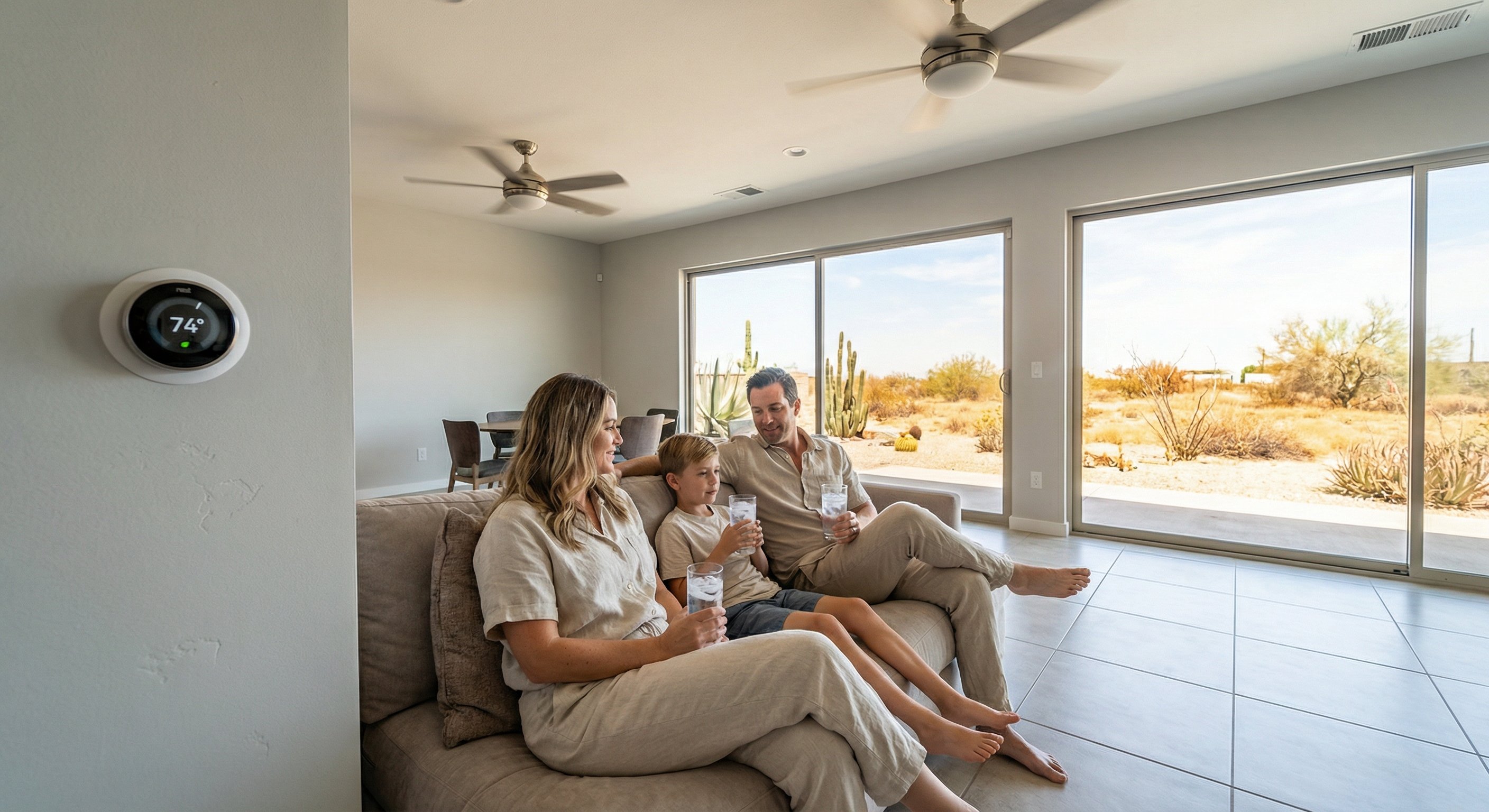
Get a free instant quote at acrebel.com and see the actual price difference between efficiency tiers before you commit to anything.
Ready to stop overpaying?
See Your Direct AC Price in 2 Minutes
Skip the dealer. Buy your AC unit at direct pricing and pay a vetted local installer only for the installation. No sales calls. No hidden markup. Most homeowners save $3,000–$5,000+ compared to a traditional quote.
Get My Direct Price — No Credit Card2-minute quote · Licensed installers · 10-year warranty options