
How Long Does AC Installation Take in Phoenix? (Realistic 2026 Timeline)

How Long Does AC Installation Take in Phoenix? (Realistic 2026 Timeline)
TL;DR: A straightforward AC replacement in Phoenix typically takes 3 to 6 hours. If ductwork modifications, electrical upgrades, or permit inspections are involved, plan for 1 to 2 full days. The type of installation matters more than anything else: swapping the same-size unit on existing infrastructure is fast; running new ductwork through an older Phoenix home can stretch the timeline considerably. Permits from Maricopa County typically add 1 to 3 business days before work can legally start.
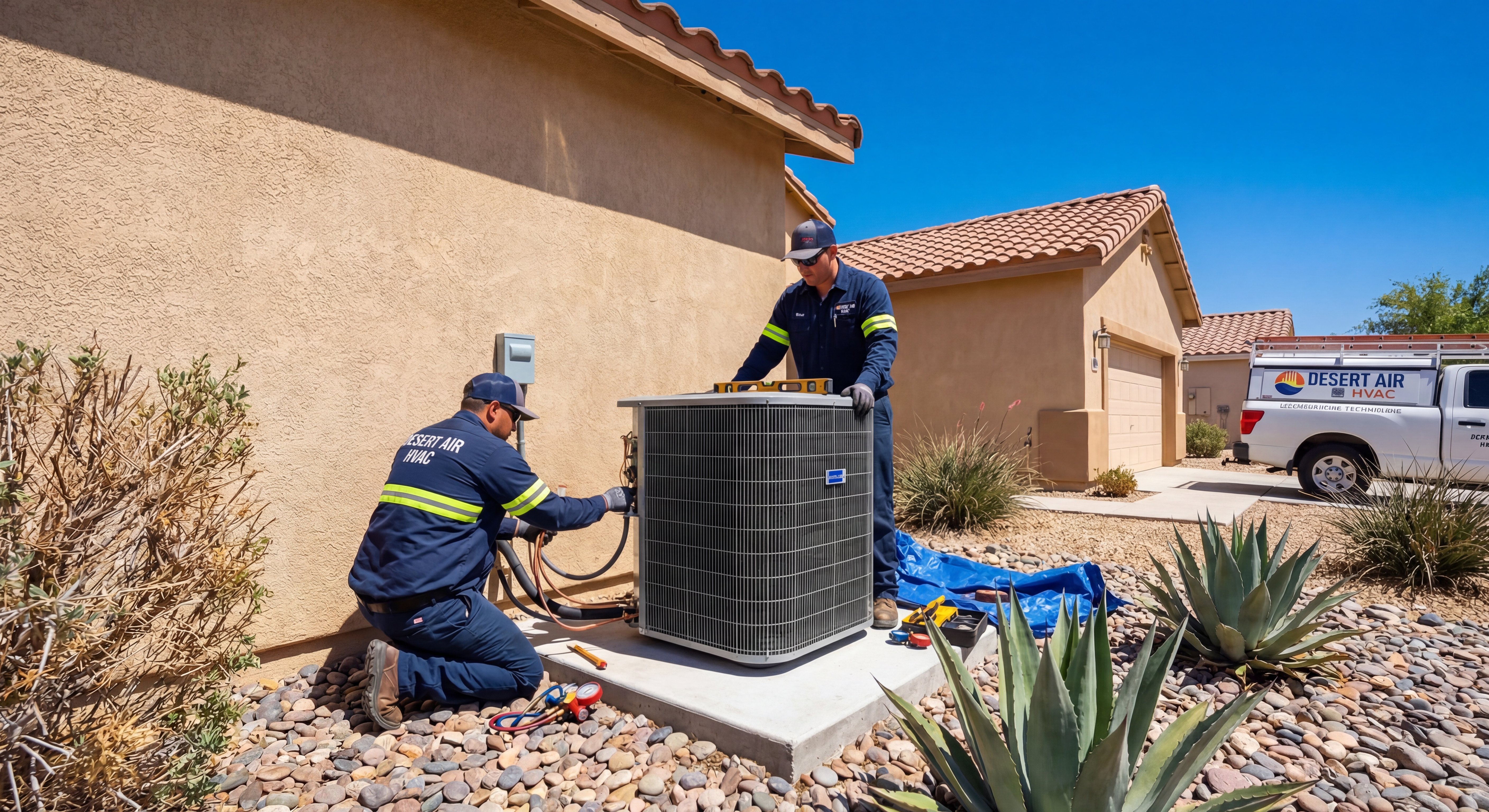
It is 108 degrees outside and your AC is done. You have already accepted the reality that replacement is faster than repair on a unit this old. You have called around. Three contractors can get someone out next week. One says 3 hours and one says 2 days. You want to know what drives the difference and how to plan your week around it.
That is what this article is for.
What Drives AC Installation Time in Phoenix
Three variables determine how long your installation will take:
1. Type of installation. The fastest installs are a straight swap: same capacity, same location, existing ductwork in decent shape. The slowest are full replacements with ductwork modifications or electrical upgrades.
2. Your home's existing infrastructure. Phoenix homes built before 2000 often have ductwork sized for smaller systems. If the new unit needs different airflow, modifications happen. If the electrical panel is original to the 1980s, upgrades may be required before the new unit can be connected safely.
3. Permit and inspection requirements. Maricopa County requires a permit for new AC installations and replacements. The inspection itself takes minutes. The wait for an inspector to show up can take 1 to 3 days depending on contractor scheduling and county workload.
The type of installation is the biggest variable. Here is how timelines break down.
AC Installation Timeline by Installation Type
Same-Size Straight Replacement: 3 to 6 Hours
This is the most common scenario. You have a 3-ton system, it failed, and you are replacing it with another 3-ton unit in the same location with the same ductwork connections.
In this case, the work is:
- Recovering and disposing of the old refrigerant (legally required, takes 30 to 60 minutes)
- Removing the old outdoor unit
- Setting the new outdoor unit on the same concrete pad
- Running new refrigerant lines and reconnecting electrical
- Installing a new disconnect box if the existing one is outdated
- Vacuum-testing the sealed system for leaks
- Powering up and verifying cooling performance
For a straightforward swap in Phoenix, expect 3 to 6 hours of labor with a two-person crew. The job is done in a single day and you have cooling by evening.
This is the scenario where you have the most leverage to compare pricing. The work is standardized. There is no reason to pay contractor markup on the unit itself when you can buy the equipment at direct pricing through AC Rebel and have a licensed contractor handle only the installation labor.
Ductwork Modification Required: 1 to 2 Days
About 30 to 40 percent of Phoenix homes have duct systems that are undersized, poorly sealed, or configured in ways that do not match modern AC design standards. If you are upgrading to a higher-efficiency unit or the existing ducts need to be reconfigured, ductwork work extends the timeline.
Duct modifications include:
- Adding new supply or return runs to balance airflow
- Sealing leaky joints in existing ductwork (a common issue in 1980s and 1990s tract homes in Chandler, Gilbert, and Mesa)
- Replacing damaged flex duct with rigid ductwork
- Resizing duct connections to match a new air handler
A partial ductwork modification typically takes one full day with a two-person crew. A more extensive reconfiguration can stretch to two days.
The Arizona heat makes this worse in a specific way: ductwork runs through attics that hit 140 degrees in the summer. Sealing duct joints in that environment is miserable work and takes longer than it would in a temperate climate. Technicians will often start early in the morning specifically to avoid working in peak attic heat.
Electrical Panel or Wiring Upgrade: 1 to 2 Days
If your home still has a 100-amp electrical panel, or if the wiring to the outdoor AC unit is original cloth-wrapped wire from the 1970s, an electrical upgrade is not optional. It is a safety requirement.
The good news is this work can often happen concurrently with other preparation steps. A licensed electrician can upgrade the panel or run new 240-volt wiring to the unit pad while other work is in progress. If the electrical upgrade is the only variable, the installation may only add a half-day to the overall timeline.
If the electrical work requires a separate permit and inspection from the HVAC permit, you are looking at two separate inspection windows, which can stretch the overall project by several days.
New Construction (No Existing System): 2 to 4 Days
If you are installing AC in a new addition or a home that never had central cooling, the timeline is longer because the contractor is starting from scratch. Running new ductwork through finished living space, installing a new electrical line, mounting an indoor air handler, and configuring the system from zero takes 2 to 4 days depending on the complexity of the layout.
This scenario is less common for Phoenix homeowners replacing existing systems, but it comes up enough in renovation projects in historic homes in Phoenix neighborhoods like Encanto or Willo that it is worth knowing.
The Permit and Inspection Timeline in Maricopa County
Here is the part that surprises most Phoenix homeowners: the permit itself is not slow, but the inspection scheduling is where time gets added.
Maricopa County requires an mechanical permit for AC replacement work. Your contractor pulls the permit on your behalf as part of the installation agreement. The permit fee varies but is typically $200 to $400 depending on the scope.
Once the work is complete, the contractor calls for a final inspection. In normal times, an inspector visits within 1 to 3 business days. During peak summer season (June through August), inspectors are busy and scheduling windows stretch. Contractors who do high volume in Phoenix tend to have established relationships with local inspectors that help get faster slots.
Bottom line on permits: budget for 1 to 3 days of waiting after the physical installation is complete before you have legal sign-off. The cooling will work before inspection day, but the system legally cannot be used until the inspection passes.
Skip the dealer markup
See What a New AC Actually Costs
AC Rebel shows you the real equipment price — no sales pitch, no inflated quote. Get matched with a licensed installer and keep $3,000–$5,000 in your pocket.
Get My Direct Price →What the Actual Day-of Looks Like
Here is a realistic timeline for a same-size straight replacement on a Phoenix home with decent ductwork:
7:00 AM: Crew arrives, takes photos of existing setup, reviews the work plan. 7:30 AM: Refrigerant recovery begins. The old refrigerant is legally captured and disposed of per EPA Section 608 requirements. 8:30 AM: Old outdoor unit is disconnected and removed. New unit is set on the pad. 9:30 AM: New refrigerant lines are run. Electrical connections are made at the disconnect box. 10:30 AM: Indoor air handler connections are verified. Ductwork is checked for leaks at the connection points. 11:30 AM: System is vacuum-tested to confirm no leaks in the sealed refrigerant system. 12:00 PM: Lunch break. System holds vacuum during this time (technician checks the gauge before and after). 12:30 PM: Power is restored. System starts up. Technician verifies refrigerant charge, checks temperature differential across the evaporator coil (target: 14 to 20 degrees Fahrenheit), and tests airflow at the supply vents. 1:30 PM: Walkthrough with homeowner. Thermostat is programmed. Contractor reviews the new equipment warranty and hands over documentation. 2:00 PM: Job is complete. Cooling is operational.
That is roughly 5 to 6 hours of active work with a two-person crew for a straightforward replacement. Add 30 to 90 minutes for each additional complexity: ductwork sealing, electrical upgrades, or extra refrigerant runs.
What to Do While You Wait
If your installation is scheduled and you have a gap before the crew arrives or during a multi-day project, use that time productively.
Clear the installation area. If the outdoor unit is in a side yard, move anything stored there. If the air handler is in a closet or mechanical room, clear a path. Technicians should not have to move your storage to get to their work.
Change your air filter now. If your existing filter is dirty, replacing it before the new system fires up puts less initial strain on the new equipment.
Check your thermostat batteries. This takes 2 minutes and ensures your new system has a functioning control interface from day one.
Know your electrical panel location. If an electrical upgrade is needed, the technician needs quick access. Having a clear path and knowing where your panel is saves time.
How AC Rebel Thinks About Installation Timing
When you buy an AC unit through AC Rebel, you are buying the equipment at direct pricing. The installation is handled by a vetted, licensed local contractor who you choose from their profile. That contractor coordinates the permit and inspection process.
Because AC Rebel works with contractors who specialize in installation volume in the Phoenix market, scheduling tends to be faster than the average one-off homeowner contract. Contractors who install 10 to 15 systems per week in the Phoenix metro have inspection relationships and permit familiarity that a one-truck company doing three installs per month simply does not.
When you go through the quote wizard on AC Rebel, the installation timeline for your specific situation is part of what your contractor will communicate before you confirm the order. You are not guessing at the timeline; you are agreeing to a schedule that your chosen contractor has committed to.
How Long Is Too Long?
If a contractor tells you an AC replacement will take 1 to 2 weeks, that is usually a scheduling red flag, not a complexity flag. Phoenix summers mean demand is high and good contractors book out. That is one reason the spring window matters: May installations are easier to schedule than July emergency calls.
The physical work for a straight replacement should not take more than 2 days under normal circumstances. If someone tells you 3 or 4 days for a simple swap, ask why specifically. The most common legitimate reasons are permit scheduling, electrical upgrades, or a multi-day curing process for duct mastic sealer on repaired ductwork.
Anything beyond that is either a scheduling bottleneck or an inexperienced contractor who is padding the timeline.
Frequently Asked Questions
How long does a straight AC replacement take in Phoenix?
A straightforward same-size AC replacement in Phoenix takes 3 to 6 hours with a two-person crew. The work includes removing the old unit, installing the new one, running refrigerant lines, connecting electrical, and testing the system. The inspection happens separately, typically within 1 to 3 business days after the work is complete.
Do I need a permit for AC replacement in Maricopa County?
Yes. Maricopa County requires a mechanical permit for all new AC installations and replacements. Your contractor pulls the permit on your behalf. The permit fee is typically $200 to $400 depending on scope and is usually included in the installation price from a reputable contractor.
What makes AC installation take longer than expected in Phoenix?
The most common factors that extend installation time are: ductwork modifications needed to match the new unit (common in homes built before 2000), electrical panel upgrades required for modern 240-volt AC units, and inspector scheduling delays during peak summer season. Phoenix attic heat also slows down any work that involves crawling in the attic, which can add time to duct sealing and air handler connections.
Can I stay in my home during AC installation?
Yes. For a straight replacement, your home remains comfortable throughout most of the process. The power will be off to the outdoor unit for roughly 2 to 3 hours during the switchover, but your home stays cool if you keep doors closed. If ductwork modifications are involved, some supply vents may be open during the work, which can allow some hot attic air into the home temporarily.
How long after installation before the AC works?
The AC works immediately after the technician finishes startup and testing, which is typically the same day as the installation. You will have cooling by the end of the workday for a standard replacement. The permit inspection happens separately, usually within 1 to 3 business days, but it does not affect the system operation.
Is 3 to 6 hours realistic for any AC replacement?
It is realistic for a same-size straight swap where the existing ductwork and electrical are compatible with the new unit. If your new unit has a different capacity (for example, upgrading from a 2.5-ton to a 3-ton unit), electrical upgrades are needed, or the ductwork requires modifications, the timeline extends to 1 to 2 days. The physical work limits are real: sealing duct joints in a 140-degree attic, running new electrical conduit, and pressure-testing refrigerant lines all take the time they take.
How do I check my contractor's license before installation day?
Arizona Registrar of Contractors maintains a public license lookup at azroc.gov. Any licensed HVAC contractor in Maricopa County must display their license number on all contracts and vehicles. You can verify the license number, check for active bonded status, and see any complaint history before you commit. AC Rebel shows each installer's license number and reviews on their profile before you book.
Ready to stop overpaying?
See Your Direct AC Price in 2 Minutes
Skip the dealer. Buy your AC unit at direct pricing and pay a vetted local installer only for the installation. No sales calls. No hidden markup. Most homeowners save $3,000–$5,000+ compared to a traditional quote.
Get My Direct Price — No Credit Card2-minute quote · Licensed installers · 10-year warranty options