
HVAC Maintenance Plans in Phoenix: Are They Actually Worth It?

HVAC Maintenance Plans in Phoenix: Are They Actually Worth It?
TL;DR: Annual HVAC maintenance plans in Phoenix typically cost $150-$300 per year, covering 1-2 filter changes and one inspection visit. For most homeowners, paying $100-$150 per individual service call on an as-needed basis saves money over a full year, since your system only needs professional attention every 2-3 years in Arizona's climate. The value of a maintenance plan depends entirely on whether your contractor actually cleans the coils, checks refrigerant pressure, and tightens electrical connections during each visit, or just tops off the filter and calls it done.
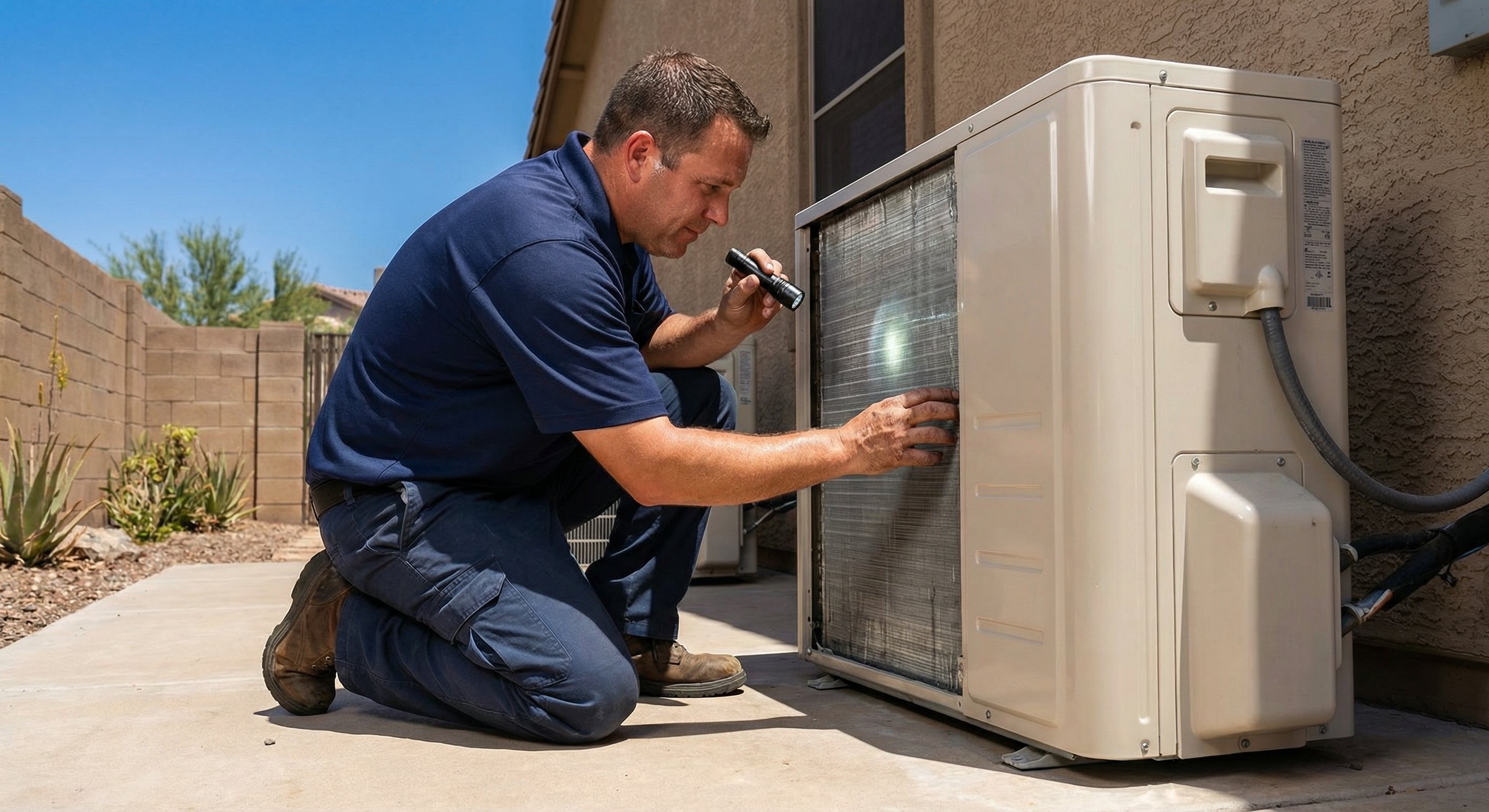
It happens every April. Your mailbox fills with postcards from HVAC companies offering "Annual Maintenance Plans" at $149, $199, or $249 per year. Some come with reassuring language about "extending the life of your system" and "preventing costly breakdowns." One of them probably showed up after a technician was in your home last spring.
Here is what those postcards do not tell you: the math rarely works in your favor, the quality of the actual service varies wildly between contractors, and some plans exist primarily to lock you into a relationship with a company before you have a chance to comparison shop when your AC actually fails.
Let us look at what these plans actually cover, what they cost, and whether the numbers make sense for a typical Phoenix metro homeowner.
What an HVAC Maintenance Plan Actually Includes in Arizona
Most annual plans in the Phoenix market fall into one of two buckets.
The $149-$179 basic plan typically includes two filter changes per year, one annual inspection visit, and a discounted rate on repairs (usually 10-15% off). Some add priority scheduling during the summer months, which sounds valuable until you realize every homeowner with a plan has the same priority status.
The $199-$300 premium plan usually adds a second inspection visit (often sold as spring and fall), more filter changes (up to four per year), extended parts coverage on specific components, and sometimes includes water heater or multi-system discounts if you have more than one unit.
Those descriptions come straight from the marketing language on contractor websites. Here is what they translate to in actual technician labor and materials:
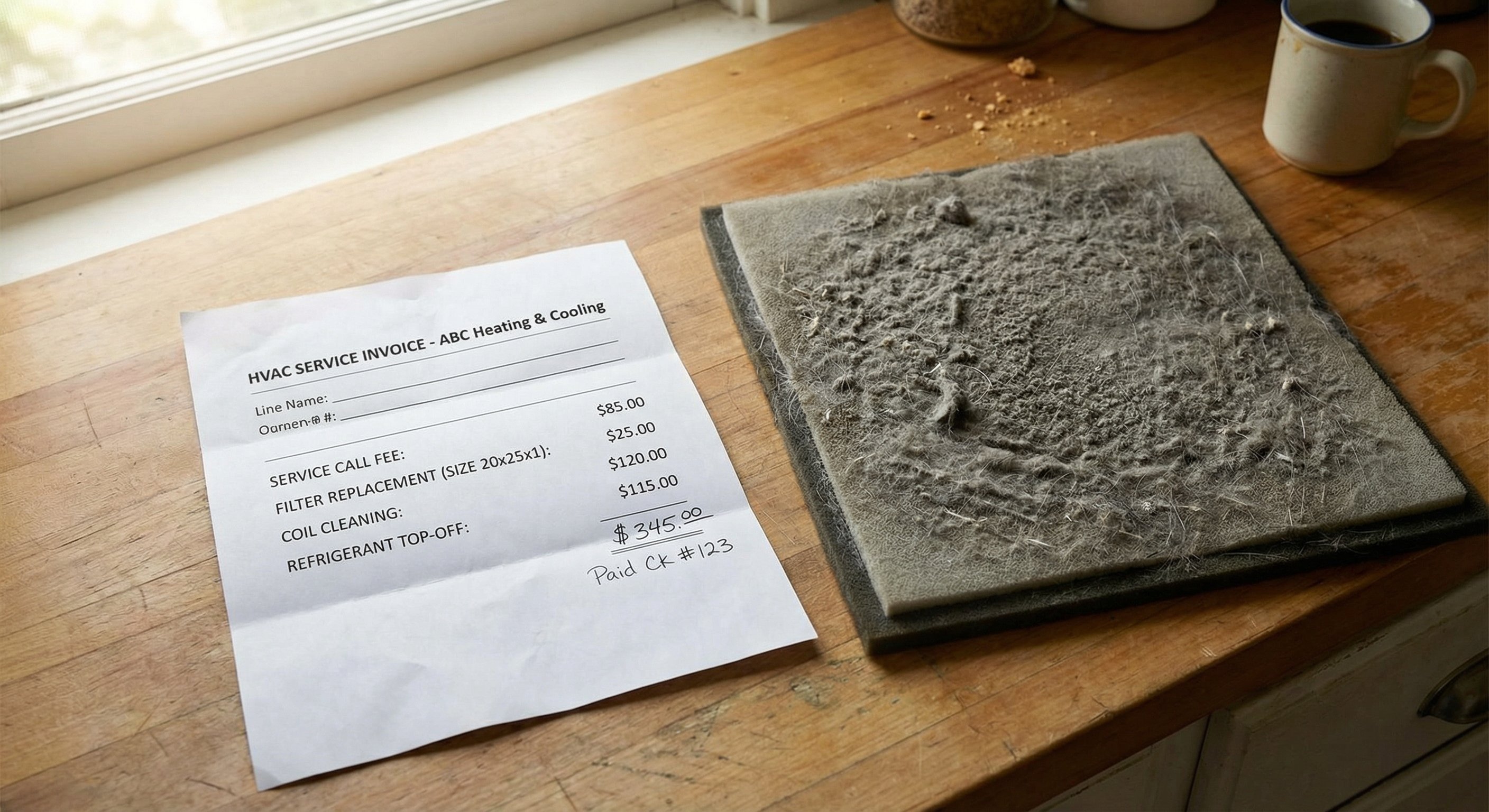
A standard filter change in Phoenix runs $25-$45 per visit if you hire someone. Two per year is $50-$90 in filter labor alone. A basic inspection visit with coil cleaning and electrical checks typically costs $125-$175 as a standalone service in the Phoenix market. A premium plan claiming $400+ in value is usually inflated by listing the full retail price of individual services rather than what a homeowner would actually pay for those specific services.
The pricing math matters here. If your plan costs $199 per year and includes two filter changes (worth $50-$90) and one inspection visit (worth $125-$175), you are paying roughly fair value if and only if the inspection is actually thorough.
The Core Problem With Maintenance Plans in Phoenix
The math works. Until it does not. Here is why.
Arizona's air conditioning load is among the heaviest in the country. A system in Scottsdale or Chandler that runs continuously from April through October accumulates more run hours in a single summer than a system in Minnesota accumulates in an entire year. That heavy usage does two things.
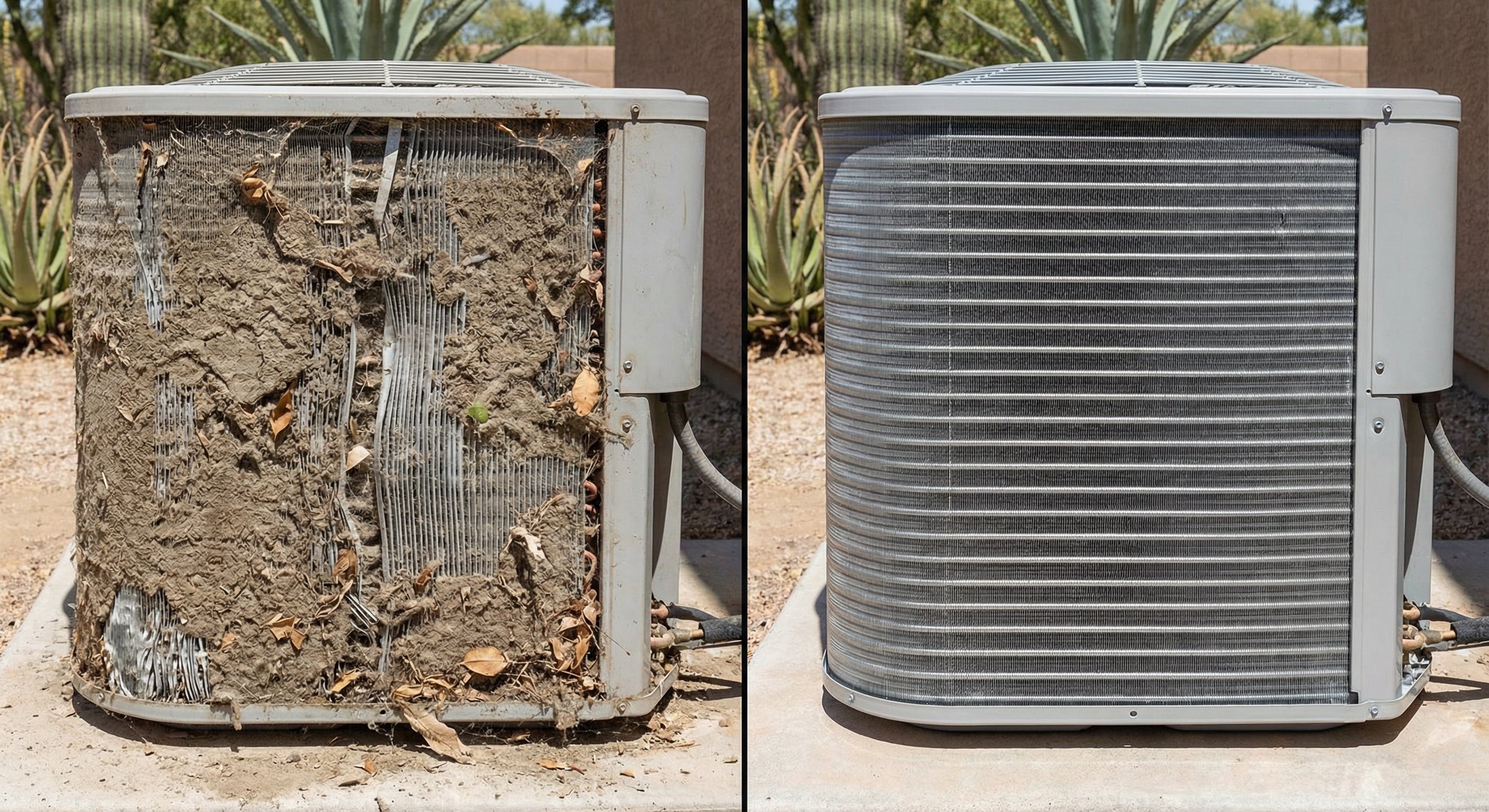
First, it accelerates wear on the compressor, capacitors, and contactor switches. Second, it makes your filter and coil maintenance genuinely important. Desert dust accumulates in condenser coils faster here than in any other major metro market in the country. Hard water mineral deposits affect evaporator coils in ways that do not show up in the normal "clean your coils" advice you see in national articles.
So the conditions that make maintenance valuable ARE present in Phoenix. The question is whether your maintenance plan delivers the maintenance that actually addresses those conditions.
What You Should Actually Be Getting Per Visit
Here is the honest checklist of what a thorough annual AC maintenance visit looks like in Arizona. If your maintenance plan technician is not doing all of these items, you are not getting your money's worth.
Outdoor condenser coil cleaning. This is the most important task in Phoenix and the most commonly skipped. Desert dust and pollen coat the fins, reducing heat transfer efficiency by up to 30% according to the U.S. Department of Energy. A pressure washer or garden hose with a coil spray nozzle removes the buildup. If your contractor just tops off the refrigerant without cleaning the coil, your efficiency problem persists.
Refrigerant pressure check. Your system should have a target superheat and subcooling reading. A technician checking pressures with gauges can tell you if you have a slow leak or a charging issue. This takes 10 minutes. If they are not doing it, they are not actually evaluating your system is health.
Electrical connection tightening. Vibrations from the compressor loosen wire connections over time. Loose connections create heat at the contact points, which is one of the leading causes of compressor failure. A $15 replacement part prevents a $4,500 compressor replacement. This step takes 5 minutes and is almost universally skipped by maintenance plan technicians on basic plans.
Condensate drain line clearing. Phoenix dust combines with humidity during monsoon season to create a sludge that clogs the condensate drain. A clogged drain does not just reduce cooling efficiency. It can cause water damage inside your home and trigger the emergency shutoff switch that leaves you without AC on a 108-degree afternoon.
Indoor evaporator coil inspection. The coil behind your air handler's access panel. If it has not been cleaned in a few years, you have a layer of dust and potentially mold on it that restricts airflow and degrades indoor air quality.
If your annual plan visit skips two or more of these items, you are paying for the plan but not receiving the maintenance your Phoenix system actually needs.
Skip the dealer markup
See What a New AC Actually Costs
AC Rebel shows you the real equipment price — no sales pitch, no inflated quote. Get matched with a licensed installer and keep $3,000–$5,000 in your pocket.
Get My Direct Price →When a Maintenance Plan Actually Makes Sense
There are two scenarios where paying for an annual maintenance contract makes financial sense.
You have a new system (under 5 years old). Newer systems are still under manufacturer warranty, and most warranties require documented annual maintenance to remain valid. If you skip your maintenance plan and your compressor fails at year 6, some manufacturers will use the lack of documented service as grounds to deny your warranty claim. A $200 annual plan is cheap insurance against a $4,500 compressor denial.
You own multiple properties or a larger home with multiple systems. If you have a main house and a guest house, or a property management portfolio of any size, the administrative simplicity of one annual contract covering multiple systems has real value. Managing four separate service calls at $150 each across four properties is more time-intensive than one invoice with one contractor. The convenience premium is worth paying if you genuinely lack the time or inclination to coordinate service yourself.
For a single-family home with a single AC system that is more than 5 years old and has been running without major issues, the maintenance plan math is harder to justify.
The Per-Visit Math for Phoenix Homeowners
Let us run the actual numbers.
A typical Phoenix homeowner pays $120-$175 per service call for a maintenance inspection that includes coil cleaning, refrigerant check, electrical inspection, and condensate drain clearing. If you schedule this every 2 years instead of every year, you are spending $60-$88 per year on average for more thorough service than most $199 annual plans deliver.
If you add a separate filter change in between maintenance years, you are at $75-$113 per year on average, and that is with full per-visit pricing, not a contracted discount rate.
A $199 annual maintenance plan delivers its best value only if you are calling for more than two service visits per year. The majority of Phoenix homeowners with a well-functioning AC system do not need more than one professional inspection every other year, especially if they are changing filters themselves every 60-90 days during cooling season.
The breakeven point for a $199 plan is roughly three service calls per year. If you are not calling your contractor that often, you are overpaying.
How to Tell If Your Contractor Is Phoning It In
Here is the most reliable test: ask your technician what your superheat and subcooling readings were before they clean the coils.
A professional doing a real inspection will have those numbers ready. A technician who shows up, replaces your filter, checks your thermostat setting, and leaves has not actually evaluated your system. They have performed a filter change with extra steps.
Another tell: ask specifically about the condensate drain. If your contractor does not clear it with a wet-dry vacuum or blown-out line every visit in Phoenix, they are skipping one of the most common failure points in Arizona systems.
The monsoon season condensate failures we see in July and August are almost always the result of a clogged drain that nobody cleared in April or May. A contractor who treats "annual inspection" as a visual check and filter swap is not providing the maintenance your system requires for Phoenix conditions.
What a Good Maintenance Plan Actually Looks Like
If you decide a plan is right for your situation, here is what to look for and what to demand in writing before signing.
Coverage must include coil cleaning. Not "coil inspection." Cleaning. The condenser coil needs to be sprayed down with water or a mild coil cleaner every spring. If your plan contract says "inspection and cleaning as needed," get in writing what triggers the as-needed decision.
Refrigerant pressure must be checked and documented. You want written readings, not just a verbal "it looks fine." If you ever need warranty service, documentation matters.
The discount on repairs must be meaningful. 10% off a $450 capacitor replacement is $45. That is not a compelling discount. Look for 15-20% minimum, or waived service call fees (typically $75-$125) when you need a repair.
The plan should not require you to use that specific contractor for repairs. Some plans void any discount if you call anyone else, even for a second opinion. That is a lock-in tactic, not a service benefit. Walk away.
Priority scheduling should be meaningful. If your plan offers "priority scheduling" but the contractor has a 3-day backlog in June, that priority status is theoretical. Ask existing customers about their actual wait times during the July heat.
The Seasonal Reality for Phoenix Systems
One reason Phoenix homeowners feel pressure to sign maintenance plans is the fear of a summer breakdown. That fear is not irrational. A compressor failure on July 15 in Glendale or Peoria is not an inconvenience. It is an emergency that requires immediate resolution.
The honest answer is that a well-maintained system in Phoenix has a failure rate of roughly 1-2% per year for systems under 10 years old. A poorly maintained system spikes to 5-8% per year. The maintenance that prevents failure is coil cleaning, refrigerant checks, and electrical connection tightening. None of those require a $199 annual contract. They require one thorough visit every 2 years and filter changes every 60-90 days in the cooling season.
If you change your own filters and are willing to schedule a professional coil cleaning and inspection every other year, you can match or beat the maintenance results of a premium annual plan at lower total cost.
If you are not going to do either of those things, the annual plan is better than nothing, even a mediocre one.
What to Do Instead if You Skip the Plan
If the math does not work for you, here is a practical alternative that covers your bases for about $100 every 2 years.
First, buy a 6-month supply of quality filters in April. Standard 1-inch pleated filters run $8-$15 each. Buy four at a time for about $40-$60 and change them every 90 days during cooling season. This alone prevents the most common airflow and efficiency problems.
Second, schedule one professional maintenance visit in April or early May, before the peak cooling season. Ask specifically for condenser coil cleaning, refrigerant pressure check, electrical connection tightening, and condensate drain clearing. Tell them you want a written report with the pressure readings. A thorough technician will appreciate that you know what to ask for. Expect to pay $125-$175 for this visit.
Third, keep the drain line clear yourself. You can buy condensate drain cleaner tablets for $5-$8 at any hardware store. Drop one in your drain pan access port every spring. This takes 2 minutes and prevents the most common monsoon-season failure mode.
That is $80-$115 every 2 years for more thorough maintenance than most $199 annual plans deliver. The difference is that you are in control of the schedule and you can switch contractors any year without penalty.
The One Situation Where You Should Absolutely Get a Maintenance Plan
There is an exception worth naming. If you have a system that is still under manufacturer warranty, do not skip documented annual maintenance. Some manufacturers, particularly Trane, Carrier, and Lennox, include documented annual professional maintenance as a warranty condition. Missing one year of documentation can reduce or eliminate your compressor coverage.
Check your warranty documents. If annual professional maintenance is required, get the plan or keep your own meticulous service records. The $150-$200 annual cost is trivial compared to a $4,500 compressor replacement that gets denied.
Frequently Asked Questions
Q: How much does an HVAC maintenance plan cost in Phoenix?
Most annual plans in the Phoenix metro area range from $149 to $299 per year, depending on the contractor and the coverage included. Basic plans covering two filter changes and one inspection typically run $149-$179. Premium plans that add a second inspection, extended parts coverage, and priority scheduling usually run $199-$300. The price rarely reflects the actual service quality, so compare the written scope of work, not just the annual fee.
Q: Is an annual AC maintenance plan worth it for older systems?
For systems older than 10 years, a maintenance plan delivers diminishing returns. Older systems are more likely to need parts anyway, and the discount on repairs becomes the primary value of the plan rather than preventive maintenance. If your system is older and you are spending $199 per year on a plan plus still paying for repairs, you may be better off budgeting $150-$300 per year for as-needed service calls from a contractor you choose based on actual reviews.
Q: What does a proper AC maintenance visit include in Arizona?
A thorough Phoenix AC maintenance visit should include cleaning the outdoor condenser coil with water or coil cleaner, measuring and documenting refrigerant superheat and subcooling readings, tightening electrical connections at the contactor and capacitor, clearing the condensate drain line, inspecting and cleaning the indoor evaporator coil if accessible, and checking the thermostat calibration. Ask your technician for written notes on the pressure readings and what they found at each inspection point.
Q: Can I maintain my AC myself in Phoenix, or do I need a professional?
You can handle the routine maintenance yourself: changing filters every 60-90 days during cooling season, keeping the outdoor condenser area clear of debris and vegetation, hosing off the condenser coils from a safe distance a few times per summer, and adding condensate drain cleaner tablets in the spring. Professional maintenance is needed once every 2-3 years for refrigerant handling, electrical diagnostics, and deep coil cleaning that requires disassembly.
Q: Does a maintenance plan actually prevent AC breakdowns?
A properly performed maintenance visit reduces the risk of breakdown but does not eliminate it. The most common preventable failure modes in Phoenix are compressor failures caused by dirty coils restricting heat transfer, capacitor failures caused by voltage irregularities and loose connections, and condensate drain clogs during monsoon season. All three are preventable with proper maintenance. The key word is proper. A basic filter change visit prevents nothing except a dirty filter.
Q: How often should AC filters be changed in Phoenix?
In Phoenix cooling season (April through October), 1-inch pleated filters should typically be changed every 60-90 days. If you have pets, run the system continuously, or have multiple occupants generating more dust, consider changing every 45-60 days. Thicker 4-inch Media filters installed in a cabinet handler can run 6-12 months between changes. The filter is your single highest-leverage maintenance item, and it costs $8-$15 and takes 3 minutes to replace.
Q: Do HVAC maintenance plans include emergency service?
Most standard maintenance plans offer priority scheduling for non-emergency service calls but do not include emergency after-hours service at no extra charge. Some premium plans add a reduced dispatch fee for emergency calls or include one emergency service call per year. If emergency coverage is important to you, read the plan contract carefully and ask specifically what after-hours availability looks like in July. Emergency availability in peak summer months is often the first thing contractors cut when they are overloaded.
If you are trying to figure out the most cost-effective path to a healthy AC system, the best starting point is knowing what you are actually paying for and what your system actually needs. You can get a free instant quote at acrebel.com and see what direct pricing looks like for AC units if your system is approaching the point where replacement makes more financial sense than continued repair and maintenance investment.
AC Rebel helps Phoenix metro homeowners buy AC units at direct pricing and get matched with vetted local contractors for installation. No dealer markup. No assignment games. You choose your installer.
Ready to stop overpaying?
See Your Direct AC Price in 2 Minutes
Skip the dealer. Buy your AC unit at direct pricing and pay a vetted local installer only for the installation. No sales calls. No hidden markup. Most homeowners save $3,000–$5,000+ compared to a traditional quote.
Get My Direct Price — No Credit Card2-minute quote · Licensed installers · 10-year warranty options