
R-410A Refrigerant in Phoenix: What Every Arizona Homeowner Needs to Know

R-410A Refrigerant in Phoenix: What Every Arizona Homeowner Needs to Know
TL;DR: R-410A is the standard refrigerant in virtually all AC units sold since 2010. It runs $25-$50 per pound for recharges, with most Phoenix homeowners paying $200-$500 total per service call. R-410A is not banned, but it is being phased down gradually through 2036 under the EPA AIM Act, meaning prices will rise slowly over time. If your system uses R-22 and is over 12 years old, replacement with a new R-410A unit is typically the better financial move. You can see R-410A unit prices and compare costs directly on AC Rebel without visiting a single contractor.
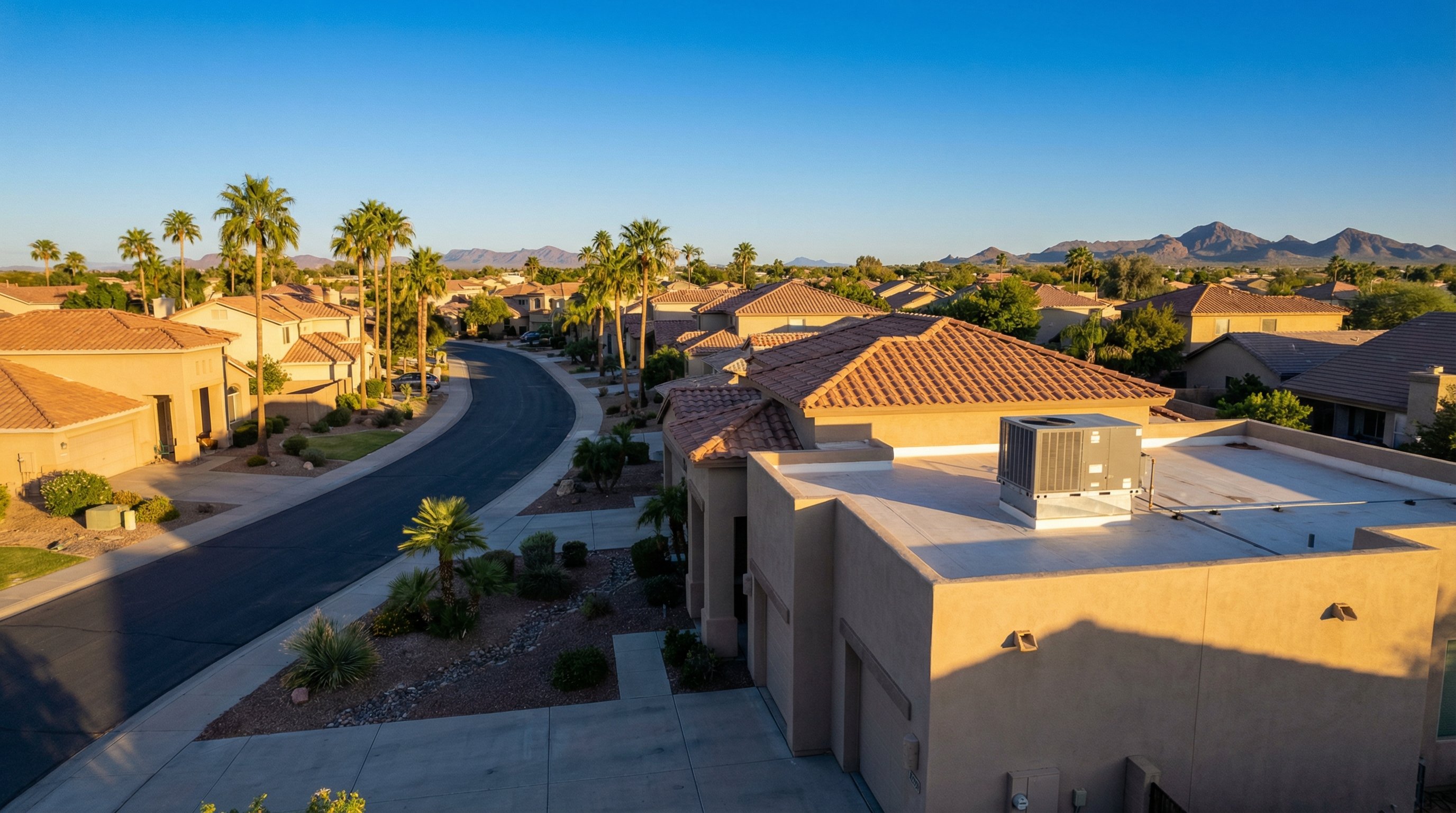
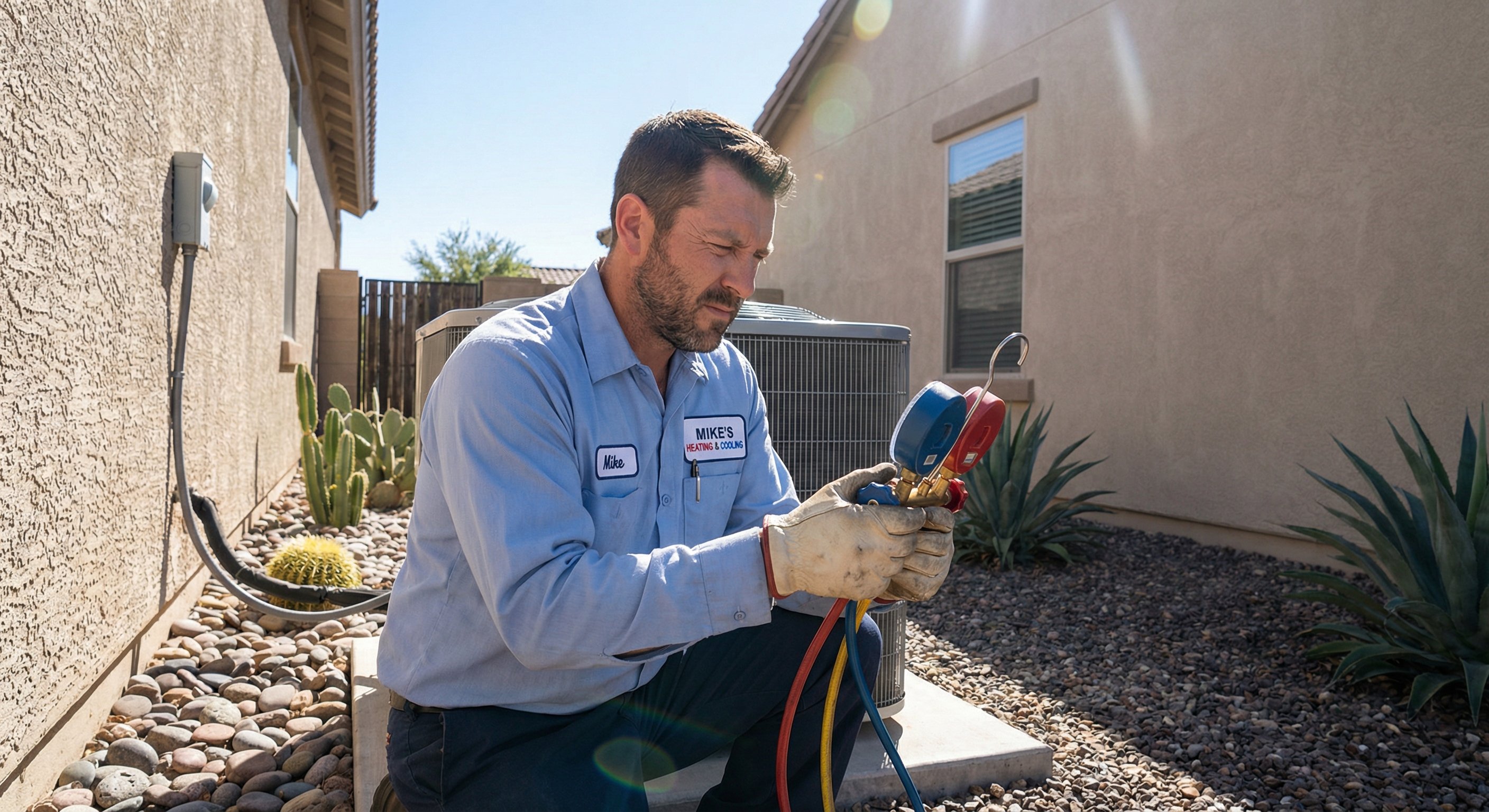
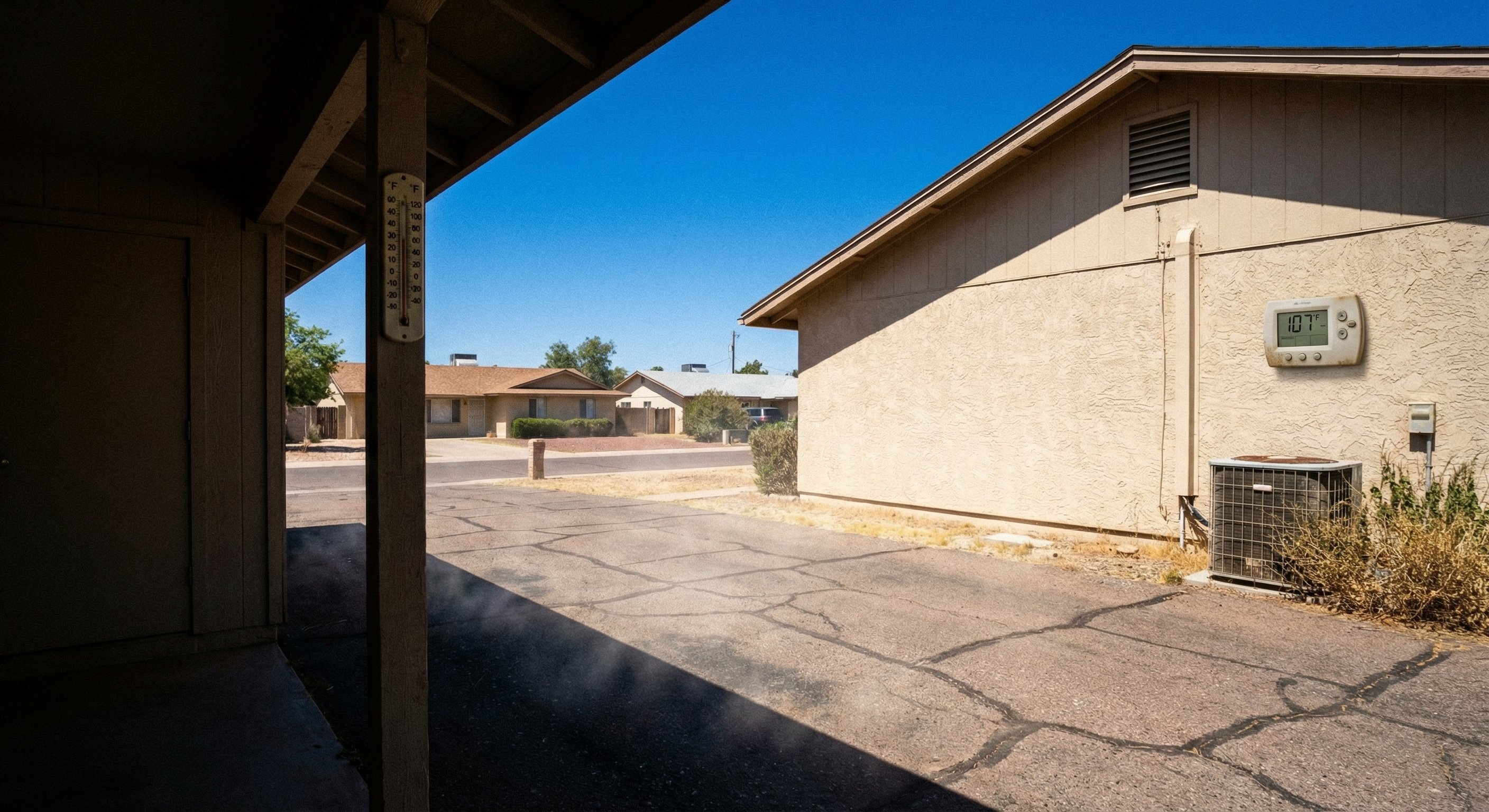
It is 107 degrees in the Valley. Your AC is running but not cooling. The service tech shows you the manifold gauge and says you need refrigerant. Then he tells you it uses R-410A. You nod like you know what that means.
Most Phoenix homeowners have been in that moment. Here is what R-410A actually is, what it costs in Phoenix, and whether you should care that the EPA is slowly restricting it.
What R-410A Actually Is
R-410A is a hydrofluorocarbon refrigerant blend that replaced R-22 (Freon) as the standard for residential air conditioning. Congress mandated the phase-out of R-22 in the 1990s because it was destroying the ozone layer. By 2010, R-410A was the required replacement for all new residential AC units in the United States.
If your Phoenix home was built or had its AC replaced after 2010, it almost certainly runs on R-410A. The older R-22 systems are still out there, mostly in homes with original AC units from the 1990s or early 2000s.
The practical difference between the two refrigerants comes down to pressure. R-410A operates at significantly higher system pressures than R-22. That sounds like a disadvantage, but it is actually one of the reasons it works better in Arizona heat. R-410A-based systems are designed to handle the extreme temperatures Phoenix throws at them without losing cooling capacity the way older R-22 systems do when the thermometer hits 115 degrees.
Is R-410A Being Phased Out?
This is where Phoenix homeowners get confused, because the answer has changed multiple times.
The short version: R-410A is not banned. It is being gradually phased down through 2036. You will not wake up one day to find it unavailable.
Here is the longer version. The EPA's AIM Act of 2020 directed the agency to phase down HFC refrigerants including R-410A. The original EPA schedule would have restricted R-410A production and import significantly by 2029. A federal court struck down parts of that schedule in 2025, and the current EPA pathway under the Trump administration has extended the phase-down timeline to 2036.
What this means for you as a Phoenix homeowner: R-410A will get more expensive gradually, not suddenly. Think of it like the R-22 situation in slow motion. If you have a functioning R-410A system today, you can run it for years without any supply concerns. The shortage risk that made R-22 recharges so expensive in the late 2010s is not coming for R-410A on the same timeline.
The refrigerant will not disappear. It will just cost more as supply tightens between now and 2036.
What R-410A Costs in Phoenix Right Now
This is what most people actually want to know.
A typical R-410A recharge in Phoenix costs $200-$500 per service call. The refrigerant itself runs $25-$50 per pound. Most residential AC systems hold 5-15 pounds depending on system size. You are paying for the refrigerant plus the labor to recover the old stuff, vacuum-test the system, and recharge it.
Here is the breakdown for a 3-ton Phoenix system:
- Refrigerant: 8-12 pounds at $30-$50/pound = $240-$600
- Labor: $150-$350 for the service call
- Total typical R-410A recharge: $400-$900
That sounds like a lot. And it is, which is why a single recharge on a dying system often makes less financial sense than most Phoenix homeowners realize.
If your AC tech is recommending a recharge on a unit older than 10 years, ask them to show you the leak rate test results. An AC system that loses refrigerant has a leak. Repairing the leak and recharging might cost $800 today. Then the leak comes back, and you are paying another $800 in six months. Three of those and you have paid for a new unit.
This is the math that Phoenix homeowners in the used-home market especially need to run. If you bought a home with a 15-year-old AC and you are already into your third recharge, you would have been better off replacing the unit before the first recharge.
Skip the dealer markup
See What a New AC Actually Costs
AC Rebel shows you the real equipment price — no sales pitch, no inflated quote. Get matched with a licensed installer and keep $3,000–$5,000 in your pocket.
Get My Direct Price →Why R-410A Performs Better in Phoenix Heat
This part does not get enough attention. Phoenix is not a typical AC market. When the national HVAC industry sets efficiency standards and designs systems, they are thinking about places like Atlanta, Dallas, or Chicago. Phoenix is different.
Summer temperatures routinely exceed 115 degrees in the Valley. Monsoon humidity arrives in July and adds a different kind of stress to AC systems. Desert dust gets pulled into coils and reduces efficiency. Hard water mineral deposits accumulate on evaporator coils in some neighborhoods.
R-410A systems handle these conditions better than the alternatives for several reasons. The higher operating pressure means the refrigerant moves through the system more efficiently even when the outdoor coil is working against 115-degree air. Newer R-410A units also use variable-speed compressors that can ramp capacity up and down rather than cycling fully on and off, which reduces compressor wear in our stop-and-go summer weather.
R-22 systems, by contrast, were designed for a different era. They lose cooling capacity in extreme heat more readily, and the older compressor designs were not built for the kind of sustained high-load operation that a Phoenix July demands.
If you are choosing between repairing an aging R-22 system and replacing it with a new R-410A unit, the Phoenix summer is arguing for replacement. A new R-410A system will cool your home more effectively, use less electricity, and give you a 10-year warranty versus the ongoing repair cycle you are already paying for.
The R-410A Unit Cost Picture
Here is where AC Rebel changes the conversation.
Most Phoenix homeowners have never seen what an AC unit actually costs before a contractor adds their markup. The traditional supply chain runs: manufacturer to distributor to supplier to contractor, with each step adding 10-40% to the price. By the time a Phoenix homeowner gets a quote, the unit cost is buried under labor, overhead, and margin.
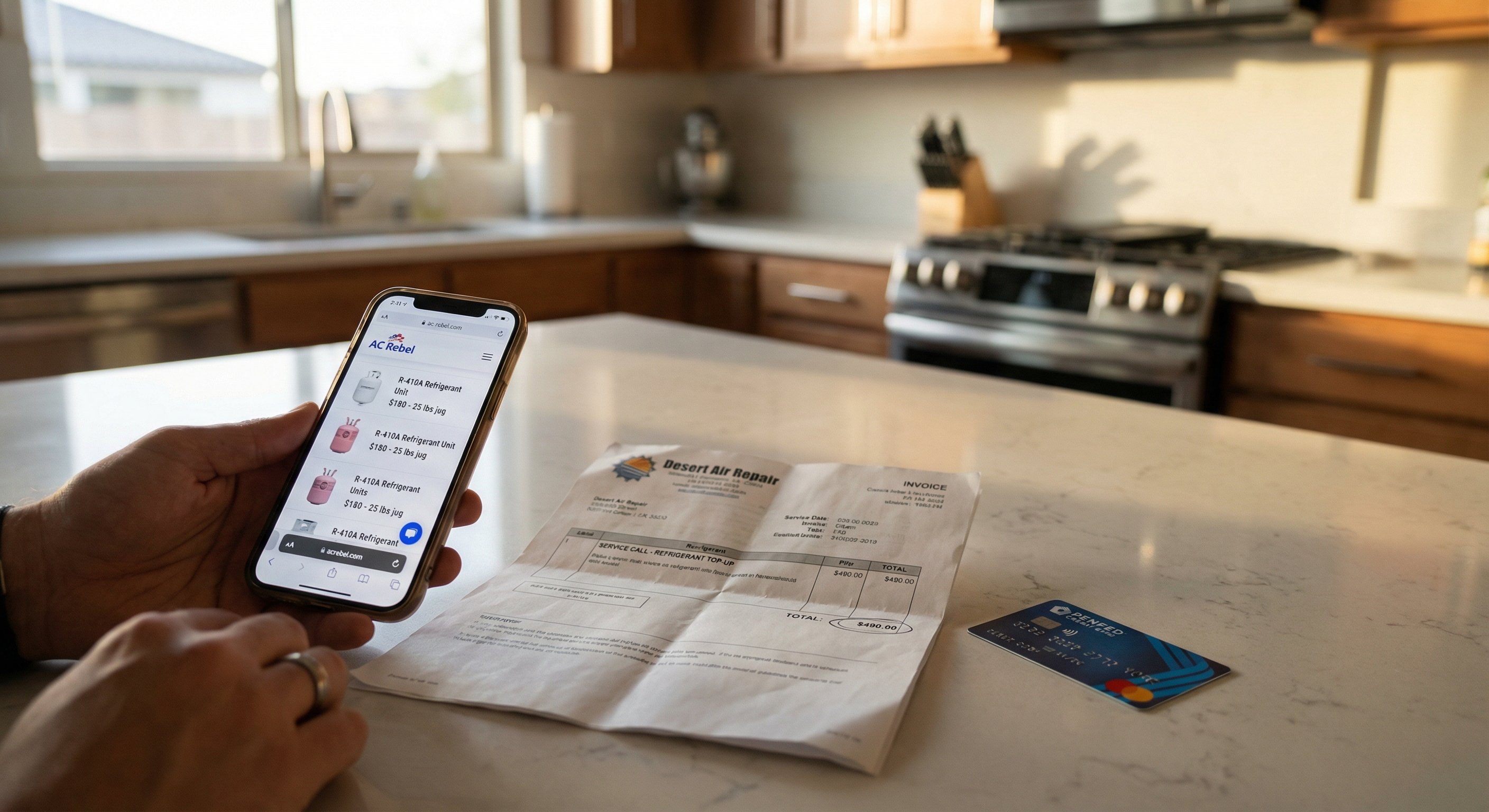
AC Rebel shows you the unit price first. A new R-410A condensing unit in the Good tier runs $2,800, the Better tier $3,800, and the Best tier $5,200. Those are the unit prices you see before installation costs. Compare that to what a Phoenix dealer would charge you for the same unit, which typically includes a 40-60% markup on the unit alone before labor.
Once you factor in installation through a licensed Phoenix-area contractor, the total installed cost for a new 3-ton R-410A system ranges from roughly $7,000-$13,000 depending on the unit tier and your home configuration. The variation comes from your home's ductwork condition, whether you need a new air handler, and the contractor's labor rates in your specific neighborhood.
The point is not that AC Rebel is always the cheapest option. It is that you see the unit cost and the installation cost separately, which means you can actually evaluate whether you are getting a fair deal.
When to Replace Instead of Recharging
Here is the decision framework I use when someone asks me this question for their Phoenix home.
Replace the unit if: the system is over 12 years old, you have paid for more than one recharge in the past three years, the compressor is the component that failed, or the repair estimate is over $1,500 on a system older than 10 years.
Recharge and repair if: the system is under 8 years old, the leak is in a fitting or valve (not the coil itself), this is the first recharge, or you are planning to sell the home in the next 12 months and the system is functioning now.
The Phoenix real estate market complicates this. If you are selling a home with a functioning but aging AC, you may not need to replace it before the sale. But if you are buying a home and the inspection shows an AC that is 14 years old and needs a recharge, factor the replacement cost into your negotiation. That $1,000 repair credit rarely covers what a new system costs.
The Phase-Down Timeline and What It Means for Your Decision
By 2029, R-410A production and import caps tighten further under the current EPA schedule. By 2036, the available supply is significantly reduced. Prices will rise for both R-410A and the retrofit refrigerant options.
This is not an emergency. But it is a reason not to pour money into a 15-year-old R-22 system that is already on its third or fourth recharge. The math that made sense in 2015, when R-22 was still somewhat available, does not make sense in 2026 and beyond.
Phoenix homeowners who are still running R-22 systems should be planning for replacement now, not waiting for the compressor to fail in July. Getting quotes in March or April, before the summer emergency season, means you can shop the decision rather than making it at 6 a.m. on a Saturday when your kids are already sweating.
Frequently Asked Questions
Q: How can I tell if my AC uses R-410A or R-22?
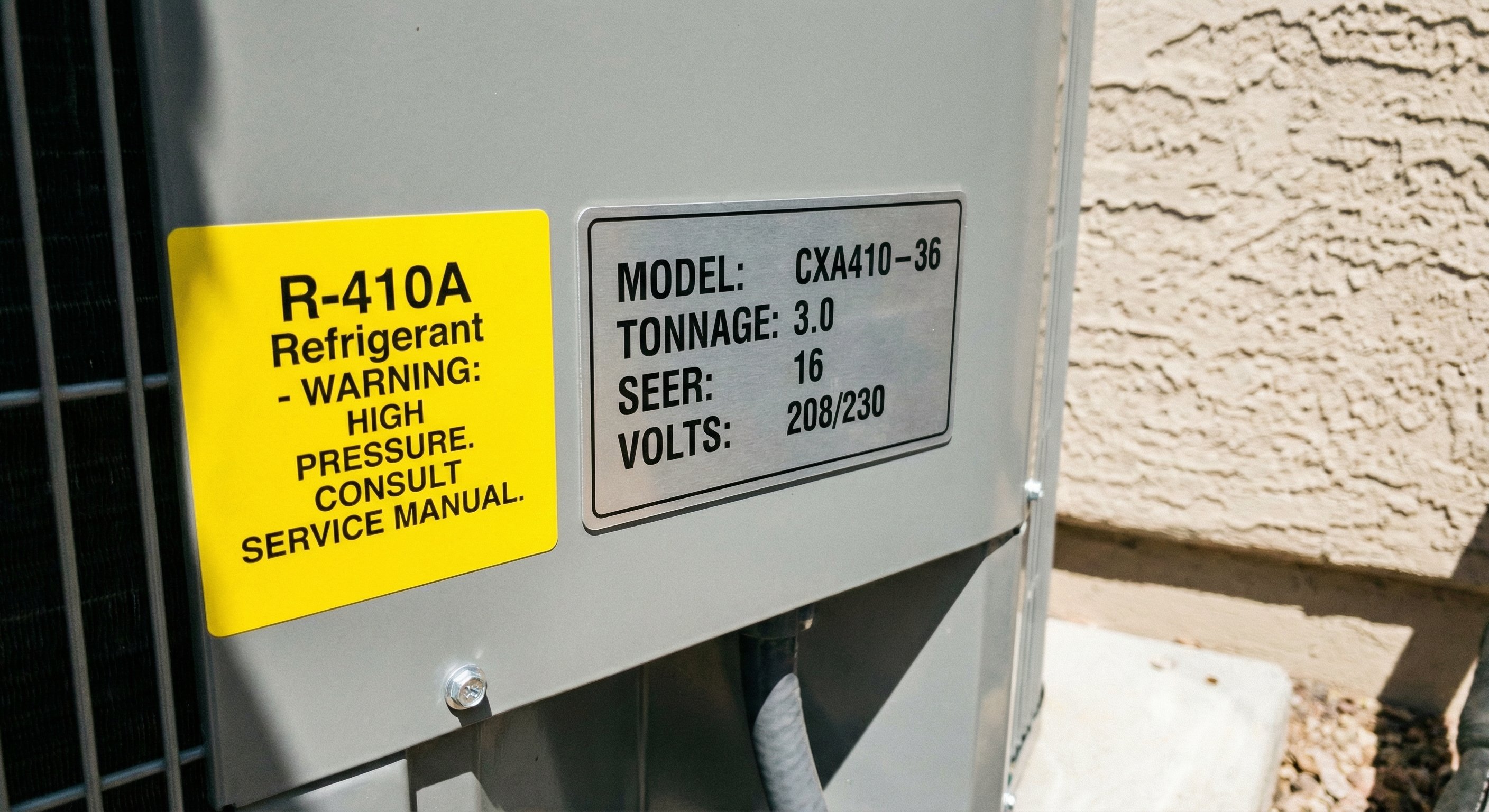
A: The refrigerant type is printed on a label attached to your outdoor condensing unit, usually near the service valves. R-22 units will have the word "R-22" or "Freon" on the label. R-410A units will say "R-410A" or "Puron." If you cannot read the label, a licensed HVAC technician can identify it with a manifold gauge in about 10 minutes. Most units installed after 2010 use R-410A.
Q: Is it worth recharging an R-410A system?
A: It depends on the age and repair history. If the system is less than 10 years old and this is the first recharge, yes. If the system is over 12 years old and you have recharged it before, replacement is usually the better financial decision. A single recharge at $400-$900 on a system that will need another one in 18 months does not make long-term sense.
Q: Can I switch from R-22 to R-410A without replacing the whole system?
A: No. R-410A operates at significantly higher pressures than R-22. The compressor, coil, and metering device are all designed for specific pressure ranges. Retrofitting an R-22 system to use R-410A requires replacing most of the major components, which costs almost as much as a new system and voids most manufacturer warranties.
Q: What is the current price of R-410A per pound in Phoenix?
A: As of early 2026, R-410A refrigerant costs $25-$50 per pound for homeowners purchasing it through a service call. The variation comes from quantity purchased, contractor pricing, and whether you are in an emergency same-day service situation. A typical 3-ton Phoenix system holds 8-12 pounds. The refrigerant cost is usually $200-$600 of a $400-$900 total service bill.
Q: Will R-410A become as expensive as R-22?
A: Not on the same timeline. R-22 was banned entirely, which eliminated most supply. R-410A is being phased down gradually through 2036, which means supply tightens slowly rather than vanishing. Prices will rise, but homeowners with R-410A systems will not face the same supply crisis that R-22 owners faced in the late 2010s. Planning for eventual replacement is smart; panicking is not necessary.
Q: Does Phoenix hard water affect R-410A systems?
A: Yes. Hard water is common across the Phoenix metro area, and mineral scale buildup on the evaporator coil reduces heat transfer efficiency. This forces the system to work harder, uses more electricity, and increases wear on the compressor. Phoenix homeowners with hard water should include coil cleaning in their annual AC maintenance. This is especially relevant in areas like Glendale, Peoria, and West Phoenix where hard water is most pronounced.
Q: What SEER rating should I look for in a new R-410A system for Phoenix?
A: Minimum SEER 15 for new units in Arizona, but aim for SEER 17 or higher if your budget allows. The efficiency gain in Phoenix summer heat pays back the additional upfront cost faster here than in milder climates. A SEER 17 versus SEER 14 unit can save $150-$300 per year in electricity during Phoenix summers, which compounds over a 10-year warranty period.
What to Do Next
If you have an R-410A system that is functioning normally, there is nothing urgent here. Keep up with your annual maintenance, change your filters every 30-60 days during cooling season, and get a professional tune-up before summer.
If you have an R-22 system, start getting replacement quotes now. The longer you wait, the more you will pay in emergency repairs and the tighter R-22 supply will become. A new R-410A unit is more efficient, better suited for Phoenix heat, and covered by a 10-year parts warranty.
Get a free instant quote at acrebel.com to see R-410A unit prices and understand what installation should cost in your Phoenix neighborhood before talking to a contractor.
Ready to stop overpaying?
See Your Direct AC Price in 2 Minutes
Skip the dealer. Buy your AC unit at direct pricing and pay a vetted local installer only for the installation. No sales calls. No hidden markup. Most homeowners save $3,000–$5,000+ compared to a traditional quote.
Get My Direct Price — No Credit Card2-minute quote · Licensed installers · 10-year warranty options