
SEER Rating Explained: What Arizona Homeowners Actually Need to Know

SEER Rating Explained: What Arizona Homeowners Actually Need to Know
TL;DR: SEER (Seasonal Energy Efficiency Ratio) measures how efficiently your AC converts electricity into cooling. Higher SEER = lower monthly bills. In Arizona, where your AC runs 9+ months a year, the payback math is dramatically better than the national average — a high-efficiency unit can pay for itself in 3-5 years instead of 8-10. Arizona's minimum standard rose to 15 SEER2 in 2023. APS offers rebates up to $250 and SRP up to $300 for units at 16 SEER or higher. Don't just buy on SEER alone — sizing, ductwork, and installation quality matter more than chasing the highest number.
When your AC quote shows "16 SEER" vs "18 SEER" and a $1,200 price difference, most Phoenix homeowners stare at those numbers like they're reading a prescription label. Here's what they actually mean — and how to decide if the higher efficiency is worth it for your specific home and budget.
What SEER Actually Measures
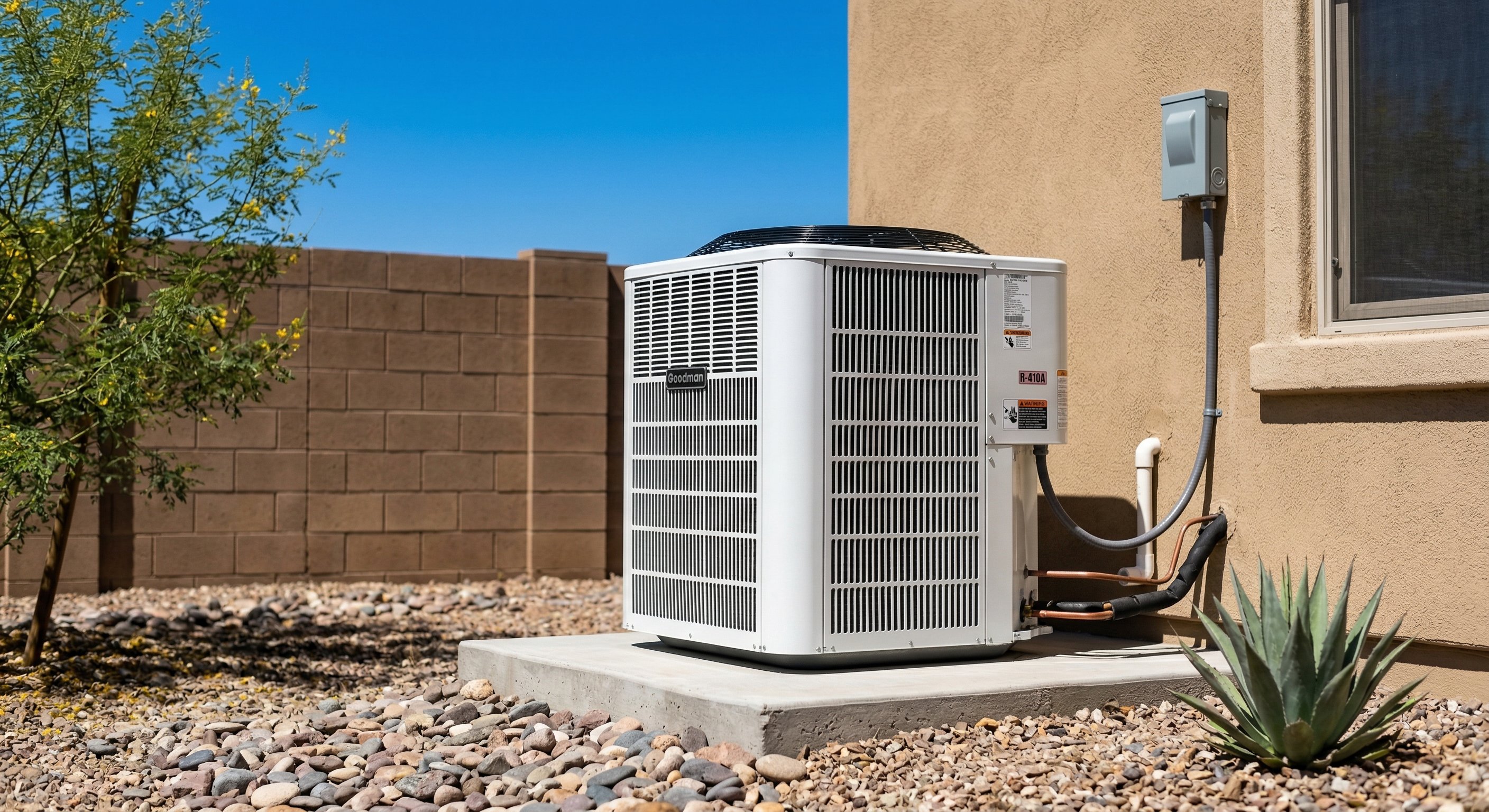
SEER stands for Seasonal Energy Efficiency Ratio. It's the ratio of cooling output (in BTUs) to the electrical energy used (in watt-hours) over an entire cooling season.
Think of it like MPG for your AC. A 16 SEER unit cooling the same house as a 10 SEER unit uses roughly 37% less electricity. That gap shows up directly on your APS or SRP bill every single month from April through October.
The formula itself isn't what matters — what matters is this: every 2-point SEER increase is roughly a 10-15% reduction in cooling costs.
| SEER Rating | Relative Efficiency | Vs. 14 SEER |
|---|---|---|
| 14 SEER | Baseline | — |
| 16 SEER | +14% more efficient | Save ~14% on cooling costs |
| 18 SEER | +22% more efficient | Save ~22% on cooling costs |
| 20 SEER | +30% more efficient | Save ~30% on cooling costs |
| 22 SEER | +36% more efficient | Save ~36% on cooling costs |
SEER vs. SEER2: What Changed in 2023
Here's the thing that trips up a lot of Arizona homeowners right now: the rating system changed.
Starting January 1, 2023, the Department of Energy replaced the old SEER standard with SEER2 (also called M1 testing). The new test measures efficiency under more realistic conditions — higher external static pressure that better reflects actual installed performance in a real duct system.
The practical translation: a 16 SEER unit under the old standard is roughly equivalent to a 15.2 SEER2 under the new one. They're measuring the same thing; the new test just gives a slightly lower number because it's harder.
What this means for you:
- All new units sold after January 2023 are rated in SEER2
- The new minimum for Arizona is 15 SEER2 (not the 14 SEER people still quote everywhere — that minimum was sunset for the Southwest U.S.)
- When comparing quotes, make sure you're comparing the same scale — old SEER vs. new SEER2 aren't direct apples-to-apples
If a contractor is quoting you a 14 SEER unit in 2026, ask questions. Either they're misquoting the rating, or they have old equipment they're trying to move.
Why the Math is Different in Arizona
Every national article about SEER payback uses the same assumption: about 750-1,000 cooling hours per year. That's accurate for Dallas or Atlanta.
In Phoenix, Mesa, Chandler, and every other Maricopa County city, you're running your AC 2,700-3,000+ hours per year.
That changes everything. Let's run the real numbers.
Assumptions:
- 2,000 sq ft home
- 3-ton (36,000 BTU) system
- Average electricity cost: $0.14/kWh (APS blended rate)
- Arizona cooling hours: 2,800/year
Annual cooling cost by SEER:
| SEER2 Rating | Annual kWh Used | Annual Cooling Cost | Savings vs. 15 SEER2 |
|---|---|---|---|
| 15 SEER2 | ~3,200 kWh | ~$448/yr | — |
| 17 SEER2 | ~2,820 kWh | ~$395/yr | ~$53/yr |
| 20 SEER2 | ~2,400 kWh | ~$336/yr | ~$112/yr |
| 22 SEER2 | ~2,180 kWh | ~$305/yr | ~$143/yr |
The price premium to jump from a 15 SEER2 to a 20 SEER2 system is typically $1,200-$2,000. At $112/year in savings, that's an 11-18 year payback — before utility rates increase.
In Phoenix that payback gets faster every year because APS and SRP rates have trended up consistently. And in larger homes (2,500+ sq ft, 4-ton systems), the savings scale proportionally higher.

Skip the dealer markup
See What a New AC Actually Costs in Phoenix Metro, AZ
AC Rebel shows you the real equipment price — no sales pitch, no inflated quote. Get matched with a licensed installer and keep $3,000–$5,000 in your pocket.
Get My Direct Price →The APS and SRP Rebate Angle
Here's where the math shifts meaningfully: utility rebates effectively lower your upfront cost.
APS (Arizona Public Service):
- Rebate for qualified high-efficiency AC systems: up to $250 per unit
- Must be 16 SEER or higher (SEER2 equivalent: 15.2+)
- Requires installation by a licensed contractor
- Application at aps.com — filed after installation
SRP (Salt River Project):
- Rebate for qualifying systems: up to $300 per unit
- 16+ SEER (SEER2 equivalent), 14+ EER
- Available to SRP residential customers only
- Filed within 180 days of installation
If you qualify for both rebates — technically possible if you have a dual-metered property, though rare — you're looking at meaningful upfront relief. For most homeowners, that single $250-$300 check cuts the efficiency premium by 15-25%.
One more incentive: The federal Inflation Reduction Act energy efficiency tax credit allows up to $600 in tax credits for qualifying high-efficiency HVAC systems (must meet CEE Tier 1 or higher efficiency standards). This is separate from utility rebates. Talk to your tax preparer — but if you're buying a 20+ SEER2 system, ask whether it qualifies.
What SEER Rating Is Actually Worth It for Arizona?
Here's the honest answer most HVAC contractors won't give you straight: the sweet spot for most Arizona homeowners is 16-18 SEER2.
Here's why:
Below 15 SEER2: Doesn't meet Arizona's minimum code. You can't buy a new non-compliant unit for residential install in the Southwest region.
15-16 SEER2: Gets you code-compliant with modest efficiency. Fine choice for tighter budgets, rentals, or homes you plan to sell in the next few years.
17-19 SEER2: The practical sweet spot. Meaningful efficiency gains over the minimum, better humidity control (often two-stage compressors at this level), and prices that are $800-$1,500 above baseline — reasonable payback in Arizona's climate.
20+ SEER2: Premium territory. Variable-speed compressors, superior humidity control during monsoon season, and the lowest possible operating costs. Worth it if you're in the home long-term (10+ years), have a large home, or run your AC hard. The Trane XV21, Carrier Infinity 26, and Lennox Signature series live here.
22+ SEER2: Diminishing returns. You're paying a significant premium for efficiency gains that take 15+ years to recover in energy savings alone. The comfort benefits (ultra-quiet, near-perfect humidity management) may matter to you — just don't buy it purely for "savings."
The SEER Trap: When SEER Number Doesn't Matter
SEER is one factor. These factors can completely cancel out a high SEER rating:
Ductwork. A 20 SEER unit connected to leaky, undersized ducts running through a 150°F attic will perform like a 12 SEER system. Arizona's older homes — especially pre-1990 construction in east Mesa, older parts of Glendale, and most of Tempe near ASU — often have undersized duct systems that weren't designed for modern efficient units. Fix the ducts before buying the premium unit.
Sizing. An oversized unit — even a highly efficient one — will short-cycle. It turns on, blasts cold air, shuts off before completing a full cooling cycle. Result: poor dehumidification (a real problem during July-August monsoon), uneven temperatures room to room, and mechanical wear from frequent starts. Get a Manual J load calculation, not just a rule-of-thumb.
Installation quality. A study by the California Energy Commission found that 50% of new AC installs had installation defects that reduced efficiency by 15-35%. That 18 SEER unit installed sloppily performs like a 13 SEER. Refrigerant charge, airflow, and duct sealing are all installation variables that matter as much as the equipment itself.
Attic insulation. Your AC fights your attic all summer. A poorly insulated attic (under R-38, which many Arizona homes have) means your unit runs longer no matter how efficient it is. The cheapest efficiency upgrade for most Phoenix homes isn't a higher SEER unit — it's adding insulation.
Flat Roof and Package Units: An Arizona-Specific Note
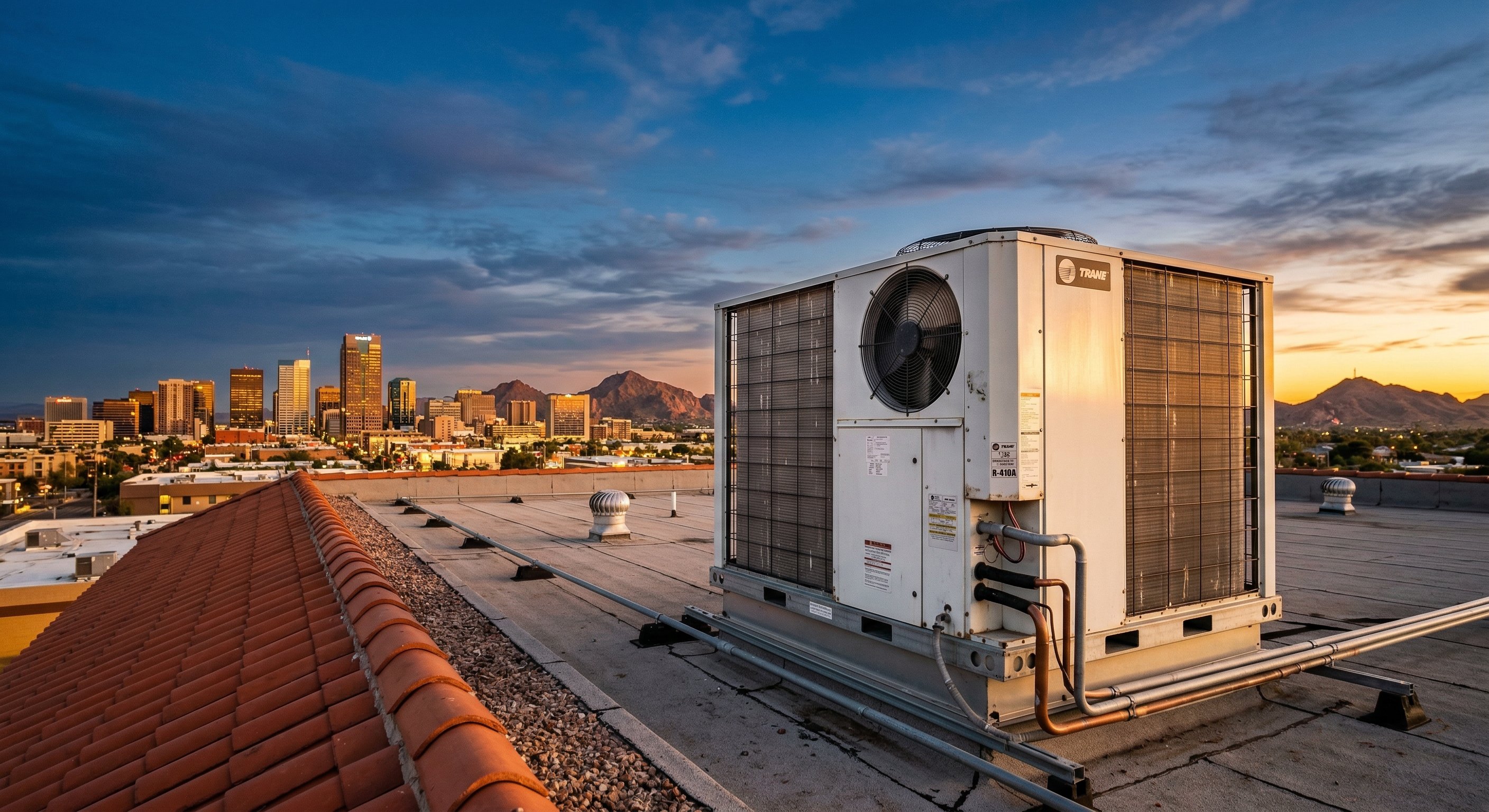
About 35-40% of Arizona homes — especially those built in the 1970s-1990s — use rooftop package units rather than split systems. The SEER dynamic is slightly different here.
Rooftop package units max out at lower SEER ratings than split systems. Most run 14-17 SEER2, with a handful of premium models hitting 19-20 SEER2. If you have a rooftop package unit, your efficiency ceiling is lower — but that doesn't mean the upgrade math doesn't work. Going from an old 8-SEER rooftop unit to a new 16 SEER2 is a 50%+ efficiency improvement, which pays back quickly even in a smaller home.
If you're in Scottsdale, Paradise Valley, or any neighborhood with older flat-roof construction, confirm whether you have a package unit or a split system before discussing SEER targets with a contractor.
The AC Rebel Take on SEER Shopping
When you're comparing quotes, here's the practical checklist:
- Make sure ratings are all in SEER2 — don't compare old SEER to new SEER2 numbers directly
- Ask for two options: a 15-16 SEER2 baseline quote and a 17-19 SEER2 upgrade quote, then compare total installed cost vs. estimated annual savings
- Ask if the system qualifies for APS or SRP rebates — any good contractor should be able to answer this
- Don't buy the highest SEER unit if your ducts are a problem — fix the ducts first
- Get the Manual J sizing calculation in writing — if a contractor won't provide it, walk away
The thing traditional HVAC contractors don't love telling you: the markup on high-SEER premium equipment is where they make real margin. A 21 SEER2 system might cost the contractor $1,200 more than a 16 SEER2 system — and they charge you $3,000 more. Know that game going in.
That's exactly why seeing transparent unit pricing before talking to anyone with a markup incentive matters. AC Rebel shows you what units actually cost — without the dealer premium baked in — so you can do the math yourself before a single conversation.
Frequently Asked Questions
What SEER rating do I need in Arizona?
Arizona (and the full Southwest region) has a minimum requirement of 15 SEER2 as of 2023 — you can't legally install a lower-efficiency unit in new residential installations. For a home you plan to stay in long-term, 17-19 SEER2 is the practical sweet spot given Arizona's extended cooling season. Above 20 SEER2 has diminishing financial returns but strong comfort benefits.
What's the difference between SEER and SEER2?
SEER2 is the updated efficiency testing standard introduced in January 2023. It uses a more realistic testing protocol (higher external static pressure) that better reflects real-world installed performance. A 16 SEER under the old standard is roughly equal to 15.2 SEER2 under the new one — they measure the same thing, the test is just more demanding. All new units sold today are rated in SEER2.
Does a higher SEER rating mean the house cools faster?
No. SEER measures efficiency, not cooling capacity. A 20 SEER2 unit and a 15 SEER2 unit of the same tonnage remove the same BTUs per hour — the high-efficiency one just uses less electricity doing it. What makes a house cool faster is proper sizing (tonnage matched to your home's load) and good airflow, not SEER.
Are high-SEER AC units worth the extra cost in Phoenix?
For most Phoenix homeowners planning to stay 7+ years, a 17-18 SEER2 unit over the 15 SEER2 minimum is worth the premium once you factor in APS/SRP rebates and Arizona's extended cooling season. Going above 20 SEER2 is harder to justify on savings alone — the comfort features (ultra-quiet, better humidity control during monsoon) may tip the decision for some homeowners.
Do APS and SRP offer rebates for high-efficiency AC units?
Yes. APS offers rebates up to $250 for qualifying high-efficiency central AC systems (16 SEER or higher). SRP offers up to $300 for qualifying systems. Additionally, the federal tax credit under the Inflation Reduction Act allows up to $600 for qualifying high-efficiency HVAC equipment. Check aps.com and srpnet.com for current program requirements, as rebate amounts and qualification thresholds change periodically.
What is the minimum SEER rating for Arizona in 2026?
The minimum is 15 SEER2 (Southwest U.S. region, which includes Arizona). This replaced the old 14 SEER minimum when the SEER2 testing standard took effect January 1, 2023. Any contractor quoting you a 14 SEER unit in 2026 either has old inventory or is misrepresenting the specs — ask for the SEER2 rating on the spec sheet.
Ready to stop overpaying?
See Your Direct AC Price in 2 Minutes
Skip the dealer. Buy your AC unit at direct pricing and pay a vetted local installer only for the installation. No sales calls. No hidden markup. Most homeowners save $3,000–$5,000+ compared to a traditional quote.
Get My Direct Price — No Credit Card2-minute quote · Licensed installers · 10-year warranty options