
What Size AC Unit Do I Need for My Phoenix Home? (Sizing Guide for 2026)

What Size AC Unit Do I Need for My Phoenix Home? (Sizing Guide for 2026)
TL;DR: Most Phoenix homeowners need 3 to 4 tons of cooling for a 1,500 to 2,500 square foot home. Use 650 to 700 square feet per ton as your Phoenix starting point, not the national 600 standard. The standard rule undersizes systems here because desert heat loads are higher. Oversizing is the more expensive mistake in Phoenix. It causes short cycling, humidity problems, and higher energy bills. Before you buy, get a Manual J load calculation for your specific home, not a guess from a salesperson.
You walk into a big-box store or take a quote from a contractor and they hand you a number. Three tons. Four tons. You nod, sign, and six months later your house is humid, your electric bill is still too high, and your AC keeps turning on and off every few minutes.
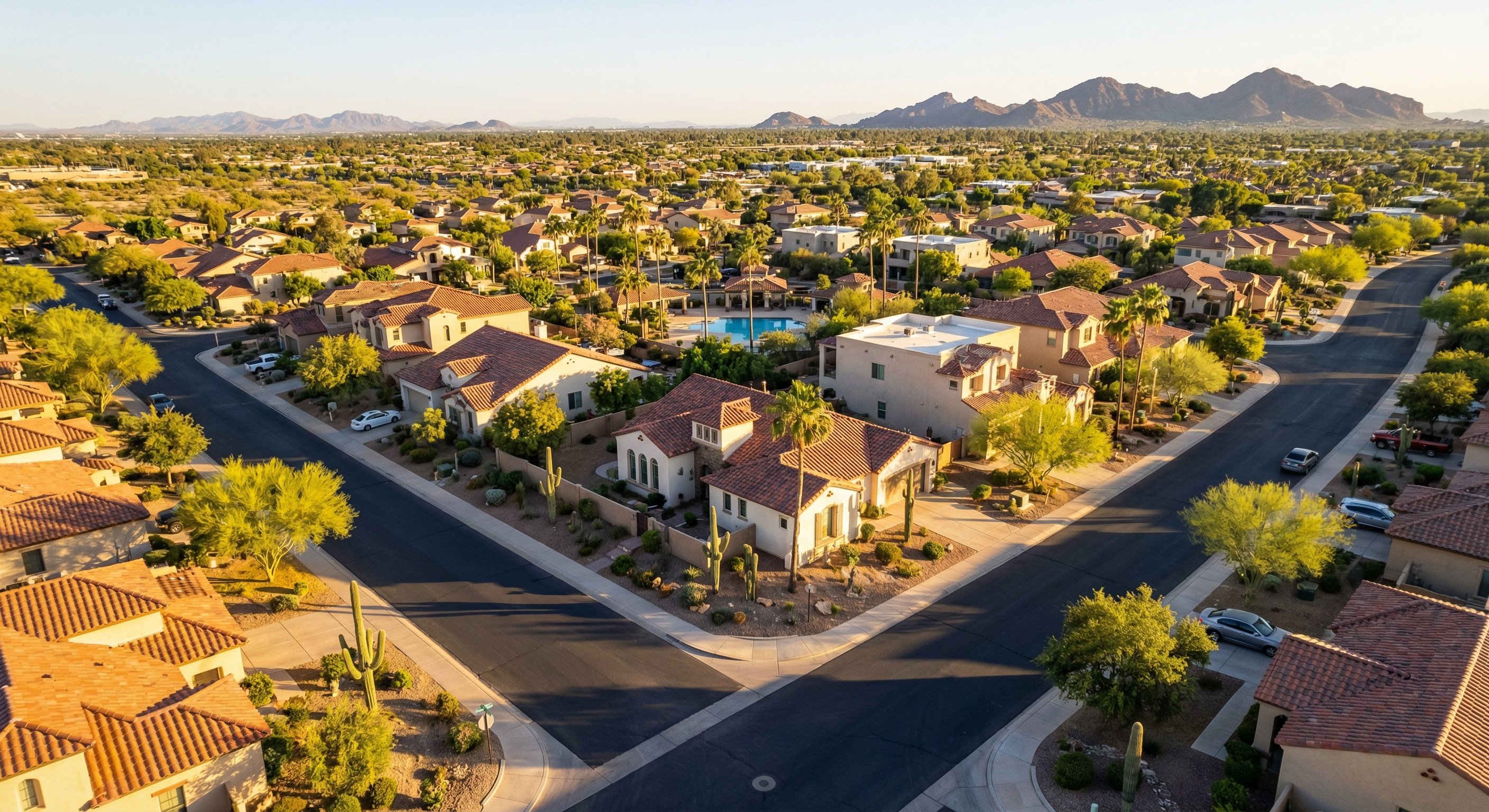
That number was probably wrong. And in Phoenix, it is wrong more often than in any other major metro in the country, because the heat load here is categorically different from what the standard rules were written for.
This guide tells you exactly how Phoenix HVAC professionals actually size an AC unit, where the shortcuts fail, and what you can check yourself before you talk to anyone.
Why Phoenix Makes AC Sizing Harder Than Everywhere Else
The standard rule used across most of the country is 600 square feet per ton of cooling. One ton handles 600 square feet. A 2,400 square foot home? Four tons.
That math works fine in Houston or Dallas where summer heat comes with humidity, average temperatures sit in the low 90s, and shade trees are everywhere.
Phoenix does not play by those rules. Your AC in Mesa or Chandler is fighting direct solar radiation that can add 30 to 40 degrees of heat to your roof compared to ambient air temperature. The dry air means evaporative cooling from landscaping does almost nothing. Most homes built before 2000 in Maricopa County have R-11 or less wall insulation when modern code calls for R-19 or higher.
What that means: the standard 600-sq-ft-per-ton rule will undersize your system in most Phoenix homes. A better starting point for this market is 650 to 700 square feet per ton. But that is still just a starting point.
Step 1: Calculate Your Base Load With Square Footage
For a rough estimate, divide your conditioned square footage by 650:
| Home Size (sq ft) | Rough Tonnage Estimate |
|---|---|
| 1,000 to 1,500 | 2.0 to 2.5 tons |
| 1,500 to 2,000 | 2.5 to 3.0 tons |
| 2,000 to 2,500 | 3.0 to 3.5 tons |
| 2,500 to 3,000 | 3.5 to 4.0 tons |
| 3,000 to 3,500 | 4.0 to 5.0 tons |
These assume average insulation, moderate sun exposure, and 8-foot ceilings. If your home has high ceilings, a lot of west-facing windows, or direct sun exposure with little shade, your needs are higher.
Step 2: Five Adjustments That Change the Number in Phoenix
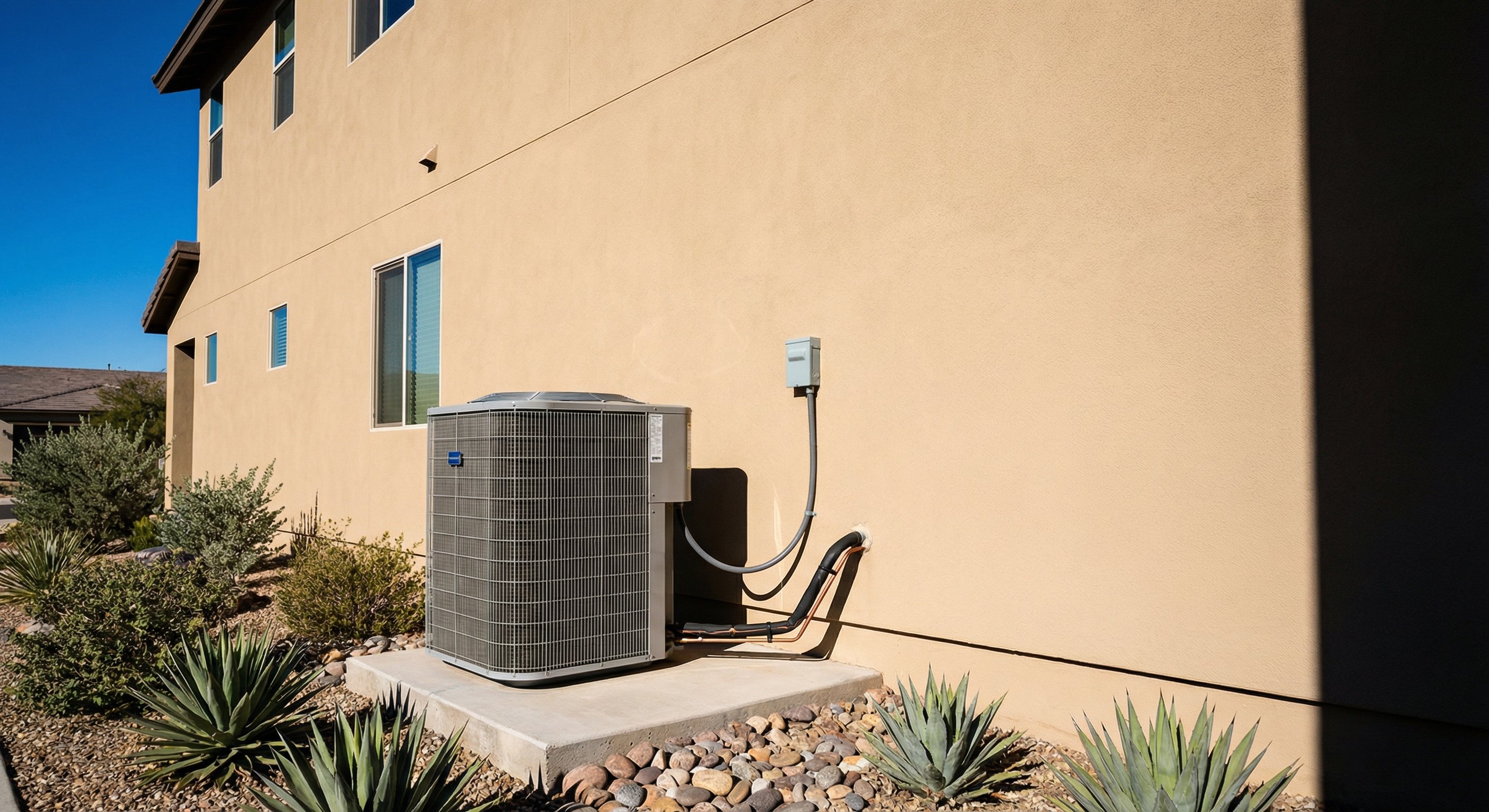
The base square footage calculation is just a start. These five factors push tonnage up or down in most Maricopa County homes.
Ceiling height: Every foot above 8 feet adds roughly 3 to 5 percent to your load. A 2,000 sq ft home with 10-foot ceilings performs like a 2,300 sq ft home with standard ceilings.
Sun exposure: West-facing and south-facing walls absorb the most afternoon heat. A west-facing master bedroom in a Gilbert home with large windows and no shade tree adds the equivalent of 200 to 300 extra square feet of cooling demand. North-facing rooms are the easiest to cool.
Insulation quality: Most Phoenix homes built before 2005 have R-11 or less in the walls. If your attic insulation is also minimal, you may need 10 to 20 percent more tonnage. That could mean going from 3 tons to 3.5.
Duct condition: Ducts running through an unconditioned attic in 115-degree summer heat lose 20 to 30 percent of their cooling capacity before air reaches your rooms. Many Peoria and Surprise homes built in the 1990s have never had ductwork inspected.
Heat-generating appliances: Home offices with multiple computers, electric cooktops, and entertainment systems add measurable load. This matters most in open-plan layouts where heat disperses freely.
Skip the dealer markup
See What a New AC Actually Costs
AC Rebel shows you the real equipment price — no sales pitch, no inflated quote. Get matched with a licensed installer and keep $3,000–$5,000 in your pocket.
Get My Direct Price →Step 3: Get a Manual J Calculation Before You Buy
The industry-standard load calculation is Manual J, developed by the Air Conditioning Contractors of America. It inputs your specific insulation R-values, window sizes and orientations, ceiling heights, duct condition, and occupancy to produce a precise BTUh number that converts directly to tons.
Most Phoenix contractors do not run a Manual J. They use a rule of thumb. The worst ones round up to the nearest ton because bigger units are more profitable and easier to sell.
Ask any contractor you are considering: "Did you run a Manual J calculation for my specific home?" If they say no, walk away. A contractor who refuses to share their load calculation output is a contractor who did not run one.
You can also hire an independent HVAC load calculation service for $150 to $300. That fee pays for itself the first time you avoid buying a unit that is one ton too big or too small.
Step 4: Why Oversizing Is the More Expensive Mistake in Phoenix
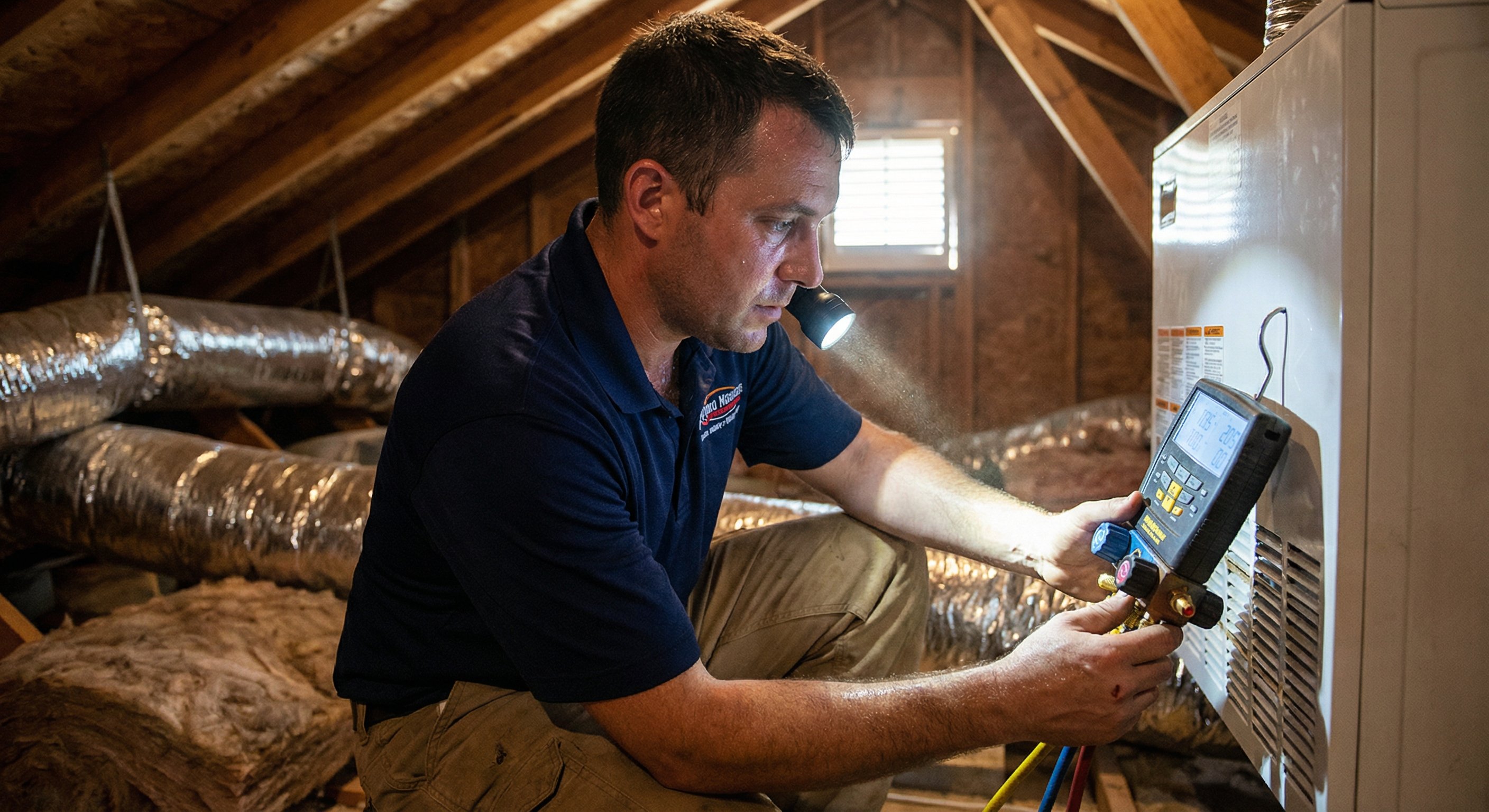
Most homeowners worry about buying a unit that is too small. In Phoenix, the more common and more damaging mistake is oversizing.
An oversized AC makes your home less comfortable, not more. An air conditioner removes heat and moisture. In Phoenix's dry climate, moisture removal is critical. When a unit runs for 10 minutes, hits the thermostat setpoint, and shuts off, it has cooled the air but barely removed any humidity. Your home ends up feeling cool and clammy even though the thermostat reads 74.
Short cycling also wears equipment out faster. Every compressor start draws a surge of electricity. More starts means higher energy bills, not lower ones.
The right unit in Phoenix runs continuously on the hottest days, holding temperature steadily and dehumidifying properly.
Step 5: The Tonnage Scale for Phoenix Homes
Use 650 to 700 square feet per ton as your Phoenix starting point, not the national 600 standard.
| Home Size | Phoenix Tonnage Estimate |
|---|---|
| 1,000 to 1,500 sq ft | 2.0 to 2.5 tons |
| 1,500 to 2,000 sq ft | 2.5 to 3.0 tons |
| 2,000 to 2,500 sq ft | 3.0 to 3.5 tons |
| 2,500 to 3,000 sq ft | 3.5 to 4.0 tons |
| 3,000 to 3,500 sq ft | 4.0 to 5.0 tons |
These assume reasonable insulation, moderate sun exposure, and standard ceilings. Two-story homes with significant west exposure typically need more tonnage per square foot than single-story homes.
Step 6: Two-Story Homes Need Extra Attention
If you have a two-story home, you cannot size your system using total square footage. Your second floor sits directly under a roof that bakes in 115-degree heat all afternoon. It carries a substantially higher load than the first floor.
A single-stage unit sized for the worst case upstairs in July will be oversized for the first floor most of the year. Ask about zoning or a two-unit setup when replacing your system.
Two-story homes with one thermostat and one unit almost always have a cold downstairs and a hot upstairs. This is a duct design and zoning problem as much as a sizing problem. Replacing your AC is the right time to address it.
The Shortcut Before You Do a Full Manual J
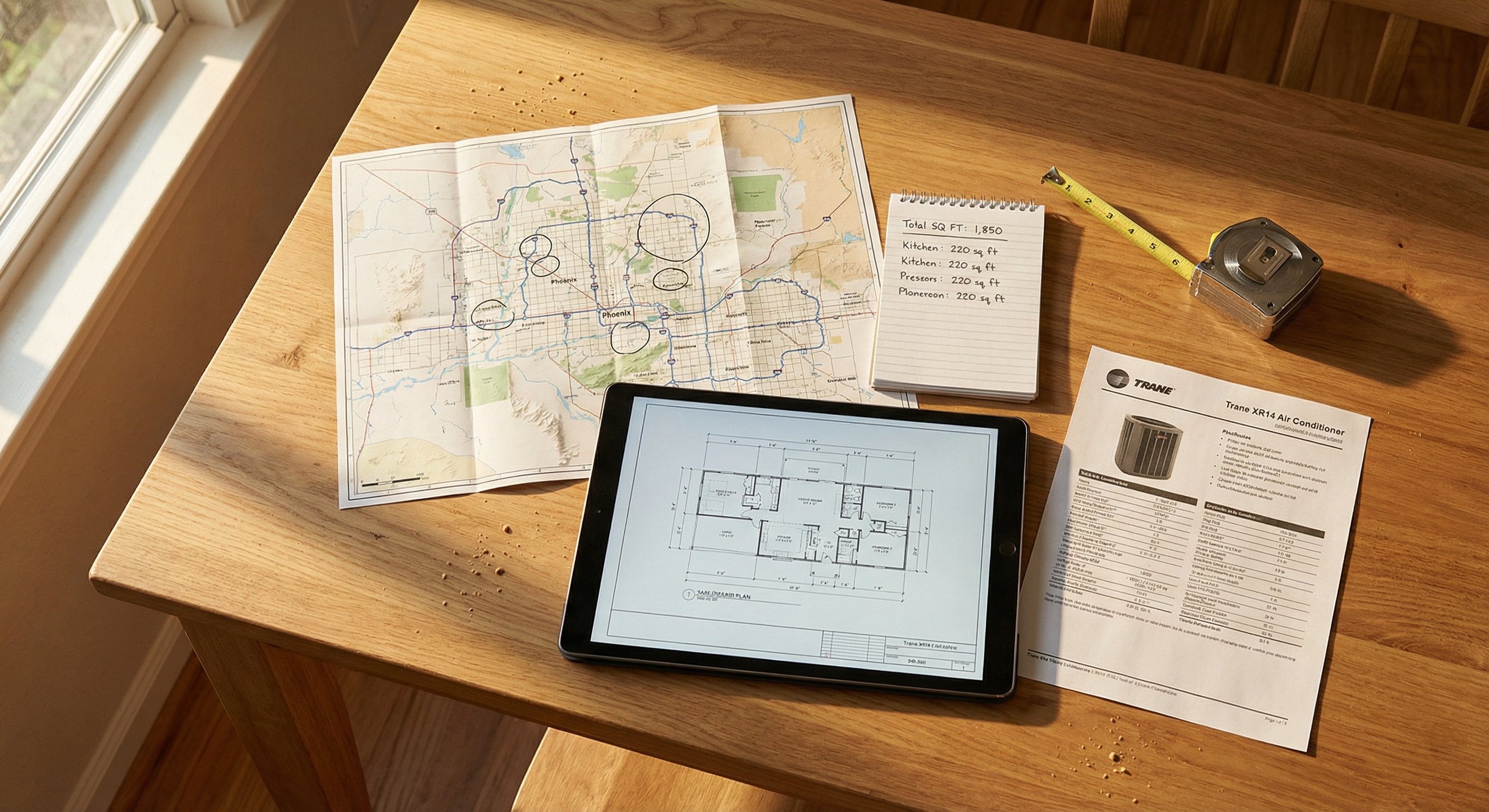
If you need a starting point today, experienced Phoenix HVAC professionals commonly land here:
Single-story home, dual-pane windows, reasonable insulation, moderate sun exposure: 650 to 700 sq ft per ton. Two-story home with significant west exposure: 600 to 650 sq ft per ton. Older home, single-pane windows, minimal insulation: 550 to 600 sq ft per ton.
These shortcuts catch about 80 percent of homes accurately. The other 20 percent where duct condition, sun exposure, or insulation deviate significantly from average still needs a Manual J to get right. That 20 percent is where you save or waste $2,000 to $4,000 on the wrong equipment.
Once you know the right size, you can shop confidently. Direct pricing through AC Rebel shows you exactly what each tier costs before a contractor ever adds their markup.
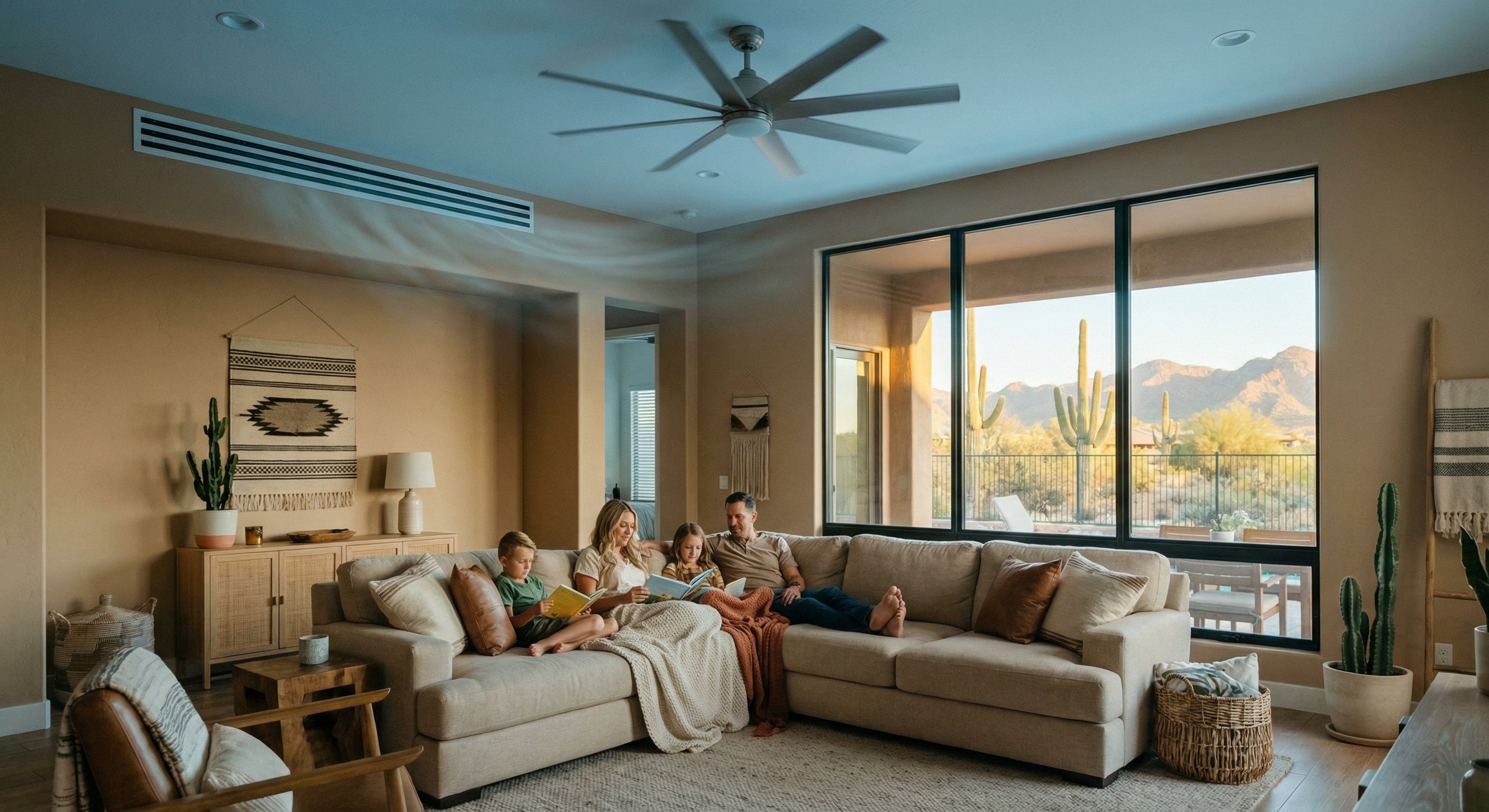
Get a free instant quote at acrebel.com to see direct pricing on correctly sized equipment without the dealer surcharge.
Frequently Asked Questions
Q: How many square feet does a 3-ton AC cover in Phoenix?
A 3-ton AC in Phoenix typically covers 1,800 to 2,200 square feet for a single-story home with reasonable insulation and moderate sun exposure. In an older home with poor insulation or significant west-facing walls, coverage drops to 1,600 to 1,800 square feet. Always use 650 to 700 square feet per ton as your Phoenix starting point, not the national 600-square-foot standard.
Q: Is it better to oversize or undersize an AC unit?
Undersizing is worse. An undersized unit runs continuously without reaching your target temperature on the hottest days, leading to wear, discomfort, and high energy bills. Oversizing causes short cycling and humidity problems. In Phoenix dry heat, a slightly undersized unit feels muggy. A slightly oversized unit never dehumidifies properly. Neither is ideal. Proper Manual J sizing eliminates both problems.
Q: What is a Manual J calculation and do I need one?
Manual J is the industry-standard load calculation method developed by the Air Conditioning Contractors of America. It accounts for your specific home's insulation, windows, sun exposure, ceiling height, and duct condition to determine the exact BTUh your AC system needs. Any reputable contractor should run one before recommending a tonnage. If they do not, get a second opinion.
Q: Does a higher SEER rating mean I need a smaller unit?
No. SEER measures efficiency, not capacity. A 16-SEER and an 18-SEER unit of the same tonnage cool the same space identically. The higher-SEER unit uses less electricity. In Phoenix where you run your AC six months a year, that difference is meaningful financially. But it does not change your tonnage requirement.
Q: My home is two stories. How does that affect AC sizing?
Two-story homes have different cooling loads on each floor. The second floor almost always needs more cooling per square foot than the first. A single-stage unit sized for the hottest day upstairs will be oversized for the first floor most of the year. Ask about zoning options or two-unit setups when replacing your system.
Q: How often should I recheck my AC sizing?
A Manual J result is good for the life of the home unless you make significant changes. If you add insulation, replace windows, finish a previously unconditioned space, or change how you use the home, revisit the calculation. Otherwise, a sizing done correctly once applies for 15 to 20 years.
Ready to stop overpaying?
See Your Direct AC Price in 2 Minutes
Skip the dealer. Buy your AC unit at direct pricing and pay a vetted local installer only for the installation. No sales calls. No hidden markup. Most homeowners save $3,000–$5,000+ compared to a traditional quote.
Get My Direct Price — No Credit Card2-minute quote · Licensed installers · 10-year warranty options