
AC Blowing Warm Air in Phoenix? Here's What's Actually Wrong

AC Blowing Warm Air in Phoenix? Here's What's Actually Wrong
TL;DR: If your AC is blowing warm air, check your thermostat settings first (easy fix). The most common causes are a dirty outdoor condenser (clean it yourself), low refrigerant from a leak (needs a pro), or a frozen evaporator coil (turn it off, then call). In Phoenix's 110°F+ heat, don't wait. A system blowing warm air during peak summer can damage the compressor permanently if you keep running it.
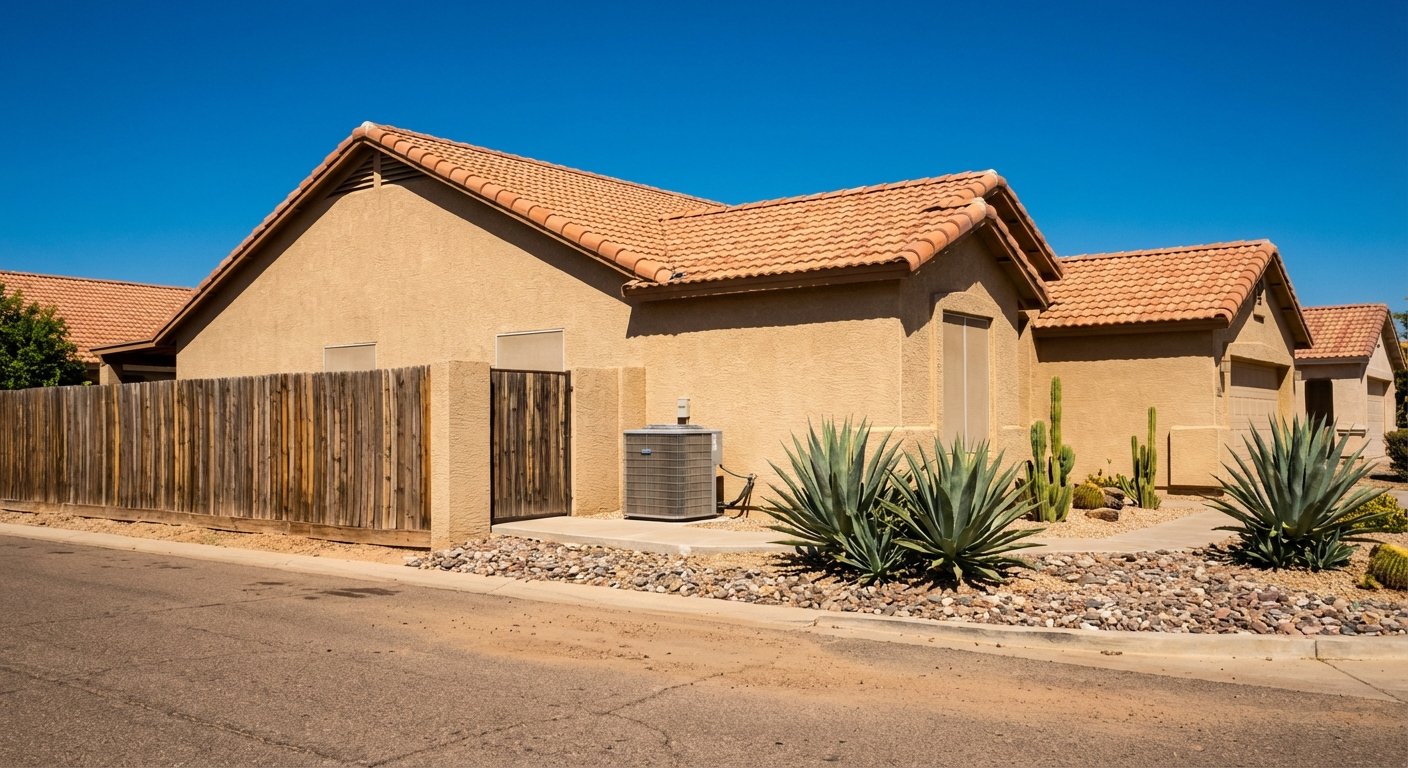
It's 108°F outside your Gilbert home. You walk inside expecting relief and get hit with air that feels like it came from a hair dryer. Your AC is running. You can hear it. But the air coming from your vents is warm, maybe even hot.
This is the moment every Phoenix-area homeowner dreads. And it's more common than you think. When the mercury pushes past 105°F, your air conditioner works harder than it was ever designed to. Systems that seemed fine at 95°F start showing their age fast.
Here's the reality: warm air from your vents is almost always one of five specific problems. Some you can fix in ten minutes. Others need a licensed technician. Knowing which is which saves you money, time, and a very uncomfortable night in July.
First Things First: Check the Obvious (Two-Minute Fixes)
Before you assume the worst, rule out the stupid-simple stuff. I've seen homeowners pay $150 service calls for problems they could have fixed with a button press.
Thermostat settings. Someone in your house may have bumped the switch from "Cool" to "Heat" or "Fan Only." The fan-only setting runs the blower without the compressor, circulating air but not cooling it. Check the mode. Set it to "Cool" and at least 5 degrees below your current indoor temp.
Circuit breaker for the outdoor unit. Your AC has two power sources: one for the indoor blower (usually working if air is moving) and one for the outdoor condenser (the big box outside). If the outdoor breaker tripped, your blower pushes air around but the condenser isn't compressing refrigerant. Warm air is the result. Check your electrical panel for a tripped breaker labeled "AC" or "HVAC."
Return vents blocked. Your system needs to pull warm air in to cool it. If return vents are covered by furniture, rugs, or boxes, the system can't breathe. Walk around and check that all return grilles are clear.
These fixes take two minutes. Try them. If the air is still warm after ten minutes, you have a real problem.
Problem #1: Your Outdoor Condenser Is Filthy (DIY Fix)
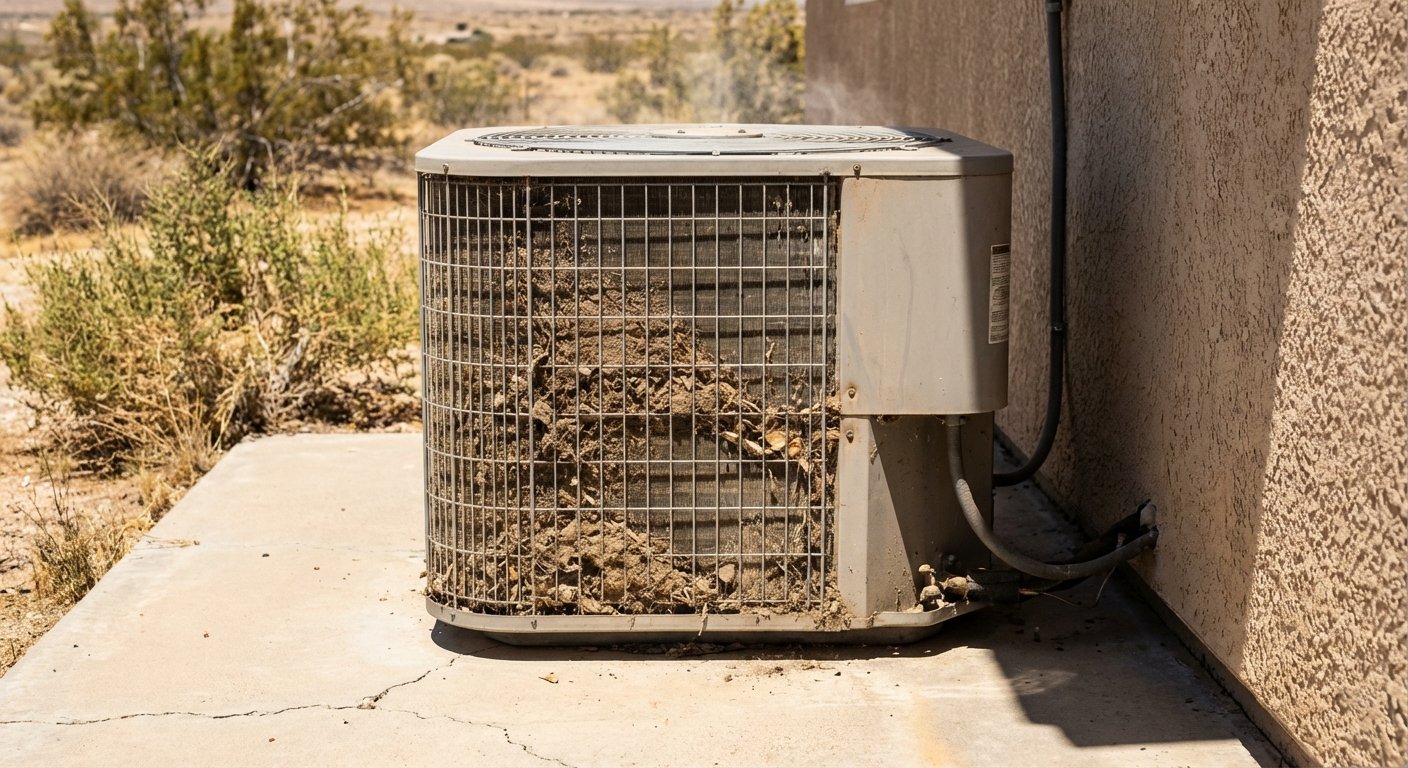
That big metal box outside your house? It's called a condenser, and it needs to breathe. When dust, grass clippings, and monsoon debris clog the fins, the unit can't release heat. It's like trying to cool down while wearing a winter coat in August.
In Phoenix, this happens faster than anywhere else. Our dust storms coat everything. Desert vegetation drops debris. And the harder your AC works, the more air it pulls through those coils, bringing dirt with it.
What it feels like: The air from your vents is warm but not hot. The outdoor unit is running but seems loud or labored. You might notice the unit cycling on and off frequently.
The fix: Turn off the AC at the thermostat and the breaker. Use a garden hose (not a pressure washer) to spray the exterior fins from top to bottom. Work slowly. You're washing out dust and debris, not blasting paint off. Clean around the unit, removing weeds and vegetation that block airflow. Give it 18 inches of clearance on all sides.
Arizona-specific note: Do this monthly during dust season (March through June). It takes fifteen minutes and prevents half the warm-air calls we see in Mesa and Chandler.
Problem #2: Low Refrigerant from a Leak (Call a Pro)
Refrigerant is the lifeblood of your AC. It absorbs heat indoors and releases it outdoors. When levels drop from a leak, the system can't move enough heat. The air gets progressively warmer.
What it feels like: The air started cool hours ago but has been getting warmer. You might hear a hissing sound near the indoor unit or outdoor lines. Ice may form on the copper line outside (sounds backward, but low refrigerant causes freezing at the outdoor unit).
Why this matters in Arizona: Phoenix's extreme heat puts constant stress on refrigerant lines. The copper expands and contracts daily. Over years, this movement causes micro-cracks at joints and connections. Older R-22 systems (pre-2010) are especially prone. That refrigerant type is now expensive and being phased out.
Can you fix it yourself? No. Refrigerant handling requires EPA certification. A pro needs to find the leak, repair it, and recharge the system to manufacturer specs. Don't let anyone just "top it off" without fixing the leak first. You'll be paying again in a month.
Cost range in Phoenix metro: Leak detection and repair runs $200–$600 depending on location. Recharging adds $150–$400 depending on refrigerant type. R-22 systems cost more and should prompt a serious conversation about replacement.
Skip the dealer markup
See What a New AC Actually Costs
AC Rebel shows you the real equipment price — no sales pitch, no inflated quote. Get matched with a licensed installer and keep $3,000–$5,000 in your pocket.
Get My Direct Price →Problem #3: Frozen Evaporator Coil (The Paradox Problem)
Here's a weird one: ice inside your system causes warm air outside. The evaporator coil sits above your furnace or air handler. It gets cold enough to freeze moisture from the air. When airflow is restricted or refrigerant is low, the coil ices over. Once frozen, it can't absorb heat. Your blower pushes air past a block of ice. The air warms up before it reaches your vents.
What it feels like: Weak airflow from vents, even though the blower sounds loud. Warm or slightly cool air. You might see water around the indoor unit as ice melts.
Causes: Dirty air filter (change it now), blocked return vents, low refrigerant, or a failing blower motor.
Immediate action: Turn the system off completely. Set the thermostat to "Off," not just "Fan." Let it thaw for 4–6 hours. Check and replace your air filter. If the filter was dirty, that was your problem. If the filter was clean or icing returns after restart, call a technician. You likely have a refrigerant issue or blower problem.
Phoenix dust factor: Our dust clogs filters faster than national averages. If you're running a 1-inch filter, check it every 30 days during summer. Upgrade to a 4-inch media filter if your system supports it. Better airflow means fewer freeze-ups.
Problem #4: Compressor Failure (The Expensive One)
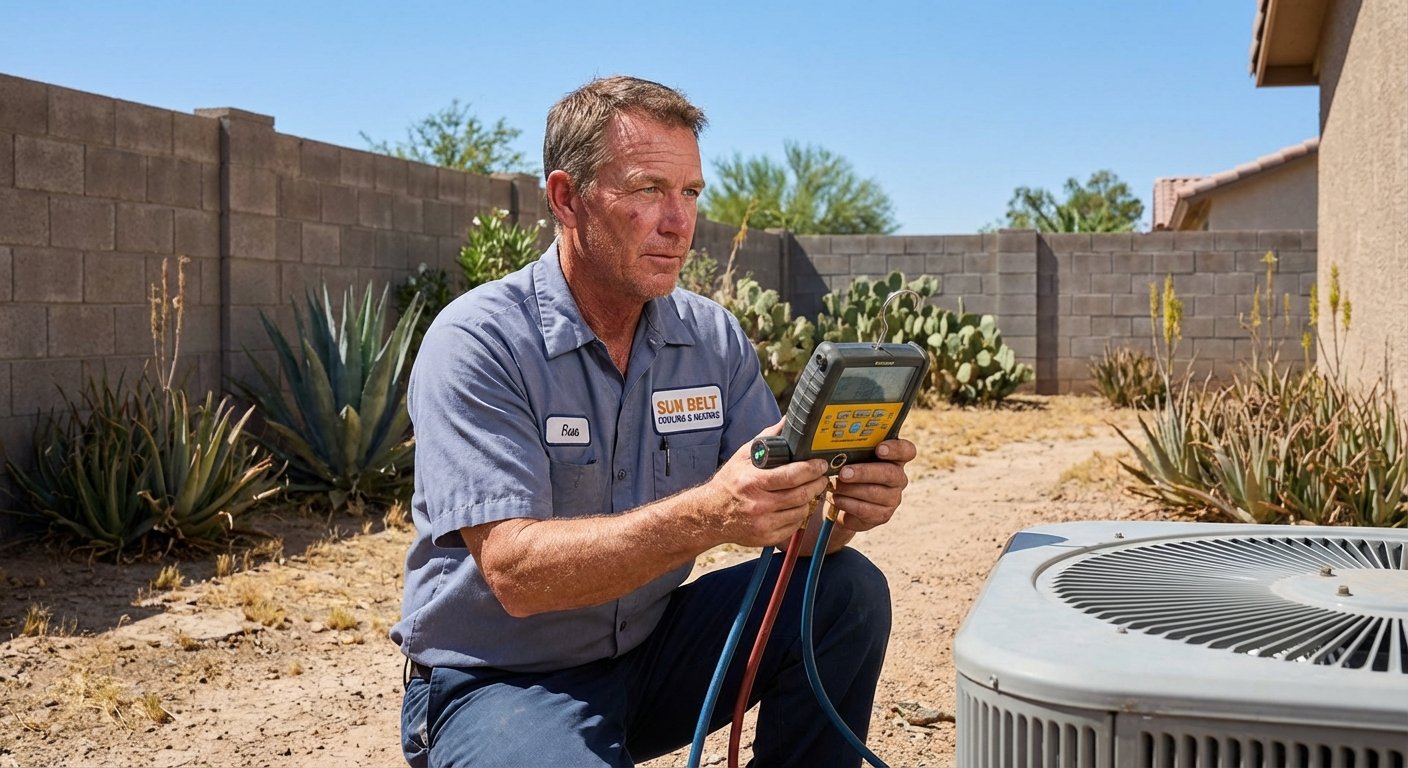
The compressor is the engine of your AC. It pressurizes refrigerant so it can absorb and release heat. When it fails, the system turns into an expensive fan. It moves air but doesn't cool.
What it feels like: The outdoor unit hums but the big fan isn't spinning. Or the fan spins but you don't hear the deeper rumble of the compressor engaging. The air is room temperature or slightly warm.
Why compressors fail: Age, electrical issues, running with low refrigerant (overheats), or running with a dirty condenser (overheats). In Phoenix, the last two are common because our heat amplifies every problem.
The hard truth: Compressor replacement on an older system rarely makes financial sense. You're looking at $2,000–$3,500 for the repair on a system that may have other worn components. For R-22 systems especially, replacement is usually the smarter move.
Age guide for Phoenix: If your AC is over 10 years old and the compressor fails, get quotes for full replacement. A new system runs $7,000–$10,500 installed for most Maricopa County homes, but you'll get a 10-year warranty and much better efficiency.
Problem #5: Ductwork Issues (The Hidden Heat Source)
Your cooled air travels through ducts in your attic. In Phoenix, attics hit 140–160°F in summer. If ducts are poorly insulated, disconnected, or have gaps, they pull in that superheated air. By the time the air reaches your bedroom vent, it's warmed up significantly.
What it feels like: Some rooms are cooler than others. The air is cool early morning but gets warmer as the day heats up. You hear whistling from vents (duct leak).
The Arizona factor: Older Phoenix homes (pre-1990s) often have ductwork that's undersized, poorly sealed, or falling apart in the attic. The original builders didn't anticipate modern efficiency standards. Some homes lose 20–30% of cooled air to attic leaks.
What you can check: Look at visible ductwork in your attic (if accessible). Silver tape should seal joints. Insulation should wrap all ducts. If you see gaps or feel hot air blowing near connections, that's your problem.
Professional solution: Duct sealing and insulation runs $1,500–$4,000 depending on home size and accessibility. SRP and APS both offer rebates for duct sealing work. Check their websites for current programs.
When to Call a Pro vs. When to Wait
Call today (emergency):
- System blows warm air and it's over 100°F outside
- You see ice forming on copper lines
- The outdoor unit isn't running at all
- Burning smell or unusual electrical odor
Call this week (soon):
- Warm air persists after you cleaned the condenser and changed the filter
- You suspect a refrigerant leak (hissing sounds, ice, gradual warming)
- Uneven cooling between rooms
Try DIY first:
- Thermostat check
- Breaker reset
- Condenser cleaning
- Filter replacement
The Real Cost of Waiting in Phoenix
Here's what the national HVAC blogs don't tell you. In a normal climate, running an AC that's blowing warm air is inefficient but not catastrophic. In Phoenix, it's actively destructive.
When your AC runs without properly cooling, the compressor works harder and hotter. Our ambient air temperatures (110°F+) mean the system is already near its thermal limit. Add a dirty condenser or low refrigerant, and you can cook a compressor in a single afternoon.
I've talked to homeowners who turned off their "warm air" AC overnight, planning to call in the morning, only to find the compressor seized completely. What was a $200 refrigerant recharge became a $3,000+ repair or full replacement.
The rule: If it's over 100°F outside and your AC is blowing warm air, shut it off and call a professional. Don't try to "tough it out" through the night. The risk isn't comfort. It's turning a fixable problem into a destroyed compressor.
Prevention: Stop Warm Air Before It Starts
The best fix is avoiding the problem. Here's the maintenance schedule that actually works in Arizona:
Monthly (March through October): Change your air filter. Check the outdoor condenser for debris. Spray it clean if dirty.
Annually (February or March, before peak heat): Professional tune-up. They'll check refrigerant levels, test electrical components, clean coils properly, and catch small problems before they become warm-air emergencies.
Every 5 years: Duct inspection. Attic conditions destroy ductwork over time. Catching leaks early saves money and comfort.
Know your system's age: If you're past 10 years in Phoenix, start budgeting for replacement. The average lifespan here is 10–12 years, not the 15–20 you read about online. Heat kills components faster.
Key Takeaways: What to Do Right Now
- Check your thermostat is on "Cool" and 5 degrees below room temp
- Reset the AC breaker if the outdoor unit isn't running
- Change your air filter if it's been more than a month
- Clean your outdoor condenser with a garden hose (power off first)
- If it's over 100°F outside and air is still warm after these steps, shut off the system and call a pro
Warm air from your AC isn't mysterious. It's a symptom with specific causes. The difference between a quick DIY fix and a $3,000 replacement often comes down to how fast you act and whether you keep running a struggling system in 110-degree heat.
Get a free instant quote at acrebel.com and see direct pricing without the dealer markup. If replacement makes more sense than repair, you'll save $3,000–$5,000 buying direct.

Frequently Asked Questions
Q: Why is my AC blowing warm air only during the hottest part of the day?
A: This usually means your system is undersized or struggling with capacity. When outdoor temps hit 110°F+, your AC runs continuously but can't keep up. The air feels warm because the system is maxed out. In Phoenix, this is common with older 10 SEER units or systems that were sized borderline-correct for milder climates. Consider upgrading to a higher-SEER system sized properly for Arizona heat loads.
Q: Can low refrigerant cause warm air even if I don't see a leak?
A: Yes. Refrigerant leaks are often slow and invisible. The system loses charge gradually over months. You won't see puddles or obvious damage. An HVAC tech uses electronic leak detectors or dye tests to find micro-leaks at joints, valves, or coil seams. By the time you notice warm air, you've typically lost 20–40% of your charge.
Q: Is it safe to run my AC if it's blowing warm air?
A: Not for long, especially in Phoenix heat. Running a system with low refrigerant, a dirty condenser, or a failing compressor causes overheating. This damages expensive components. If the air is warm, run it just long enough to confirm the problem (5–10 minutes), then shut it off until repaired. The exception: if you just changed settings and are waiting to see if it cools, give it 15 minutes.
Q: How much does it cost to fix an AC blowing warm air in Phoenix?
A: It depends on the cause. DIY fixes (cleaning, filter) are free. Refrigerant leak repair and recharge: $350–$1,000. Failed capacitor (common cause of outdoor unit not running): $150–$300. Compressor replacement: $2,000–$3,500. Full system replacement: $7,000–$10,500 for most Maricopa County homes. Get multiple quotes. The first number you're told often has significant markup built in.
Q: Why does my AC blow cold air sometimes and warm air other times?
A: Intermittent cooling usually points to a system cycling on and off due to a safety switch, or icing and thawing. If the evaporator coil freezes, it blocks cooling until it melts. Then it works briefly until refreezing. Common causes are restricted airflow (dirty filter), low refrigerant, or a failing blower motor. This pattern needs professional diagnosis.
Q: Can a dirty air filter really cause warm air?
A: Absolutely. When airflow is restricted, the evaporator coil gets too cold and freezes. Ice blocks air passage, so your blower pushes air around the ice rather than through it. The result is warm or weak airflow. Change your filter monthly in Phoenix. Our dust loads clog filters faster than the national "every 90 days" recommendation you'll see online.
Q: Should I replace my AC if it's blowing warm air and over 10 years old?
A: Probably, if the repair cost exceeds $1,000. At 10+ years in Phoenix, you're near end-of-life anyway. A new 16 SEER system cuts summer electric bills by 20–40% compared to old 10 SEER units. Do the math: a $600 repair on a system that dies next summer anyway, plus another year of high electric bills, often costs more than replacing now. Get quotes both ways.
Sources: ENERGY STAR AC maintenance guidelines, AHRI equipment performance standards, APS and SRP utility rebate program documentation
Ready to stop overpaying?
See Your Direct AC Price in 2 Minutes
Skip the dealer. Buy your AC unit at direct pricing and pay a vetted local installer only for the installation. No sales calls. No hidden markup. Most homeowners save $3,000–$5,000+ compared to a traditional quote.
Get My Direct Price — No Credit Card2-minute quote · Licensed installers · 10-year warranty options