
What Your AC Model Number Actually Means (And How to Use It)

What Your AC Model Number Actually Means (And How to Use It)
TL;DR: Your AC model number is a code that tells you the brand, cooling capacity (in BTU), efficiency rating (SEER), refrigerant type, and the year it was made. You can read it yourself with a basic chart or free online decoder. Knowing your model number saves you time at the supply house, helps contractors give accurate quotes, and lets you shop for exact-match parts or replacement units online. The number is on the outdoor unit's yellow sticker, usually within reach from the ground once you know where to look.
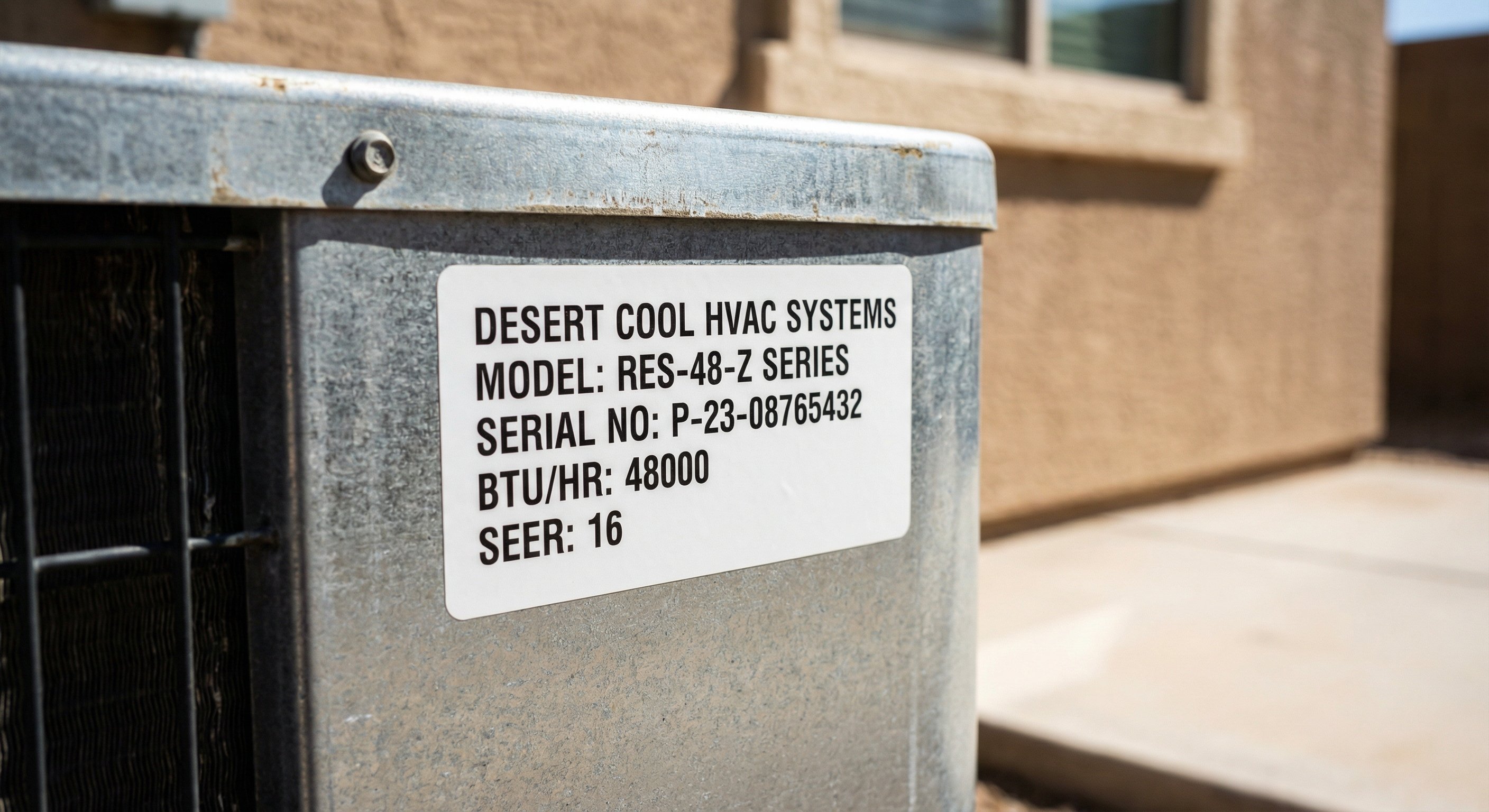
Where to Find Your AC Model Number
Before decoding anything, you need the number itself. Head outside to your outdoor condensing unit. It sits on a concrete pad on the side or back of your house, typically enclosed in a metal cabinet.
Look for a yellow or white sticker. On most units sold in Arizona since the 1990s, this label lives on the outside of the service panel, usually the panel facing the yard or driveway. You do not need a ladder. Reach up and look at the face of the cabinet below the fan cage.
The label has two distinct numbers:
- Model number — the long alphanumeric code that tells you everything about the unit
- Serial number — a separate追踪追踪 identifier tied to the factory build date and origin
You need the model number. The serial is useful for warranty claims but not for decoding specs.
If the sticker is too faded to read, try soapy water and a soft brush. Arizona dust and hard water deposits obscure labels fast. If it still will not come clean, search for your unit using the brand name plus any visible numbers at the manufacturer website.
How to Decode the Model Number (Trane, Carrier, Lennox, and Rheem)
Most residential AC model numbers follow a predictable structure. The major brands use variations on the same format. Here is how to break down a real number.
The Brand Prefix
The first three to five characters identify the manufacturer:
- R = Rheem
- RACA or RASL = Ruud (same parent company as Rheem)
- CA, CX, CTX = Carrier
- TSP, TTC = Trane
- L = Lennox
- G = Goodman (now part of Daikin)
- YCD = York
This tells you who made the unit. For Phoenix homeowners, Carrier, Trane, Lennox, and Rheem are the most common brands in homes built after 2000.
The Cooling Capacity (BTU)
The first set of digits after the brand prefix tells you the unit's cooling capacity in British Thermal Units, or BTU. This is how much heat the unit can remove in one hour.
Common sizes for Phoenix homes:
- 24 = 2 tons (24,000 BTU)
- 30 = 2.5 tons (30,000 BTU)
- 36 = 3 tons (36,000 BTU)
- 42 = 3.5 tons (42,000 BTU)
- 48 = 4 tons (48,000 BTU)
- 60 = 5 tons (60,000 BTU)
A unit labeled RACA042 would be a 3.5-ton Carrier. A YCD060 would be a 5-ton York.
Most Phoenix homes need 3 to 4 tons. Older homes with original ductwork and no insulation often need upsizing. Newer homes with good envelope construction can often run smaller.
The Efficiency Rating (SEER)
The alphanumeric characters after the BTU code indicate the efficiency rating. This is where Phoenix homeowners see the most variation, and where it matters most on your electric bill.
- Units manufactured before 2006: may show SEER 10 or SEER 12
- Standard efficiency (2006-2015): SEER 13 to SEER 14
- High efficiency: SEER 15 to SEER 18
- Premium units: SEER 20 to SEER 25 (variable speed compressors)
In Arizona, a unit below SEER 14 is considered low efficiency by current standards. ENERGY STAR requires SEER 15 or higher for Climate Zone 2, which covers most of the Phoenix metro area. Units rated SEER 18+ qualify for utility rebates through both APS and SRP.
A model number might show the SEER as a two-digit code, or it might be embedded in the full model string. Free online decoder tools at the manufacturer's site will pull the official rating from any model number within seconds.
The Refrigerant Type
Model numbers from 2010 onward typically include a letter code indicating the refrigerant type:
- A = R-410A (current standard, ozone-safe)
- Old units may show no letter or use F = R-22 (being phased out, expensive to service)
If your unit uses R-22 and something fails, you are looking at $600 to $1,200 for a simple leak repair plus refrigerant at $25 to $50 per pound. At those prices, a full replacement often makes more financial sense than a repair.
The Manufacturing Year
The final segment of the model number or serial number encodes the manufacturing date. This is critical for Phoenix homeowners because age determines both warranty coverage and the likelihood of cascading failures.
For units made after 2006, the first two digits of the serial number typically indicate the year:
- 06 = 2006
- 10 = 2010
- 15 = 2015
- 21 = 2021
If your unit was manufactured before 2010 and you are running it hard through Phoenix summers, you are past the point where most experts recommend continued repair. An 18-year-old unit that has already needed one major repair is a replacement candidate, not a candidate for another repair bill.
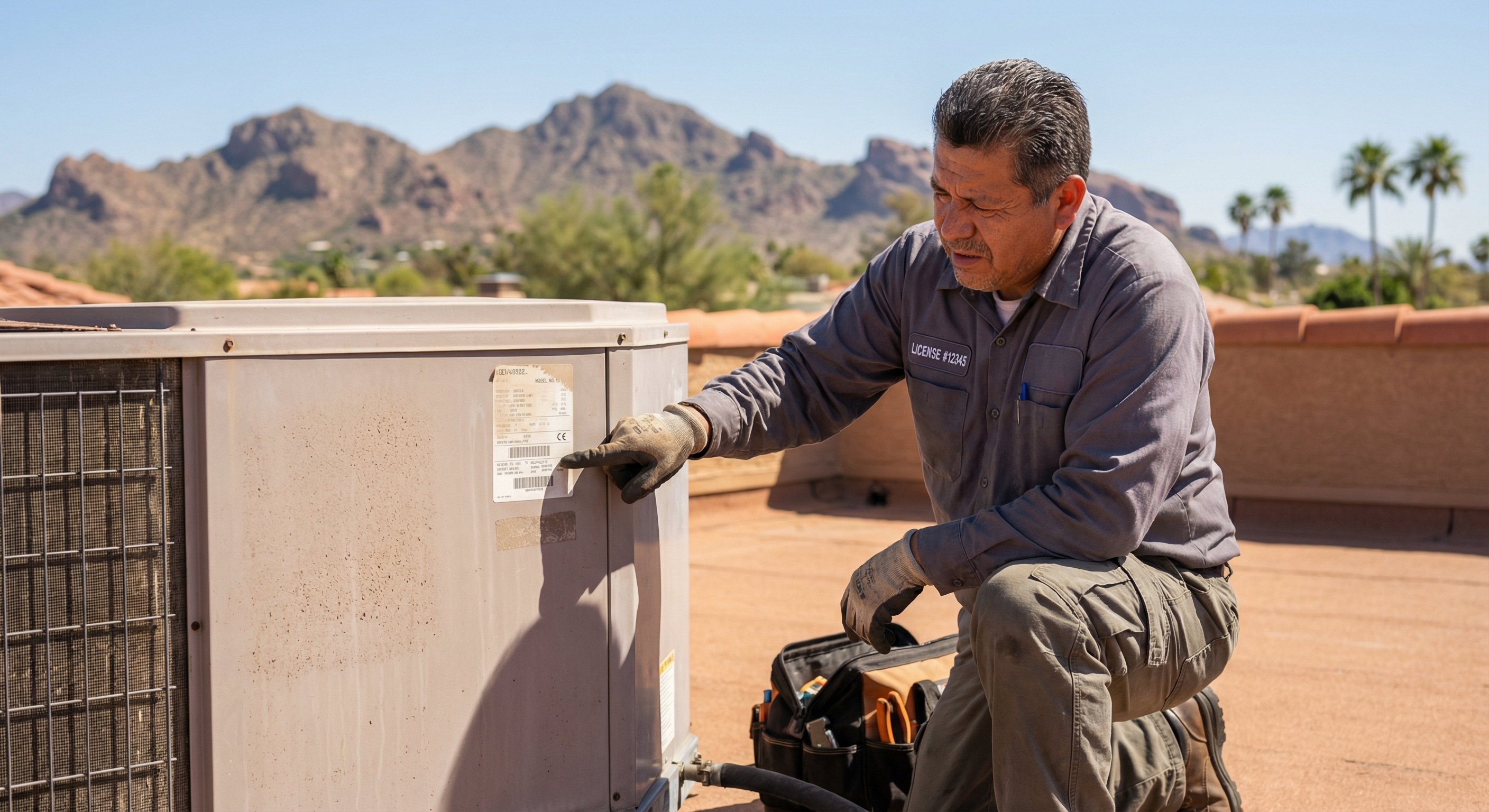
Why Phoenix Homeowners Benefit More From Knowing This
The national average lifespan for a central AC is 15 to 20 years, according to ASHRAE. That figure comes from moderate climates where units idle for months at a time. Phoenix is not a moderate climate.
Running an AC at 110°F to 115°F outside temperature for four months straight is equivalent to running the same unit hard year-round in Dallas or Houston. Phoenix heat accelerates wear on compressors, degrades refrigerant faster, and bakes capacitor chemistry. A unit that should last 15 years in Ohio is often done by 11 or 12 in the East Valley.
This means a unit manufactured in 2012 is already 14 years old in 2026. It is past its designed lifespan in Arizona terms. Knowing the manufacture date from the serial number tells you where you actually are in the unit's lifecycle, regardless of what a salesperson tells you.
If a contractor recommends a $1,800 capacitor replacement on a unit made in 2011, you can do the math: you are putting $1,800 into a 15-year-old machine that is three years past its effective lifespan in this climate. That is a data point, not a reason to panic. Sometimes it still makes sense. But you want to know that before you sign anything.
Skip the dealer markup
See What a New AC Actually Costs
AC Rebel shows you the real equipment price — no sales pitch, no inflated quote. Get matched with a licensed installer and keep $3,000–$5,000 in your pocket.
Get My Direct Price →What Homeowners Can Do With This Information
Once you can read the model number, three things become immediately actionable.
1. Shop for Exact-Match Parts Without a Middleman
A capacitor for a Carrier 3-ton unit has a specific part number. Search "Carrier 36BTU capacitor" and you will find the exact match for $18 to $35 online. The same part through an HVAC supply house with a service call mark-up runs $120 to $250 for the part alone.
This only works for components that are genuinely standardized. Capacitors, contactors, and fan motors are straightforward. Heat exchangers and compressors require professional installation and refrigerant handling licenses.
For Phoenix homeowners comfortable with basic DIY, capacitors and filters are the two repairs most worth doing yourself. A dirty capacitor is the single most common cause of an AC that runs but does not cool. That repair takes under 30 minutes once you have the right part.
2. Get More Accurate Quotes From Any Contractor
When you call a contractor and say "I have a 2015 Trane 3-ton, SEER 14 unit, model number blah blah," you immediately sound like someone who has done their homework. Contractors adjust their behavior when they know the homeowner is not starting from zero.
More practically, knowing your model number lets you verify that the quote you receive is for the right size unit. If a contractor quotes you for a 4-ton system and your home has a 3-ton unit, that is a $2,000 to $3,000 question worth asking before signing anything.
3. Compare Pricing on Replacement Units Before Buying
This is where AC Rebel comes in. Once you know your model number and size, you can look up what the unit itself costs at direct pricing versus what a dealer charges for the same model plus installation.
A 3-ton Carrier XR15 condenser (SEER 15) runs $1,400 to $1,800 at wholesale distributors. A Phoenix dealer quotes it at $3,200 to $4,200 for the unit alone before installation. That dealer markup is what AC Rebel eliminates. You buy the unit at direct pricing, and a vetted local contractor handles the install.
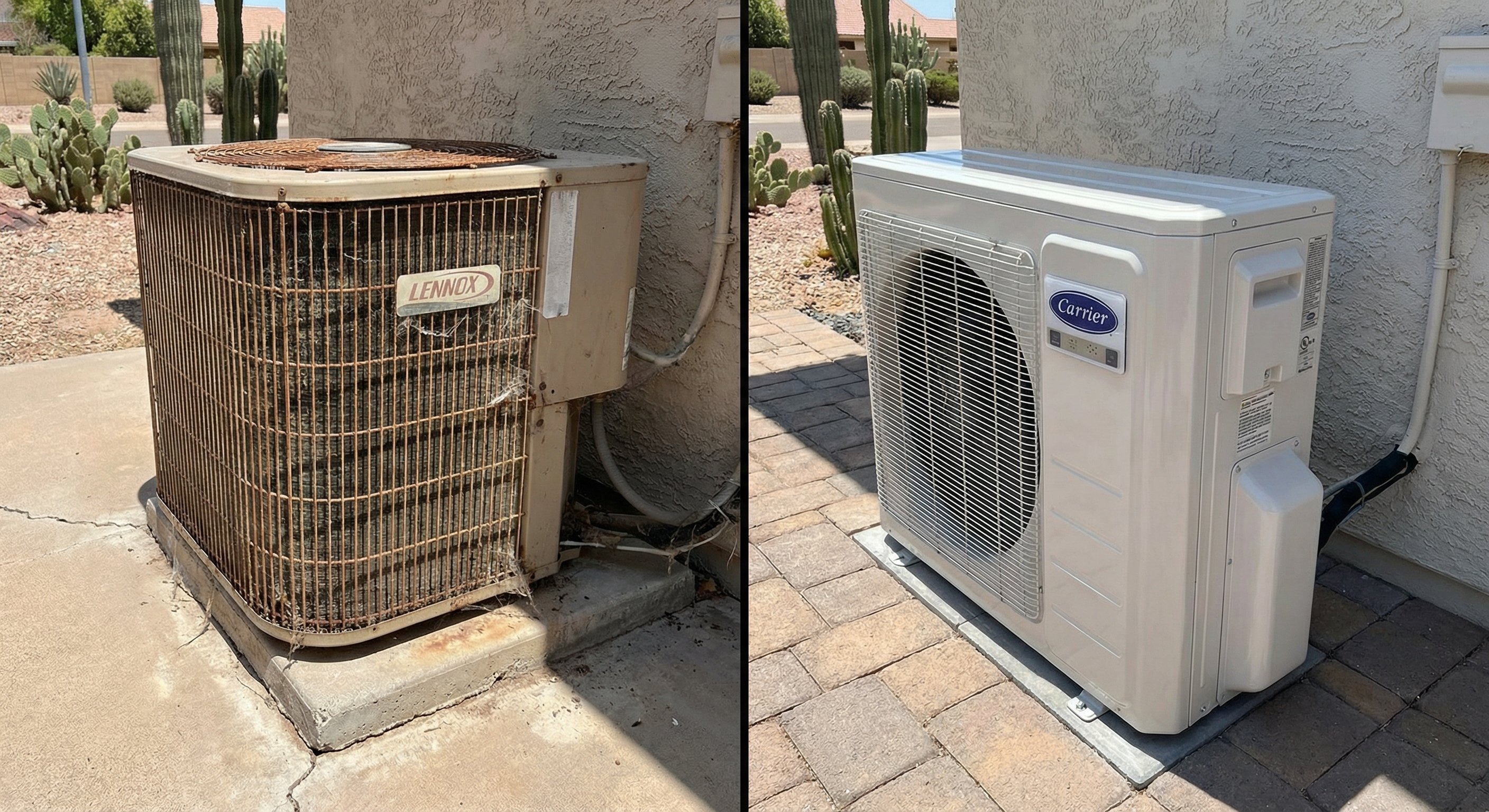
The Most Common Mistakes Phoenix Homeowners Make
Believing "Bigger Is Better" on Capacity
A unit too large for your home short-cycles. It runs for five minutes, hits the thermostat setpoint, shuts off, and runs again 10 minutes later. This wastes energy, wears out the compressor faster than steady operation would, and leaves your home humid because short-cycling does not allow enough run time to dehumidify the air.
Phoenix homes in the 1,600 to 2,200 square foot range typically need a 3-ton unit. Larger, poorly insulated, or top-floor homes may need 3.5 or 4 tons. Your current model number tells you what size you have now. If it is working and cooling your home adequately, replacing with the same size is usually the right call.
Ignoring the Age Until It Is an Emergency
Most Phoenix homeowners start shopping for a new AC only when their current unit fails in July. By then, they are emotionally motivated, working against the clock, and vulnerable to high-pressure sales tactics.
Knowing your model number and manufacturing year lets you plan proactively. If your unit is 10 years old and showing signs of wear, you can shop for replacement in April or May when contractors are hungry for work, pricing is softer, and you can get installation scheduled before the June heat. That is a completely different buying experience than an August emergency replacement at peak prices.
Paying Retailer Prices Without Knowing the Markup
The same Trane unit that costs a dealer $1,600 to stock costs you $3,800 at the dealer counter. That $2,200 difference is the distribution chain adding up. It is not profit from superior service. It is structural. See how AC Rebel's direct model works, and why it cuts that chain completely.
When to Call a Pro Even With Model Number Knowledge
There are things you cannot do yourself. If your model number tells you the unit uses R-22 refrigerant, any repair involving the sealed system requires an EPA 608 universal certification and EPA-certified technician. In Arizona, you also need a state contractor's license to legally work on HVAC systems above certain thresholds.
If the model number shows your unit is a variable-speed inverter model (SEER 18 or higher), the compressor drive and control board are more complex than a standard single-stage unit. Repairing these requires brand-specific diagnostic equipment. A wrong part on an inverter board can fail catastrophically.
For most Phoenix homeowners, the model number knowledge pays off in the shopping and quote verification phase. For the actual repair work, the licensed contractor with the right parts and certifications is non-negotiable. Arizona requires a state contractor's license for HVAC work above certain thresholds.
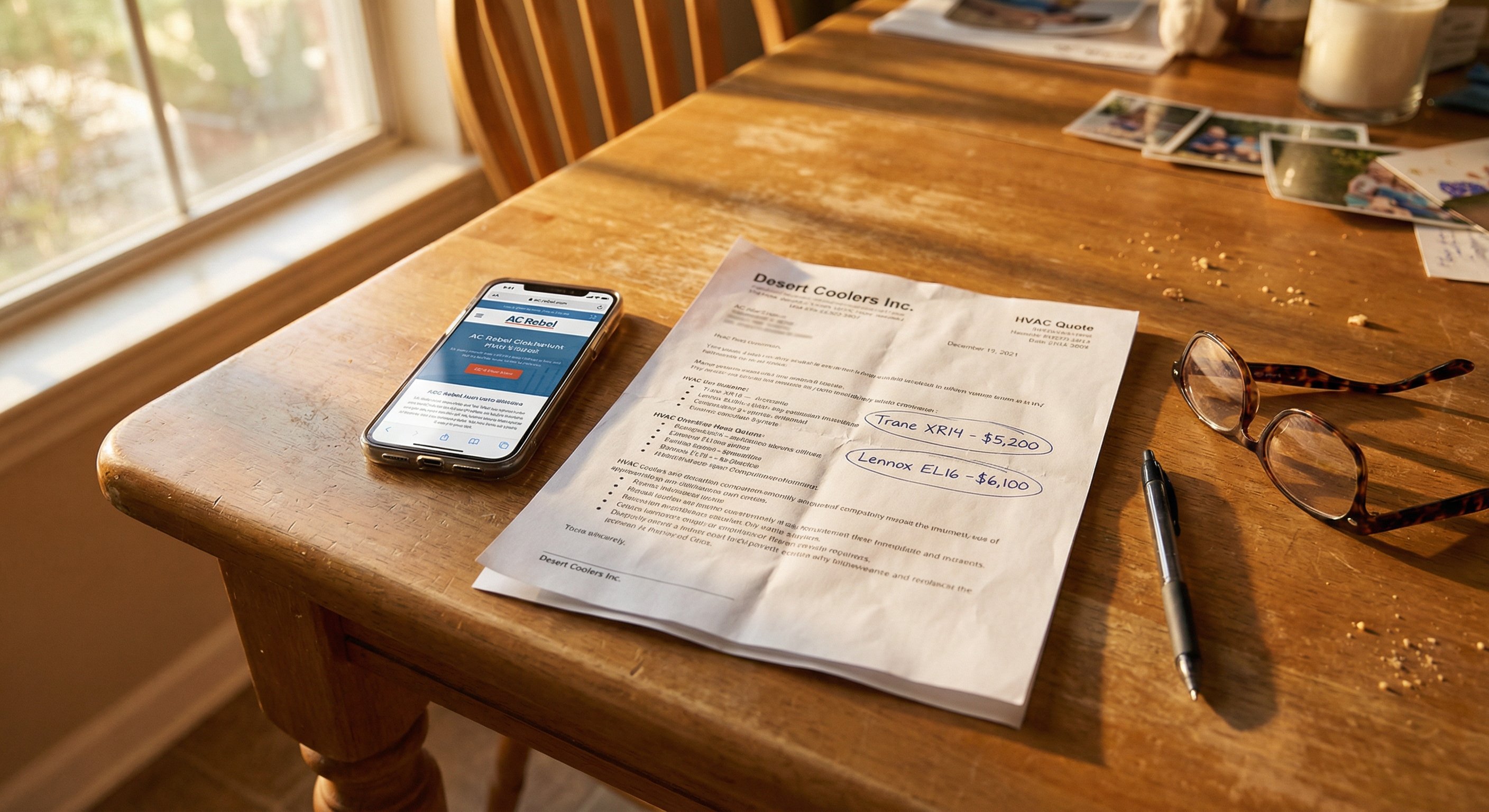
How to Verify a Model Number Decode
Once you have read your model number and made your best decode attempt, you can verify it in under two minutes. Search "[Your Brand] model number decoder" and go to the manufacturer's official website. Most major brands (Carrier, Trane, Lennox, Rheem) have free online tools where you paste the model number and get back the full spec sheet: BTU, SEER, refrigerant, condenser coil type, and registered warranty status.
This is also how you confirm the manufacturing year if the serial number encoding is unclear. The manufacturer's database ties the model and serial numbers to the original production date.
Keep a photo of the label on your phone. By the time you need it, the label will be faded or the text will have weathered off.
Frequently Asked Questions
Q: Where exactly is the model number located on my AC unit?
The model number is printed on a yellow or white sticker attached to the outdoor condensing unit, typically on the service panel facing the yard or driveway. It is on the outside of the metal cabinet, near the bottom. You do not need a ladder for most units. If your unit is mounted on a roof, check the side panel accessible from the roof edge.
Q: How do I know if my AC uses R-22 or R-410A refrigerant?
The easiest way is to check the model number. Units with R-22 were manufactured before 2010. If your unit was installed before 2010 and has not had a refrigerant change-out, it almost certainly runs on R-22. A professional HVAC technician can also confirm this with a manifold gauge set during a service call.
Q: Does the SEER rating on my model number match what I see on my electric bill?
SEER is a tested efficiency rating, not a guarantee of your actual energy use. Actual consumption depends on thermostat settings, home insulation, ductwork condition, and how hard the unit runs in any given summer. That said, a SEER 18 unit will use 25 to 35 percent less electricity than a SEER 12 unit running the same workload. In Phoenix summer heat, that difference translates to $60 to $120 per month on your APS or SRP bill.
Q: Can I replace a capacitor myself after reading my model number?
If you are comfortable working with electrical components and your main breaker is off, a capacitor replacement is one of the most DIY-friendly AC repairs. The part costs $18 to $35 online. Search for your exact model number plus "run capacitor" to find the right match. You will need a screwdriver, a pair of needle-nose pliers, and about 30 minutes. If at any point you feel uncertain, stop and call a licensed pro.
Q: My model number is too faded to read. What do I do?
First, clean the label with soapy water and a soft brush. Arizona hard water deposits and dust often obscure labels that would be readable otherwise. If that does not work, note the brand name and any visible numbers from the outdoor unit, then go to the manufacturer's website and search for your unit by brand plus partial model number. If that fails, a licensed HVAC technician can look up your unit by serial number through the manufacturer's database.
Q: Should I replace my AC based on age alone if the model number shows it is old?
Age is a strong factor, not an automatic decision. A 12-year-old unit in good working condition that has been maintained annually may have another three to four years of life in a Phoenix home. A 12-year-old unit that has already had one major repair and shows signs of reduced capacity is closer to replacement. The decision should factor in repair cost versus replacement cost, your home's current efficiency, and whether you are planning to stay in the home long enough to recoup a replacement investment.
Q: How do I use my model number to shop for a new AC unit?
Your model number tells you the size and efficiency tier you need. Once you know the BTU and SEER rating, you can look up equivalent models across brands. Use a size calculator (tons required for your home's square footage and sun exposure) to confirm the size, then compare the same tier across brands. Direct pricing platforms like AC Rebel let you see exact unit costs for your size tier without the dealer markup.
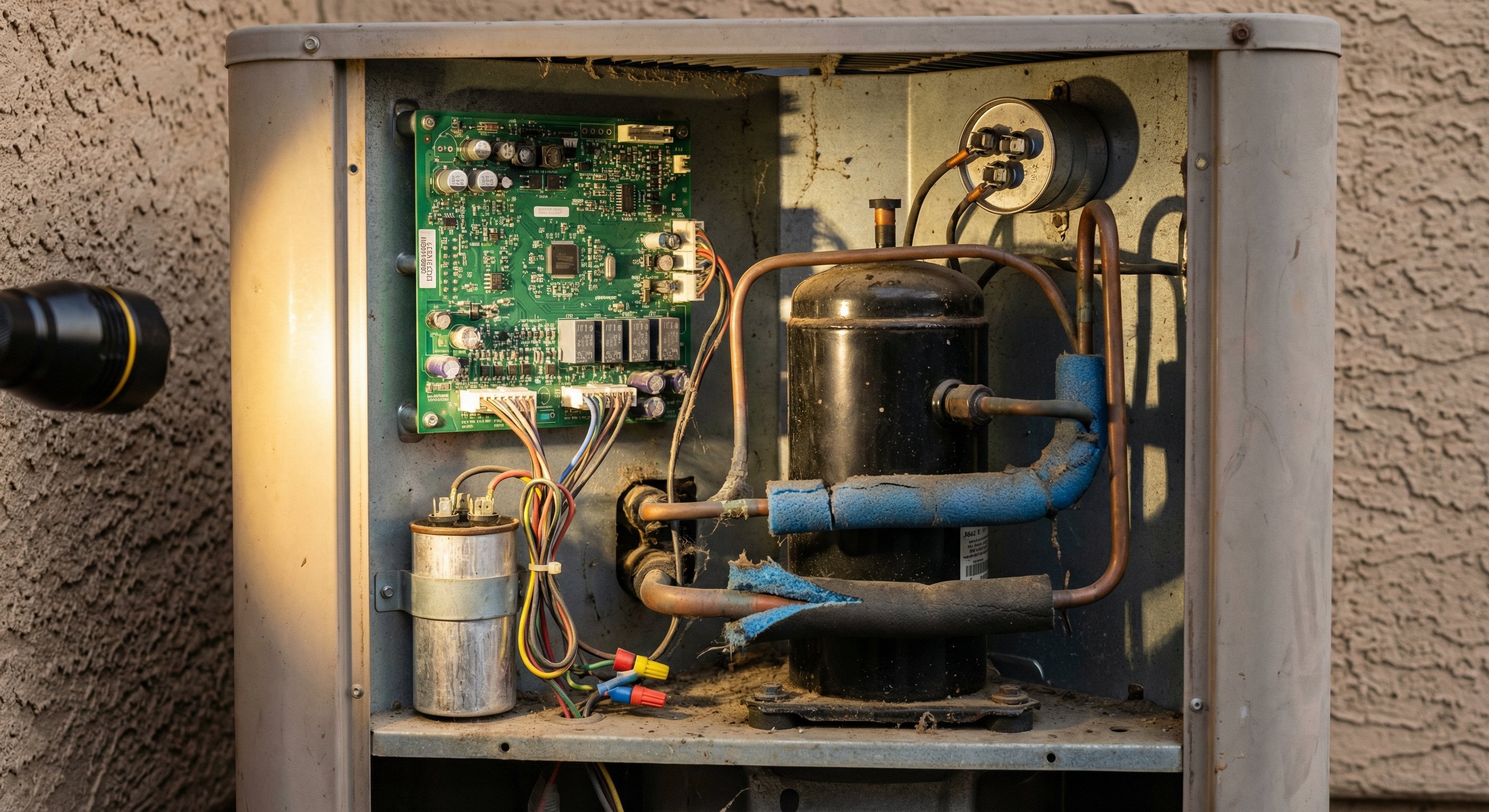
Your model number is yours. It is printed on the unit, sitting in your yard, and it is not going anywhere. Once you can read it, you immediately have more negotiating power, better repair decisions, and clearer visibility into whether the quote you just received makes sense.
Take five minutes, walk outside, find the label, photograph it, and save it in your phone. Future you will be glad you did when August hits and something makes a noise you have not heard before.
Get a free instant quote at acrebel.com.
Ready to stop overpaying?
See Your Direct AC Price in 2 Minutes
Skip the dealer. Buy your AC unit at direct pricing and pay a vetted local installer only for the installation. No sales calls. No hidden markup. Most homeowners save $3,000–$5,000+ compared to a traditional quote.
Get My Direct Price — No Credit Card2-minute quote · Licensed installers · 10-year warranty options