
AC Capacitor Replacement Cost in Phoenix (2026 Pricing Guide)

AC Capacitor Replacement Cost in Phoenix (2026 Pricing Guide)
TL;DR: AC capacitor replacement cost in Phoenix usually runs $180 to $450 in 2026. A basic weekday repair often lands near $180 to $300. Dual-run capacitors, hard-start kits, and after-hours calls push the bill higher. If your quote is over $500 for a simple capacitor swap, slow down and ask what else is included. In Arizona heat, this part fails often, but it should not turn into a mystery bill.
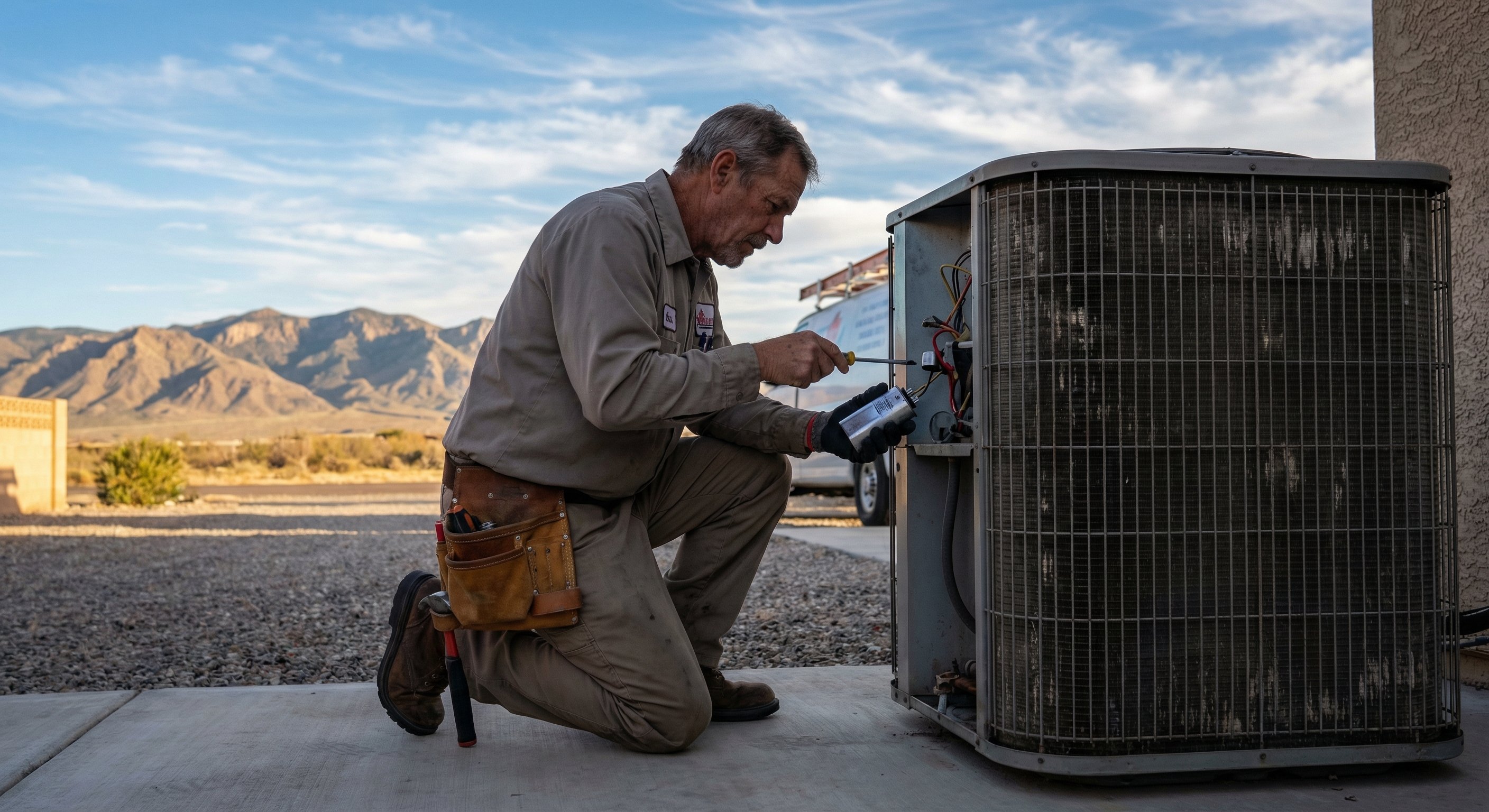
This is one of those repairs that gets sold in a panic.
Your outdoor unit stops starting. The house warms up fast. A tech opens the panel, points at a silver can-shaped part, and says the capacitor is bad. Ten minutes later you are staring at a quote that seems too high, but the inside temperature is already climbing and you do not want to drag this out.
That is why homeowners get burned on capacitor jobs.
The repair is real. The part matters. But the part is not expensive, and a lot of HVAC companies know customers have no idea what fair pricing looks like. Here is the honest version of AC capacitor replacement cost in Phoenix, what changes the number, and when a simple repair is being used to sell you something bigger.
What an AC capacitor actually does
A capacitor helps your AC motors start and keep running. In a split system, it usually supports the compressor and the outdoor fan motor. If it weakens or fails, the system may hum, struggle to start, run badly, or stop cooling altogether.
You will usually hear three terms.
Start capacitor. Gives a stronger burst to help a motor start. More common on certain older systems or specialty setups.
Run capacitor. Supports steady operation once the motor is running.
Dual-run capacitor. Combines support for the compressor and condenser fan in one part. This is what many residential systems in Phoenix use.
You do not need to memorize that. What matters is this: when the capacitor is weak, the system has to work harder to start. In 110°F weather, that extra strain shows up fast.
AC capacitor replacement cost in Phoenix
Here is the range most homeowners should expect in 2026.
| Service | Fair local range | What it usually includes |
|---|---|---|
| Basic run capacitor replacement | $180 to $300 | Part, labor, standard service call |
| Dual-run capacitor replacement | $220 to $375 | More common on residential split systems |
| Hard-start kit or added startup component | $300 to $450 | Used when compressor startup is a concern |
| After-hours or weekend repair | Add $100 to $250 | Nights, weekends, peak heat calls |
| Diagnostic-only visit | $75 to $150 | Sometimes credited toward repair |
That does not mean every quote outside the range is wrong. It means the company should be able to explain the difference clearly.
If you hear a number above $500 for a basic weekday capacitor replacement, ask these three questions:
- Is this a single or dual-run capacitor?
- Is the diagnostic fee included?
- Are you charging for anything besides the capacitor and normal labor?
If the answers are fuzzy, the price probably is too.
Why capacitors fail so often in Arizona
Phoenix is hard on AC equipment in general, but capacitors take a beating.
Long cooling season. Your system is not working a mild three-month summer. It is grinding through spring, brutal summer, and hot fall shoulder months.
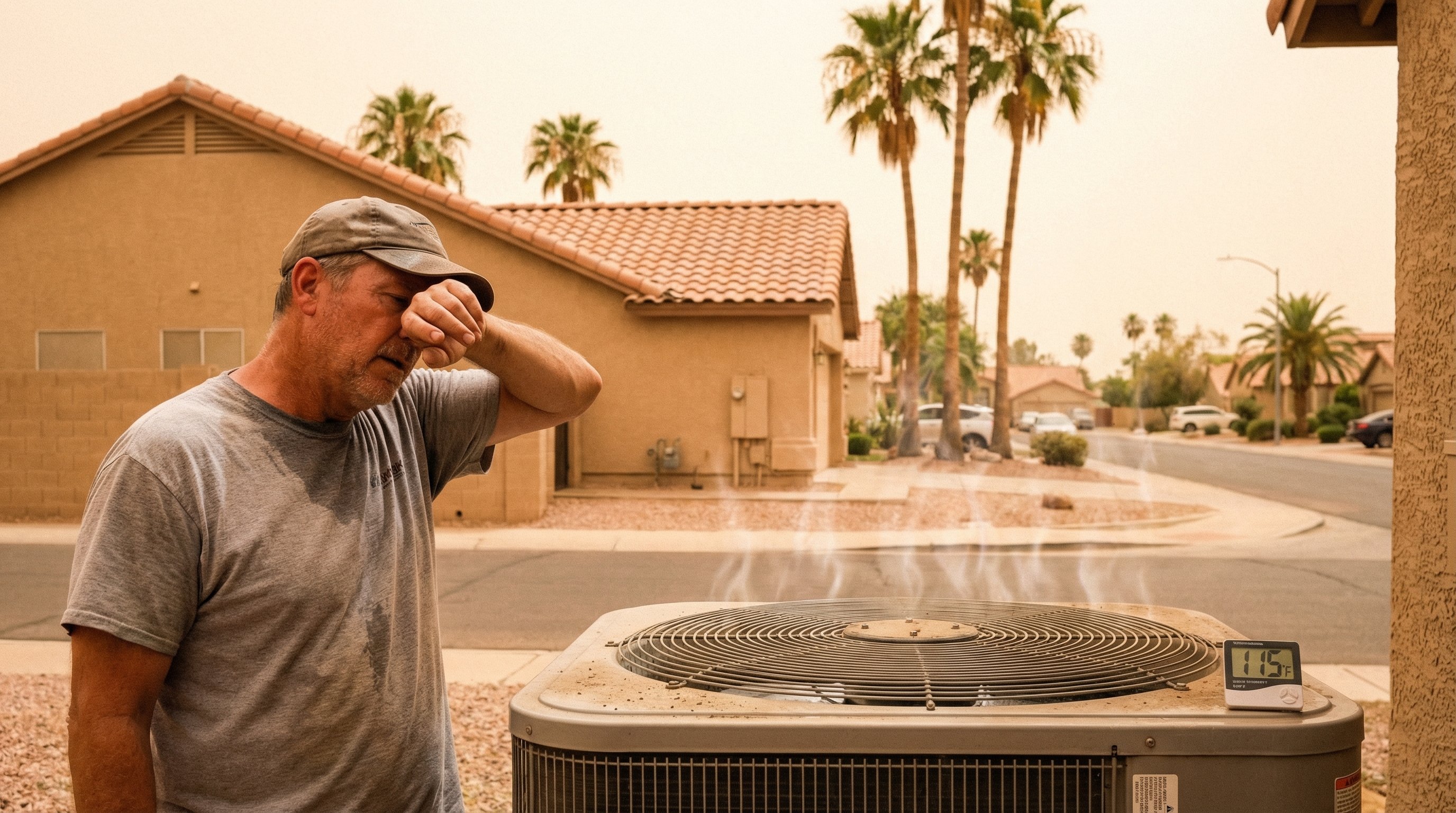
Extreme heat at the equipment. The official air temperature might say 108°F. The air around the outdoor unit and the metal cabinet can feel much worse.
Power instability during monsoon season. Storms, flickers, and surges can shorten capacitor life or finish one off that was already weak.
Dust and dirty coils. When the condenser is packed with dust, the compressor works harder. That extra electrical strain is not great for capacitor life.
Aging systems running too hard. A 12-year-old system trying to hang on through another summer in Phoenix puts more stress on every startup.
In a milder climate, a capacitor may fade slowly enough that nobody notices. Here, the heat exposes weak parts fast.
Skip the dealer markup
See What a New AC Actually Costs
AC Rebel shows you the real equipment price — no sales pitch, no inflated quote. Get matched with a licensed installer and keep $3,000–$5,000 in your pocket.
Get My Direct Price →Symptoms of a bad AC capacitor
Most bad capacitors announce themselves before complete failure. The trick is noticing the pattern.
Watch for these signs:
- outdoor unit hums but does not start right away
- fan runs but the compressor does not seem to kick in
- system takes multiple tries to start
- AC cools in the morning but struggles later in the day
- clicking sounds at startup
- outdoor unit shuts down after trying to start
Sometimes homeowners also notice a higher electric bill before a full failure. The system is still running, but it is doing it inefficiently.
If you smell burning or the unit keeps tripping, shut it down and call for service. At that point, you may be beyond a capacitor-only problem.
What a proper capacitor service call should look like
This job should not take all day. A clean capacitor diagnosis and replacement is usually straightforward.
A solid service call usually includes:
- shutting off power safely
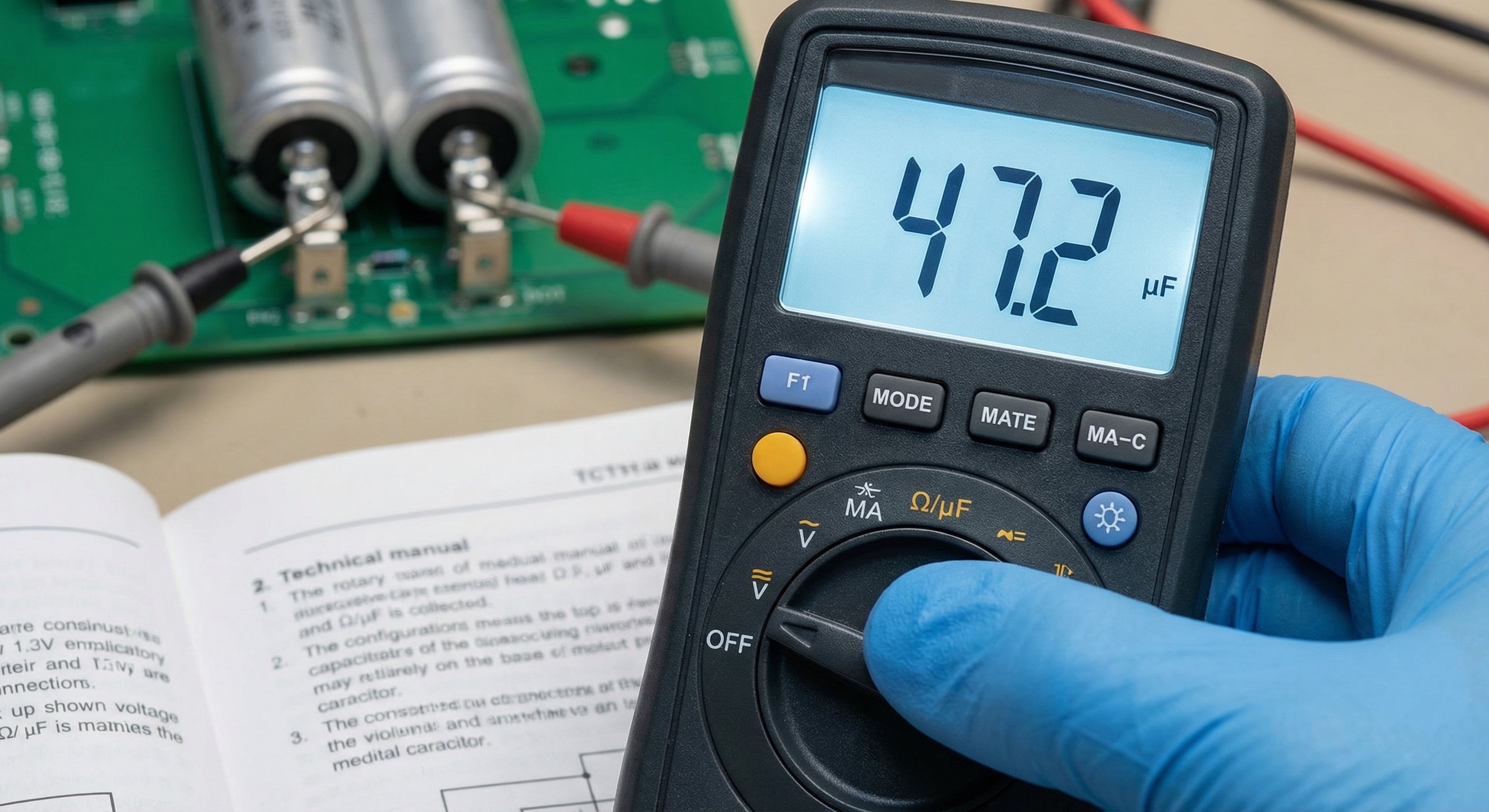
- testing the existing capacitor with a meter
- confirming the microfarad rating is out of spec
- checking whether the compressor and fan are otherwise operating normally
- installing the correct replacement part
- testing startup and operation after the swap
That last part matters.
A tech should not just change the capacitor and sprint to the truck. If the compressor is pulling ugly amps, the fan motor is failing, or the contactor is worn out, you want to know that. The issue is not that extra findings are impossible. It is that bad shops use a failed capacitor as the easiest moment to start piling on fear.
When a cheap capacitor repair points to a bigger problem
Sometimes the capacitor is the whole story. Sometimes it is the first symptom.
A simple repair usually makes sense when:
- the system is under 10 years old
- cooling performance was normal before the failure
- the compressor sounds healthy
- there is no known refrigerant issue
- this is the first repair in a while
You should step back and think harder when:
- the system is 12 to 15 years old
- summer bills have been climbing for two seasons
- airflow has been weak in parts of the house
- you have already replaced other electrical parts recently
- the tech says the compressor is struggling to start even with a new capacitor
That does not automatically mean full replacement today. It does mean the capacitor may be a bandage, not the whole fix.
The easiest way to tell if a quote is padded
The easiest way is to separate the bill into three pieces: part, labor, and timing.
The part itself is usually inexpensive. The labor is what makes it a service call. Timing is what turns a fair bill into a painful one.
Here is how that usually breaks down:
- Part cost: small relative to the total
- Labor and trip: the real bulk of a normal invoice
- Emergency premium: what hurts in July when everyone is calling at once
If a company is charging emergency-level pricing on a Tuesday afternoon with no special conditions, that is not about the capacitor. That is just markup.
That is also why you should ask for the exact part type and a written quote before approving the work. Once the panel is open and you are sweating through your shirt, vague pricing gets expensive.
How to avoid overpaying when your AC dies
You do not need a full HVAC education. You need a short checklist.
Ask these questions before you approve the repair
What failed, exactly? Ask whether it is a run capacitor, dual-run capacitor, or another startup component.
Did you test it? A real diagnosis should include an actual meter reading, not a guess.
Is the diagnostic fee included in this total? This changes the real price more than homeowners expect.
What warranty comes with this repair? Even a small repair should come with something in writing.
Do you see signs of other problems, or is this isolated? Good techs can answer this without turning the conversation into a scare tactic.
If the company gets slippery on those basics, slow the process down.
What Phoenix homeowners should do next after a capacitor failure
A failed capacitor is not just a repair event. It is also a useful checkpoint.
If the system is younger and otherwise healthy, replace the capacitor and move on.
If the system is older, treat this as a good time to look at the full picture:
- age of the system
- recent repair history
- current cooling performance
- summer utility bills
- whether your next repair is likely around the corner
That is where homeowners often get trapped. They spend $300 here, $700 there, then a bigger failure hits in July and now the replacement decision happens under pressure.
If you are already in that zone, it helps to compare repair money against what a replacement would actually cost, not what a dealer quote says it costs.
How Arizona maintenance helps capacitors last longer
No capacitor lasts forever, especially here. But you can improve the odds.
Spring maintenance helps. A tech can catch a weak reading before the hottest week of the year finishes the part off.
Keep coils cleaner. Dusty condensers run hotter. Hotter equipment is rougher on electrical parts.
Take monsoon surge risk seriously. Whole-home surge protection is not just for your TV and appliances.
Pay attention to startup sounds. A system that suddenly hums longer before starting is often telling you something.
This is not glamorous advice, but it saves money.
The bottom line on AC capacitor replacement cost Phoenix homeowners should expect
AC capacitor replacement cost Phoenix homeowners see in 2026 usually falls between $180 and $450. Most normal weekday repairs should be in the lower half of that range. The higher numbers usually come from after-hours timing, dual-run parts, or other verified issues.
What you should not accept is mystery pricing.
A capacitor is a real repair, but it is also one of the easiest places for a contractor to take advantage of a stressed homeowner who just wants cold air back. If the diagnosis is clear and the price is fair, fix it. If the quote feels bloated or the system is old enough that this is probably not the last repair, zoom out and compare your bigger options.
For that bigger comparison, get a free instant quote at acrebel.com.
Frequently Asked Questions
Q: How much should a capacitor replacement cost in Phoenix?
For a standard weekday service call, most homeowners should expect roughly $180 to $300. Dual-run capacitors and emergency calls can push the total higher.
Q: Why do AC capacitors fail faster in Arizona?
Extreme heat, long runtime, monsoon-season electrical stress, and dirty outdoor coils all shorten capacitor life here.
Q: Can a bad capacitor look like a bigger AC problem?
Yes. A weak capacitor can cause hard starts, weak cooling, shutdowns, and odd noises. It can also show up alongside compressor, fan motor, or contactor issues.
Q: Is a $500 capacitor quote too high?
It may be, especially for a basic weekday repair. Ask whether the quote includes emergency service, diagnostic fees, or added components. If not, get another opinion.
Q: Should I repair the capacitor or replace the whole AC?
If the system is younger and otherwise healthy, the capacitor repair usually makes sense. If the unit is older, inefficient, and already stacking repair bills, this may be the right moment to price out replacement too.
Ready to stop overpaying?
See Your Direct AC Price in 2 Minutes
Skip the dealer. Buy your AC unit at direct pricing and pay a vetted local installer only for the installation. No sales calls. No hidden markup. Most homeowners save $3,000–$5,000+ compared to a traditional quote.
Get My Direct Price — No Credit Card2-minute quote · Licensed installers · 10-year warranty options