
AC Making Noise in Phoenix? Here's What Each Sound Means (and What to Fix)

AC Making Noise in Phoenix? Here's What Each Sound Means (and What to Fix)
TL;DR: A noisy AC isn't just annoying — it's your system telling you something's wrong. Buzzing usually means electrical issues (bad capacitor or contactor, $150–$400 to fix). Rattling often indicates loose parts or debris in the outdoor unit. Squealing points to belt or motor bearing problems. Banging means something serious is broken inside the compressor. In Phoenix's extreme heat, ignoring noises leads to complete system failure, often at 110°F when you need it most. Most fixes cost $150–$600, but continued operation with major noises can destroy a $3,000+ compressor.
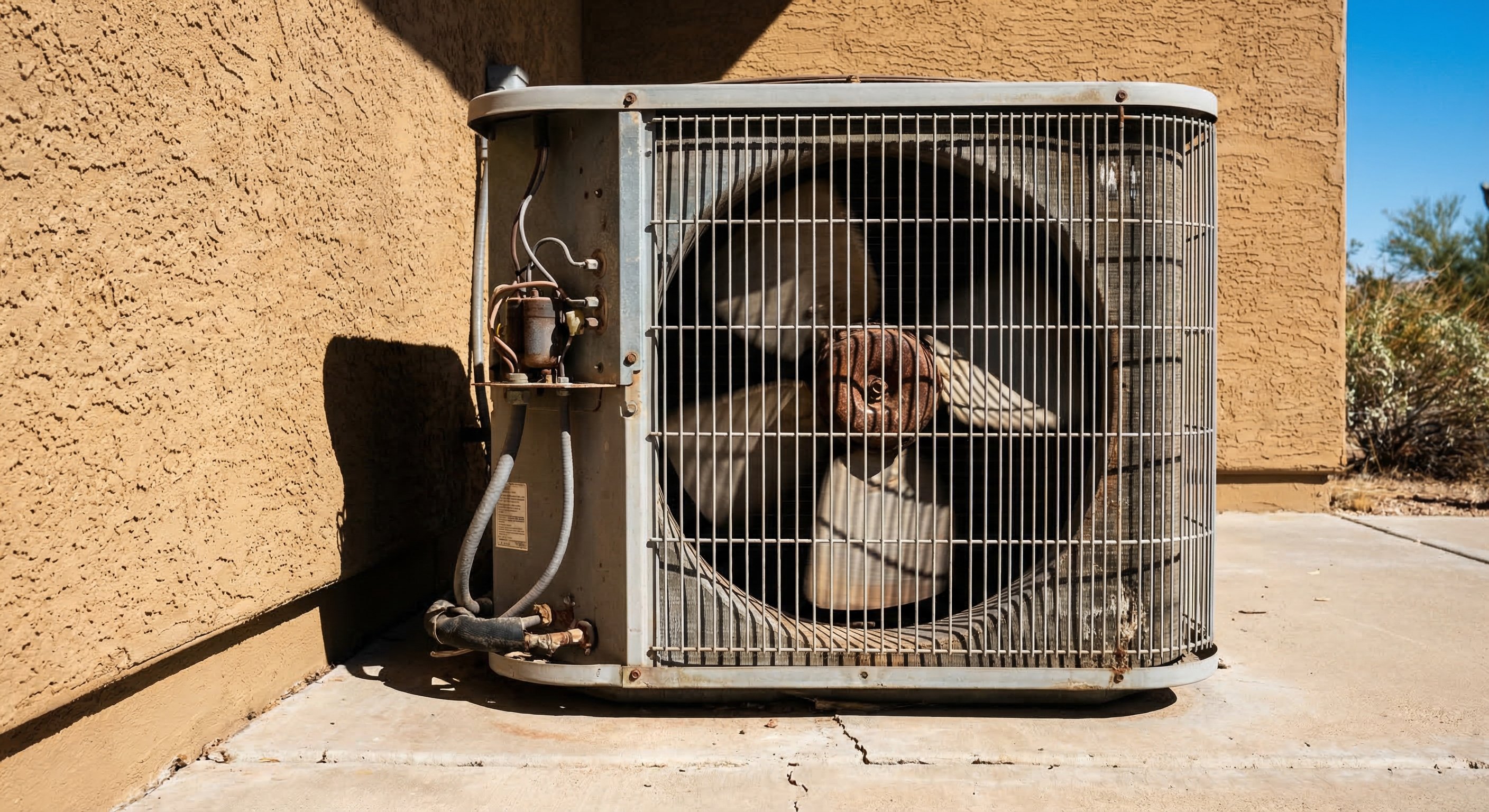
It's July in Chandler. Your AC has been running since 10 AM, and it's not even the hottest part of the day yet. Then you notice it — a sound you haven't heard before. Maybe it's a buzz that comes and goes. Maybe it's a rattle that gets worse when the unit kicks on. Or worse, a squeal that makes you wince every time the compressor starts.
Here's the thing about air conditioners: they're designed to run quietly. A properly functioning AC unit makes a low, consistent hum — the sound of airflow and the compressor doing its job. When you start hearing anything else, your system is trying to tell you something.
In Arizona, this matters more than most places. Your AC runs 2,000+ hours per year. That constant operation means small problems become big problems fast. A loose part that might last a season in Minnesota becomes a catastrophic failure here in weeks. The 115°F heat puts every component under stress that cooler climates simply don't experience.
This guide breaks down what each AC noise means, what causes it, what it'll cost to fix, and — most importantly — whether you should repair or start shopping for a replacement.
The Sound: Buzzing or Humming (Electrical Issues)
A buzzing sound from your AC unit is almost always electrical. You'll hear it from the outdoor condenser, and it might be constant or intermittent. Sometimes the unit hums but won't start. Sometimes it buzzes loudly when the compressor tries to kick on.
What's Actually Wrong
Bad capacitor: The capacitor is a small cylindrical component that gives your compressor and fan motor the electrical jolt they need to start. In Phoenix heat, capacitors fail constantly — they're rated for outdoor temperatures around 100°F, but your unit sees 140°F+ inside that metal cabinet on hot days. A weak capacitor can't deliver enough startup power, so the system buzzes instead of starting.
Failing contactor: The contactor is a heavy-duty electrical switch that connects your outdoor unit to power. When it wears out, the electrical connection gets loose and creates an arc — that buzzing sound you hear. Contactors fail faster in Arizona because they cycle on and off more frequently than in milder climates.
Loose electrical connections: Vibration from the compressor can loosen wire nuts and terminal screws over time. The buzzing is electricity arcing across a poor connection.
What It Costs to Fix
- Capacitor replacement: $150–$300 (part is $15–$40, but requires handling refrigerant and high voltage safely)
- Contactor replacement: $200–$400
- Electrical connection tightening: $100–$200 as part of a service call
The Phoenix Factor
Here's what most homeowners don't realize: electrical failures spike during monsoon season. July through September, afternoon storms create power fluctuations that stress capacitors and contactors. If your AC starts buzzing after a storm, there's a good chance the electrical components took a hit.
Also, if your capacitor fails once, it'll fail again. The heat that killed the first one is still there. Many Phoenix homeowners end up replacing capacitors every 2–3 years until they replace the whole unit.
The Sound: Rattling or Vibrating (Loose Parts or Debris)
Rattling is the most common noise complaint in Arizona — and the most ignored. It starts subtle, maybe only when the unit first kicks on. Over time it gets louder. Eventually, you're hearing it inside the house with the windows closed.
What's Actually Wrong
Loose fan blades or motor mounts: The fan on top of your outdoor unit spins at high speed. If the blade is bent, loose, or unbalanced, it'll rattle against the cage. Same goes for the fan motor — if its mounting bolts loosen from vibration, the whole assembly shakes.
Debris in the unit: Desert dust, monsoon leaves, palm fronds, even small rocks can get inside the condenser and rattle around. In Phoenix, dust storms (haboobs) dump massive amounts of debris into outdoor units.
Loose panel or cover: The metal panels on AC units are held on with screws. Vibration loosens them over time. A rattling sheet metal cover is annoying but easy to fix.
Failing compressor mounts: The compressor itself sits on rubber vibration isolators. When these wear out, the heavy compressor rattles against the unit base. This is serious — continued operation can damage refrigerant lines.
What It Costs to Fix
- Tightening loose panels or screws: Often free if you do it yourself, $100–$150 for a tech
- Debris removal and cleaning: $150–$250
- Fan blade or motor repair: $300–$600
- Compressor mount replacement: $400–$800
When to Worry
If the rattling gets progressively louder over days or weeks, the problem is worsening. A loose fan blade can break off and damage the condenser coils — turning a $300 repair into a $2,000+ coil replacement. In the worst case, a loose compressor can rupture refrigerant lines, requiring a full system replacement.
The Sound: Squealing or Screeching (Belt or Bearing Issues)
A high-pitched squeal when the unit starts is hard to ignore. It typically lasts 10–30 seconds then fades, or it might continue the entire time the unit runs. Either way, it's not normal.
What's Actually Wrong
Worn fan motor bearings: The outdoor fan motor has bearings that allow smooth rotation. When they dry out or wear down, metal rubs on metal — that squealing sound. Here, bearings fail faster because heat breaks down lubricants.
Bad blower motor bearings: The indoor blower motor can squeal too. This sound comes through the ducts and vents, so it seems like it's coming from everywhere. Same cause: worn bearings from heat and age.
Belt-driven blower issues: Older systems (15+ years) sometimes have belt-driven blowers instead of direct-drive motors. A loose, worn, or misaligned belt squeals loudly. You can actually see the belt through the air handler access panel if you're curious.
What It Costs to Fix
- Fan motor bearing lubrication or replacement: $300–$700
- Blower motor replacement: $500–$1,200
- Belt adjustment or replacement: $100–$200
The Hard Truth About Squealing
Squealing from bearings is a wear indicator, not a sudden failure. The bearings are announcing their impending death. You have time to plan, but not much — typically weeks to a few months. In Phoenix summer, that squealing motor is running 12+ hours per day. The accelerated wear means failure comes faster than the national averages you'll read online.
If your system is 12+ years old and the blower motor is squealing, replacement is often the smarter financial play. A $1,000 motor repair on a system that might die entirely in two years doesn't make sense when you could put that money toward a new unit with a 10-year warranty.
Skip the dealer markup
See What a New AC Actually Costs
AC Rebel shows you the real equipment price — no sales pitch, no inflated quote. Get matched with a licensed installer and keep $3,000–$5,000 in your pocket.
Get My Direct Price →The Sound: Banging or Clanking (Serious Mechanical Damage)
This is the sound that makes HVAC techs wince. A loud bang, clank, or knocking — especially rhythmic banging that matches the compressor cycle — means something inside your unit is broken or loose in a major way.
What's Actually Wrong
Compressor failure: The compressor is the heart of your AC system. Inside it, a piston or scroll mechanism compresses refrigerant. When internal components break, you hear banging as loose parts rattle around inside the sealed compressor housing. This is terminal — compressors can't be repaired internally, only replaced.
Blower wheel or blade damage: Inside your air handler, the blower wheel spins to move air. If it cracks, chips, or comes loose from the shaft, it bangs against the housing. This can damage the heat exchanger in gas furnaces or the coil housing in all-electric systems.
Refrigerant line damage: Copper refrigerant lines can break loose from their supports and bang against the unit cabinet or framing. This is actually the "best case" banging scenario — it's repairable.
What It Costs to Fix
- Compressor replacement: $1,800–$3,500 (often makes more sense to replace the whole condenser)
- Blower wheel repair: $400–$900
- Refrigerant line securing: $200–$400
The Decision Point
Banging from the compressor is almost always a replacement trigger. Here's the math: a compressor replacement runs $2,000–$3,500. A new condenser unit (outdoor component) runs $2,800–$5,000 installed. For the extra $1,000–$2,000, you get all new components, a 10-year warranty, and better efficiency.
If your indoor unit (coil and air handler) is also 12+ years old, a full system replacement ($6,000–$9,000 traditionally, $3,800–$6,500 through AC Rebel) is the only move that makes sense. Installing a new condenser with a 20-year-old indoor unit is asking for mismatched problems.
The Sound: Clicking (Normal or Failed Component)
Not all clicking is bad. Your AC should make a single click when the thermostat calls for cooling — that's the contactor engaging. But repeated clicking, or clicking without the unit starting, is a problem.
What's Actually Wrong
Failing thermostat: The relay inside the thermostat can chatter if it's failing, creating rapid clicking.
Bad control board: The control board sends signals to various components. When relays on the board fail, they click repeatedly.
Obstructed fan: If something is blocking the outdoor fan blade, the motor clicks as it tries to turn and fails.
What It Costs to Fix
- Thermostat replacement: $150–$400 (basic programmable to smart WiFi models)
- Control board replacement: $400–$800
- Fan obstruction removal: $100–$200
Why Phoenix AC Units Make More Noise Than Other Places
Arizona's climate is uniquely brutal on air conditioners. Understanding why helps you decide whether to keep repairing or replace.
Heat stress: AC components are rated for outdoor temperatures up to around 100°F. Your unit sees 110°F+ ambient temperatures and 140°F+ internal cabinet temperatures. Plastic gets brittle, rubber hardens, lubricants break down faster.
Constant operation: In cooler climates, AC might run 500 hours per year. In Phoenix, 2,000+ hours is normal. More runtime means more vibration, more wear, more opportunities for things to loosen.
Dust infiltration: Desert dust is abrasive and conductive. It gets inside motors, bearings, and electrical components, accelerating wear.
Power fluctuations: Monsoon storms and summer grid strain cause voltage sags and spikes. Electrical components hate this.
Age compression: An AC unit in Phoenix ages roughly 2–3x faster than the same unit in a mild climate. That 15-year expected lifespan you read about nationally? It's 10–12 years here, and that's with good maintenance.
Should You Repair the Noise or Replace the Unit?
Here's a framework that works for Phoenix homeowners:
Repair if:
- The unit is under 10 years old
- The noise is from a minor issue (loose panel, debris, capacitor)
- Repair cost is under $500
- The system has been reliable overall
Consider replacement if:
- The unit is 12+ years old
- The noise indicates compressor or major mechanical failure
- You've had 2+ repair calls in the past year
- The repair cost exceeds 30% of replacement cost
- Your energy bills are climbing (inefficiency indicator)
Replace if:
- The unit is 15+ years old and making major noise
- The compressor has failed (banging, won't start)
- Cumulative repair costs exceed $2,000 in the past 2 years
- You're facing a refrigerant leak repair on an R-22 system (phased out, expensive refrigerant)
The "What I'd Do If It Were My House" Take
If my 8-year-old unit started rattling from a loose fan blade, I'd pay the $300 to fix it. That's a maintenance issue, not a system failure.
If my 12-year-old unit started squealing from the blower motor, I'd start shopping. That $800–$1,200 repair is 20% of a new system cost, and more failures are coming.
If my 15-year-old unit started banging from the compressor, I'd replace it immediately. Running it risks catastrophic failure that damages other components, turning a $6,000 replacement into an $8,000 emergency.
The noise your AC makes tells you which category you're in. Listen to it.
How to Prevent AC Noises (Maintenance That Actually Works)
The best way to deal with AC noise is preventing it. Here's what actually matters in Arizona:
Change filters monthly in summer. Restricted airflow makes the blower motor work harder, accelerating bearing wear. The $8 filter is cheaper than the $600 motor.
Rinse the outdoor coils quarterly. Turn off power, spray the coils with a garden hose from the inside out. Dust buildup makes the compressor run hotter and longer, shortening its life.
Keep vegetation 2+ feet from the unit. Plants drop debris, restrict airflow, and invite rodents that chew wires.
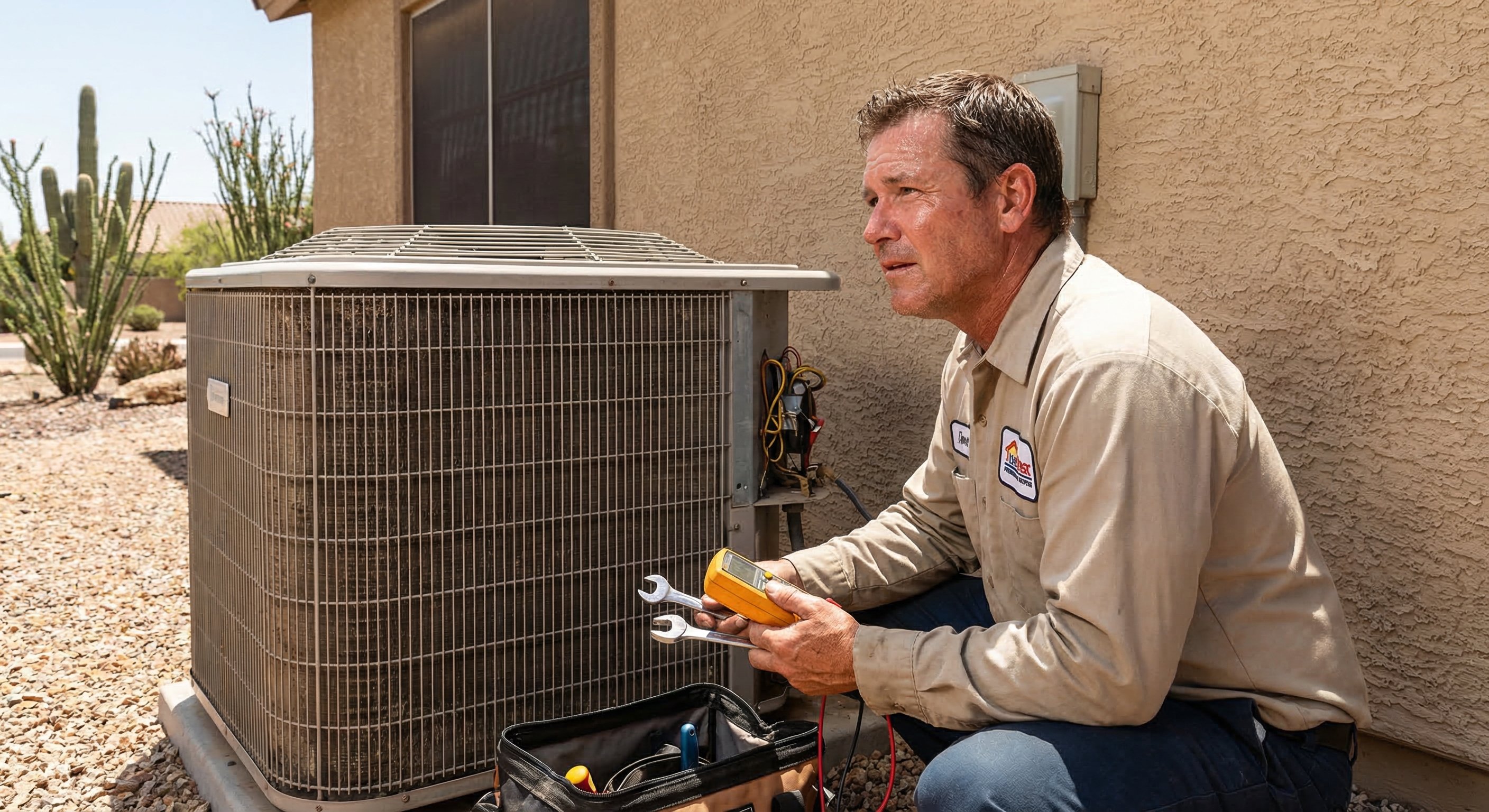
Get a professional tune-up in March. Before the heat hits, have a tech check electrical connections, test capacitors, inspect the compressor mounts, and lubricate motors. Catching a weak capacitor in March beats an emergency call in July.
Don't ignore the small sounds. That rattle you can barely hear in April becomes a clank you can't ignore in July. Addressing it early often means tightening a screw instead of replacing a compressor.
Frequently Asked Questions
Q: Is a noisy AC dangerous?
Electrical buzzing can indicate loose connections that create fire risks, though this is rare. The bigger danger is economic — continuing to run a failing compressor can damage other components, turning a repairable situation into a full replacement.
Q: Can I keep running my AC if it's making noise?
It depends on the noise. A slight rattle from a loose panel won't cause damage. A banging compressor will destroy itself and possibly the entire system. Use the sound descriptions above to judge, but when in doubt, shut it off and call a tech.
Q: Why does my AC only make noise when it first starts?
Startup is when electrical and mechanical stress is highest. Capacitors deliver maximum current, motors go from zero to full speed, and refrigerant pressure spikes. Components that are weak but functional often fail only at startup, then seem to run fine.
Q: Will a noisy AC cost more to run?
Often yes. A failing capacitor can cause the compressor to draw excess power. A loose fan blade runs inefficiently. A struggling blower motor works harder. You'll see the impact on your APS or SRP bill before you hear major damage.
Q: How long can I wait to fix a noisy AC?
Buzzing or rattling: Days to weeks, depending on severity. Squealing: Weeks to months — plan your approach. Banging: Hours to days — the damage is accelerating every time it runs.
Q: Can I fix AC noise myself?
Tightening a loose panel or removing visible debris: yes, with power off. Anything involving electrical components, refrigerant, or internal mechanical parts: no. High voltage, high pressure refrigerant, and warranty concerns make professional repair the right call.
Q: What's the average lifespan of an AC in Phoenix?
10–12 years with good maintenance. 8–10 years without it. The national average of 15–20 years doesn't apply here — our heat and constant operation accelerate wear dramatically.
Q: Does brand matter for noise reliability?
Quality brands (Trane, Carrier, Lennox, Rheem) use better motors, compressors, and electrical components that resist heat and vibration longer. But in Phoenix, even the best brands see shortened lifespans. The difference is 2–3 years, not 10.
When to Call a Pro vs. When to Start Shopping
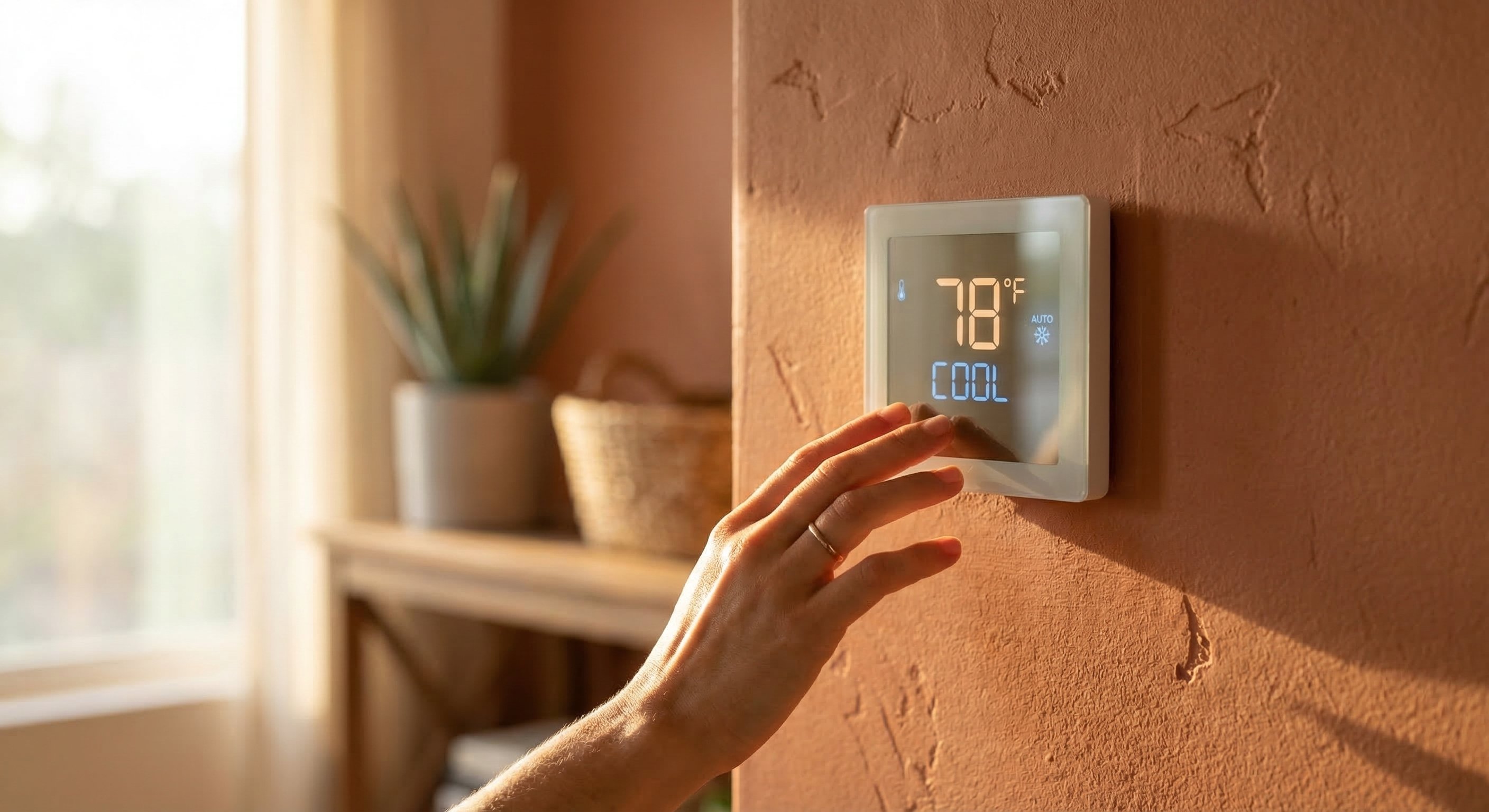
The noises described in this guide fall on a spectrum. On one end, you've got a loose screw that needs tightening. On the other end, you've got a failed compressor that needs replacing.
The key is matching the sound to the right action. A $150 capacitor replacement doesn't require the same decision-making as a $3,000 compressor failure. Use the framework above, trust your gut about whether the sound is getting worse, and don't let a Phoenix summer day be the test of whether your AC can survive another season.
Get a Free Quote on a New AC (If the Noise Says It's Time)
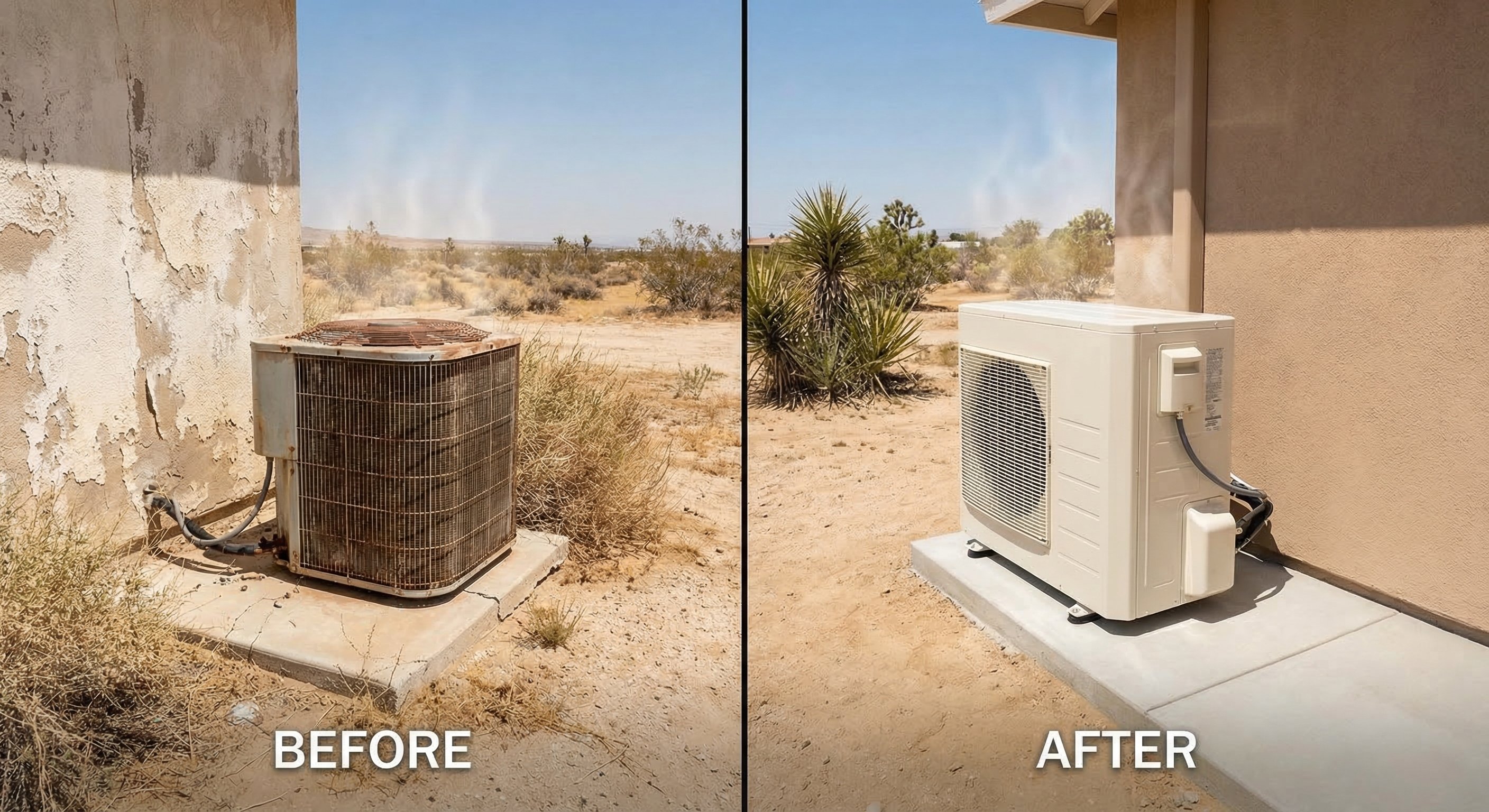
If your AC is making one of the serious sounds — banging, grinding, or compressor failure — replacement is likely your best option. Here's what you need to know:
Most Phoenix homeowners pay $6,000–$9,000 for a full AC replacement through traditional contractors. That includes the contractor's markup, distributor fees, and installation labor. But the actual equipment costs far less.
At AC Rebel, we cut out the dealer markup. You buy the unit at near-wholesale pricing ($2,800–$5,200 depending on size and efficiency), then we connect you with vetted local contractors for installation only. Total cost: typically $3,800–$6,500 — savings of $2,000–$3,000+ versus traditional quotes.
You see exactly what the unit costs. You choose your installer from our network of licensed, rated contractors. And you get a 10-year warranty on the equipment.
Ready to see what you'd actually pay without the dealer markup? Get a free instant quote at acrebel.com — no phone calls, no sales pressure, just real numbers.

Sources: AHRI (Air-Conditioning, Heating, and Refrigeration Institute) certification standards, ENERGY STAR equipment ratings, SRP and APS utility seasonal rate data for Phoenix metro area.
Ready to stop overpaying?
See Your Direct AC Price in 2 Minutes
Skip the dealer. Buy your AC unit at direct pricing and pay a vetted local installer only for the installation. No sales calls. No hidden markup. Most homeowners save $3,000–$5,000+ compared to a traditional quote.
Get My Direct Price — No Credit Card2-minute quote · Licensed installers · 10-year warranty options