
AC Thermostat Problems in Phoenix? Here's What's Wrong (and What to Do)

AC Thermostat Problems in Phoenix? Here's What's Wrong (and What to Do)
TL;DR: Phoenix thermostat problems usually stem from dead batteries ($5), a tripped breaker ($0), miscalibrated settings, or a failed thermostat itself ($30 to $300 for a new programmable or smart unit). Before calling a contractor, work through this checklist: replace batteries, check the breaker, verify the temperature differential is at least 4 degrees, and clean any dust from the unit. If none of that works, your thermostat likely needs replacement.
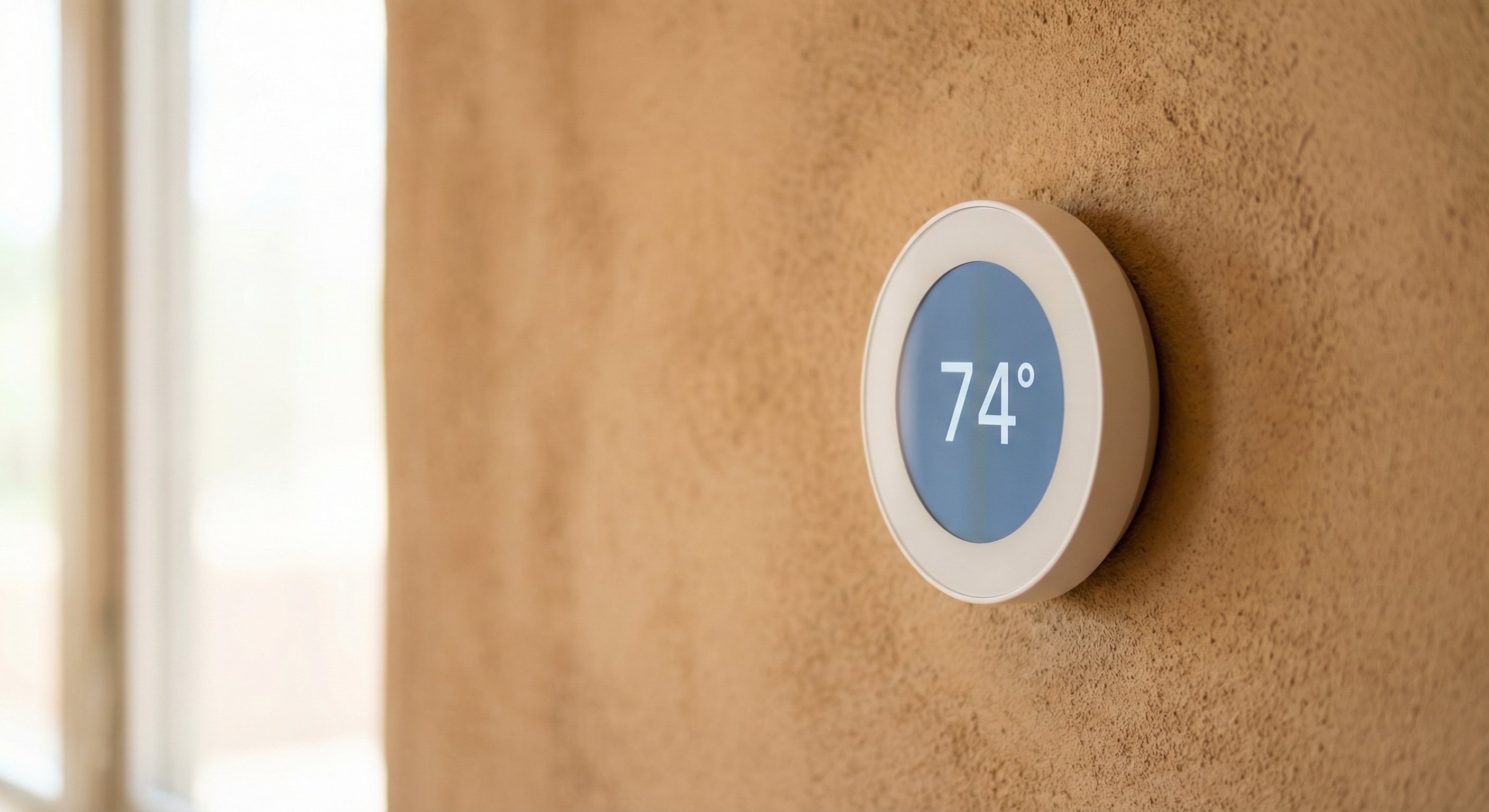
It is 6:00 on a Saturday evening in Tempe. You just got home from dinner and your house is 81 degrees. The thermostat says it is set to 74. The AC is running. Nothing is happening. You check the thermostat. The display is off. You hit buttons. Nothing.
The first thing I want you to know: your AC is almost certainly fine. The problem is usually the thermostat, and the thermostat is usually fixable without a service call. Let me walk you through what to check and what it costs when you do need to replace it.
Why Phoenix Thermostats Fail More Often Than You Think
Thermostats are the control center of your entire AC system. When they misbehave, the whole system stops making sense. Phoenix accelerates thermostat wear in ways other climates do not.
The biggest factor is direct heat exposure. If your thermostat sits on an interior wall near a window, an exterior wall that bakes in the afternoon sun, or above a kitchen or entertainment center that generates heat, it will read the temperature incorrectly. A thermostat that reads 5 degrees too hot will never signal the AC to turn on when you think it should.
The second factor is dust. Phoenix has exceptional dust penetration. That fine desert dust works its way into the thermostat housing, coats the internal sensors, and throws off readings. Most homeowners in the Phoenix metro should be cleaning their thermostats every spring and fall as part of seasonal AC prep.
The third factor is age. A thermostat more than 10 years old is running on aging sensors that drift over time. The calibration that was accurate in year two is off by several degrees by year eight.
The DIY Thermostat Checklist Before You Call Anyone
Work through these steps in order. Most thermostat problems resolve at step one or two.
Step 1: Replace the Batteries
This sounds obvious, but it is the cause roughly 40 percent of the time. Most thermostats warn you with a flashing display or blank screen when batteries are low, but not all do. If your thermostat is completely dark and unresponsive, try fresh batteries before anything else.
Cost: $5 to $15 for a set of quality alkaline batteries. This is not a joke. Do it first.
Step 2: Check the Circuit Breaker
If new batteries do not restore the display, find your electrical panel. Look for a breaker labeled HVAC, air handler, or AC. If it has tripped, reset it by flipping it fully off and then back on.
A tripped breaker usually means something caused the system to draw too much current. If it trips again immediately, do not keep resetting it. Call an electrician, because there is a short somewhere.
If the breaker was not tripped, move to step three.
Step 3: Inspect for Tripped Switches at the Air Handler
Near your indoor air handler (usually in a closet, attic, or garage) there is a small switch that looks like a light switch. It is usually red or black and labeled "emergency" or "HVAC." If this switch got bumped, your AC will not respond to the thermostat.
Flip it off, wait 30 seconds, and flip it back on. This is essentially a reset for the connection between your thermostat and your air handler.
Step 4: Clean the Thermostat
Dust is the enemy of accurate temperature sensing. Turn off power to the thermostat at the breaker. Remove the thermostat cover (it usually snaps off). Use a can of compressed air or a soft brush to clean out any dust, pet hair, or debris from the interior.
Do not use liquid cleaners on the sensors. Let it air dry for 10 minutes, then restore power.
This step fixes a surprising number of phantom problems where the thermostat reads the temperature but the AC does not respond to commands.
When It Is the Thermostat Settings, Not the Thermostat
Sometimes the thermostat is working fine but you have it set wrong for Phoenix conditions.
Temperature Differential Is Too Narrow
Every thermostat has a setting called the temperature differential, also called "cycle differential" or "cycles per hour." This controls how many degrees the temperature must change before the AC cycles on or off. If this is set to 1 degree, your system will constantly turn on and off, never running long enough to actually cool your house.
For Phoenix summers, set the differential to 3 to 4 degrees. Your AC runs longer, cools deeper, and actually gets your house comfortable.
Heat Mode Is On
This happens more than you would think. If you switched from heating to cooling and did not fully confirm the mode change, your thermostat may be in heat mode. Some smart thermostats also default to auto mode which can cause confusion about which stage is running.
Schedule Conflicts
If you have a programmable thermostat and set a schedule, check for conflicting programmed settings. If the schedule has the AC off during the hours you are home, the thermostat is doing exactly what you told it to do, even if you forgot you told it.
Skip the dealer markup
See What a New AC Actually Costs
AC Rebel shows you the real equipment price — no sales pitch, no inflated quote. Get matched with a licensed installer and keep $3,000–$5,000 in your pocket.
Get My Direct Price →When the Thermostat Needs Replacement
If you have worked through the checklist and the thermostat still does not work correctly, you are looking at replacement. There are three tiers of thermostats, each with a different price point and capability level.
Non-Programmable (Basic)
A basic single-stage thermostat runs $15 to $30 at any hardware store. It does one thing: turns the AC on and off based on temperature. If your current thermostat is non-programmable and failing, this is the replacement option.
The limitation: it does not know anything about Phoenix utility rate schedules. If you are on an APS or SRP time-of-use plan, you are missing opportunities to shift cooling to cheaper off-peak hours.
Programmable
Programmable thermostats let you set schedules and cost $40 to $100. For Phoenix homeowners who are not home during the hottest part of the day (typically 3:00 PM to 7:00 PM under time-of-use plans), programming the AC to pre-cool the house before peak hours can meaningfully reduce your electric bill.
The sweet spot for most Phoenix households is setting the AC to kick on at 1:00 PM, cooling to 74 degrees before peak rates hit, then backing off to 78 degrees during peak hours when you are not home.
Smart Thermostat
A smart thermostat runs $100 to $300 installed and connects to your home Wi-Fi. These models learn your schedule, detect when you are away, and some integrate directly with APS and SRP demand response programs. During a peak demand event, these utilities will sometimes send a signal to your smart thermostat to briefly cycle the AC, and in exchange you get a bill credit.
ENERGY STAR certified smart thermostats must demonstrate a minimum 8 percent energy savings compared to conventional thermostats in cooling-dominant climates like Phoenix.
For Phoenix homeowners, the smart thermostat pays for itself in 12 to 24 months through peak hour savings and utility rebates.
When It Is Not the Thermostat
Here is the part where I save you from replacing a perfectly good thermostat.
If your thermostat is working correctly, the display responds, the system cycles on when it should, but your house is still not cooling, the problem is somewhere else. Check these before you assume the thermostat is lying about the temperature.
A dirty air filter restricts airflow and makes the AC blow warm. Check and replace your filter first. A dirty evaporator coil has the same effect. A refrigerant leak will also cause warm air. A capacitor failure will cause the outdoor unit to run without cooling.
The thermostat tells the system what to do. If the system is not doing it, the problem is usually downstream from the thermostat, not the thermostat itself.
When to Call a Professional
Call an HVAC contractor if your thermostat is new and still not working, you have exhausted the checklist and nothing has fixed the problem, you see exposed wiring that looks damaged or burnt, or your AC is running but each room is a different temperature (which may indicate a thermostat location issue or ductwork problem).
A service call for thermostat diagnosis typically runs $75 to $150. If the diagnosis finds a wiring issue or the need for a new thermostat, get the pricing for the unit separate from the labor before agreeing to anything.
Key Takeaways
Phoenix thermostat problems cluster around four root causes: dead batteries and tripped breakers (DIY fix, $15), dust and calibration drift (clean or replace, $15 to $100), failed thermostat units (replace, $30 to $300), and incorrect settings (free, just requires knowing what to check).
Smart thermostats are worth the investment for Phoenix homeowners on time-of-use utility plans. The pre-cooling strategy alone typically pays back the cost within the first summer.
Before replacing a thermostat that seems broken, run through the full checklist. Forty percent of thermostat problems are dead batteries.
Frequently Asked Questions
Q: How much does a new thermostat cost for an AC in Phoenix?
A basic non-programmable thermostat costs $15 to $30. A programmable model runs $40 to $100. A smart thermostat installed costs $100 to $300. For Phoenix homeowners on APS or SRP time-of-use plans, a smart thermostat usually pays back the cost difference within 12 to 24 months through peak hour savings.
Q: Can a faulty thermostat cause an AC to run constantly?
Yes. If the thermostat is reading the temperature incorrectly (due to dust, sunlight exposure, or sensor drift), it may never register that the house has reached the set temperature, causing the AC to run continuously without cooling the home effectively.
Q: How often should you replace your thermostat?
Most thermostats last 10 to 15 years. If your home is older and you are replacing an original thermostat, upgrading to a programmable or smart model is worth the investment. If your current thermostat is programmable and more than 10 years old, the sensors have likely drifted enough to justify replacement.
Q: Why does my thermostat work fine during winter but not summer?
Summer puts maximum stress on thermostats because the AC runs constantly and the surrounding walls absorb heat all day. A thermostat that was accurate in winter when the heating system ran briefly may be reading several degrees hot in summer if it is on an exterior wall or near a heat source. Cleaning the thermostat and checking its location relative to heat sources usually fixes this.
Q: Are smart thermostats worth it in Phoenix?
Yes, for most homeowners. Smart thermostats support pre-cooling strategies that take advantage of off-peak electricity rates, integrate with APS and SRP demand response programs for bill credits, and learn your schedule automatically. ENERGY STAR models must demonstrate at least 8 percent energy savings in cooling-dominant climates.
Q: How do I know if my thermostat is getting correct temperature readings?
Place a reliable thermometer next to the thermostat and compare readings after 30 minutes. If they differ by more than 3 degrees, your thermostat sensors have drifted. Cleaning the thermostat sometimes fixes minor drift. Significant drift (5 degrees or more) usually means it is time to replace the unit.
Q: Why does my AC kick on and off rapidly?
This usually means the temperature differential is set too narrow (under 2 degrees), the thermostat is mounted in a location with poor airflow, or the thermostat sensors are coated in dust and reading incorrectly. Widening the differential to 3 to 4 degrees fixes this in most cases.
Get a free instant quote at acrebel.com if you have determined the thermostat is working but your AC is still not cooling correctly. We will send a technician to diagnose the actual problem without guessing.
Ready to stop overpaying?
See Your Direct AC Price in 2 Minutes
Skip the dealer. Buy your AC unit at direct pricing and pay a vetted local installer only for the installation. No sales calls. No hidden markup. Most homeowners save $3,000–$5,000+ compared to a traditional quote.
Get My Direct Price — No Credit Card2-minute quote · Licensed installers · 10-year warranty options