
APS vs SRP Electric Bills in Phoenix: How Your Utility Affects What You Pay to Cool Your Home

APS vs SRP Electric Bills in Phoenix: How Your Utility Affects What You Pay to Cool Your Home
TL;DR: APS and SRP serve different neighborhoods across Phoenix, and the utility you are on matters more than most homeowners realize. APS uses a tiered rate structure where higher total consumption means higher per-kWh prices. SRP uses a demand-based model where your single highest peak-hour usage spike drives your bill more than total consumption. If your home is on SRP, the E-27 demand plan means keeping peak-hour appliance use low matters more than overall usage. Either way, a high-SEER system with a smart thermostat is your best cooling cost move, and both utilities offer rebates that help offset the upfront cost.
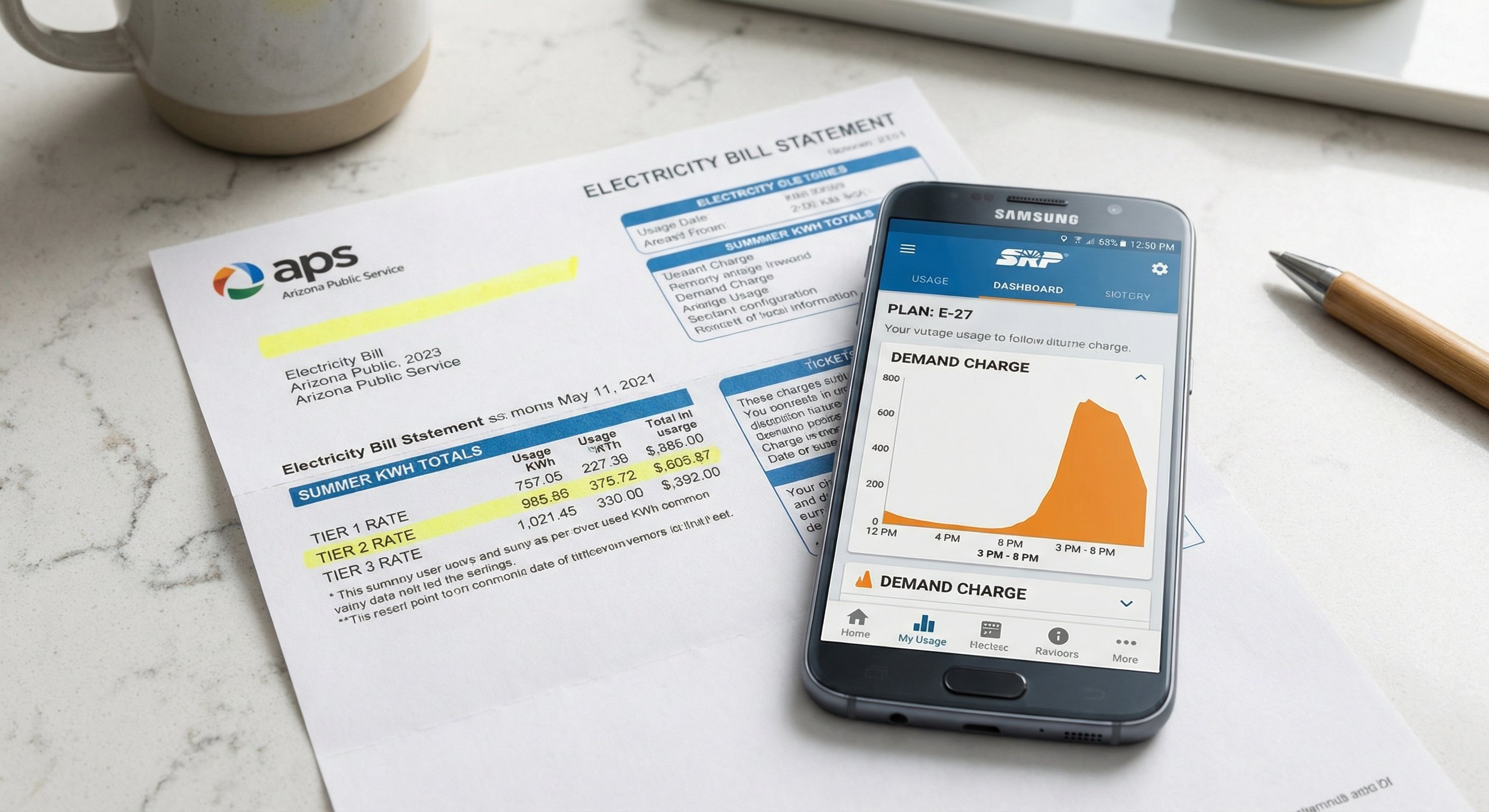
It is June 1 and your first 100-degree day just arrived. You set the thermostat to 76, the same way you always do. By July, your electric bill hits $340. By August, it hits $430. You assume this is just what summer costs in Phoenix.
It is not. How much you pay depends heavily on which utility serves your home, and most Phoenix homeowners have never been told the difference between APS and SRP, let alone how each one prices cooling.
This matters because the utility you are on determines which cooling strategies actually lower your bill. A move that saves $80 a month on APS might save nothing on SRP. Before you buy a new AC system or sign up for a smart thermostat program, know which utility you are on and how it prices your electricity.
The Two Utilities That Run Phoenix
Phoenix is served by two primary electric utilities, and which one your home connects to is a function of geography, not preference.
APS (Arizona Public Service) covers western and central Phoenix. If you live in Glendale, Peoria, Litchfield Park, Goodyear, Buckeye, Avondale, central Phoenix, or Maryvale, you are almost certainly an APS customer.
SRP (Salt River Project) covers the eastern Phoenix metro. Chandler, Gilbert, Mesa, eastern Tempe, Queen Creek, and Apache Junction fall into SRP territory.
Both serve the same extreme heat and monsoon humidity. Their rate structures are where they diverge.
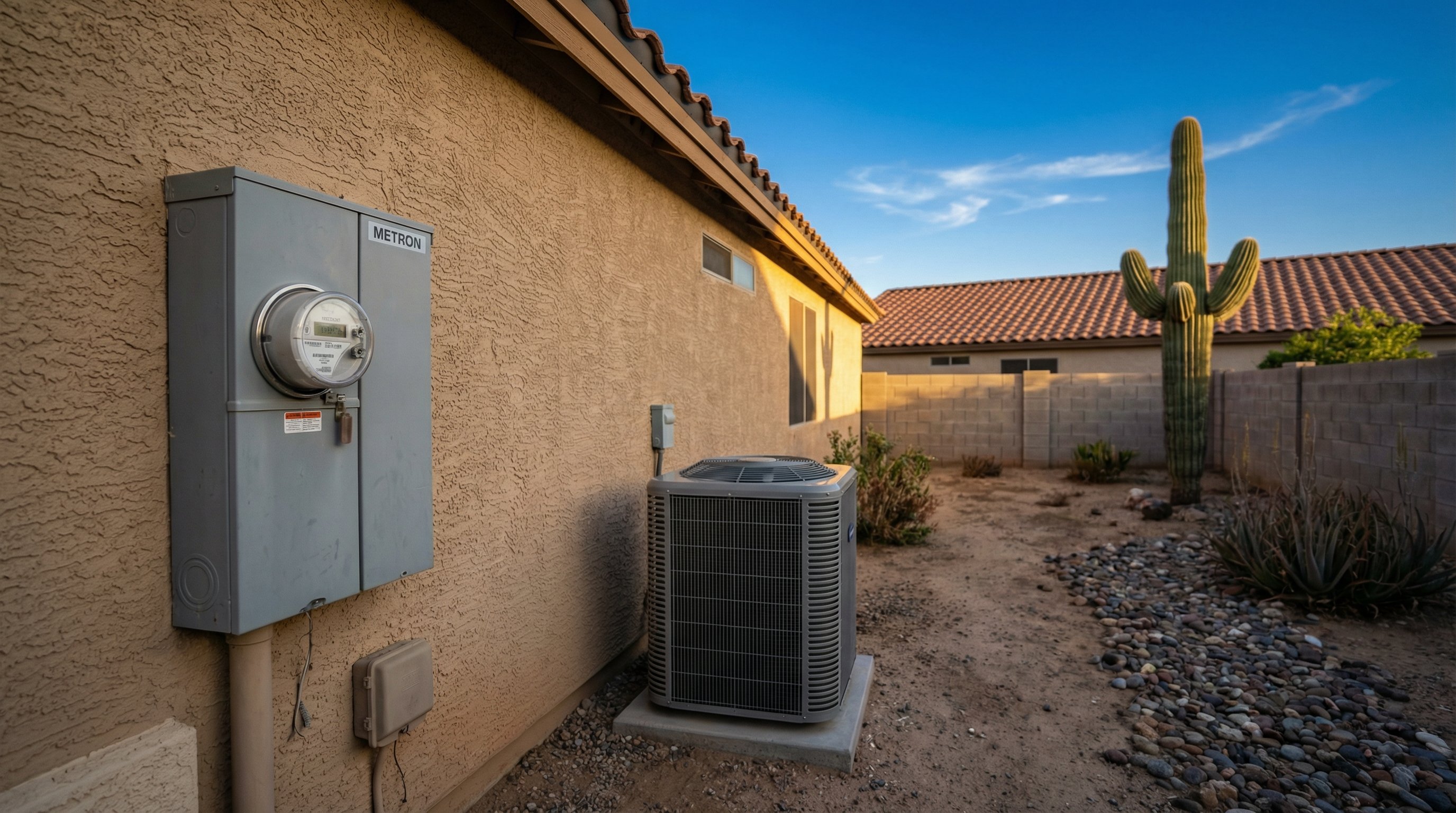
How APS Prices Electricity for Phoenix Homeowners
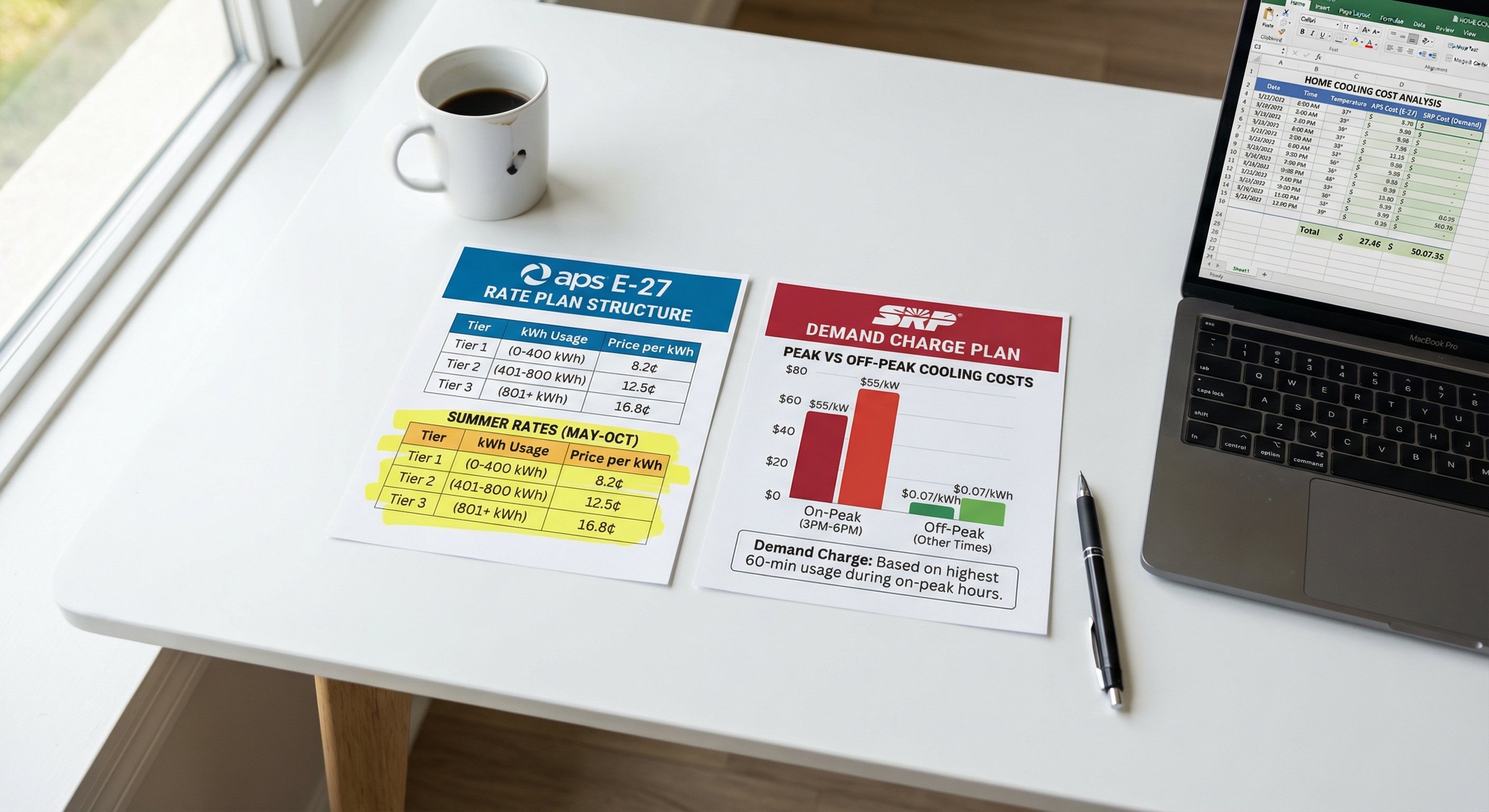
APS uses a tiered rate structure on its standard E-27 residential plan. The more electricity you use in a billing cycle, the higher your average price per kilowatt-hour becomes.
Here is how the tiers work roughly for Phoenix in 2026:
Tier 1 (0 to 800 kWh): Around $0.12 to $0.14 per kWh. Base rate.
Tier 2 (801 to 1,000 kWh): Around $0.15 to $0.17 per kWh. You hit this tier every summer just from running your AC.
Tier 3 (1,001 to 1,200 kWh): Around $0.18 to $0.20 per kWh. Most Phoenix homes hit this during July and August.
Tier 4 (above 1,200 kWh): Around $0.22 to $0.25 per kWh. This is where bills get painful.
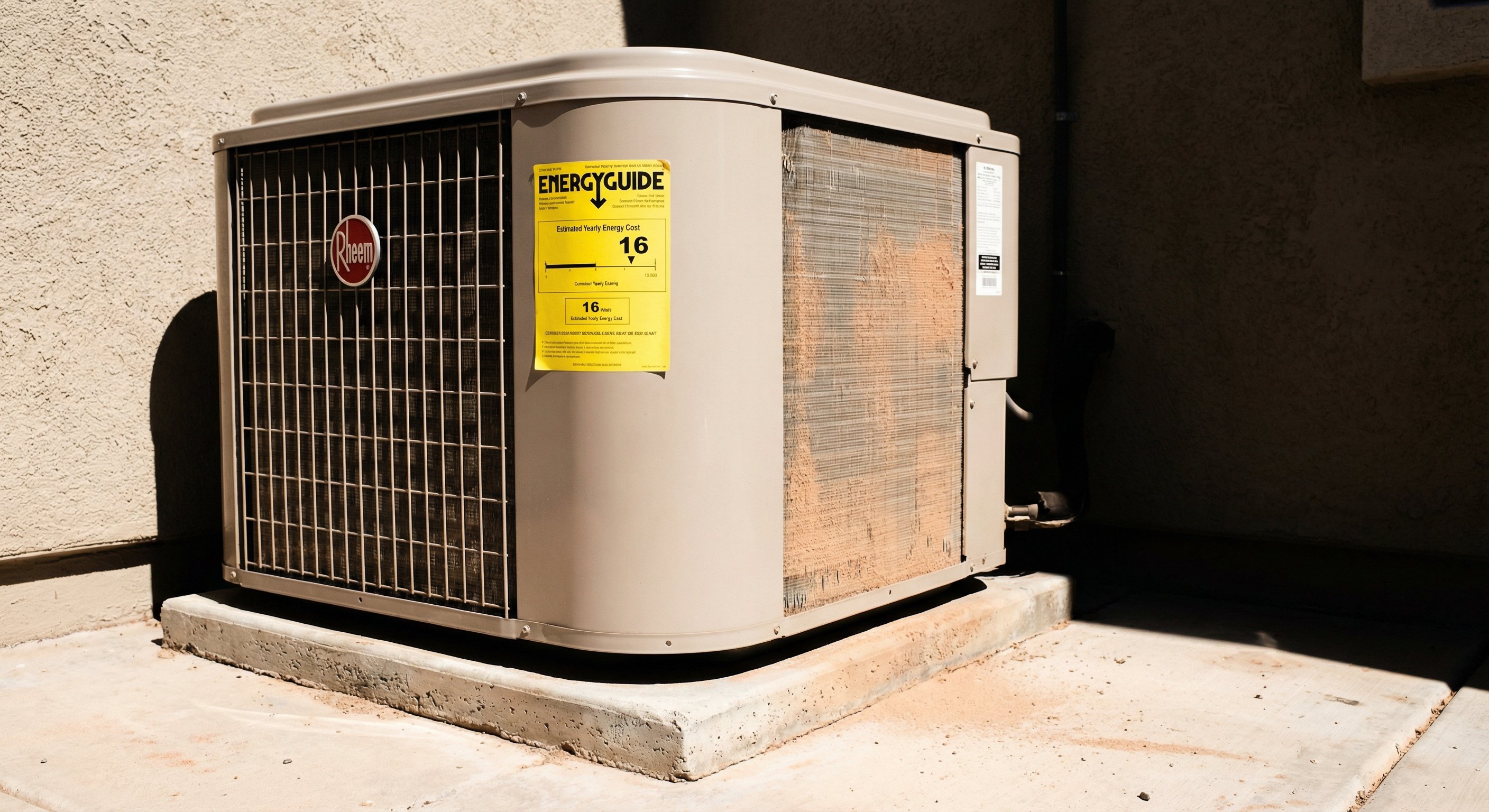
The average Phoenix home uses 1,100 to 1,400 kWh per month in summer. A home running a 20-year-old system can hit 1,500 kWh in August. At $0.24 per kWh, that old system is working exactly as designed, and the bill reflects it.
APS also charges a base service fee on top of the usage charges. The total bill is base fee plus usage at your applicable tier rates.
How SRP Prices Electricity for Phoenix Homeowners
SRP uses a fundamentally different model, and this is where Phoenix homeowners get caught off guard.
SRP is not primarily concerned with how much total electricity you use. It is concerned with your peak demand, specifically during the 3pm to 8pm peak pricing window on its E-27 residential plan.
Under the SRP E-27 plan, your electricity is priced in two bands. During peak hours (3pm to 8pm, Monday through Saturday, June through September), you pay a significantly higher per-kWh rate. During off-peak hours (everything outside that window), you pay a lower rate.
The real kicker is SRP's demand charge. Your monthly bill is partly determined by your single highest 15-minute peak usage reading during the billing cycle. Run your dryer, your pool pump, your microwave, and your AC all at once at 5pm on a Wednesday, and that one spike sets your demand charge for the month.
For Phoenix homeowners on SRP, this means the single biggest driver of your summer bill is not total consumption. It is when you use power and how big your peak spikes are. A home that uses 1,200 kWh total but keeps peak demand low will often pay less than a home that uses 900 kWh but creates multiple large demand spikes during peak hours.
Skip the dealer markup
See What a New AC Actually Costs in Phoenix, Arizona
AC Rebel shows you the real equipment price — no sales pitch, no inflated quote. Get matched with a licensed installer and keep $3,000–$5,000 in your pocket.
Get My Direct Price →Why This Changes How You Should Buy an AC System
If you are in the market for a new AC, your utility should factor into which system you choose as much as your home size does.
On APS, the math is direct. Higher SEER rating means lower total kWh consumption. Lower consumption means you stay in lower tiers or drop a tier entirely. Moving from a SEER 10 system to a SEER 18 system can cut summer consumption by 25 to 35 percent, and at Tier 3 and Tier 4 rates that is real money back in your pocket every month.
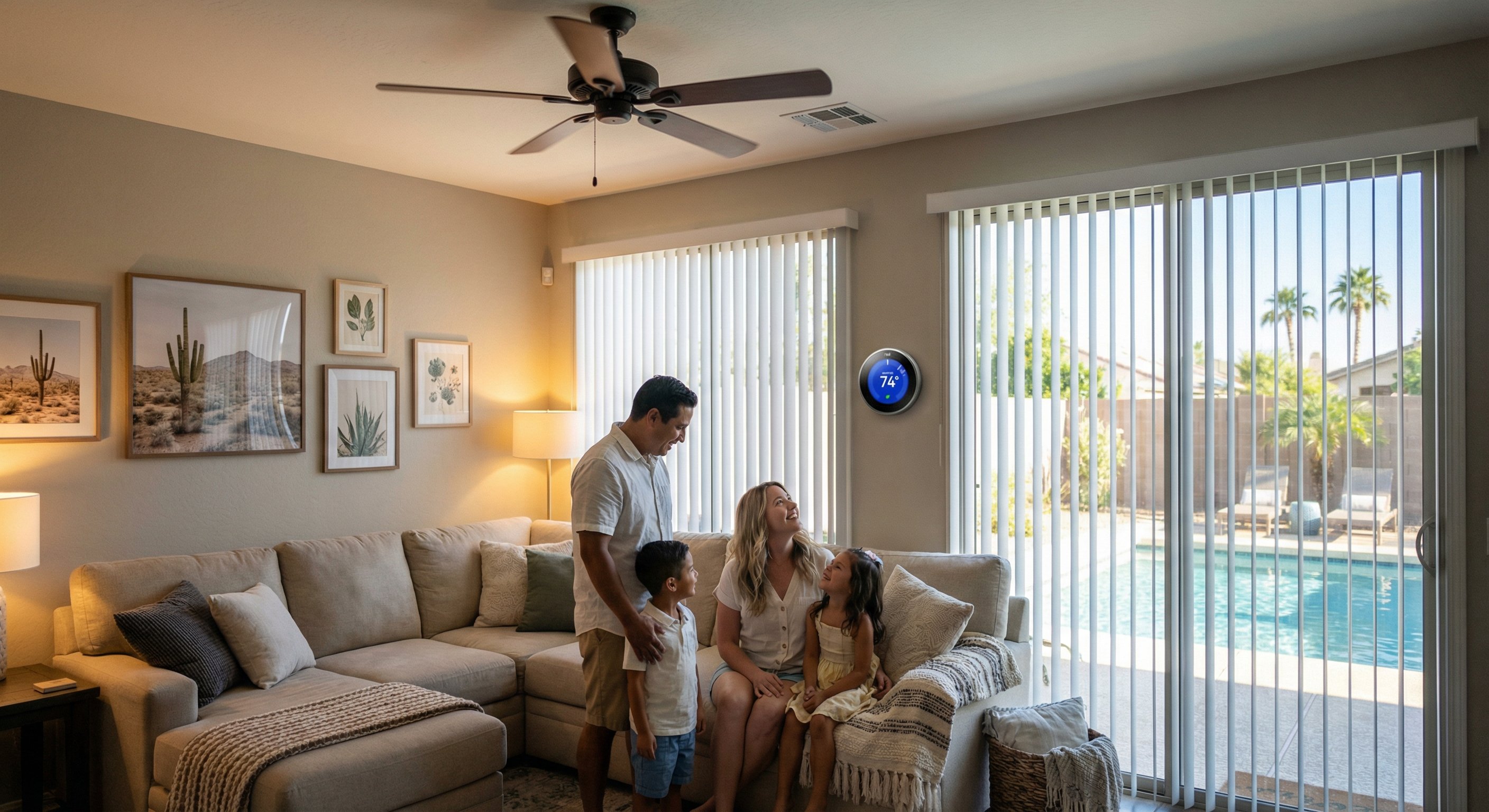
On SRP, a variable-speed or two-stage system that modulates its output rather than cycling fully on and off produces smaller, more consistent demand spikes. Combined with a smart thermostat that pre-cools before 3pm and eases off during peak hours, an SRP homeowner can meaningfully reduce their peak demand reading. That demand charge is where the real money goes on SRP.
Both approaches converge on the same conclusion: a high-efficiency, properly sized AC system with a smart thermostat is the move. The specific mechanism of savings differs by utility, and if a contractor does not ask which utility you are on, ask them why not.
What You Can Do Right Now to Lower Your Bill
Regardless of which utility you are on, there are concrete steps that move the needle on your summer electric bill.
Get a smart thermostat and use its scheduling features. A programmable thermostat saves 10 to 15 percent on cooling costs on average, according to ENERGY STAR. A smart thermostat with APS or SRP utility integration can save more. The key is not just installing it, it is setting a schedule that reduces cooling when you are not home and eases off before the 3pm peak window if you are on SRP.
Check your attic insulation before you blame the AC. Arizona Department of Energy data shows that inadequate attic insulation drives 20 to 30 percent of unwanted heat gain in Phoenix homes. Adding blown-in insulation to a poorly insulated attic is one of the highest-ROI improvements you can make before summer.
Seal your ductwork. Leaky ducts in an unconditioned attic can lose 20 to 30 percent of the cool air your AC produces before it reaches your living spaces. In a Phoenix summer, that is pure waste. Have a contractor do a duct blizzard test and seal the major leaks.
Look up your utility rebate programs before you buy. APS has a Home Performance with ENERGY STAR program. SRP has an AC rebate program for qualifying high-efficiency systems, typically $75 to $200. Check APS.com/rebates or SRP.net/rebates for your address.
What to Know Before You Buy an AC Unit
Factor your utility into the decision the same way you factor your home size or budget. Ask any contractor: do you have experience with SRP customers, and what system configurations do you recommend for demand-based billing? If they pause, find one who knows the local utility landscape.
On APS, prioritize the highest SEER rating you can afford. Every incremental SEER point drops your total consumption and keeps you in lower tiers.
On SRP, prioritize variable-speed or two-stage systems and ask about demand management features. The unit that keeps peak spikes low is worth more on SRP than the unit with the highest raw efficiency number.
Always check rebate eligibility before you finalize. A $5,200 system that qualifies for a $150 SRP rebate effectively costs $5,050. Check APS.com/rebates and SRP.net/rebates for your address.
Key Takeaways
APS and SRP use different pricing models that matter for your cooling costs. APS charges more when you use more electricity overall, making high-SEER systems and total consumption reduction the priority. SRP charges based on your peak demand during afternoon and early evening hours, making demand management and smart scheduling the priority.
Whether you are on APS or SRP, these moves will lower your summer bill: switch to a high-SEER system (SEER 18 or higher), install a smart thermostat and use the scheduling features, improve attic insulation, and seal your ductwork.
Check your utility rebate programs before buying. Both APS and SRP have cooling upgrade rebates that are easy to miss.
The contractor you buy from should know the difference between APS and SRP rate structures and be able to recommend a system configuration that fits your utility context. If they do not ask which utility you are on, ask them why not.
AC Rebel sells AC units at direct pricing, cutting out the dealer markup that adds thousands to every installation. Browse systems, compare SEER ratings and equipment tiers, and see exactly what your unit would cost before installation. Financing available through GreenSky with payments from $47 per month.
Frequently Asked Questions
How do I know if I am on APS or SRP?
Check the logo on your electricity bill. APS bills show the APS logo and include tier-based usage pricing. SRP bills show the SRP logo and include demand charge data. SRP also has a service area lookup tool on its website where you can enter your address to confirm.
Does SRP cost more than APS for cooling?
It depends on your usage pattern, not the utility itself. A home that manages peak-hour usage well can pay less on SRP than on APS. A home that creates large simultaneous spikes during 3pm to 8pm will pay more on SRP for similar total consumption. Know your usage pattern before assuming one is cheaper.
What is the APS E-27 plan?
The APS E-27 plan is the standard residential electricity rate plan in Arizona. It uses a tiered pricing structure where electricity costs more per kilowatt-hour as your monthly consumption increases. Most Phoenix homeowners are on this plan or a similar APS residential rate structure. Confirm your specific rate class by checking your bill or calling APS directly.
What is the SRP E-27 demand plan?
The SRP E-27 plan is a residential electricity plan structured around demand-based pricing. Instead of charging primarily by total kilowatt-hours used, SRP E-27 sets prices based on your highest peak demand reading during the 3pm to 8pm peak window. This makes it fundamentally different from APS's tiered model and requires different cooling strategies to minimize costs.
Can I switch from APS to SRP or vice versa?
No. Your provider is determined by your service address. You cannot choose between them. However, you can explore different rate plans within your utility. SRP offers both demand-based and traditional plans. APS offers standard tiered plans and may offer time-of-use options in some areas.
Does a higher SEER AC system save more money on APS or SRP?
Both. A higher SEER system reduces your total cooling load, which lowers your bill on APS. On SRP, a high-efficiency variable-speed system also reduces peak demand spikes, which directly lowers your demand charge. Either way, upgrading to a SEER 18 or higher system from a pre-2000 unit is one of the highest-ROI cooling investments a Phoenix homeowner can make.
Ready to stop overpaying?
See Your Direct AC Price in 2 Minutes
Skip the dealer. Buy your AC unit at direct pricing and pay a vetted local installer only for the installation. No sales calls. No hidden markup. Most homeowners save $3,000–$5,000+ compared to a traditional quote.
Get My Direct Price — No Credit Card2-minute quote · Licensed installers · 10-year warranty options