
HVAC Warranty in Phoenix: What Actually Gets Covered (And What Doesn't)

HVAC Warranty in Phoenix: What Actually Gets Covered (And What Doesn't)
TL;DR: Phoenix HVAC warranties split into two parts: a manufacturer parts warranty (5 to 10 years, conditional on registration and annual maintenance) and a contractor labor warranty (1 to 2 years, sometimes nothing). Claims get denied most often because equipment was never registered with the manufacturer or because there is no proof of annual maintenance. Read your registration card and check it against your installation date today.

It is 11 p.m. on a Thursday in August. Your AC tripped off and will not restart. Inside temperature is 87 degrees and climbing. You paid $10,800 for this unit two years ago, so you call the manufacturer expecting them to make it right. They pull up your file and tell you the claim is denied because the equipment was never registered, and your installation contractor did not file the required maintenance log.
That is not a hypothetical. That happens to Phoenix homeowners every summer because nobody explains the warranty rules clearly before they sign. This is the guide I wish every Phoenix metro homeowner had read before their unit was installed.
The Two-Warranty Problem Nobody Talks About
When you buy a new AC unit in Phoenix, you are actually buying two separate warranties from two separate parties. Confusing them, or assuming they cover the same things, is how homeowners end up with zero coverage when they need it most.
Manufacturer warranty covers defects in the equipment itself. The compressor, coils, and other major components are covered against factory defects for a set number of years. This comes from the equipment maker (Carrier, Trane, Lennox, Rheem), not from whoever installed your unit.
Labor warranty covers the installation work. If the unit fails because of how it was installed, that falls on the contractor. Most Phoenix-area contractors offer 1 year of labor coverage. Some offer 2 years. A few offer nothing.
These two warranties do not overlap. A manufacturer warranty does not pay for a contractor to fix a bad install. A labor warranty does not cover a defective compressor.
What Manufacturer Warranties Cover in Arizona
Every major AC brand sold in Phoenix carries a manufacturer warranty. Here is what the typical coverage looks like in 2026.
Compressor warranty: Most brands cover the compressor for 10 years from installation date. In Phoenix heat it works harder than almost anywhere else in the country. A failed compressor can cost $2,500 to $4,500 to replace. If your brand covers it for a full 10 years, that is significant protection.
Parts coverage: Other major components, including the coil assembly, evaporator coil, and condenser coil, typically carry a 5-year parts warranty. Some brands extend this to 10 years on specific product lines.
Conditional lifetime: A few premium brands advertise "conditional lifetime" warranties on the heat exchanger. Most require original owner occupancy, annual professional maintenance, and equipment registration within 90 days of installation. Miss any of those and the lifetime coverage drops to a 20-year prorated plan.
The Registration Trap: Why Most Phoenix Homeowners Are Walking on Thin Ice
Here is the single most common reason HVAC warranty claims get denied in the Phoenix market, and most contractors do not explain it clearly at the point of sale.
Your equipment needs to be registered with the manufacturer. Not just within a few weeks of installation, but within a specific window, usually 30 to 90 days depending on the brand. When equipment is not registered, the default warranty period drops from 10 years to 5 years, or in some cases to just 2 years.
You might assume your contractor handles this for you. Some do. Many do not. And if yours did not, or if the registration was submitted incorrectly with the wrong serial number or installation date, the manufacturer has no record, and the claim gets denied.
After installation, pull out the registration card that came with your equipment. Call the manufacturer or register online at their warranty portal. Confirm your unit shows up in their system with the correct installation date. If it does not, get it registered immediately. The window may already be closed, but you will not know until you check.
Skip the dealer markup
See What a New AC Actually Costs in Phoenix, Arizona
AC Rebel shows you the real equipment price — no sales pitch, no inflated quote. Get matched with a licensed installer and keep $3,000–$5,000 in your pocket.
Get My Direct Price →Annual Maintenance: The Non-Negotiable Requirement
Every major AC manufacturer requires proof of annual professional maintenance as a condition of keeping the warranty in force. In Phoenix, this requirement makes particular sense. Summer heat puts AC units through sustained heavy use. A system running continuously for four months at temperatures above 110 degrees Fahrenheit accumulates more wear than a unit in a moderate climate. Manufacturers tie warranty coverage to documented maintenance because of it.
What counts as maintenance? Most manufacturers require service by a licensed HVAC contractor that includes coil cleaning, refrigerant level check, electrical component inspection, thermostat calibration, filter replacement, and condensate drain cleaning.
Keep every service invoice. Document the work performed, the contractor's license number, and the date. If a manufacturer ever questions whether maintenance was performed, those invoices are your proof. A good contractor notes the equipment model, serial number, and specific work performed on each visit.
The Warranty Denial Triggers Every Phoenix Homeowner Should Know
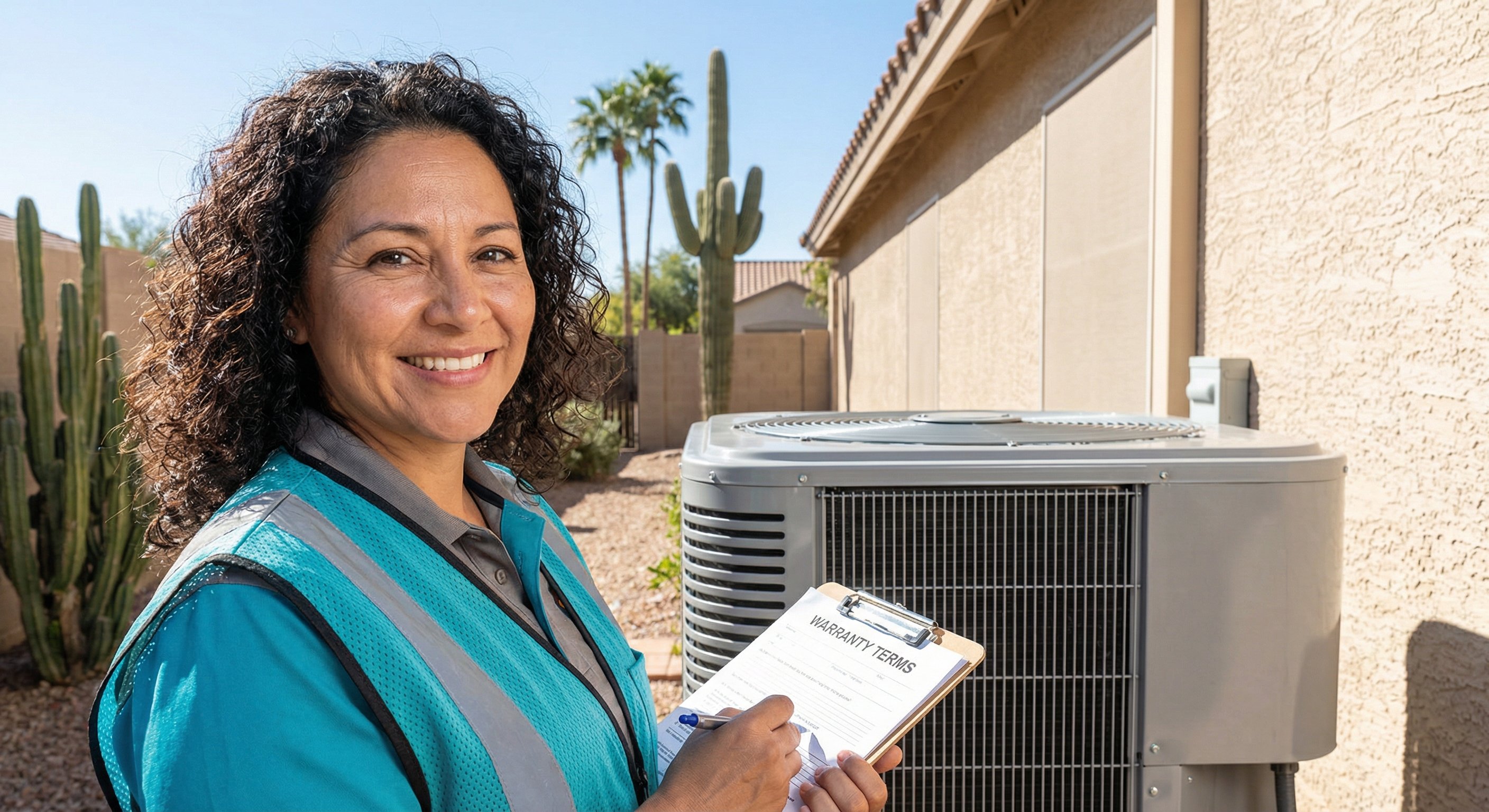
Certain situations automatically void warranty coverage regardless of how well you have maintained your equipment.
Improper refrigerant: R-410A systems are charged to a specific refrigerant weight, not a pressure range. Adding the wrong refrigerant type, or charging to a pressure that looks correct but is outside the manufacturer's specified weight range, can damage the compressor and void the warranty. Always use a contractor who weighs refrigerant on a scale.
Electrical damage from monsoon surges: Phoenix monsoon season (July through September) brings power surges that fry circuit boards and capacitors. Manufacturer warranties cover defects in these components, but not damage from electrical events. Surge protection at your breaker panel is the answer.
Unauthorized repairs: Having a different contractor touch your unit during the warranty period without proper documentation can void coverage on the components they worked on.
Operating without proper airflow: Running a system with a clogged filter causes the evaporator coil to freeze and the compressor to overwork. This is considered a maintenance failure, and the warranty will not cover it.
Contractor Labor Warranties: What You Actually Get
Beyond the manufacturer coverage on equipment, your installation contractor provides a separate labor warranty. This is where Phoenix homeowners frequently get less than they think.
Standard labor coverage: Most Phoenix-area contractors offer 1 year of labor warranty on installation work. If something fails because of how it was installed within the first year, they come back and fix it at no charge.
Extended labor coverage: Some contractors offer 2 years. A few premium installers offer 5 years. Ask specifically when you are getting quotes, but do not assume it comes standard.
The fine print: Labor warranties only cover labor costs. If a component fails during the labor warranty period, the manufacturer covers the replacement part and the contractor covers the labor to install it. If your manufacturer warranty has expired and a part fails in year 3, but your contractor's labor warranty is still in effect, you pay for the part at full retail price.
This is why splitting the unit purchase from the installation, the way AC Rebel does, matters. You know exactly what each costs and can evaluate each layer of coverage independently.
The Extended Warranty Question: Are They Worth It for Phoenix Homes?
An extended warranty typically costs $300 to $800 and extends coverage on major components for an additional 5 years or more. Before agreeing to one, read the specific terms.
Key questions to ask before agreeing to an extended warranty:
- Does it require annual professional maintenance as a condition?
- Does it cover the compressor specifically?
- Is there a deductible per service call?
- Who performs the repairs?
For most Phoenix homeowners, the standard 10-year manufacturer warranty already covers what matters most. The more valuable investment is registering your equipment on day one and keeping maintenance invoices for every year of ownership.
What to Do Right Now Before Something Breaks
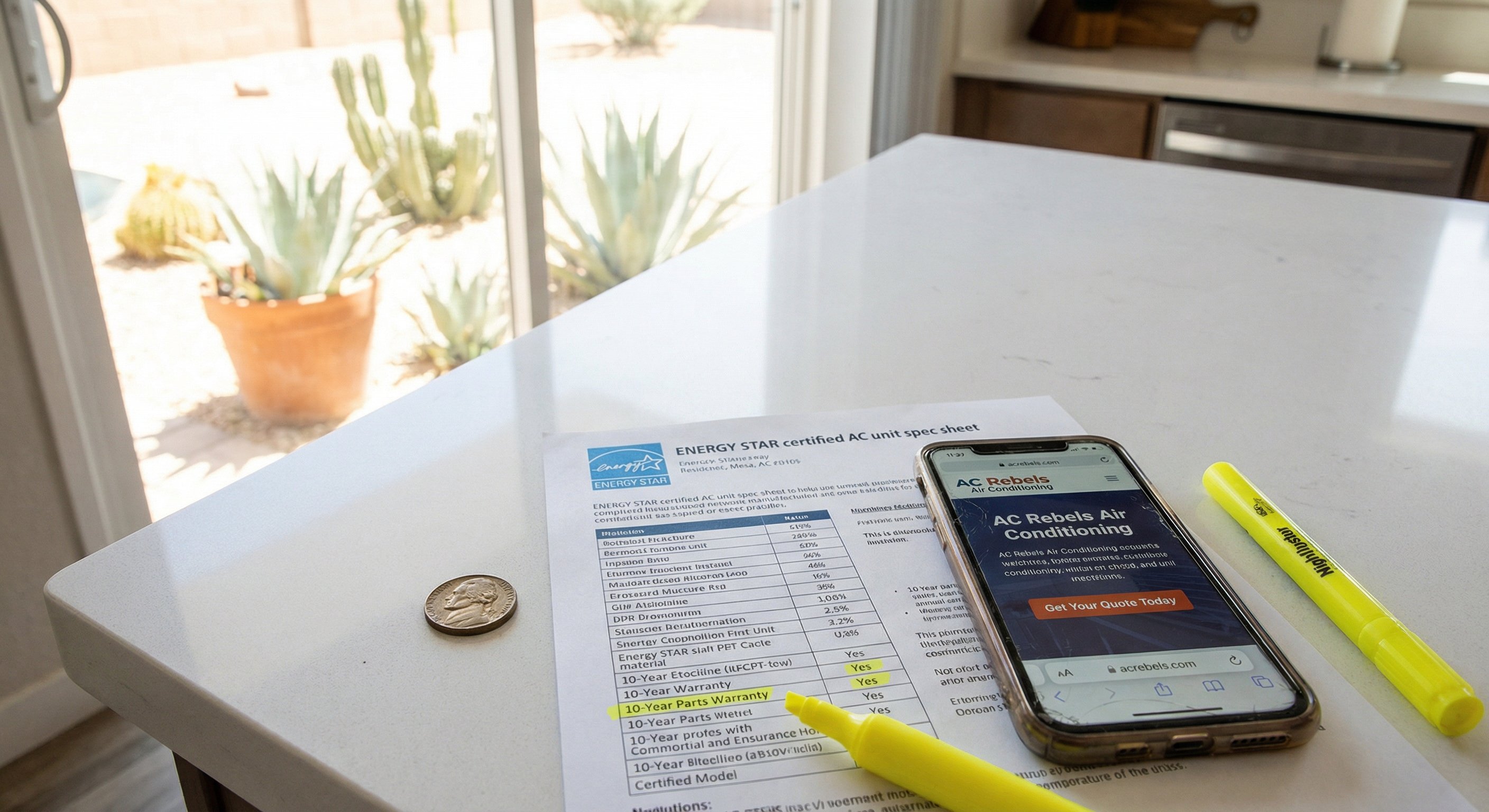
If your AC is currently running fine, there are three things you can do this week that will save you thousands if something fails before summer peaks.
Step 1: Find your equipment registration. Pull together all paperwork from your current installation. Locate the model number and serial number. Go to the manufacturer's website and search by serial number. If it does not appear, register it today.
Step 2: Pull your maintenance invoices. Find every service invoice for the last three years. Check that each includes your unit's model and serial number, a description of work performed, and the contractor's license number. If any years are missing, schedule a maintenance visit now.
Step 3: Know what you own. Know the exact manufacturer warranty period before you buy any new system. Ask specifically: is the compressor covered for 10 years, and what are the conditions?
What AC Rebel's Warranty Coverage Looks Like
When you buy an AC unit through AC Rebel, the equipment comes with the standard manufacturer warranty from whichever brand you choose. The difference is in how transparent the process is from the start.
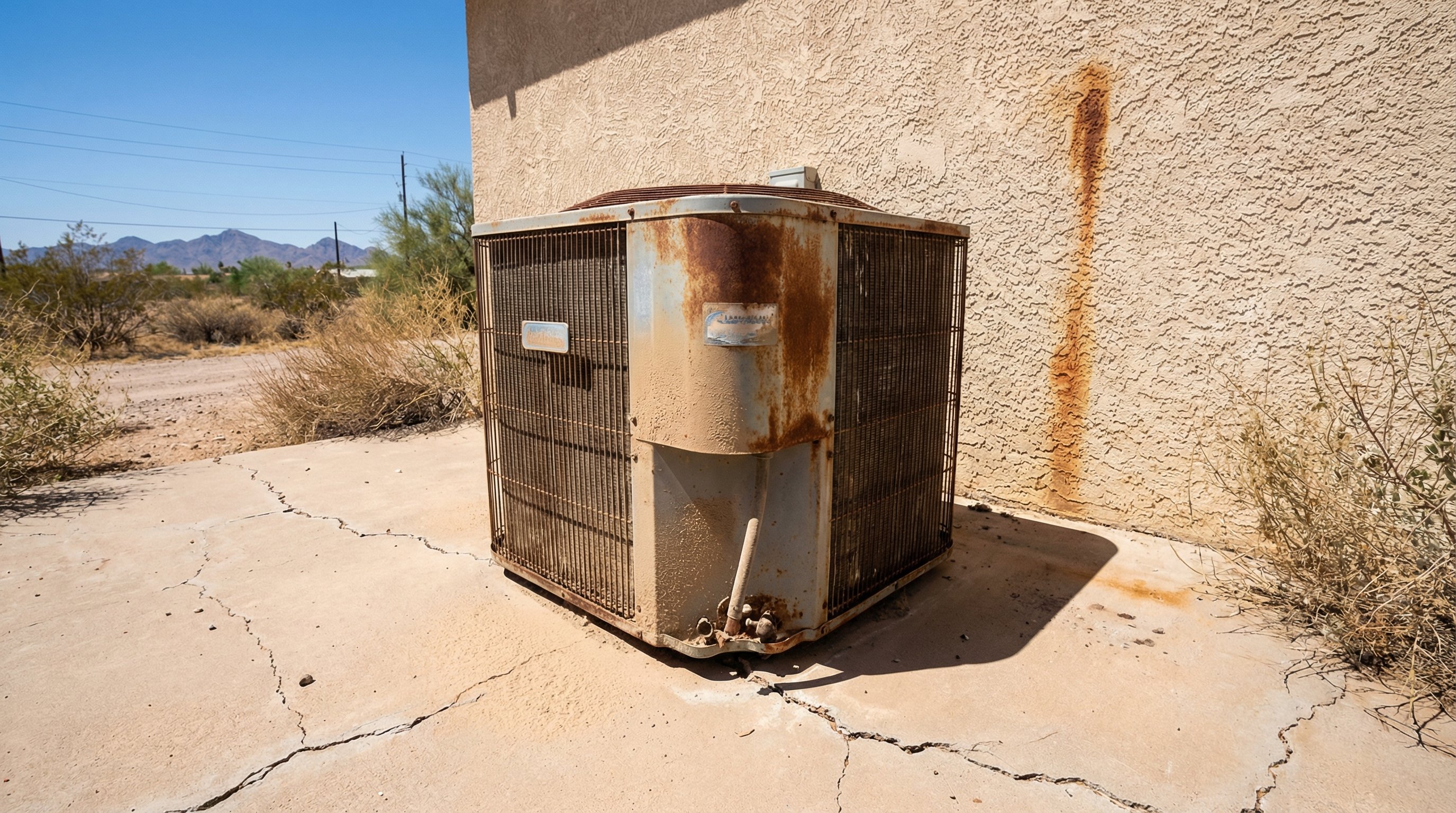
Every unit page on AC Rebel shows the exact manufacturer warranty terms for that specific model, including the compressor coverage period, parts coverage, and any conditions tied to registration and maintenance. You see this before you buy, not after something breaks.
The 10-year manufacturer warranty is included standard on most units sold through the platform. Registering the equipment is something your selected installation contractor handles as part of the install process, and the AC Rebel system prompts this step as part of the contractor checklist.
For the installation labor itself, AC Rebel works with vetted, licensed contractors who carry their own labor warranties. Contractor ratings and warranty terms are visible before you accept an installation quote, so you can make an informed decision rather than discovering the fine print after the work is done.
Get a free instant quote at acrebel.com and see exactly what your specific equipment covers before summer starts.
Frequently Asked Questions
How long is the typical manufacturer warranty on a new AC unit in Phoenix?
Most AC units sold in Phoenix carry a 10-year manufacturer warranty on the compressor and a 5-year warranty on other major components. These periods are conditional on equipment registration within 30 to 90 days of installation and proof of annual professional maintenance.
What is the most common reason HVAC warranty claims are denied in Arizona?
Unregistered equipment and missing annual maintenance documentation. Both are avoidable. Register your equipment immediately after installation and keep every service invoice.
Does the manufacturer warranty cover the compressor in Arizona heat?
Yes. The compressor is typically covered for 10 years from installation date. Phoenix summer heat makes this coverage especially valuable because compressors in this climate work harder and fail earlier on average than in moderate climates.
Can I use any HVAC contractor for warranty repairs, or does it have to be the original installer?
For most manufacturer warranties, repairs during the warranty period must be performed by a licensed contractor, but they do not necessarily have to be the original installer. Some manufacturers require that warranty work be performed by an authorized contractor. Check your specific warranty terms.
Are extended warranties worth buying for Phoenix AC units?
For most Phoenix homeowners, the standard 10-year manufacturer warranty provides sufficient coverage. Extended warranties make the most sense if you want coverage beyond 10 years or are buying a system with a shorter base manufacturer warranty.
Ready to stop overpaying?
See Your Direct AC Price in 2 Minutes
Skip the dealer. Buy your AC unit at direct pricing and pay a vetted local installer only for the installation. No sales calls. No hidden markup. Most homeowners save $3,000–$5,000+ compared to a traditional quote.
Get My Direct Price — No Credit Card2-minute quote · Licensed installers · 10-year warranty options