
AC Compressor Problems in Phoenix: 7 Signs Your Unit Is Failing

AC Compressor Problems in Phoenix: 7 Signs Your Unit Is Failing
TL;DR: AC compressor problems in Phoenix show up as warm air, clicking sounds, or breakers that trip. The 7 signs are: a clicking compressor on startup, warm air from vents, breaker trips during operation, excessive vibration or rumbling, error codes on the outdoor unit, a running compressor that never cools the house, and oil stains near the outdoor unit. Phoenix heat accelerates compressor wear because units fight 110+ degree ambient temps for months every summer. For units over 12 years old with a compressor failure, replacement is almost always the better math over repair.
Your AC is the most mechanically stressed appliance in your Phoenix home. While homeowners in Chicago worry about their furnace from November through March, your compressor runs hard from April straight through October, often at ambient temperatures that push 115 degrees. That kind of stress announces itself in specific ways. Here is what to watch for and what each symptom actually means.
1. The Compressor Clicks but Will Not Start
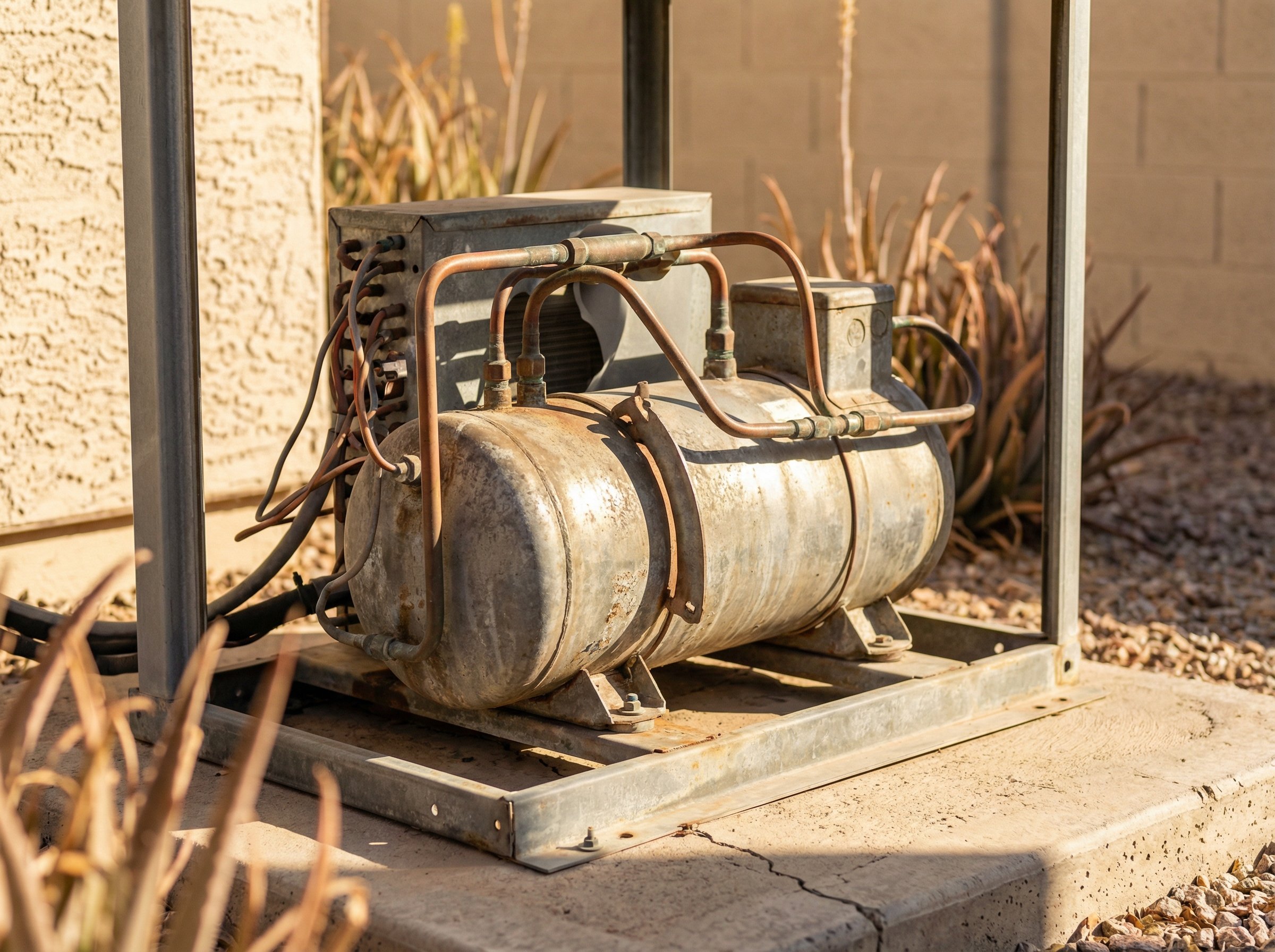
You set the thermostat to 74 degrees. The fan comes on outside. But instead of the deep hum of a compressor kicking in, you hear a click, then silence, then another click. The unit retries a few times and gives up.
This is the most common early warning sign of compressor failure. The compressor has an electrical device called a run capacitor. Its job is to give the compressor motor the extra jolt of electricity it needs to start under load. In Phoenix, those capacitors fail faster than almost anywhere else in the country because the ambient heat bakes them year after year. A failing capacitor cannot deliver that startup charge, so the compressor tries to turn, fails, and retries. Each attempt without proper voltage damages the compressor a little more.
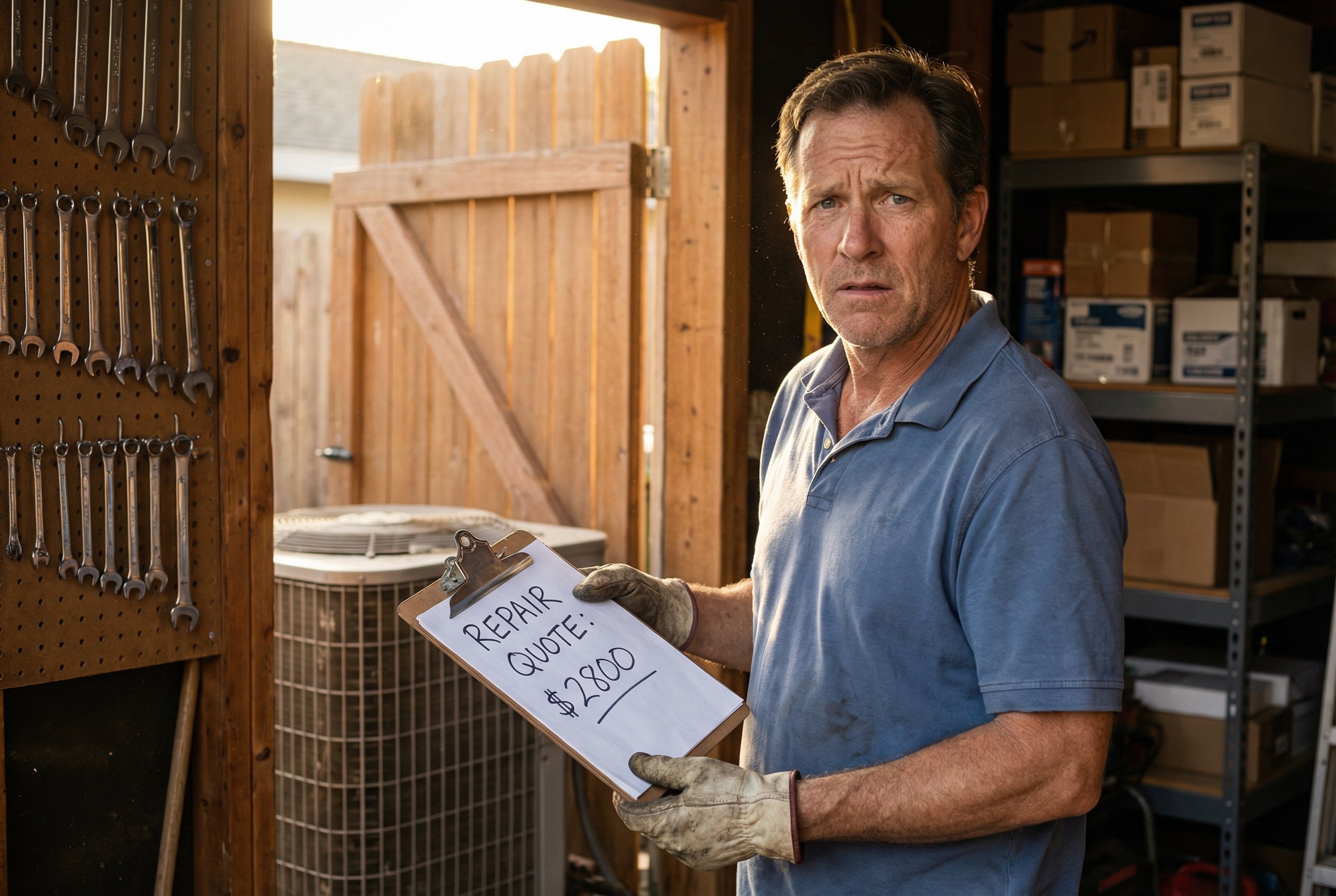
A dual run capacitor costs $150-$350 for the part and labor in the Phoenix market. If a contractor quotes you more than $500 for a capacitor replacement on a standard residential system, get a second opinion. One Gilbert homeowner described being quoted $2,800 to replace a compressor when the actual problem was a $280 run capacitor. The contractor never tested the capacitor. He just looked at the age of the unit and handed over a replacement quote.
2. Warm Air Coming From Every Vent
The thermostat says 76 degrees. Your vents are blowing air. But the air is room temperature or warmer. This is not a dirty filter problem. This is the compressor not doing its job.
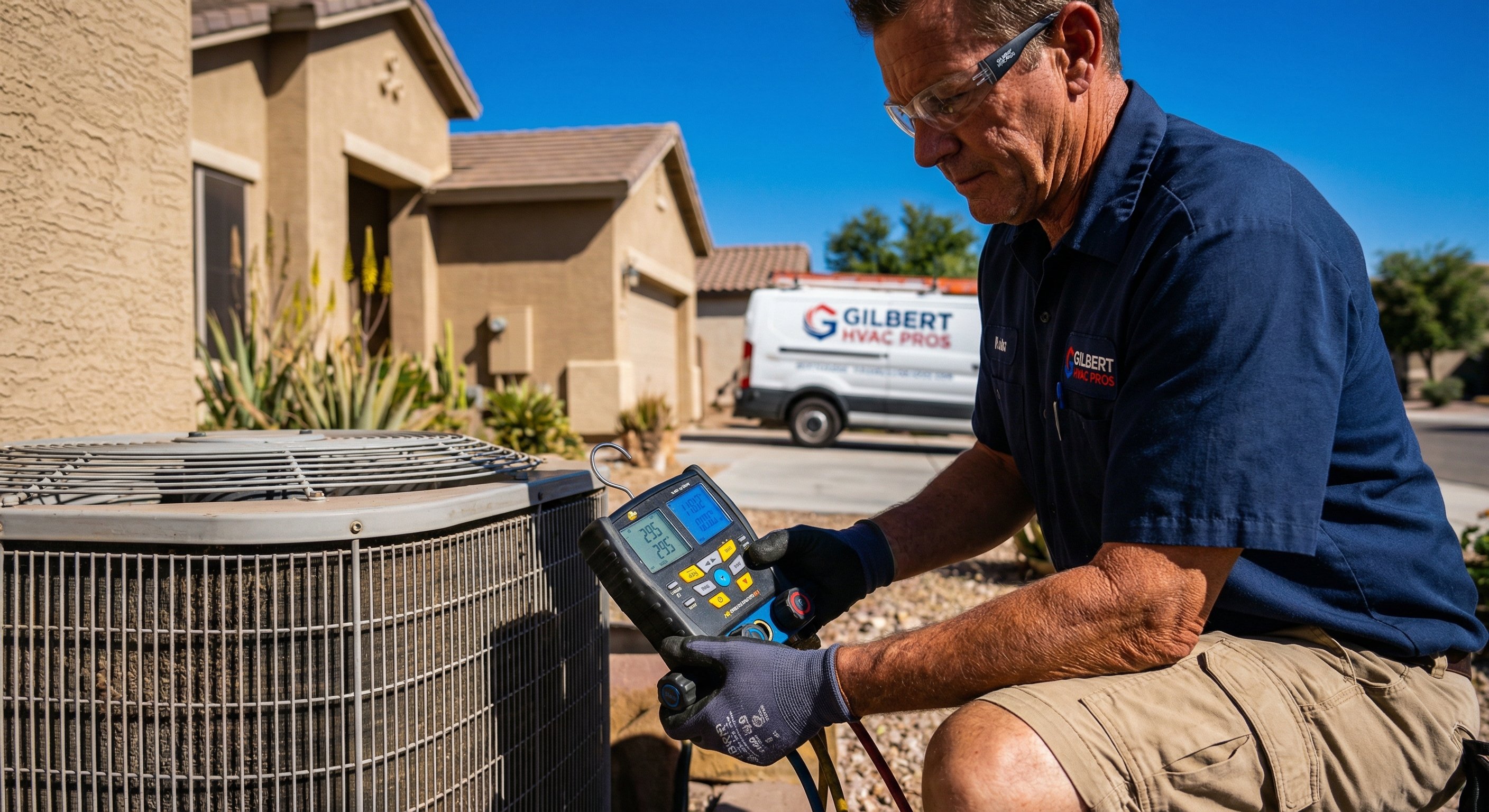
The compressor is the heart of your AC system. It circulates refrigerant between the indoor coil and the outdoor condenser, moving heat from inside your home to outside. If the compressor is running but not building proper pressure, the heat exchange does not happen. Two possible causes: a refrigerant leak or a failing compressor. The difference is diagnosed with pressure gauges. If the low-side pressure reads normal but the high-side is low, that points toward compressor trouble. If both sides are low, you have a refrigerant leak.
R-22 systems (common in homes built before 2010) are expensive to repair because that refrigerant is no longer manufactured. If you have an R-22 system and a leak, you are looking at $600-$1,200 just for the refrigerant on top of the repair cost. At that point, replacement is usually the better math.
3. The Unit Trips the Breaker When It Runs
Your AC runs fine for 20 minutes. Then you hear a click from the electrical panel and everything goes quiet. The breaker has tripped.
This is an electrical problem, and the compressor is usually the culprit. A compressor drawing more electrical current than it should will pull the breaker to its trip point. Common causes: compressor windings shorting internally (failure in progress), a failed start capacitor pulling locked rotor amperage, or a seized condenser fan motor drawing excessive current.
A breaker that trips once might be an anomaly. A breaker that trips every time the unit runs is telling you something is wrong. Do not keep resetting it and hoping it resolves. Each trip risks arc damage inside the compressor. Tell the contractor: "My AC breaker trips after about 20 minutes of running." That information narrows the diagnosis fast.
Skip the dealer markup
See What a New AC Actually Costs
AC Rebel shows you the real equipment price — no sales pitch, no inflated quote. Get matched with a licensed installer and keep $3,000–$5,000 in your pocket.
Get My Direct Price →4. Excessive Vibration or Rumbling From the Outdoor Unit
A properly running AC condenser should hum steadily. If you are hearing rattling, deep rumbling, or vibration that you can feel through the walls, something inside the compressor is wrong.
Inside a scroll compressor (in virtually every residential AC sold since the late 1990s), two spiral scrolls mesh together to compress refrigerant. Over time and with heat cycling, those scrolls wear. When they wear unevenly or a scroll becomes chipped, the compression process becomes noisy and vibration increases.
Rumbling is a particularly bad sign. It often means the compressor bearings are failing. The compressor is essentially an engine, and like any engine, it has bearings that allow the crankshaft to rotate. When those bearings wear, metal touches metal and you hear it as a deep rumble that gets louder as the compressor warms up.
This is a problem that gets worse. A compressor with bad bearings or damaged scrolls will eventually seize completely. Once it seizes, the only option is replacement.
5. High-Pressure Lockout or Error Code on the Condenser
Your outdoor unit has a small panel with an LED light blinking a code. Or your thermostat shows an error message you cannot find in the manual.
Modern AC systems have safety lockouts that shut the compressor down when conditions become dangerous. The most common codes in Phoenix:
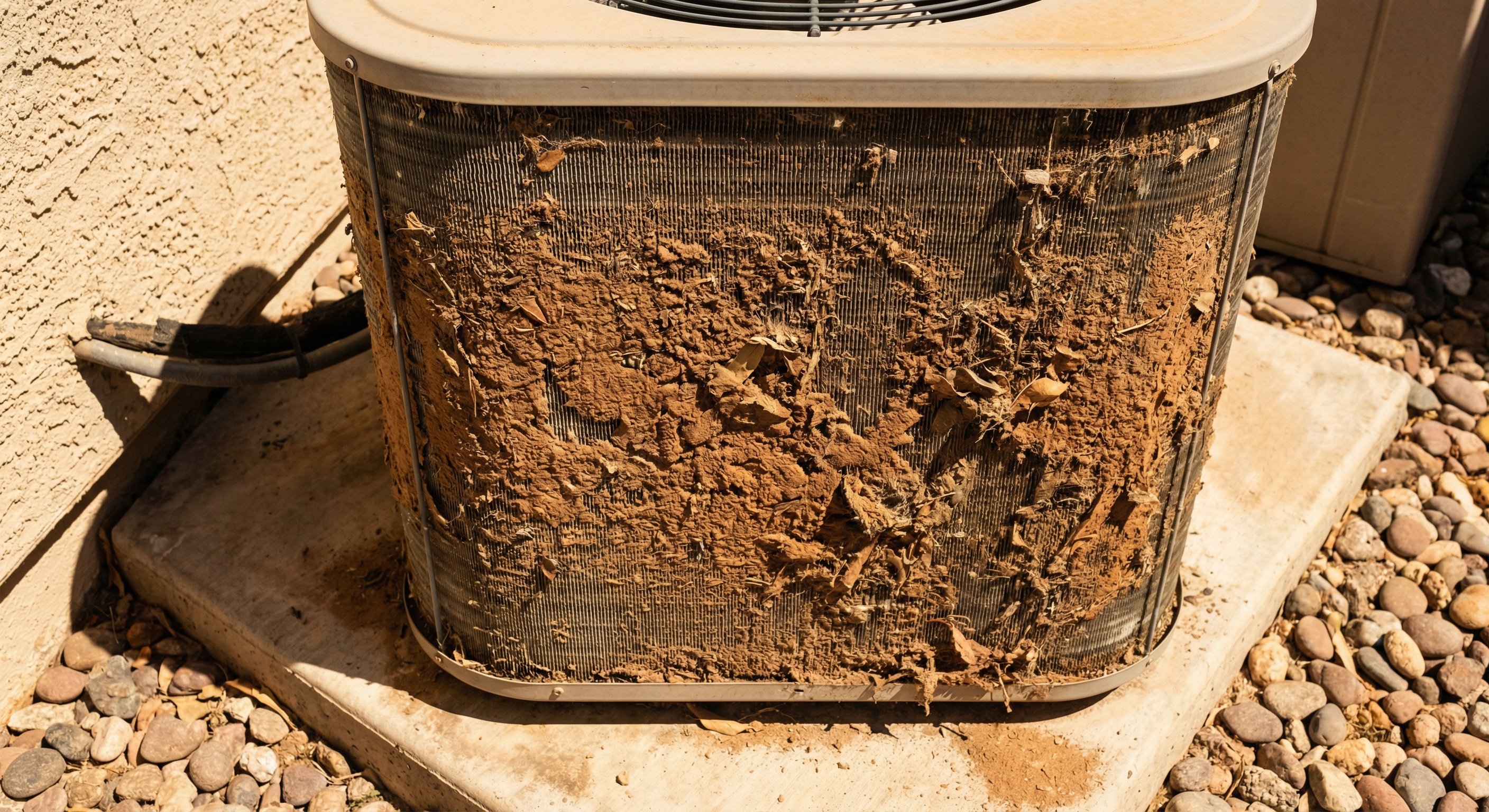
HP (High Pressure) lockout: The system pressure went above safe levels, usually because the condenser coil is clogged with dust, the outdoor fan failed, or there is a refrigerant restriction. In Phoenix, a dirty condenser coil is the most common trigger. This is not necessarily a compressor failure. Clean the coil and reset before calling anyone.
LP (Low Pressure) lockout: Refrigerant pressure dropped below safe levels because of a leak. The compressor may be fine, but the refrigerant is gone.
Open crankcase heater: The compressor sat unpowered over winter and the oil has settled. Run the fan-only mode for a few hours before trying to cool.
If your system locks out repeatedly, the compressor is usually not the problem. A dirty coil or refrigerant leak is triggering the safety. Fix those first.
6. The Compressor Runs But the House Never Cools
The fan is running. The compressor is humming. But your home never reaches the thermostat setting on a 108-degree Phoenix afternoon.
This usually means the compressor is running but producing very little cooling. The compressor internal valves may be worn, leaking refrigerant back from the high side to the low side so the system never builds proper pressure.
In a properly running system, the temperature difference between supply air and return air should be 15-20 degrees. If your differential is 8 degrees or less, the compressor is running but not compressing effectively. One Scottsdale homeowner ran his unit for six hours in July while the inside temperature sat at 81 degrees. The compressor was running. It was just not doing anything useful. And his APS bill reflected it every single month.
7. Oil Stains Near the Compressor
Walk around your outdoor unit. Dark stains on the concrete pad beneath the compressor or around the refrigerant lines are a red flag.
Air conditioning compressors are sealed units with oil inside to lubricate the moving components. That oil should never escape the sealed system. If you see oil, you have a refrigerant leak at a point hot enough to burn it, which usually means the compressor discharge valve or the compressor body itself. The leak may be small enough that you have not noticed cooling loss yet, but over weeks the refrigerant continues to escape and the compressor eventually fails from running on insufficient refrigerant.
If the leak is at the compressor body, replacement is the only option. If the leak is elsewhere in the system, you have a choice: repair and recharge, or replace the whole unit. For a unit under 10 years old, a leak repair makes sense. For anything over 12 years old in Phoenix, replacement almost always wins on math.
What to Do When You Spot These Signs
Before calling anyone, check the condenser coil yourself. Turn off power to the outdoor unit at the disconnect box. Spray the coil down with a garden hose, flushing water through the fins from the inside out to blow debris outward. Let it dry 15 minutes, restore power, and run the AC. In Phoenix, dirty coils are the most common cause of compressor stress and the easiest fix.
If cleaning the coil does not resolve the problem, call a contractor. Ask them specifically: "Have you tested the run capacitor and compressor windings before quoting a replacement?" Any competent technician will use a multimeter to test electrical components before recommending a compressor replacement.
Repair vs. Replace: The Phoenix Math
A new 3-ton AC system installed in the Phoenix market runs $6,500-$9,500 depending on the brand tier and whether you buy through a dealer or direct. A compressor replacement alone, including labor and refrigerant, runs $2,500-$4,500 on most residential systems. The math only favors repair if your existing unit is less than 8 years old and has no other major issues.
But here is what most contractors will not tell you: the compressor in your existing unit has already been running hard for every summer since it was installed. An 8-year-old AC in Phoenix has effectively experienced Chicago-style compressor stress for 8 years straight because the heat here is so much more severe. For units over 12 years old with a compressor failure, replacement is almost always the better call. You are putting $2,500-$4,500 into a compressor on a unit that likely has other aging components waiting to fail.
If replacement is the right call, the way you buy matters. The traditional HVAC distribution chain adds 40-65% to equipment cost before it reaches your home. AC Rebel sells the same equipment direct from the manufacturer at near-wholesale pricing. You still pay separately for installation by a licensed contractor, but you see exactly what the unit costs versus what the installation costs.
Get a free instant quote at acrebel.com to see direct equipment pricing for your home size and cooling needs.
Frequently Asked Questions
Q: Can a compressor be repaired or does it always need to be replaced?
A compressor is a sealed unit. When internal components fail, the compressor itself cannot be opened and repaired. It must be replaced. However, many symptoms that look like compressor failures are actually other problems: failed run capacitors, dirty condenser coils, refrigerant leaks, or failed condenser fan motors. All of those are repairable. Get a proper electrical and pressure diagnosis before accepting a compressor replacement quote.
Q: How long does a compressor last in Phoenix?
The national average is 15-20 years. In Phoenix, it is closer to 10-15 years because of the extreme summer heat and extended runtime. A unit that runs 4-5 months per year in Arizona undergoes more total wear than a unit in a moderate climate. If your compressor fails and the unit is over 12 years old, plan for replacement.
Q: What causes a compressor to fail in the Arizona heat?
The most common causes are: running with insufficient refrigerant from slow undetected leaks, electrical stress from repeated hard starts when capacitors are weak, overheating from a dirty condenser coil, and normal wear from extended summer runtime. The single biggest preventable cause is neglecting condenser coil cleaning. Dust and desert sand fill the coil fins every spring. A $20 garden hose cleaning can extend compressor life significantly.
Q: Is it worth replacing just the compressor on an old unit?
Generally no, if the unit is over 10-12 years old. A compressor replacement ($2,500-$4,500 installed) is a large portion of full replacement cost. You are likely to face another major repair within 2-3 years. Replace the whole unit if the compressor fails on a system older than 10 years.
Q: My AC is making a clicking sound but still cooling. Do I need to act now?
Yes. A clicking compressor is trying to start and failing. Each attempt without proper voltage damages it. The most common cause is a run capacitor losing its charge, which is a $150-$350 repair. Catch it early and you fix the capacitor. Wait until the compressor seizes completely and you are looking at a full replacement.
AC compressor problems in Phoenix almost always announce themselves before the unit dies completely. Clicking on startup, warm air when it should be cold, excessive vibration, or a breaker that trips mid-cycle are all signals worth paying attention to. The most common root cause in this climate is a dirty condenser coil or a failing run capacitor, both of which are cheap fixes. The expensive call is waiting until the compressor seizes before you do anything.
Check your condenser coil every spring. Change your air filter every month during cooling season. And if you hear something wrong, deal with it in May rather than July when every contractor in the valley is booked solid and you are sweating while you wait for an appointment.
Ready to stop overpaying?
See Your Direct AC Price in 2 Minutes
Skip the dealer. Buy your AC unit at direct pricing and pay a vetted local installer only for the installation. No sales calls. No hidden markup. Most homeowners save $3,000–$5,000+ compared to a traditional quote.
Get My Direct Price — No Credit Card2-minute quote · Licensed installers · 10-year warranty options