
AC Blower Motor Replacement Cost in Phoenix (2026 Pricing Guide)

AC Blower Motor Replacement Cost in Phoenix (2026 Pricing Guide)
TL;DR: Replacing an AC blower motor in Phoenix costs between $350 and $1,200 installed. The wide range comes down to motor type: a standard PSC motor runs $350 to $600, while a variable-speed ECM motor costs $800 to $1,200. Phoenix motors fail faster than the national average because they run twice as many hours per year in attic temperatures that exceed 150 degrees. If your system is over 12 years old and the motor dies in July, replacing the entire unit often makes more financial sense than a single motor repair.
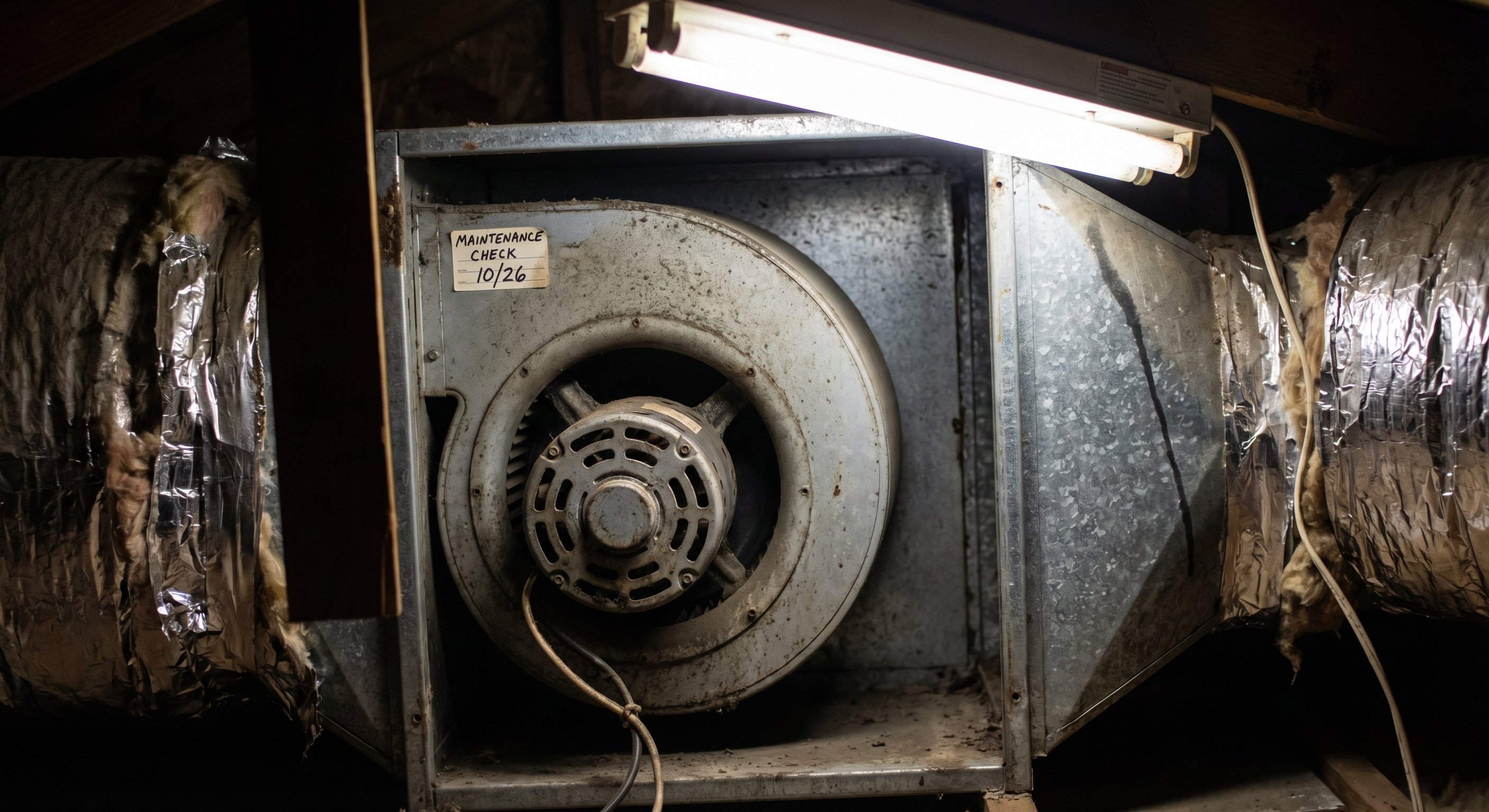
Your AC is running but barely any air comes out of the vents. Or you hear a loud humming noise from the attic or the indoor unit. Maybe you caught a burning smell before the system shut itself off.
That is the blower motor. And if you are reading this in a Phoenix summer, you need it fixed yesterday.
The blower motor is the fan that pushes cooled air through your ductwork and into every room of your house. When it fails, your compressor keeps running outside but nothing moves inside. The coil freezes up, the system overheats, and you are sitting in 105-degree heat waiting for a repair truck.
Here is what it actually costs to replace one in the Phoenix metro area, why it happens more often here than almost anywhere else, and how to decide whether a motor replacement is worth it or whether the whole system needs to go.
Why Blower Motors Die Faster in Phoenix
The national average lifespan for an AC blower motor is 15 to 20 years. In Phoenix, you are lucky to get 10 to 12.
The reason is runtime. A typical AC in a mild climate runs 1,000 to 1,500 hours per year. In the Phoenix metro, that number hits 2,500 to 3,000. June through September, your system runs 16 to 20 hours a day. That is not occasional use. That is industrial-duty cycling for four straight months.
Motor windings generate heat as a normal byproduct. When the air around the motor is 80 degrees, like a basement in Chicago, the motor stays cool enough to last decades. When it is 150 degrees, like a Phoenix attic in August, the motor runs at the edge of its thermal limit every single day.
Desert dust makes it worse. Fine particulates get pulled into the return air, past the filter, and into the blower wheel. Dust buildup creates imbalance, imbalance creates vibration, and vibration kills bearings. A motor that should spin smoothly for years shakes itself to death instead.
Hard water is another Phoenix factor. The evaporator coil sits directly above the blower in most air handlers. Scale builds up on the coil over years, and flakes drop onto the blower wheel. More weight, more imbalance, shorter motor life.
According to ENERGY STAR maintenance guidelines, regular inspections and filter changes can extend equipment life by 25 to 40 percent. In Phoenix, even well-maintained systems face heat and runtime stresses that wear out every electrical component faster than the national average.
What You Will Actually Pay (2026 Phoenix Pricing)
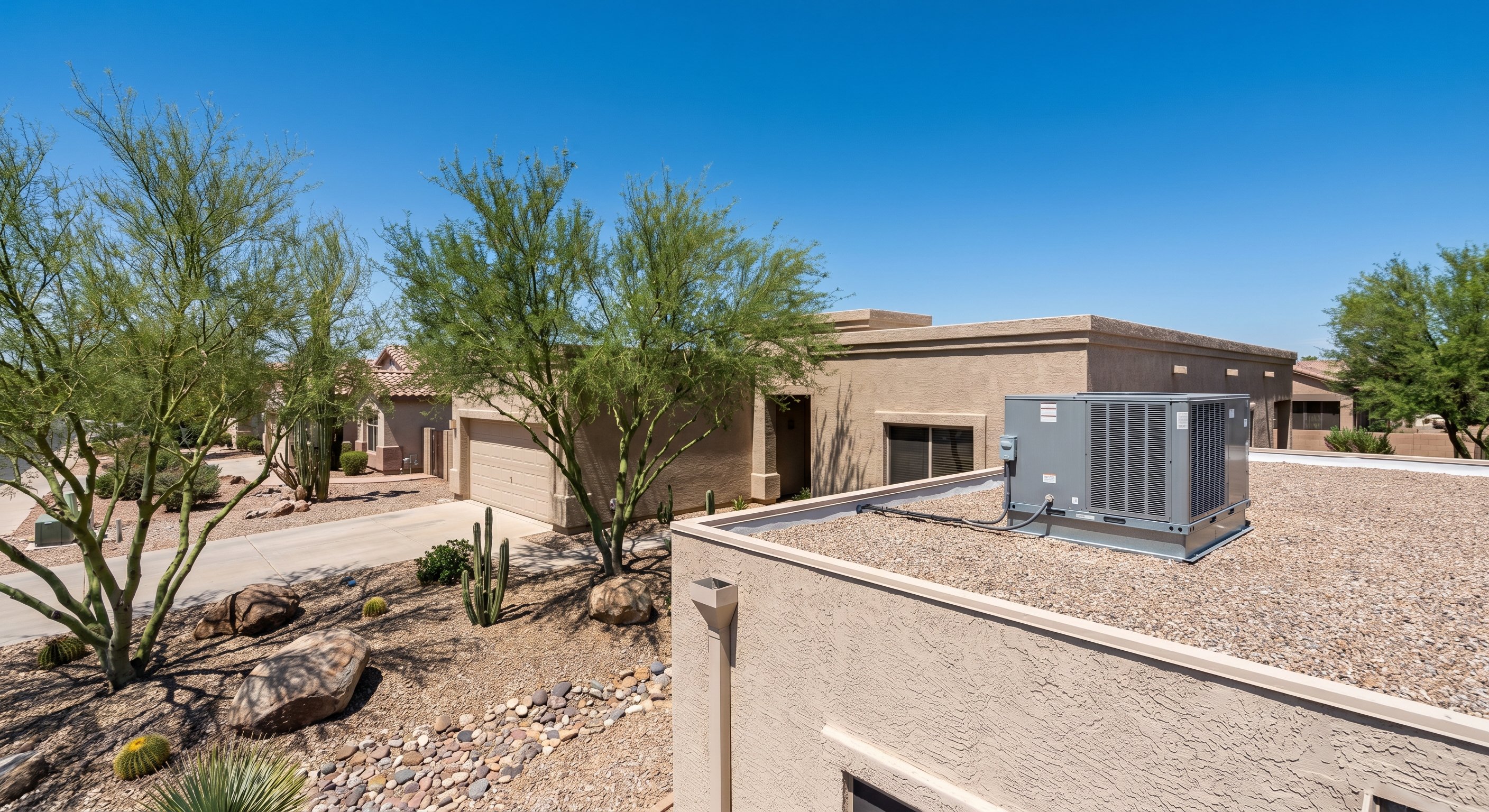
Blower motor replacement costs break down into two categories: the motor itself and the labor to install it. Here are the real numbers for the Phoenix metro area.
Standard PSC Motors: $350 to $600 Installed
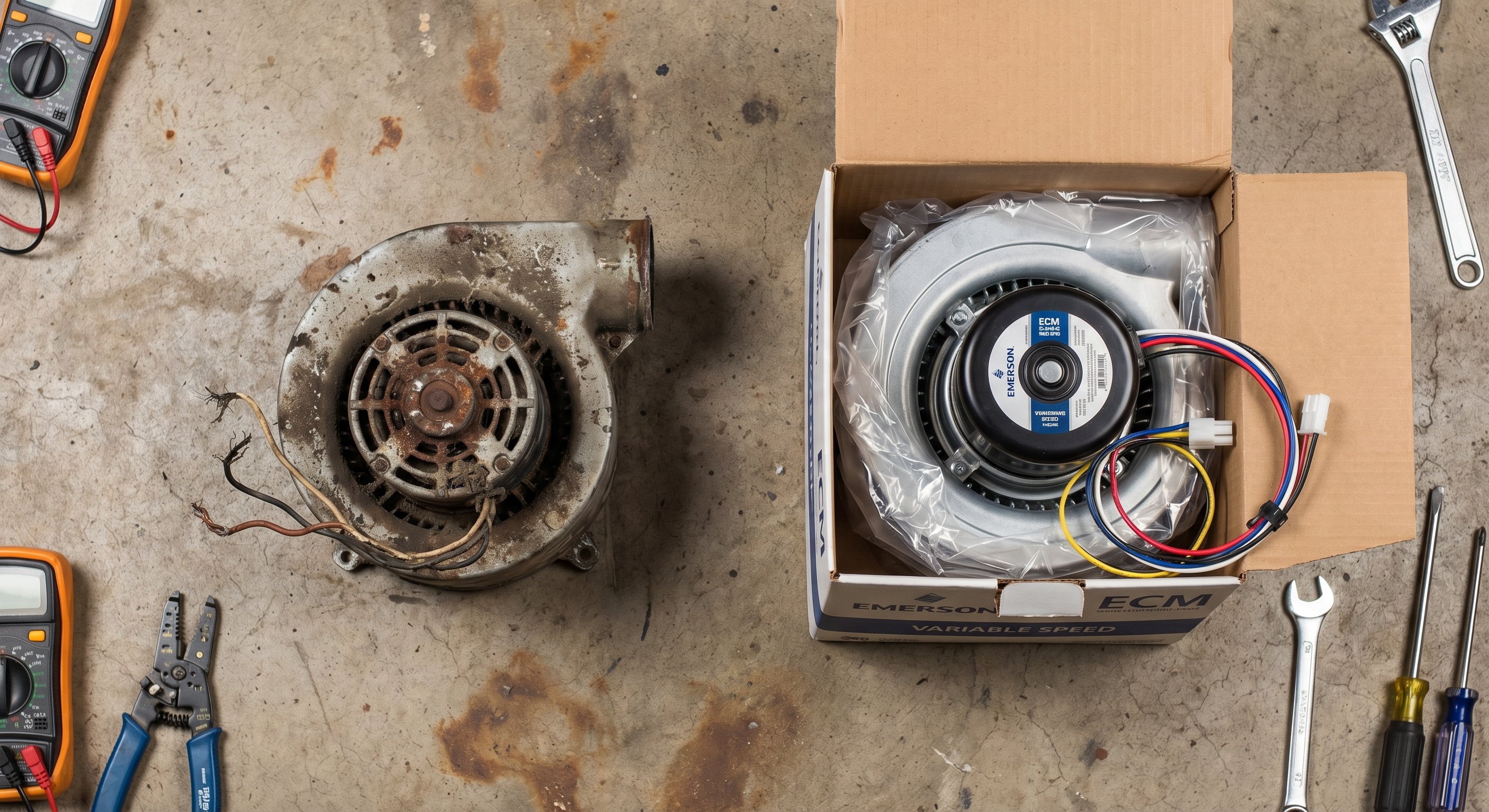
PSC (Permanent Split Capacitor) motors are the single-speed workhorses found in most systems installed before 2015. One speed, full blast, whenever the thermostat calls for cooling.
- Motor cost: $100 to $250 (part only)
- Labor: $200 to $400 (1 to 3 hours depending on accessibility)
- Total installed: $350 to $600
If you have an older system with a PSC motor and it fails, this is the straightforward repair. The part is common, the job is well-understood, and most HVAC companies in the Valley stock these motors on their trucks during summer.
Variable-Speed ECM Motors: $800 to $1,200 Installed
ECM (Electronically Commutated Motor) blowers are found in higher-efficiency systems and most units installed after 2015. They ramp up gradually instead of slamming on at full speed, use less electricity, run quieter, and dehumidify better. They also cost three to four times more to replace.
- Motor cost: $400 to $800 (part only)
- Labor: $300 to $500 (longer install, more complex wiring)
- Total installed: $800 to $1,200
The price stings, but ECM motors last longer when properly maintained because they do not run at full speed all the time. Less heat generation inside the motor means less thermal stress on the windings. In Phoenix, that matters.
What Changes the Price
Several factors push the final bill up or down:
Accessibility. Ground-level closet or garage? Lower labor. A 140-degree attic with six inches of clearance? Higher end. Rooftop package units (common on flat-roof homes in Tempe and Mesa) fall in the middle.
Brand. Carrier, Trane, and Lennox OEM motors cost more than generics. A generic PSC motor works fine in most systems, but some manufacturers use proprietary connectors that require the OEM part.
Warranty coverage. Many AC units come with 10-year parts warranties when registered. If yours is active, the motor may be free. You pay labor only, bringing the total to $200 to $400.
Emergency timing. A Friday night motor failure in July costs more than the same repair on a Tuesday in October. Emergency service calls in Phoenix during peak summer add $150 to $300. If you can survive with fans for a day, waiting saves real money.
Signs Your Blower Motor Is Failing
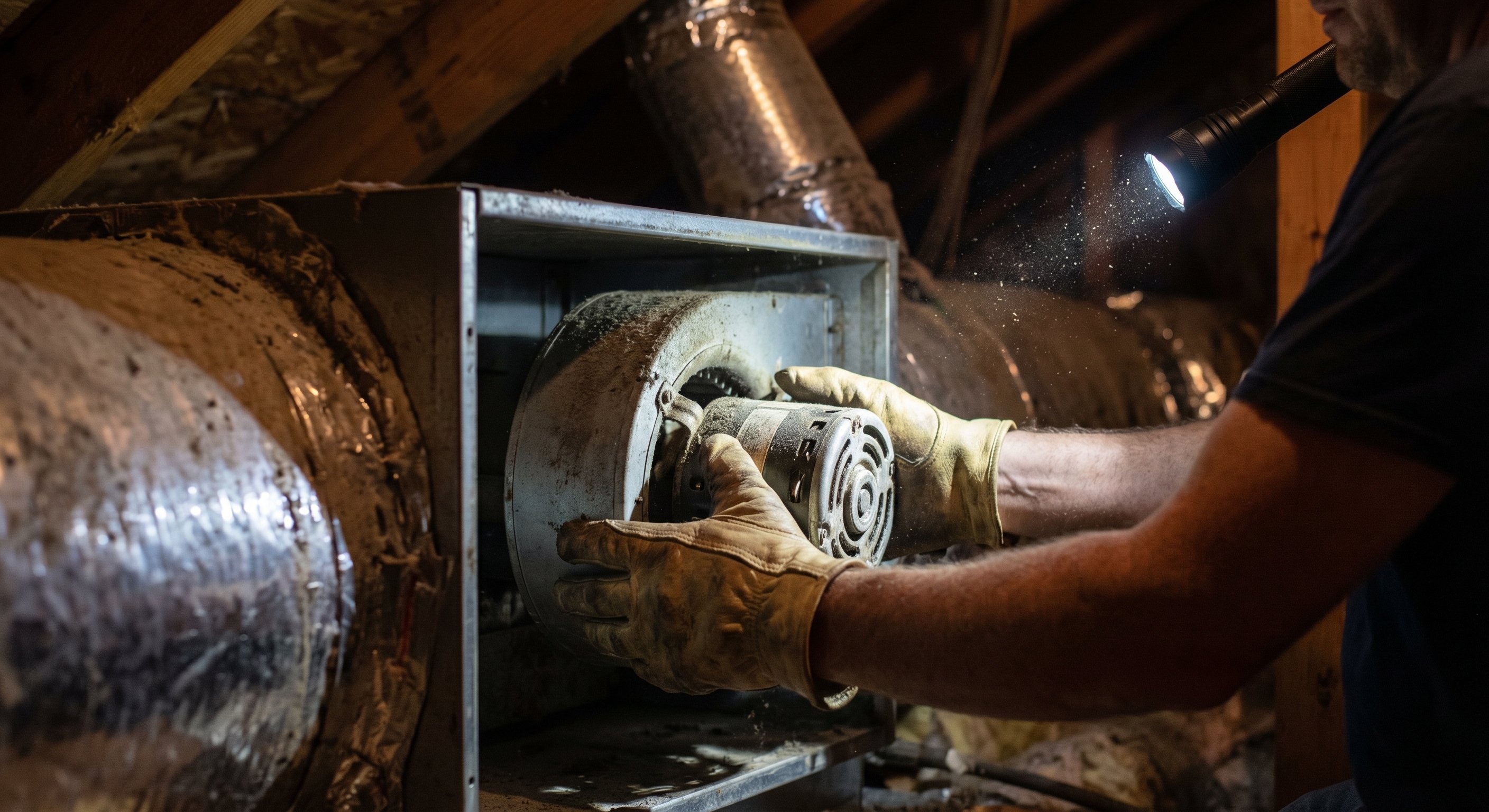
Most blower motors give warning signs for weeks or months before they quit.
Weak airflow from vents. The AC runs but air feels weak at the registers. This can also be a dirty filter or frozen coil, but if you have checked those, the blower motor is next.
Loud humming or buzzing. A motor struggling to start will hum. The capacitor may be failing, and the motor cannot overcome initial resistance. Turn the system off. Running it in this state burns out the windings and turns a $150 capacitor repair into a $600 motor replacement.
Burning smell. Electrical burning odor from the vents means the motor windings are overheating. Shut the system off. Not a "wait and see" situation.
Short cycling. If the AC runs for a few minutes, shuts off, then kicks back on, the motor may be overheating and tripping its thermal overload. This cycle kills the motor fast.
Higher electric bills. A failing motor draws more amperage. Your APS or SRP bill creeps up even though your thermostat settings have not changed. A $40 to $80 unexplained jump in summer is a red flag.
The U.S. Department of Energy recommends annual HVAC inspections that include checking motor amperage draw. A motor pulling more amps than its rating is a motor in trouble.
Skip the dealer markup
See What a New AC Actually Costs
AC Rebel shows you the real equipment price — no sales pitch, no inflated quote. Get matched with a licensed installer and keep $3,000–$5,000 in your pocket.
Get My Direct Price →Motor Replacement vs Full System Replacement
This depends on system age, motor type, and what else is wearing out.
Replace the motor if:
- Your system is under 10 years old and the compressor, coils, and condenser are solid
- You have a parts warranty that covers the motor
- The rest of the system has been well-maintained
- The repair costs under $600 for a PSC motor
Replace the system if:
- Your AC is over 12 years old (in Phoenix, that is the functional equivalent of a 20-year-old system anywhere else)
- The compressor has had issues or the coils are corroded
- You are still running on R-22 refrigerant (banned for new production since 2020, expensive to recharge)
- The motor is an ECM costing $1,000+ and the system is already past its prime
The math is straightforward. A new AC system in Phoenix runs $6,000 to $12,000. If you are facing a $1,000 motor repair on a 14-year-old system with corroded coils and R-22 refrigerant, you are throwing money at a unit that will need another expensive repair within two years.
How to Avoid Getting Overcharged
Blower motor replacements are among the most commonly upsold HVAC repairs.
Get the motor part number before the technician leaves. Every blower motor has a model number on the housing. Look it up online to see the retail price. That gives you negotiating room on the total quote.
Ask whether a generic replacement works. Many systems accept generic PSC motors that cost $100 to $150. If a contractor quotes $800 for a "specialty motor" on a 2010 Goodman, that is a markup red flag.
Get two quotes minimum. Even in July. The gap between a fair quote and a gouged one can be $300 to $500. Worth a day of fans.
Watch for the capacitor upsell. The blower motor runs through a capacitor, and a failed capacitor mimics motor failure. A reputable tech will test the capacitor before condemning the motor.
If you want to see what a fair price looks like before you talk to contractors, get a free instant quote at acrebel.com. No markup, no sales pressure. Just the real cost of equipment so you know what you should be paying.
Preventing Premature Blower Motor Failure
The best motor replacement is the one you never need.
Change your filter monthly during summer. Not every three months. Monthly. Phoenix dust loads filters faster than almost anywhere in the country. A clogged filter forces the blower to work harder, run hotter, and die sooner.
Get annual maintenance that includes blower wheel cleaning. A technician cleans the dust buildup, checks bearings, and measures amp draw. Takes 30 minutes and adds years to the motor's life.
Keep the area around your air handler clear. Do not block return air with boxes or stored items. Restricted airflow makes the blower work harder.
Listen to your system. New sounds are never good sounds. A rattle, a new hum, a change in airflow tone are early warnings. Catching a problem at the capacitor stage is a $150 fix. Waiting until the motor burns out costs $600 to $1,200.
Frequently Asked Questions
Q: How long does a blower motor replacement take?
A properly equipped HVAC technician can replace a standard PSC blower motor in 1 to 2 hours. ECM motors take 2 to 3 hours due to more complex wiring and programming. If the technician needs to order a specialty motor, expect a return visit the next day.
Q: Can I replace an AC blower motor myself?
Technically yes, but it is not recommended for most homeowners. The job involves disconnecting and reconnecting electrical wiring, removing and reinstalling the blower wheel (which can be heavy and awkward), and ensuring proper rotation direction and amperage draw. Done wrong, you can damage the new motor, the control board, or both. The labor cost is the cheaper mistake to make.
Q: Will a new blower motor lower my electric bill?
If your old motor was failing and drawing extra amperage, yes. Replacing a struggling PSC motor with a fresh one can reduce the motor's power consumption by 20 to 40 percent. If you upgrade from PSC to ECM, the savings are even more significant. ECM motors use 60 to 80 percent less electricity than PSC motors at typical operating speeds, according to the Air-Conditioning, Heating, and Refrigeration Institute.
Q: Is it normal for a blower motor to fail after only 5 or 6 years in Phoenix?
It is on the early side but not unusual. A system that runs 18 hours a day for four months straight accumulates runtime equivalent to 8 to 10 years in a milder climate in just 5 or 6 Phoenix years. Poor maintenance (infrequent filter changes, no annual tune-ups) accelerates this further.
Q: Does homeowner's insurance cover blower motor replacement?
Generally no. Homeowner's insurance covers sudden, accidental damage (like a tree falling on your unit), not wear and tear or mechanical failure. If you have a home warranty, the blower motor may be covered under the HVAC system provision, subject to your deductible and service call fee.
Q: What is the warranty on a replacement blower motor?
Most replacement blower motors come with a 1-year parts warranty from the installer. Some contractors offer 2-year warranties on parts and labor. OEM motors installed under the original system warranty follow that warranty's terms, which may be up to 10 years if the system was registered when installed.
Q: Should I upgrade from a PSC motor to an ECM motor when replacing?
It depends on your system. If your current system uses a PSC motor, the control board may not support an ECM upgrade without additional modifications. If the system supports it, the upgrade is worth it for the energy savings alone. ECM motors run quieter, use less electricity, and last longer in high-heat environments like Phoenix.
Ready to stop overpaying?
See Your Direct AC Price in 2 Minutes
Skip the dealer. Buy your AC unit at direct pricing and pay a vetted local installer only for the installation. No sales calls. No hidden markup. Most homeowners save $3,000–$5,000+ compared to a traditional quote.
Get My Direct Price — No Credit Card2-minute quote · Licensed installers · 10-year warranty options