
Trane vs Carrier vs Lennox in Arizona: Which AC Brand Actually Performs in Phoenix Heat?

Trane vs Carrier vs Lennox in Arizona: Which AC Brand Actually Performs in Phoenix Heat?
TL;DR: All three brands work in Arizona, but they are not equals. Trane's XR15 and XV20 models handle Phoenix heat reliably with strong compressor durability. Carrier's Infinity series offers the best smart thermostat integration but at a premium price. Lennox's SL280V excels in efficiency but demands more maintenance in desert conditions. For most Phoenix homeowners buying at the Good/Better/Best tiers on AC Rebel, the Better tier Trane or Carrier delivers the best balance of performance and price. The direct pricing advantage on AC Rebel means you skip the $3,000-$5,000 dealer markup on any of these brands.
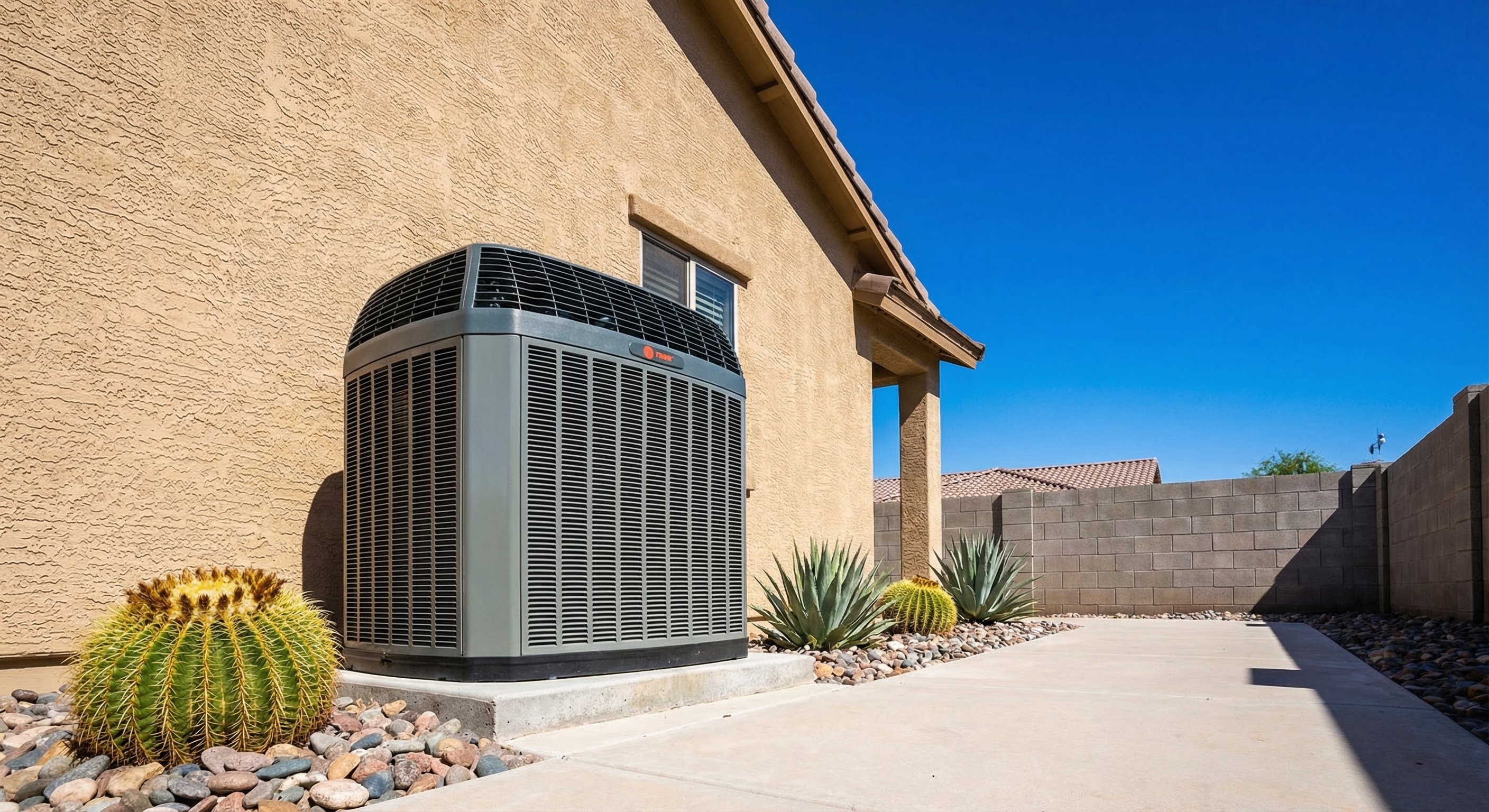
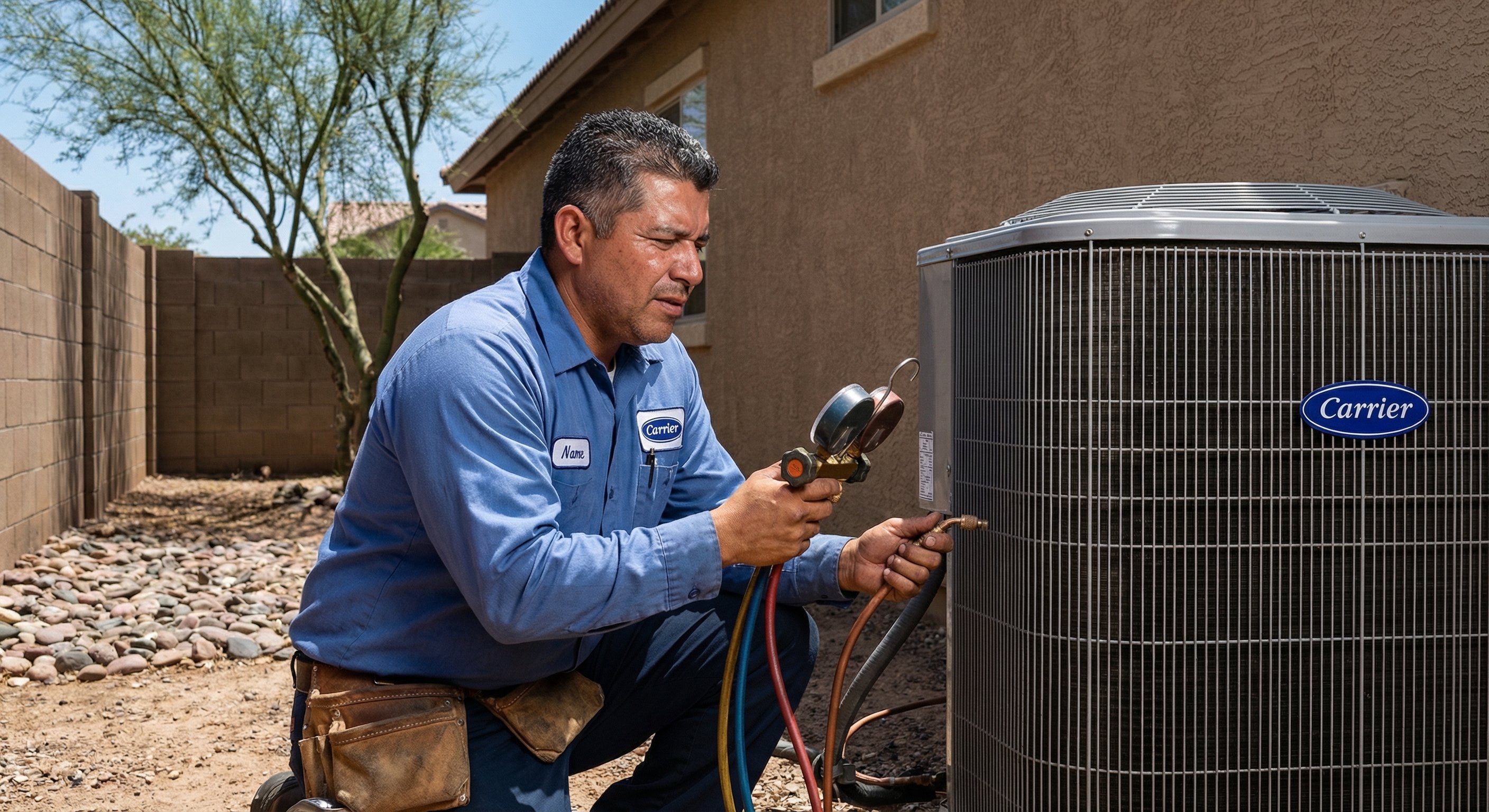
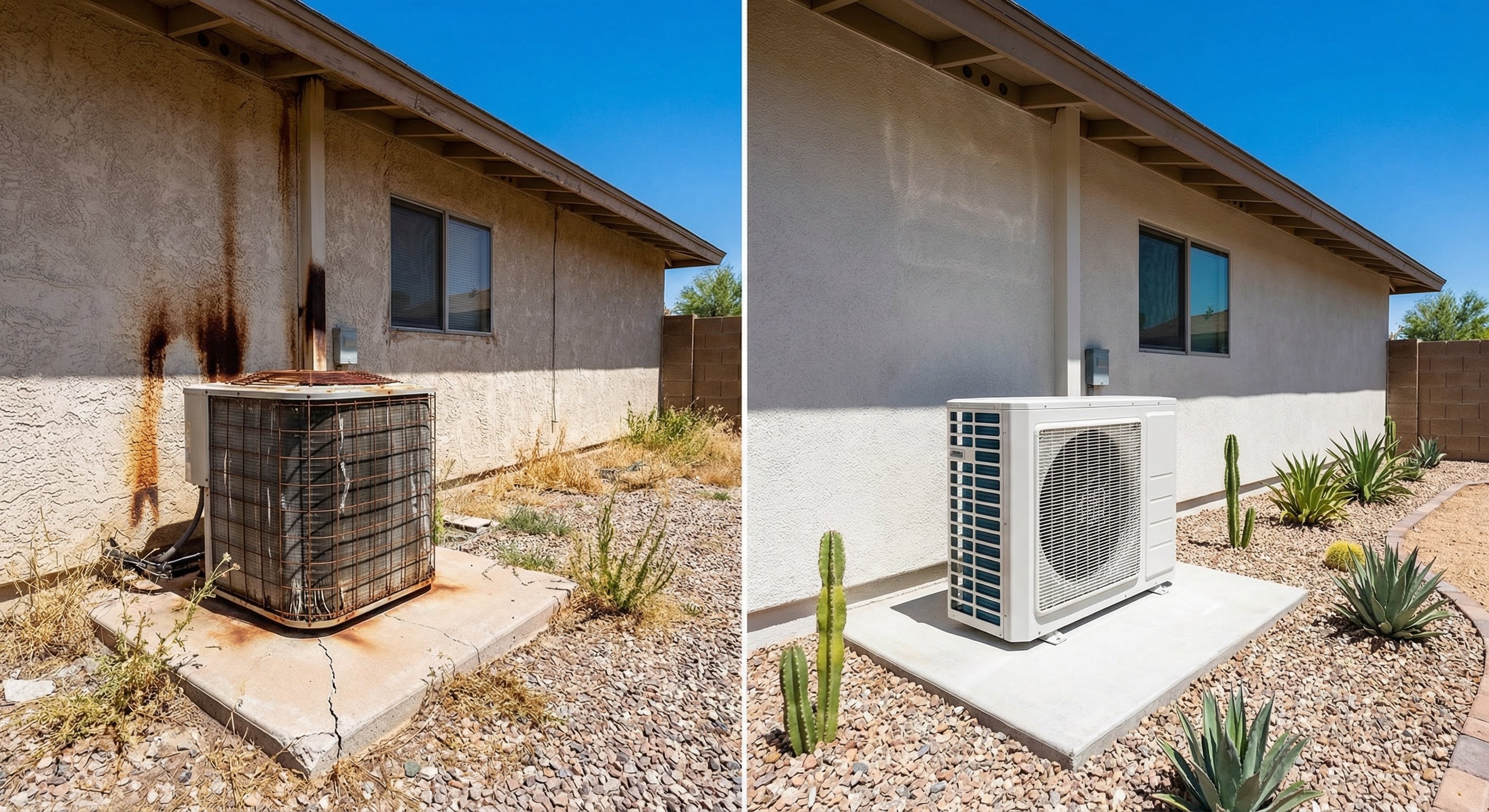
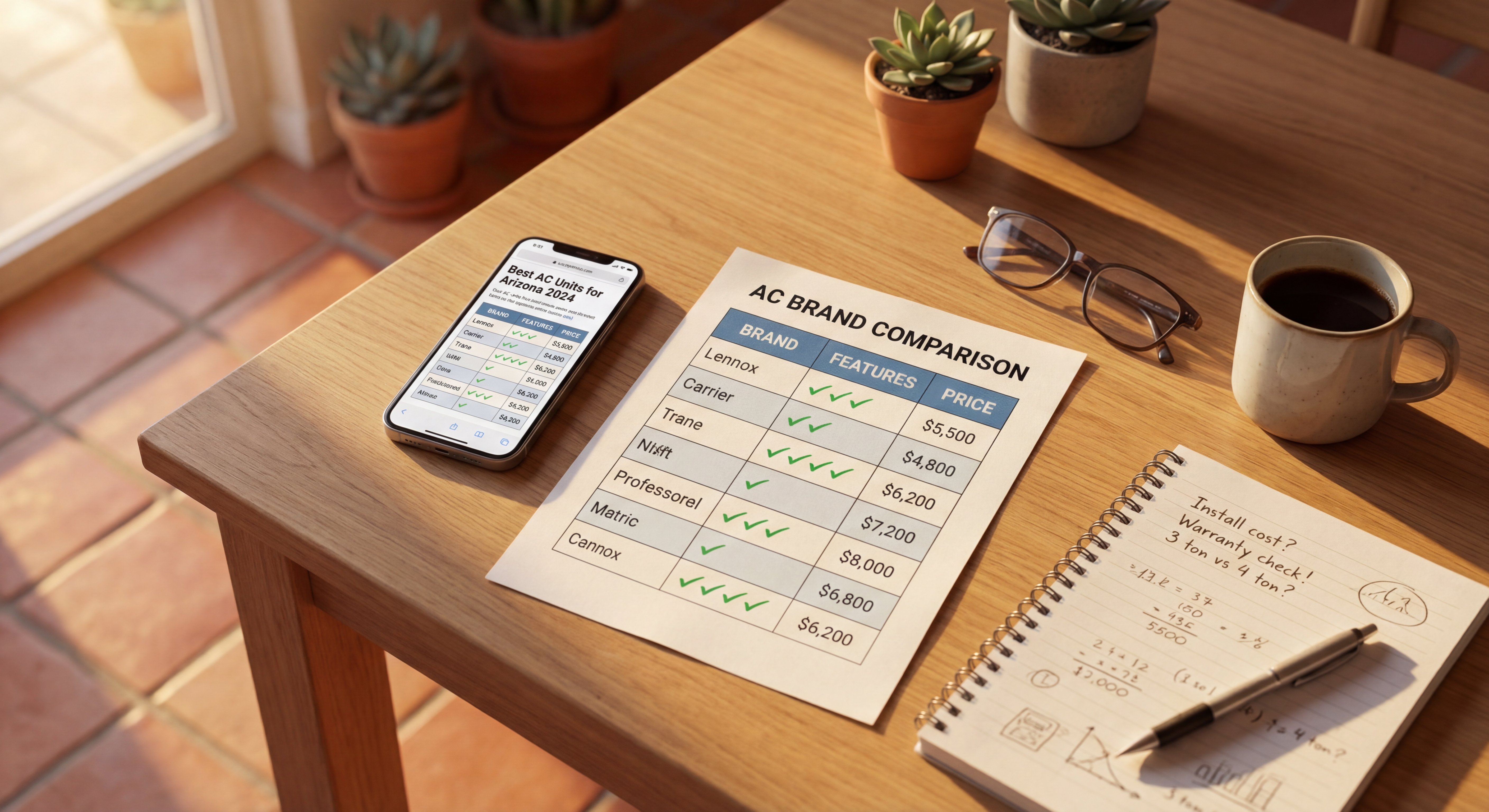

If you are buying a new AC unit in the Phoenix metro area, you have probably narrowed your search to three names: Trane, Carrier, and Lennox. They dominate the premium residential market, every contractor stocks them, and every dealer swears their preferred brand is the best.
Here is what the sales pitch does not tell you.
This is not a spec-sheet comparison. This is what we see when we install these units year after year, what fails in years 3-7 in the Arizona heat, and what each brand actually costs when you factor in the unit price, installation, and long-term repair trajectory.
Why Arizona Heat Breaks Some AC Brands Faster Than Others
Phoenix does something to air conditioners that most other climates do not. The combination of sustained temperatures above 110 degrees for weeks at a time, low humidity that accelerates wear on certain components, and the dust and mineral load from the desert environment creates a specific set of failure modes.
The compressor is where most brands show their first cracks. A compressor in a system running at 115 degrees ambient temperature for 18 hours a day operates under significantly more stress than the same unit in, say, San Diego. Manufacturers know this, which is why Trane, Carrier, and Lennox all sell Arizona-specific model lines. Not all of them are actually different inside.
The coil materials matter more here than almost anywhere else. Aluminum coils with microchannel technology hold up well to desert dust. Copper tube-and-fin coils are more tolerant of the mineral deposits left by hard water when irrigation systems hit outdoor units. Some models handle one better than the other.
Refrigerant pressure is another factor most homeowners never think about. At 115 degrees outside, your system is running at pressures that would be unusual in a northern climate. Models not specifically designed for high-heat operation will short-cycle more often, cool less effectively in the afternoon peak heat, and wear out faster.
That context matters as we go through each brand.
Trane: The Durable Workhorse for Phoenix Homes
Trane has the best reputation in the Arizona installer community for one reason: the compressor holds up. Their Scroll compressors in the mid-tier and above models are among the most reliable units we install, particularly in the XV20 and XR17 series.
Trane's aluminum microchannel coils are a genuine advantage in the Phoenix environment. Desert dust does not corrode them the way it can affect traditional fin-and-tube coils, and they are lighter, which matters for rooftop installs on older Mesa and Chandler homes where the roof structure was not designed for heavy loads.
The XR15 is the entry point that actually works in Arizona heat. The SEER rating is solid without the extreme efficiency claims that sometimes mask reliability compromises. We see fewer callbacks on XR15 installs in Scottsdale and Gilbert than almost any other brand-model in the same price tier.
The XV20 is the premium choice if you want variable-speed everything. The Climatuff compressor modulates smoothly rather than cycling on and off, which means less stress on the components and more consistent temperature in multi-story homes in Glendale and Peoria where hot and cold spots are a chronic complaint.
Where Trane falls short: the价格 (price). Trane is consistently the most expensive option in any comparable tier, and the build quality advantage does not always scale with the price jump. Theentry-level Trane models are not dramatically better than Carrier equivalents, but they cost more.
Also: Trane's warranty process is contractor-friendly, not always homeowner-friendly. If something fails, the labor reimbursement process is slower than Carrier's, which can mean longer wait times for repairs.
What you pay for a Trane on AC Rebel: The XR15 3-ton runs around $2,800-$3,200 before installation. The XV20 3-ton runs $4,200-$4,800. Compare that to the $9,000-$14,000 a Phoenix dealer charges for the same units with a 40 percent markup added.
Carrier: The Smart Home Choice With a Premium
Carrier built its reputation on the Infinity series, and for Phoenix homeowners who want smart thermostat integration, the Infinity control system is genuinely good. The AI-driven comfort features actually work rather than being marketing language, modulating airflow and compressor speed based on learned patterns rather than simple scheduling.
The Carrier 24ABC6 Puron Advanced (their R-410A alternative) is a solid mid-tier unit that handles Arizona heat well. The compressor is reliable, the coil construction is durable, and the availability of parts is excellent because Carrier has the largest market share of the three brands. Finding a qualified Carrier technician in Surprise or Goodyear is easier than finding a qualified Trane or Lennox specialist.
Carrier's Cor insulation on the coil is worth noting for Phoenix applications. The epoxy coating resists the corrosive effects of the mineral-laden dust that gets blown into outdoor units during our dust storms in June and July. It is not a dramatic difference, but over 8-10 years, it shows up in the coil condition at inspection time.
The main complaint with Carrier in Arizona is the pricing tier above the mid-range. The Infinity series is excellent, but the installed cost including the dealer markup regularly hits $12,000-$16,000 for a 3-ton system in Chandler or Tempe. The performance advantage over the mid-tier Carrier does not justify that delta for most homeowners.
What you pay for a Carrier on AC Rebel: The 24ABC6 3-ton runs about $2,600-$3,000 before installation. The Infinity 24ANB1 3-ton runs $4,000-$4,600. Again, the dealer markup on the Infinity in Phoenix typically adds $4,000-$6,000 on top of those numbers.
Skip the dealer markup
See What a New AC Actually Costs
AC Rebel shows you the real equipment price — no sales pitch, no inflated quote. Get matched with a licensed installer and keep $3,000–$5,000 in your pocket.
Get My Direct Price →Lennox: The Efficiency Leader With a Tradeoff
Lennox makes the most efficient residential AC units in the industry, and the SL280V is a genuinely impressive piece of engineering. The variable-speed compressor and advanced heat exchange design deliver the highest SEER ratings of the three brands, which matters for Phoenix homeowners on SRP or APS time-of-use pricing plans where reducing peak-hour consumption directly lowers your bill.
If you are in a newer Scottsdale or Gilbert home with a tight envelope and good ductwork, a Lennox system will outperform Trane or Carrier on efficiency. The delta is real and shows up in the summer utility bill.
Here is the tradeoff, and it is a real one for Arizona conditions: Lennox units run harder to achieve that efficiency. The engineering that delivers top-tier SEER ratings means the system operates at higher internal pressures and runs closer to its thermal limits during peak Phoenix heat. That is fine if the unit is perfectly maintained, but desert dust, missed filter changes, and the occasional irrigation overspray all push a Lennox system toward the edge faster than a Trane operating at lower internal temperatures.
The other issue is maintenance requirements. Lennox systems need more frequent coil cleaning and filter changes to maintain efficiency in the Phoenix environment. If you are the type of homeowner who changes the filter every 3-4 months, a Lennox will work well for you. If you are more likely to forget for 6-8 months, a Trane or Carrier in the same tier will outlast it.
Lennox also has the smallest dealer network in the Phoenix metro area. Finding a qualified Lennox installer in Buckeye, Avondale, or Queen Creek can be harder than finding a Trane or Carrier specialist, which matters when you need emergency service in July.
What you pay for a Lennox on AC Rebel: The SL280V 3-ton runs $3,000-$3,600 before installation. The top-tier XP25 3-ton runs $5,000-$5,800. Compare that to $11,000-$16,000 installed through a traditional Lennox dealer in the Phoenix area.
The Direct Pricing Advantage Changes the Math
Before we get into the recommendation, let us talk about what AC Rebel actually does and why it matters for this comparison.
The reason this comparison matters is not just performance. It is price. The traditional HVAC distribution chain adds 40-60 percent to the cost of every Trane, Carrier, and Lennox unit before it reaches your home. A 3-ton Carrier Infinity that costs $4,200 at the distributor becomes a $11,500 installed price on a Phoenix dealer's quote. That markup is not about the unit being more expensive to install. It is the dealer margin.
On AC Rebel, you buy the unit at direct pricing. The installation is handled by a vetted local contractor in your area. The total installed cost for a 3-ton premium system from any of these three brands typically runs $7,000-$9,500 on AC Rebel, compared to $11,000-$16,000 through a traditional dealer.
That $3,000-$6,000 difference is not small print. It shows up in your financing terms, your monthly payment, and how much home improvement budget you have left for the other things a Phoenix summer demands.
The Recommendation: What We Actually Install
Having installed all three brands extensively in the Phoenix market, here is how we think about them.
For most homeowners in the Phoenix metro area, we recommend the mid-tier Trane (XR17 or XR15) or the Carrier 24ABC6. Both handle Arizona heat without the extreme efficiency tradeoffs of the Lennox entry models and without the price premium of the top-tier Infinity or XV20.
Specifically:
- Single-story home in Mesa, Chandler, or Gilbert with a 3-ton cooling load: Trane XR15 or Carrier 24ABC6. Both will run reliably for 12-15 years with normal maintenance.
- Multi-story home with inconsistent cooling: Trane XV20. The variable-speed compressor modulation matters more in two-story layouts where hot and cold zones are chronic.
- Newer home with time-of-use utility pricing (SRP or APS): Lennox SL280V. The efficiency advantage pays back over 5-7 years if your usage patterns align with peak/off-peak pricing.
- Older home with marginal ductwork: Avoid Lennox. The efficiency engineering requires well-sealed ducts to deliver the rated performance. Trane or Carrier mid-tier is more forgiving.
One thing we do not recommend: buying the top-tier model from any brand at a traditional dealer markup. The performance delta between a $4,200 Carrier Infinity and a $9,500 dealer-installed Infinity is not $5,300 worth of better cooling. It is the same unit with the same components. Buy the unit at direct pricing and invest the difference in a good installation contractor, proper duct sealing, or a professional calibration.
What About SEER Ratings in Arizona?
The efficiency conversation changes in Phoenix compared to national averages. The EPA's ENERGY STAR guidelines and the SEER rating system were developed with national climate data, which includes a lot of mild-weather regions. Arizona skews the numbers.
A 21 SEER unit does not use 21 percent less electricity than a 17 SEER unit in Phoenix. The relationship is more complex because our cooling season is longer, our peak temperatures are higher, and the humidity profile is different from what the SEER formula assumes.
What matters more than SEER in a Phoenix-specific calculation:
- High temperature performance rating (HSPF in heat pumps, but also the AHRI cooling performance rating at 95 degrees and 115 degrees)
- Compressor technology (scroll compressors outperform reciprocating in sustained high-heat operation)
- Coil material and design for desert dust resistance
- Variable-speed vs single-stage in multi-story homes with zoning challenges
For most Phoenix homeowners, a 16-18 SEER unit from Trane or Carrier is the practical sweet spot. The premium for anything above 20 SEER rarely pays back within the unit's service life in Arizona specific usage conditions, unless you are specifically on a time-of-use pricing plan where shifting consumption matters.
Check the ENERGY STAR certified cooling equipment list to verify the efficiency ratings of specific models before purchasing.
FAQ: Common Questions About Trane, Carrier, and Lennox in Arizona
Q: Which brand lasts longest in Phoenix heat?
Trane has the best long-term compressor reliability in the Phoenix market based on installer callback rates and warranty claim frequency. Carrier is close behind. Lennox units last well if maintained diligently, but desert conditions push them harder than the other two brands at comparable efficiency levels.
Q: Is Lennox worth the higher price in Arizona?
Only if you are on a time-of-use pricing plan and your home has good ductwork. The efficiency advantage is real but narrow in the Phoenix climate. For most homeowners, the mid-tier Trane or Carrier delivers 90 percent of the performance at 70 percent of the price.
Q: What is the best AC brand for a 20-year-old Mesa home?
For older Mesa homes with potentially undersized or aging ductwork, the Carrier 24ABC6 or Trane XR15 is the most forgiving choice. Both handle duct imperfections better than the high-efficiency Lennox models, which require well-sealed ducts to deliver rated performance.
Q: Do Trane, Carrier, or Lennox offer better warranties in Arizona?
All three offer 10-year parts warranties on their mid-tier and above models. Trane has a slight edge in compressor coverage terms, but the practical difference is minimal if you register the equipment promptly and have the installation done by a licensed contractor. On AC Rebel, the 10-year warranty is included with every unit.
Q: Can I install a Lennox SL280V in Buckeye without voiding the warranty?
No legitimate contractor will install a Lennox unit in a way that voids the warranty, and the warranty is tied to the equipment registration, not the installer. As long as the installation is permitted, inspected, and done by a licensed Arizona contractor, the warranty is valid regardless of brand.
Q: Why do dealers push one brand over others?
Dealer preference is usually driven by margin, not performance. Some dealers make more profit on Trane. Others have an exclusive arrangement with Carrier. Lennox sometimes offers the best dealer incentives in a given quarter. The brand your contractor recommends tells you more about their margin structure than about what is best for your home.
Q: Should I buy the extended warranty through the dealer?
No. The manufacturer warranty is sufficient. Extended dealer warranties are where contractors recoup significant margin, and the coverage terms are often limited in ways that are not obvious until you file a claim. Buy the unit at direct pricing, register it with the manufacturer, and skip the extended warranty.
The brand matters less than most homeowners think. What matters more is buying at direct pricing, choosing a contractor who does accurate cooling load calculations for your specific home, and maintaining the system twice a year with desert-specific filter and coil care. Any of the three brands in the mid-tier and above will serve a Phoenix home well for 12-15 years if those basics are in place.
Get a free instant quote at acrebel.com to see Trane, Carrier, and Lennox units at direct pricing without the dealer markup.
Ready to stop overpaying?
See Your Direct AC Price in 2 Minutes
Skip the dealer. Buy your AC unit at direct pricing and pay a vetted local installer only for the installation. No sales calls. No hidden markup. Most homeowners save $3,000–$5,000+ compared to a traditional quote.
Get My Direct Price — No Credit Card2-minute quote · Licensed installers · 10-year warranty options