
Evaporator Coil Replacement Cost in Phoenix (2026 Real Pricing)

Evaporator Coil Replacement Cost in Phoenix (2026 Real Pricing)
TL;DR: Replacing an evaporator coil in Phoenix costs between $1,400 and $3,800, with most homeowners paying around $2,000 to $2,500. The price depends on your system's tonnage, whether you need a cased or uncased coil, and how accessible your air handler is. If your system is over 10 years old, replacing the entire AC unit often makes more financial sense than swapping just the coil, especially given how hard Phoenix summers are on HVAC equipment.
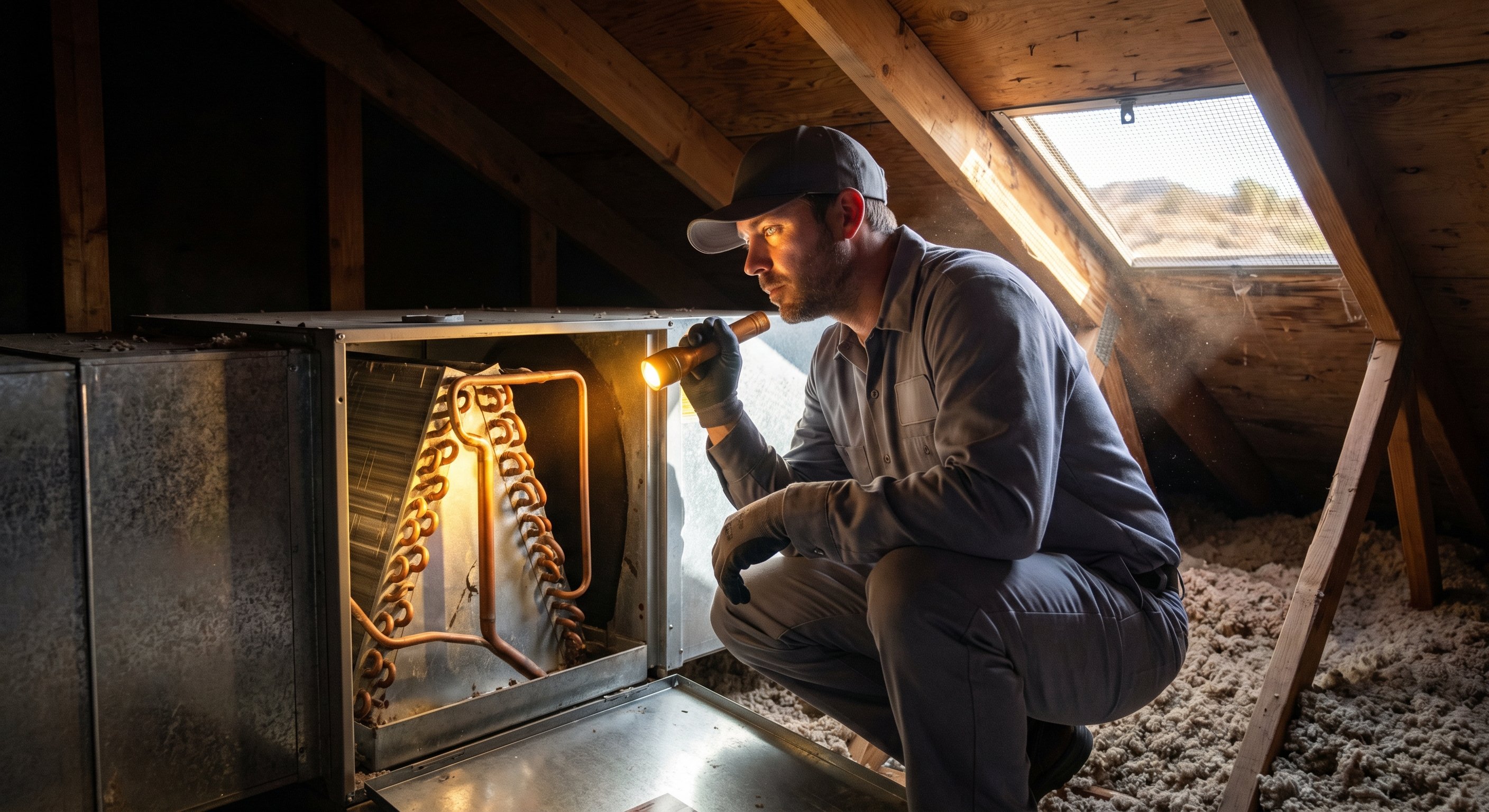
Your AC is blowing warm air. The tech crawls into your attic, pulls the panel off the air handler, and comes back down with the verdict: "Your evaporator coil is shot."
Then comes the number. Sometimes $1,800. Sometimes $3,500. And suddenly you're standing in your own kitchen trying to figure out if you're being taken for a ride or if this is just what it costs.
Here is what the evaporator coil actually does, what it really costs to replace one in the Phoenix metro, and how to decide whether fixing it is smarter than biting the bullet on a new system.
What the Evaporator Coil Does (And Why It Matters)
The evaporator coil is the indoor half of your AC system. It sits inside your air handler, usually in the attic, a closet, or the garage. Refrigerant flows through it, and as warm air from your house passes over the fins, the coil absorbs the heat. That is how your air gets cool.
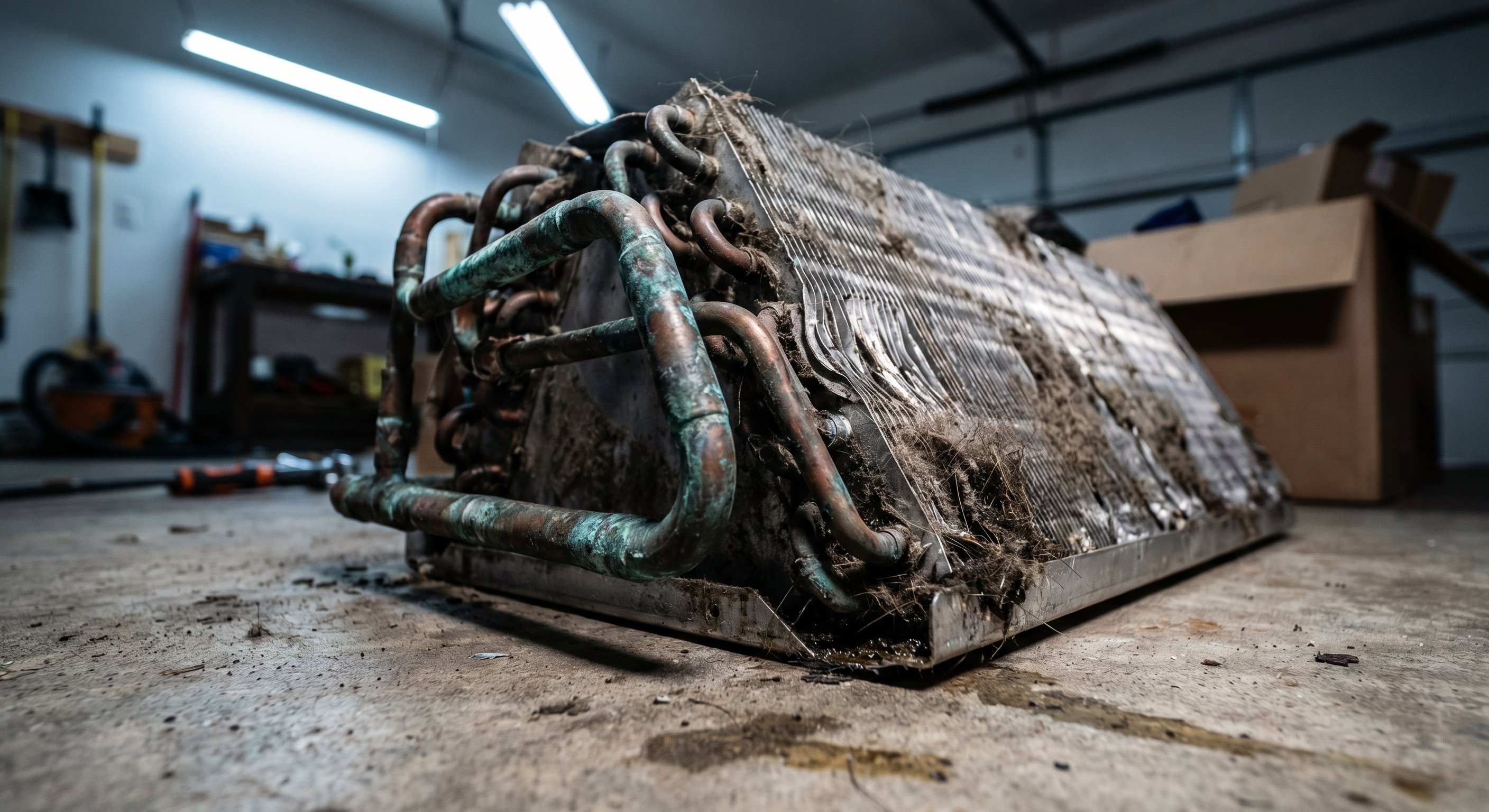
When the coil is clean and intact, the process works. When it is corroded, leaking, or caked in grime, your AC either stops cooling, freezes up, or runs nonstop trying to hit your thermostat set point.
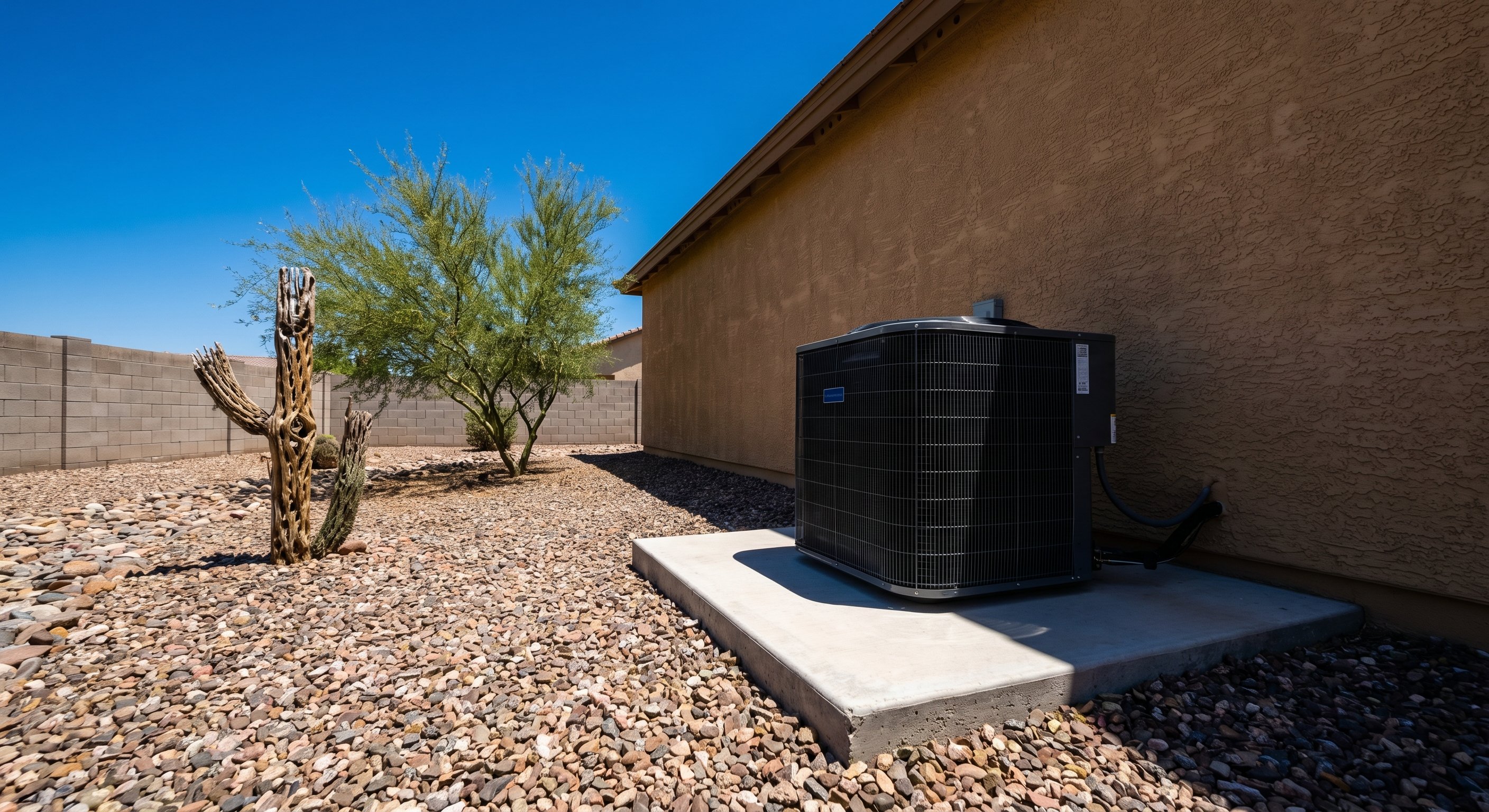
In Phoenix, the evaporator coil works harder than almost anywhere else in the country. Your system runs 2,000-plus hours per cooling season compared to 600-800 hours in a mild climate. That is three times the wear on the same component. Add desert dust that slips past filters and hard water scale from evaporator condensation, and you have a part that ages fast.
Signs Your Evaporator Coil Is Failing
Most homeowners do not know the coil is the problem until a tech tells them. But there are warning signs:
- Warm air from vents when the outdoor unit is running. The coil is not absorbing heat anymore.
- AC runs constantly without reaching the set temperature. The coil is partially functional but struggling.
- Ice on the refrigerant lines or the indoor coil itself. A leaking coil drops refrigerant pressure, which causes freezing.
- Hissing or bubbling sounds near the air handler. That is refrigerant escaping through a pinhole leak in the coil.
- Higher electric bills with no change in usage. A degraded coil forces the compressor to work harder, pulling more amps.
If you notice two or more of these, get a tech out before the coil fails completely. Running a system low on refrigerant will eventually kill the compressor, and that repair makes a coil replacement look cheap.
Evaporator Coil Replacement Cost in Phoenix (2026 Numbers)
Here is what you should expect to pay in the Phoenix metro area, based on actual contractor pricing and parts costs:
| Coil Type | Typical Cost Range | Best For |
|---|---|---|
| Uncased coil (2-3 ton) | $1,400 to $2,200 | Older systems, budget-conscious |
| Uncased coil (3.5-5 ton) | $1,800 to $2,800 | Larger homes, common Phoenix size |
| Cased coil (2-3 ton) | $1,800 to $2,600 | Newer systems, better fit |
| Cased coil (3.5-5 ton) | $2,200 to $3,800 | Full-size Phoenix homes |
What drives the price:
Coil size and type. Most Phoenix homes need a 3-ton to 5-ton coil. A 2,400 sq ft home in Chandler with west-facing windows typically runs a 3.5 or 4-ton system. The bigger the coil, the more copper and aluminum, the higher the cost. Cased coils cost more because the sheet metal cabinet has to match your air handler.
Accessibility. A first-floor closet air handler takes two to three hours. A 140-degree attic in August costs more because the job takes longer. Attic installations are common in Phoenix and add $200 to $500.
Refrigerant type. If your system uses R-410A (anything installed after 2010), refrigerant costs are manageable. If you have an older R-22 system, you cannot legally recharge it with R-22 anymore, and converting to a replacement refrigerant adds cost. At that point, replacing the whole system is almost always the better call.
Brand matching. The replacement coil should match your outdoor unit's brand and capacity. A mismatched coil reduces efficiency and can cause compressor problems. The Air Conditioning Contractors of America (ACCA) publishes standards for proper system matching.
Skip the dealer markup
See What a New AC Actually Costs
AC Rebel shows you the real equipment price — no sales pitch, no inflated quote. Get matched with a licensed installer and keep $3,000–$5,000 in your pocket.
Get My Direct Price →Why Evaporator Coils Fail Faster in Phoenix
Phoenix destroys HVAC components faster than most of the country. The evaporator coil is no exception. Three things work against it:
Desert dust. Phoenix gets haboobs. Fine particulate matter gets into everything, including your ductwork and air handler. Even with good filters, some dust reaches the coil and accumulates on the fins. Over time, that accumulation traps moisture, which corrodes the aluminum fins and eventually the copper tubing.
Extended runtime. From May through October, your AC runs most of the day. That is five to six months of near-continuous operation. The coil is constantly cycling refrigerant, condensing moisture, and absorbing heat. In a place like Denver, the coil gets a break at night. In Phoenix in July, it does not.
Hard water and condensation. The evaporator coil produces condensation as it cools indoor air. In the Phoenix metro, the water that condenses on the coil carries minerals from the air and from your home's water vapor. Over years, those minerals build up as scale on the coil fins, reducing heat transfer and accelerating corrosion. Homes in Mesa and Gilbert with particularly hard water see this issue more often.
According to the U.S. Department of Energy, regular coil cleaning and maintenance can extend system life, but in Phoenix's climate, even well-maintained coils face a shorter lifespan than the national average.

The Real Decision: Replace the Coil or Replace the System
This is where most homeowners get stuck. The tech just quoted $2,500 for a coil replacement, and you are wondering if that money is better spent on a new system.
Here is the framework for making that call:
Replace just the coil if:
- Your system is under 8 years old
- The compressor and outdoor condenser are in good shape
- The coil failure is isolated (not caused by systemic refrigerant leaks)
- You plan to stay in the home for less than 3 more years
- The total repair cost is under 30% of a full system replacement
Replace the whole system if:
- Your system is 10 years or older
- The coil is not the first major repair this year
- Your SEER rating is 13 or below (current minimum is 14, and 15+ makes more sense in Phoenix)
- You are still on R-22 refrigerant
- The repair costs more than 40% of a new system price
The math is straightforward. A new coil on a 12-year-old system in Scottsdale buys you maybe two to three more years before something else fails. The compressor, the condenser fan motor, the blower, all aging. You are putting $2,500 into a system that will need $3,000 more in repairs before it dies completely.
A new 3.5-ton system installed in Phoenix runs $6,000 to $10,000 depending on brand and SEER rating. If the coil replacement is $2,500 and your system is over 10 years, you are spending 25-40% of replacement cost on a part that will outlive the system it is installed in.
What the Replacement Process Looks Like
If you decide to replace the coil, here is what happens:
Diagnosis (1-2 hours). The tech confirms the coil is the problem, checks for additional leaks, and measures the existing coil to order the correct replacement.
Parts ordering (1-5 days). The coil has to match your system. Most Phoenix contractors stock common sizes, but odd configurations or older brands can take a few days.
Installation (3-6 hours). The tech recovers the refrigerant, removes the old coil, installs the new one, brazes the copper connections, pressure-tests the system, pulls a vacuum, and recharges with fresh refrigerant.
Cleanup and test. The system runs through a full cycle to verify cooling performance and check for leaks.
The whole job is typically done in one visit once the part is in stock. You should have AC again the same day.
How to Avoid Getting Overcharged
Some contractors see coil replacement as an opportunity to upsell. A few things to watch for:
Get a second quote. Always. Coil replacement pricing varies wildly between contractors in the Phoenix metro. The same job can range from $1,600 at an independent shop to $3,200 at one of the big name companies with the wraparound truck wraps and commissioned salespeople.
Ask for the coil part number. A genuine OEM coil for a 3-ton Carrier system costs $400 to $700 wholesale. If the contractor is quoting $2,800 for the job, ask how much of that is parts versus labor. Labor should be $800 to $1,500 for a straightforward coil swap.
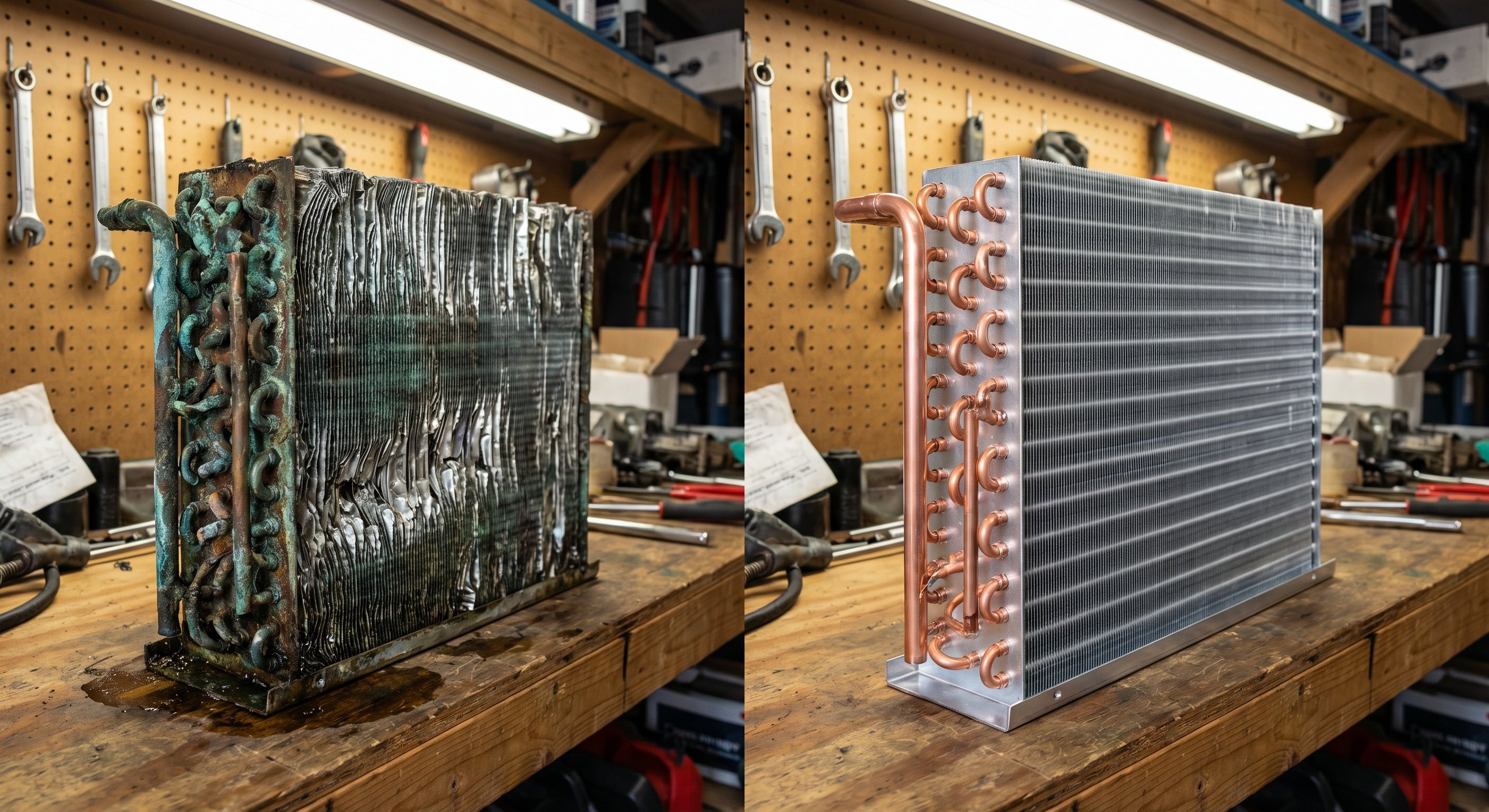
Do not let anyone talk you into a full system replacement without explaining why. If your system is 6 years old and the coil failed, replacing the whole system is almost never the right call. If it is 14 years old, it probably is. Ask the tech to show you the failed coil and explain exactly what went wrong.
Verify the replacement coil matches your outdoor unit. An unmatched coil will cool your home, but it will not do it efficiently. The AHRI Directory lets you verify that the indoor coil and outdoor unit are rated to work together.
When to Consider AC Rebel Instead
If the coil quote comes in at $2,000 or more and your system is pushing 10 years, it is worth comparing that repair cost against a new unit at direct pricing.
AC Rebel sells AC units at near-wholesale prices, cutting out the dealer markup that adds $3,000 to $5,000 to traditional contractor quotes. You buy the unit, then choose a vetted local installer. For a lot of Phoenix homeowners facing a coil replacement on an aging system, the math works out: spend $2,500 fixing an old system, or spend $6,000 to $7,000 on a brand new unit that will last another 10-12 years.
Get your free instant quote at acrebel.com and see what direct pricing actually looks like before you commit to the repair.
Frequently Asked Questions
Q: How long does an evaporator coil last in Phoenix?
In Phoenix, evaporator coils typically last 8 to 12 years. The national average is 12 to 15 years, but extended summer runtime, desert dust, and hard water scale shorten coil life in Arizona. Regular maintenance, including annual coil cleaning, can push that closer to the 12-year mark.
Q: Can I replace just the evaporator coil without replacing the whole AC?
Yes, you can replace the coil independently. The coil is a separate component from the compressor, condenser, and blower. It only makes financial sense if the rest of your system is in good condition and has several years of expected life remaining.
Q: Why is evaporator coil replacement so expensive?
The coil itself costs $400 to $900 wholesale, but the labor is intensive. The tech has to recover refrigerant, cut and braze copper lines, pressure-test, vacuum, and recharge the system. In Phoenix, attic installations add time and difficulty. Contractor overhead and markup also contribute.
Q: Can a dirty evaporator coil be cleaned instead of replaced?
If the coil is dirty but not leaking, professional cleaning costs $150 to $400 and can restore performance. But if the coil has a refrigerant leak, corrosion damage, or bent fins that restrict airflow, cleaning will not fix it. Replacement is the only reliable fix for a leaking coil.
Q: Will a new evaporator coil lower my electric bill?
If your old coil was degraded or leaking, yes. A new coil restores proper heat transfer, which means your compressor does not have to work as hard. In Phoenix, where summer electric bills can exceed $400 a month with an aging system, a properly functioning coil can save $30 to $80 per month during peak cooling season.
Q: What happens if I do not replace a failed evaporator coil?
Your AC will stop cooling effectively or stop cooling entirely. Running a system with a leaking coil forces the compressor to work harder, which can cause it to fail. A compressor replacement costs $2,000 to $4,000. Ignoring a bad coil turns a $2,000 repair into a $4,000 to $10,000 problem.
Ready to stop overpaying?
See Your Direct AC Price in 2 Minutes
Skip the dealer. Buy your AC unit at direct pricing and pay a vetted local installer only for the installation. No sales calls. No hidden markup. Most homeowners save $3,000–$5,000+ compared to a traditional quote.
Get My Direct Price — No Credit Card2-minute quote · Licensed installers · 10-year warranty options