
AC Not Turning On in Phoenix? Here's What to Check Before You Call a Contractor

AC Not Turning On in Phoenix? Here's What to Check Before You Call a Contractor
TL;DR: If your AC will not turn on in Phoenix, check the breaker panel first. A tripped breaker is free to fix and common after a power surge or dirty filter causing overcurrent. If the breaker is fine, check the thermostat and capacitor. A dead thermostat runs $75-$175 to replace. A failed capacitor typically costs $250-$450 for the part alone, and a contractor visit on top of that. Get the diagnosis before agreeing to any replacement quote.
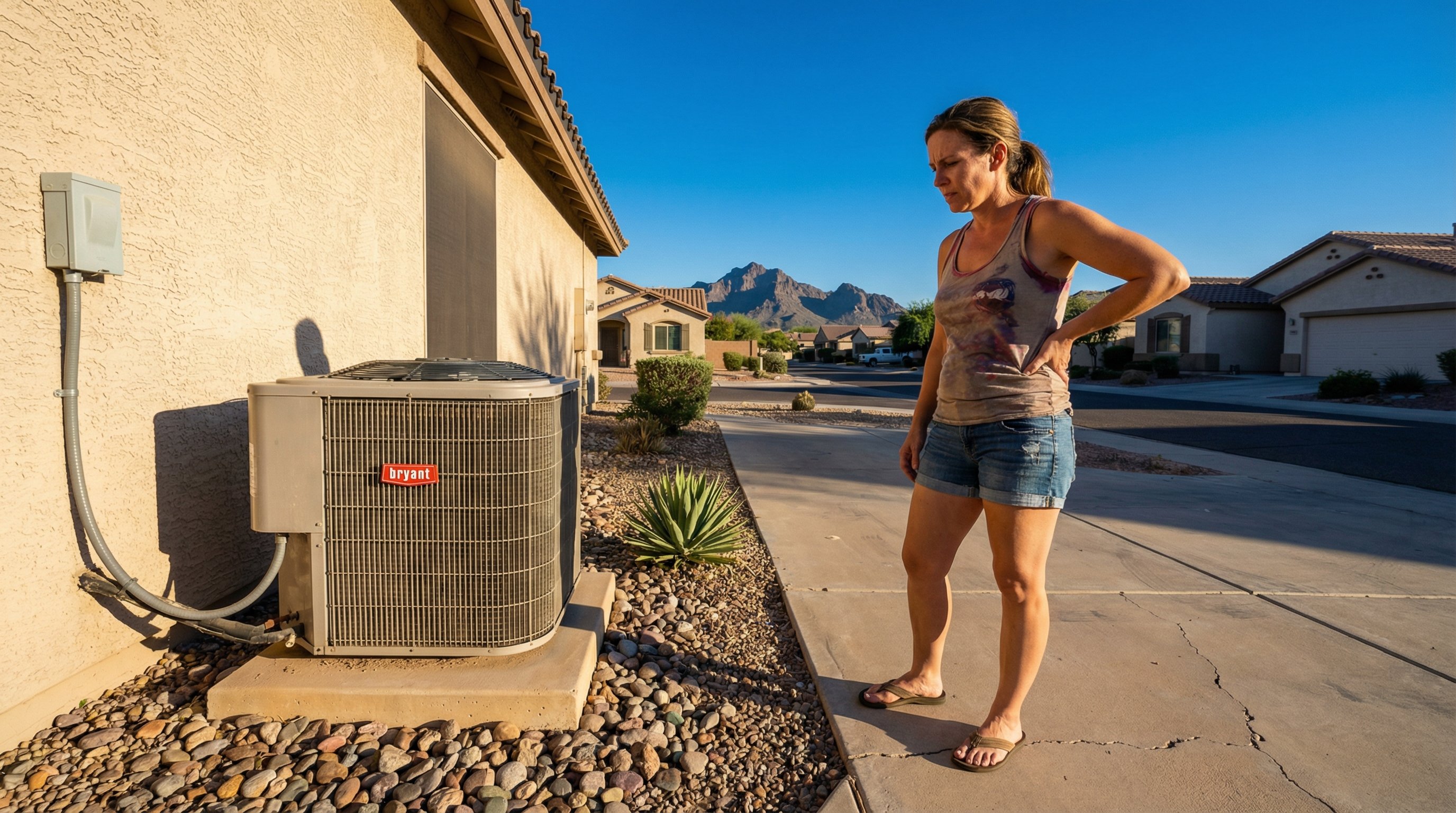
It is 6 p.m. on a Tuesday in July. The temperature outside is 106 degrees. You hit the thermostat to cool things down, and nothing happens. No fan. No compressor hum. No cool air in 10 minutes. Just hot silence.
This is one of the most stressful moments a Phoenix homeowner can face, and the response from most contractors is a same-day service call that starts at $149 just to show up and tell you what is wrong. Here is the thing: in the majority of cases, you can figure out what is wrong yourself in under 15 minutes. And in some cases, you can fix it without spending anything at all.
This guide covers every reason an AC does not turn on in Phoenix, in the order of likelihood and cost. Start at the top. Work your way down.
1. Check the Breaker Panel (Free)
The first thing to check is your electrical panel. Your AC unit draws a significant amount of current when it starts up. If something causes that draw to spike, the breaker trips to protect the circuit. It is a safety feature, not a failure.
In Phoenix, the most common triggers are:
A power surge from the grid. APS and SRP both experience voltage fluctuations, especially during monsoon season when dust storms knock out substations or when the grid is under heavy load in peak summer. A surge can trip your AC breaker even if nothing else is wrong.
A dirty air filter causing the blower to overdraw. This one surprises people. A clogged filter makes the blower motor work harder, which increases the amp draw on the entire system. Over time, that extra load can trip the breaker, particularly on older units.
Loose wire connection at the condenser. After years of thermal cycling (hot, cold, hot, cold, year after year), wire connections at the outdoor unit can loosen. A loose connection creates resistance, which creates heat, which increases current draw. The breaker trips before the wire overheats enough to cause a fire, but the result is the same: no AC.
How to check it: Walk to your electrical panel. Look for a breaker labeled "AC," "Air Conditioner," or a 30-amp or 40-amp double-pole breaker. If it is in the tripped position (between ON and OFF, or fully OFF), reset it by pushing it fully to OFF first, then back to ON. Wait 5 minutes before turning your thermostat to cool mode.
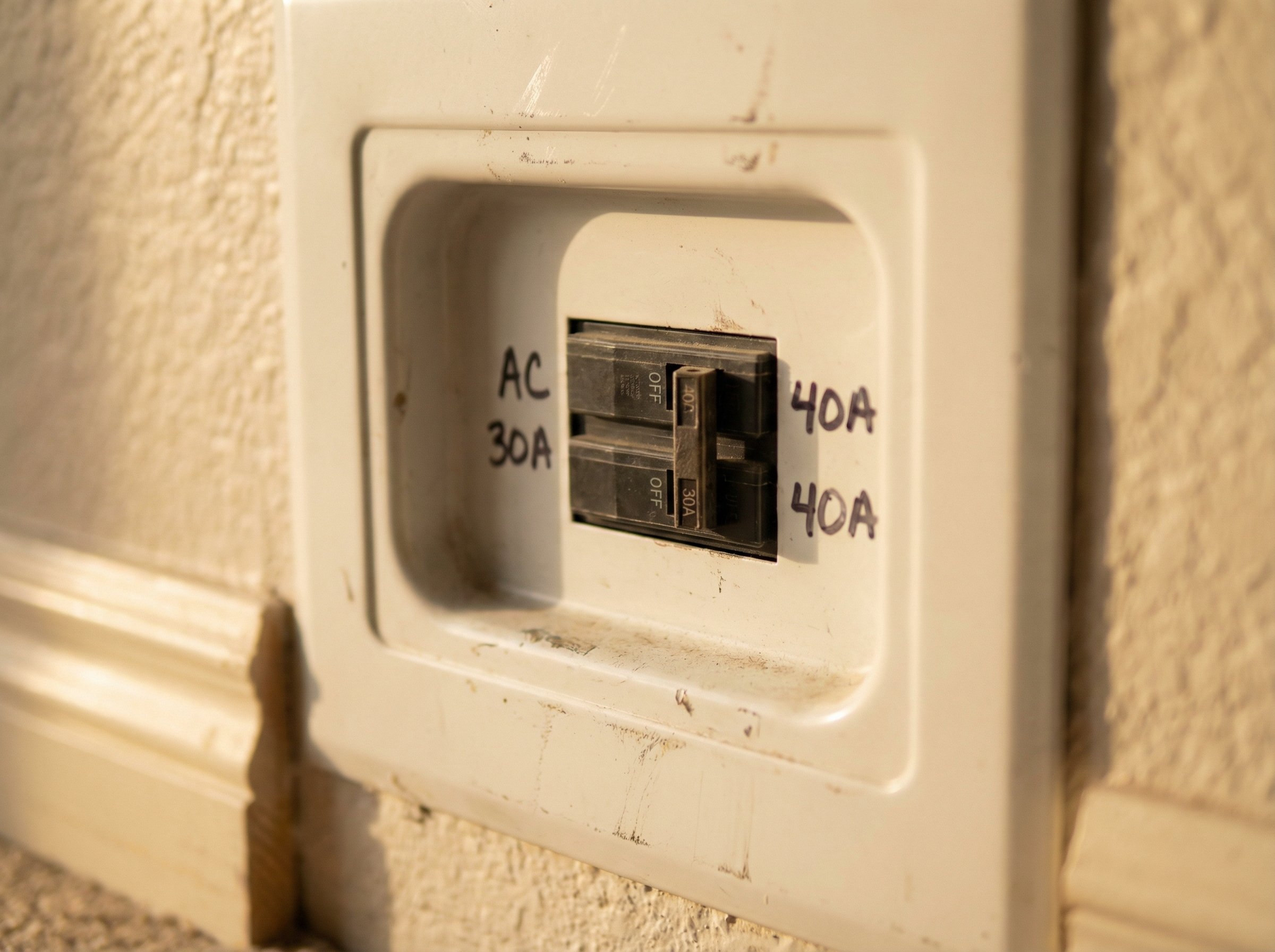
If the breaker trips again within minutes, stop resetting it. That means there is a fault downstream that needs professional diagnosis. Continuing to reset it risks damaging the compressor or wiring.
2. Check the Thermostat (Free to $175)
If the breaker holds and the AC still will not start, the next thing to rule out is the thermostat. This is especially relevant in Phoenix because the Nest and Ecobee market penetration here is high, and both are Wi-Fi-connected devices that can lose power, lose connectivity, or simply fail.
First: is the thermostat getting power? Look at the display. If it is blank, the batteries are dead or the C-wire connection failed. Most modern thermostats need a constant 24-volt supply. If yours runs on batteries alone and they are dead, the display dies and the AC never gets the signal to start.
Second: is the cooling signal actually sending? Set the thermostat to cooling mode, set it 5 degrees below room temperature, and listen carefully near the outdoor condenser. You should hear a click within 30 seconds, followed by the compressor starting. If you hear nothing, the signal is not reaching the condenser.
The fix: Replace the batteries first. If it is still blank, you likely need a new thermostat. A basic Honeywell or ecobee thermostat with professional installation runs $150-$350 total. The device itself is $50-$250 depending on the model. For Phoenix homes, the Google Nest Learning Thermostat (3rd generation) is a popular choice because it programs itself around your schedule and has strong Arizona heat tolerance, but any 24-volt thermostat will work for a standard split-system.
3. Check the Capacitor ($250-$450)
The capacitor is the most common electrical failure point in a Phoenix AC that will not start, and it is especially likely to fail in summer when the unit runs constantly in extreme heat.
A capacitor stores electrical energy and provides the starting jolt the compressor motor needs to turn on. Without it, the compressor cannot start, even if everything else is fine. The unit may run the fan (which has its own smaller capacitor) but the compressor sits silent.
Why capacitors fail in Phoenix: Heat. The average high in Phoenix from June through August is 104-115 degrees. The outdoor condenser sits in direct sun, on a concrete pad, surrounded by the heat radiating off your roof and driveway. Capacitors are rated for a certain number of operating hours, but Phoenix summers burn through that rating fast. A capacitor that might last 8-10 years in Denver lasts 4-6 years in Phoenix.
Signs your capacitor is failing (before it fails completely):
The AC takes longer than normal to start. You set the thermostat, hear a click, and then nothing for 10-15 seconds before the compressor finally kicks on. That delay is the capacitor struggling to gather enough charge.
The outdoor fan motor sounds different. Slower, or with a grinding sound on startup. The fan capacitor and compressor capacitor are different components, but they often fail around the same time on older units.
Your electric bill spikes without a corresponding increase in usage. A failing capacitor causes the compressor to draw more current to do the same work. That shows up on your APS or SRP bill.
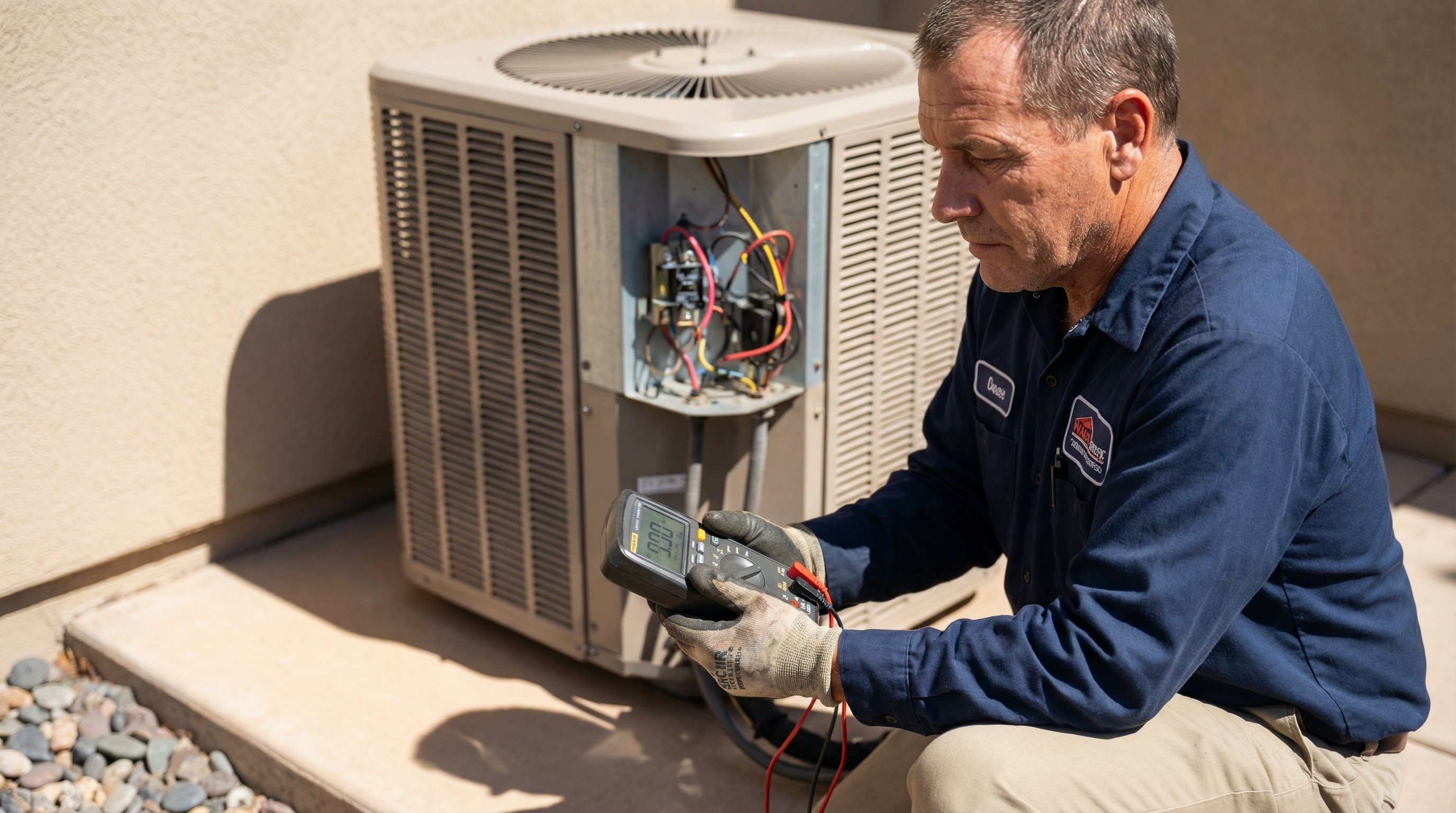
The fix: A new run capacitor for a standard 3-ton residential AC runs $30-$80 for the part. A dual run capacitor (which handles both the compressor and the fan in one unit) runs $40-$120. The labor to install it, if a contractor dispatches a technician, typically runs $200-$350 for the visit plus $50-$100 for the install itself. Total bill: $250-$450 depending on the contractor and whether they find anything else wrong while they are there.
Skip the dealer markup
See What a New AC Actually Costs
AC Rebel shows you the real equipment price — no sales pitch, no inflated quote. Get matched with a licensed installer and keep $3,000–$5,000 in your pocket.
Get My Direct Price →4. The Contactor: What It Is and Why It Matters ($150-$350)
Behind the capacitor, the contactor is the next most likely electrical culprit.
The contactor is an electrically-controlled switch that sends high-voltage power to the compressor and fan motor. When your thermostat sends a 24-volt signal, the contactor closes, and the 240-volt power flows to the compressor. When the thermostat satisfied the cooling demand, the contactor opens, and power cuts off.
In Phoenix, contactors fail primarily for two reasons:
Voltage spikes during monsoon season. When the power grid flickers or surges during a dust storm, the contactor contacts can pit and wear unevenly. Over time, that pitting creates inconsistent contact, and eventually the contactor fails to close fully.
Insects in the outdoor cabinet. This one is more common than most people think. Ants and beetles occasionally nest in the electrical compartment of the outdoor unit, particularly in the spring. They can short out the contactor coil or interfere with the contact surfaces.
The fix: A new contactor runs $75-$150 for the part. Labor to install it: $150-$250. A contractor dispatched for a "no-start" call will often replace the contactor and capacitor together, since if one has failed, the other is probably not far behind on an older Phoenix unit.
5. The Compressor: The Expensive One
If you have checked the breaker, the thermostat, and the capacitor, and the unit still will not start, you may be looking at a compressor failure. This is the most expensive component in the system.
A failed compressor typically costs $2,500-$4,500 to replace, including labor, refrigerant, and miscellaneous parts. At that point, you are close enough to full replacement cost that most contractors will recommend a new unit instead. For context, a new 3-ton system at Good-tier on AC Rebel runs $2,800 for the unit, and installed cost through a licensed Phoenix contractor typically runs $7,500-$10,500 total.
Signs of compressor failure:
The unit makes a clicking sound but the compressor never engages. A hard, single click followed by silence is often the compressor internal overload protection tripping. Three or four clicks in sequence is the compressor trying to start and failing.
The breaker trips as soon as the compressor tries to engage. If the compressor is seized, it draws locked-rotor amps, which can be 5-6 times normal running current. The breaker trips immediately.
You hear a grinding or rattling noise from the outdoor unit. This is internal mechanical failure, not something that will resolve on its own.
When to Replace Instead of Repair
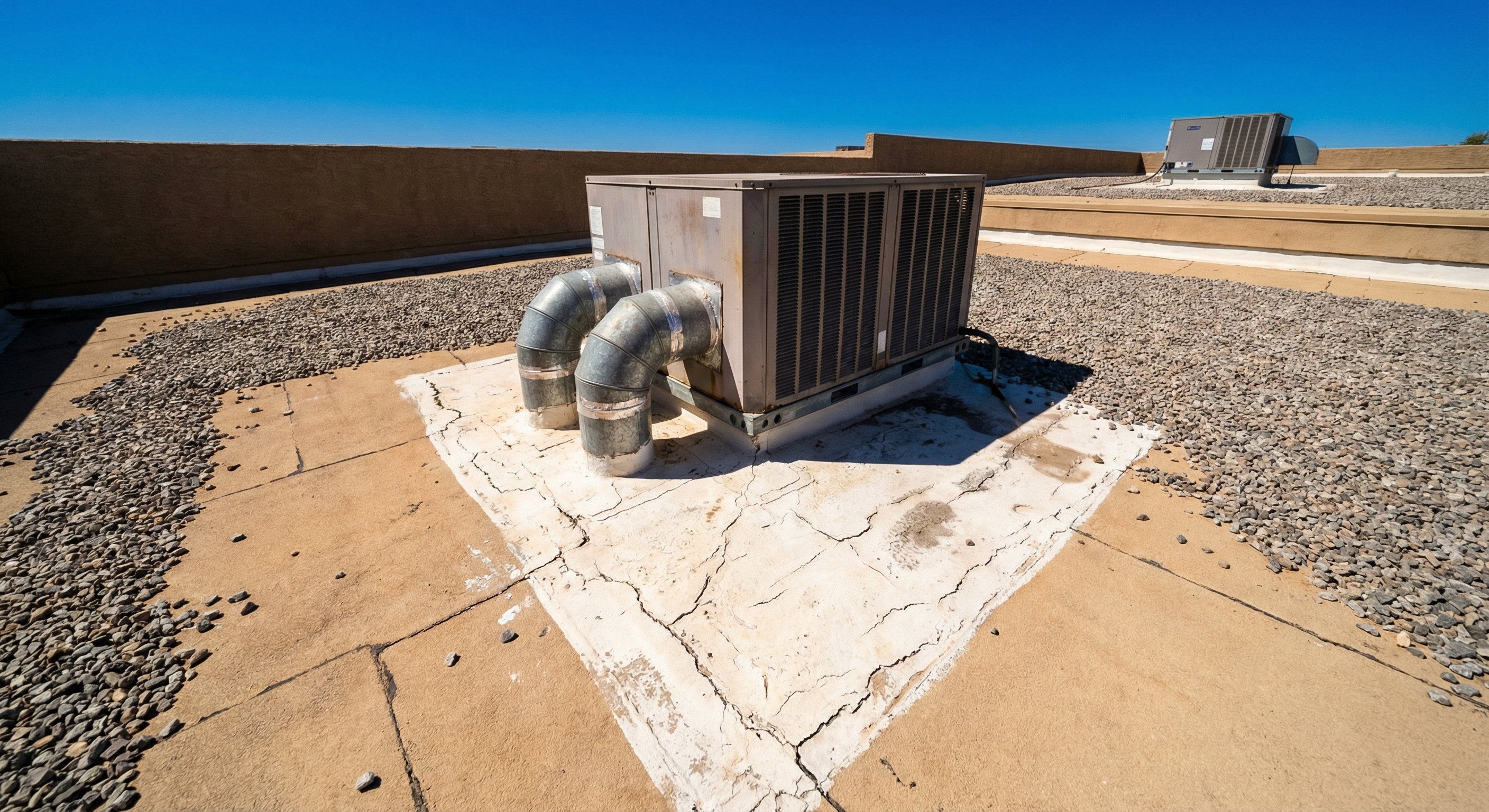
The 50% rule applies here. If the repair will cost more than half of what a new system costs to install, replace. For Phoenix, that threshold is roughly $4,000-$5,000 on a standard single-stage system. Anything below that, repair makes sense on a unit that is less than 12 years old and has been well-maintained.
If your unit is over 12 years old, has had one major repair already, and is showing signs of reduced cooling capacity (takes a long time to cool down, runs constantly, bills are high), a replacement makes more financial sense than another repair.
For Phoenix homeowners, the calculation is slightly different than the national average because of the load. An AC in Phoenix runs harder, longer, and more often than almost any other market in the country. A unit that is technically "working" but running constantly is burning money every month and is one breakdown away from an emergency replacement at the worst possible time.
How to Avoid This Situation
The best time to replace your AC is before it fails. Phoenix summers are not getting milder. The number of days above 105 degrees in Phoenix has increased steadily over the past 20 years, and the forecast for the next decade shows continued upward pressure on peak summer temperatures.
An annual maintenance agreement with a licensed Phoenix HVAC contractor typically runs $150-$300 per year and includes a pre-summer inspection, coil cleaning, refrigerant top-off, and electrical testing. For most homeowners, that is a fraction of what one emergency service call costs, and it catches failing components before they leave you without AC at 9 p.m. on a Saturday in August.
Most Phoenix homeowners are paying $3,000-$5,000 more than they need to for a new AC because of the traditional dealer markup structure. AC Rebel sells the same unit at direct pricing, and you choose your own licensed installer from our vetted network. That is how the market should work.
Get a free instant quote at acrebel.com and see what the actual unit costs vs. what a dealer would charge you.
Frequently Asked Questions
Q: Why did my AC breaker trip in Phoenix specifically?
Phoenix AC breakers trip most often because of extreme heat forcing the unit to run harder, voltage fluctuations from APS or SRP grid stress during monsoon season, or a dirty filter increasing amp draw. The fix depends on the cause. Reset the breaker once to confirm it holds. If it trips again immediately, stop resetting it and call a contractor for electrical diagnostics.
Q: How much does it cost to replace an AC capacitor in Phoenix?
A run capacitor replacement in Phoenix runs $250-$450 total when done by a contractor. The part itself costs $30-$120. Labor typically runs $200-$350 for the dispatch and installation. Some contractors will replace the dual-run capacitor and contactor together as preventive maintenance during the same visit since both are common failure points in Phoenix.
Q: Can I replace the AC capacitor myself in Arizona?
Technically yes, but it is not recommended. The capacitor stores enough electrical charge to be lethal even after the power is off. In Arizona, HVAC work requires a licensed contractor for any work involving refrigerant or high-voltage connections. A DIY misdiagnosis can also mask the real problem, and a failed compressor is not something you want to miss before signing off on repair vs. replace.
Q: How long does an AC unit last in Phoenix?
Most units last 10-15 years in Phoenix compared to the national average of 15-20 years. The reason is straightforward: Phoenix ACs run 8-10 months per year, and summer temps regularly exceed 110 degrees. Components that are rated for a certain number of operating hours age faster when those hours are spent at 110 degrees on a rooftop in direct sun.
Q: Should I replace my whole AC or just repair it in Phoenix?
Use the 50% rule. If the repair costs more than half of full replacement cost (roughly $4,000-$5,000 in Phoenix for a standard single-stage system), replace the unit. Also consider the age of the system: anything over 12 years old with a major repair history should probably be replaced rather than repaired again. Phoenix homeowners who replace proactively typically spend $2,800-$5,200 on the unit through AC Rebel plus installation, versus $7,500-$14,000 through a traditional dealer.
Q: What is the most common reason an AC does not turn on in Phoenix?
The most common reason is a tripped breaker caused by a power surge, a dirty filter causing overcurrent, or a failed run capacitor. All three are electrical issues that a technician can diagnose in 15-20 minutes on-site. The capacitor is the part most likely to fail specifically because of Phoenix heat, and it is also the most misdiagnosed part by homeowners who do not know what to listen for.
Ready to stop overpaying?
See Your Direct AC Price in 2 Minutes
Skip the dealer. Buy your AC unit at direct pricing and pay a vetted local installer only for the installation. No sales calls. No hidden markup. Most homeowners save $3,000–$5,000+ compared to a traditional quote.
Get My Direct Price — No Credit Card2-minute quote · Licensed installers · 10-year warranty options