
AC Replacement Cost in Glendale, AZ (2026 Real Numbers)

AC Replacement Cost in Glendale, AZ (2026 Real Numbers)
TL;DR: Replacing an AC in Glendale, AZ costs $7,200–$13,500 installed for most homes, depending on system size and unit tier. That range looks wide until you understand what drives it — home square footage, the age of your existing system, and how much of the markup you let your contractor keep. Glendale summers are brutal (115°F+ days aren't unusual in July), and an undersized or aging system isn't a minor inconvenience here — it's a health risk. This guide breaks down the real numbers so you know what a fair quote looks like before anyone shows up at your door.
Your AC died. Or it's making that sound again. Or your APS bill hit $420 last August and you're done with the guessing game.
Whatever brought you here: you want to know what a new AC actually costs in Glendale, AZ — not a national average that was calculated somewhere it snows in October.
Here's the honest answer: $7,200 to $13,500 installed, for a standard central AC system in a Glendale home. Most Glendale homeowners land between $8,500 and $11,000.
But the number that matters is yours. Let's figure that out.
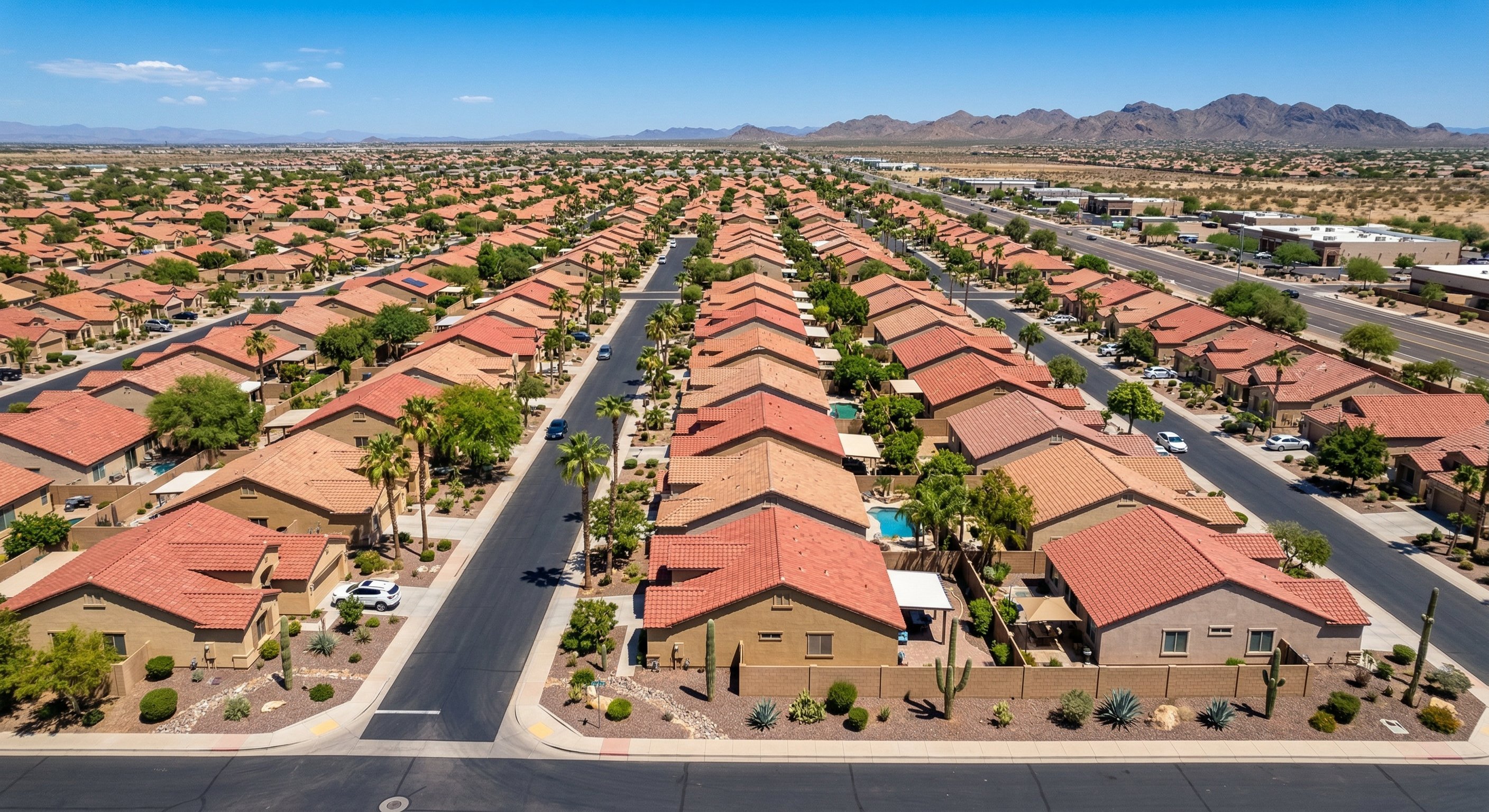
Why Glendale AC Costs Are Higher Than the National Average
The national average for AC replacement is often quoted around $5,500–$7,000. In Glendale, add at least $1,500–$3,000 to that figure. Here's why that gap is real:
1. Your system works harder than anywhere else. From May through September, Glendale temperatures routinely hit 108–115°F. Your AC isn't cooling a house — it's fighting physics. Systems that run 16+ hours a day in summer need more capacity, heavier components, and higher-grade refrigerant lines than a comparable home in, say, Portland.
2. You're replacing more often. The national average AC lifespan is 15–20 years. In Glendale — and across the Phoenix metro — you're looking at 10–14 years, sometimes less in older homes with poor duct insulation. The desert shortens every mechanical lifespan. More frequent replacement means contractors know demand here doesn't slow down the way it does in seasonal climates.
3. Desert-specific add-ons are often necessary. Homes near the Agua Fria River lowlands or older Glendale neighborhoods with original ductwork often need duct sealing or partial replacement alongside the unit swap. Glendale's hard water accelerates scale buildup on evaporator coils. Monsoon dust (July–September) clogs coils and filters 30–40% faster than comparable humidity climates. Responsible installers quote for these — which adds cost, but also adds years to your new system.
Glendale AC Replacement Cost by Home Size
Here's what the math actually looks like, based on real system sizing for Glendale homes:
| Home Size | Recommended Tonnage | Installed Cost Range |
|---|---|---|
| 1,200–1,600 sq ft | 2.5-ton | $6,800 – $9,200 |
| 1,600–2,200 sq ft | 3-ton | $7,400 – $10,500 |
| 2,200–2,800 sq ft | 3.5–4-ton | $8,200 – $12,000 |
| 2,800–3,500 sq ft | 4–5-ton | $9,500 – $13,500 |
| 3,500+ sq ft | 5-ton+ or multi-zone | $12,000 – $17,000+ |
Sizing note specific to Glendale: Older neighborhoods west of 67th Avenue — Catlin Court area, Velma Teague, many homes built in the 1970s and 1980s — frequently have undersized ductwork from the original build. A contractor putting in a properly sized 4-ton system into 1980s ductwork may recommend duct upgrades. Don't skip this. An oversized blower through undersized ducts wears out faster, creates pressure problems, and still doesn't cool the home effectively.
What Drives the Price Difference Within That Range?
You can get two quotes for the same-sized home in Glendale and see them $2,500 apart. Here's what actually explains that gap:
Equipment tier is the biggest variable. A 14 SEER2 entry-level unit runs cooler than what you had, but it's running nearly constantly at 114°F. A 16–18 SEER2 mid-range unit has a two-stage compressor — it can dial down to 70% capacity when the full blast isn't needed, which happens more than you'd think even in Glendale summer nights. A variable-speed 20+ SEER2 unit is the premium tier — it modulates continuously, runs quieter, and produces significantly better humidity control during monsoon season.
Labor rates vary considerably across the Phoenix metro, and Glendale sits in a competitive zone. You can find licensed HVAC contractors in Glendale quoting $2,800–$3,500 in labor for a standard split-system swap. That's reasonable. If someone's quoting $1,800 labor on a full install, ask what's included — it's common to see "labor only" quotes that exclude permits, refrigerant, and line set work.
The unit markup. This is the number most homeowners never see, and it's where the real money is hidden. A mid-range Trane or Carrier 3-ton split system (the actual unit) carries an MSRP in the $2,200–$3,400 range depending on efficiency tier. Many traditional contractors double that number before it shows up on your quote. It's legal. It's standard practice. But it's also $1,500–$3,000 you don't have to pay if you're buying through a direct channel.
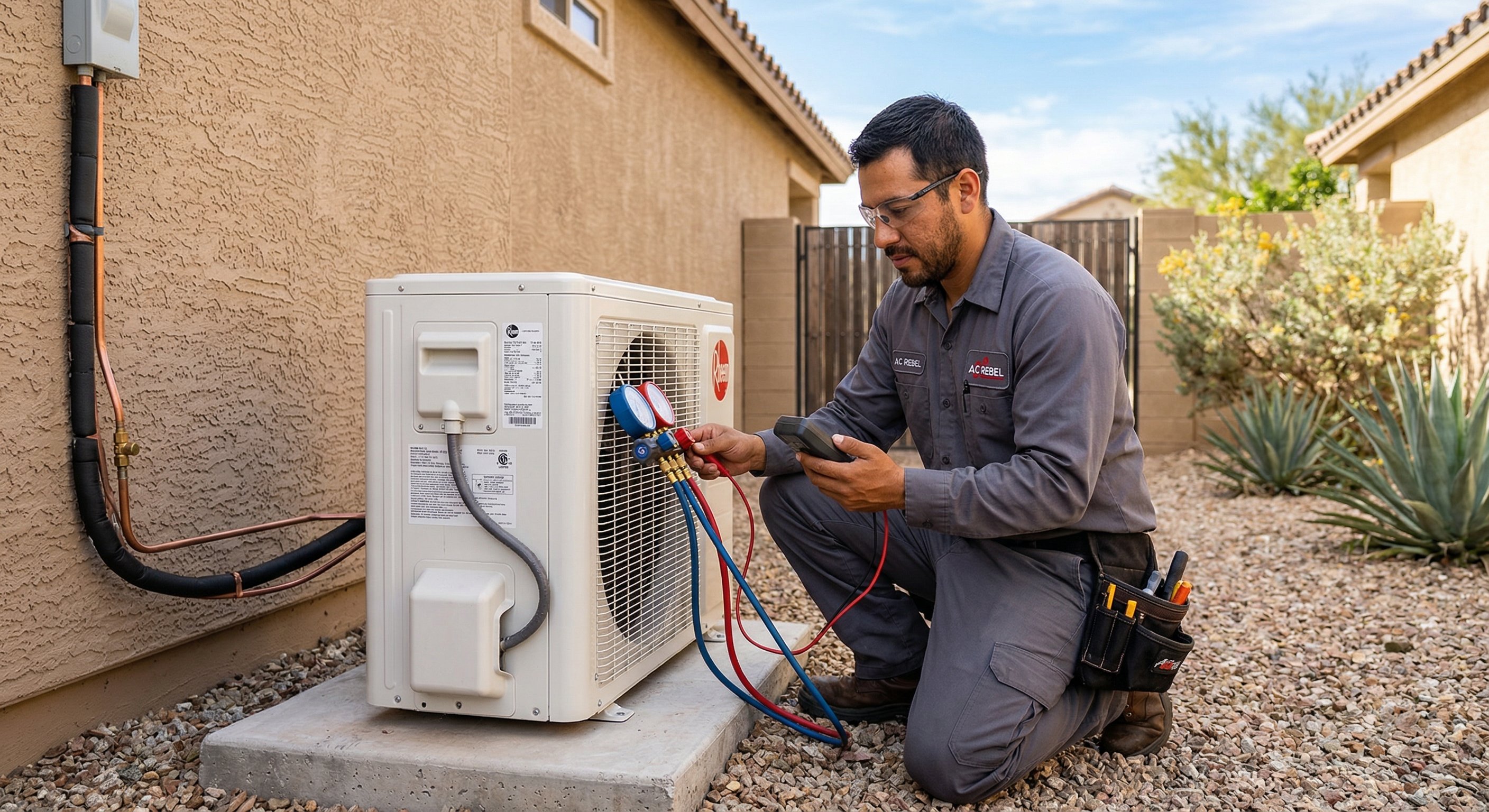
Skip the dealer markup
See What a New AC Actually Costs in Glendale, AZ
AC Rebel shows you the real equipment price — no sales pitch, no inflated quote. Get matched with a licensed installer and keep $3,000–$5,000 in your pocket.
Get My Direct Price →The Glendale Contractor Math Problem
Here's the supply chain reality most homeowners don't know:
When you call a traditional HVAC contractor in Glendale, they buy the unit from a local distributor at contractor pricing — typically 20–35% below MSRP. Then they mark it up 40–60% before putting it on your quote. That $2,800 unit that cost them $2,100 shows up on your invoice as $4,200–$4,500 in "equipment."
The contractor isn't doing anything wrong. That's the business model. Equipment margin pays for trucks, insurance, slow seasons, and the three crews they had to keep on staff through February when nobody needed AC.
But if you're the homeowner writing the check, that's $1,500–$2,500 in markup on a commodity item that you could have bought yourself at close to wholesale pricing — and paid a qualified installer just for the installation labor.
That's the premise behind AC Rebel. Buy the unit at near-direct pricing, pay a vetted installer for their actual labor. Most Glendale homeowners save $2,000–$4,000 on the same system they'd get from a traditional quote.
See direct pricing on AC Rebel — configure your system, see what the unit actually costs, and compare it to what you've been quoted. It takes about 2 minutes: acrebel.com
Good, Better, Best: What Your Money Gets You
If you're shopping in Glendale, think in tiers:
Good ($7,200–$9,500 installed) Single-stage compressor, 14–15 SEER2, standard efficiency. Gets the job done. Fine for a rental property or a home where you're replacing a functional unit that's reached end-of-life on a budget. Just know: in Glendale summers, a single-stage runs at 100% blast constantly, which is noisier, harder on the system, and slightly less efficient at humidity removal.
Better ($9,500–$12,000 installed) Two-stage compressor, 16–18 SEER2. The sweet spot for most Glendale homeowners. The two-stage runs at lower capacity during shoulder months (April, October, early evenings in summer) and kicks to full blast when it needs to. Quieter, better humidity control, longer compressor life. This is what most homeowners who plan to stay in their home for 10+ years should be looking at.
Best ($12,000–$17,000+ installed) Variable-speed/inverter drive, 20+ SEER2, often paired with a smart thermostat and enhanced air filtration. In Glendale's climate, the ROI is real — utility savings of $80–$150/month vs. a comparable single-stage unit. APS offers rebates on qualifying high-efficiency systems that can offset $300–$600 of the cost. But you're paying $3,000–$5,000 more upfront, so run the math on your specific house before assuming the premium tier always wins.
What to Ask Any Glendale HVAC Contractor
Before you sign anything, get clear answers to these questions:
"What unit are you installing, exact model number?" Legitimate contractors will give you this immediately. Vague answers like "a quality Carrier unit" or "something comparable to what you have" are red flags. You should be able to look up the exact model and verify the MSRP and specs.
"Is your labor quote all-in, including permits and refrigerant?" Some Glendale contractors quote the install labor but leave permits ($150–$250) and refrigerant charge ($200–$400) as separate line items that appear after you've committed. Ask for a single all-in number.
"Do you pull permits with the city?" In Glendale, mechanical permits are required for AC replacements. Any contractor telling you they'll skip the permit is doing you a favor that will cost you when you sell — buyers' inspectors find unpermitted HVAC work, and it kills deals.
"What's the warranty, and is it manufacturer or contractor-backed?" The unit manufacturer (Trane, Carrier, Lennox, etc.) provides the parts warranty — typically 5–10 years with registration. Labor warranty is the contractor's — you want at least 1 year on parts and labor from the installer. Ask specifically what happens if the system has a problem in year 2.

Glendale-Specific Considerations
Arrowhead, Westgate, and newer subdivisions (built 2000–present): Most of these homes have properly sized ductwork and modern air handlers. Standard replacement is usually straightforward. Budget for the unit + labor + possible thermostat upgrade.
Older Glendale neighborhoods (Catlin Court historic district, areas near Glendale Ave and 51st–59th): Pre-1985 construction often means original ductwork, R-22 systems, and sometimes improperly sized returns. Ask your installer to scope the duct system before quoting — sealed ducts can lose 20–30% of your conditioned air in Arizona attics that hit 150°F in July.
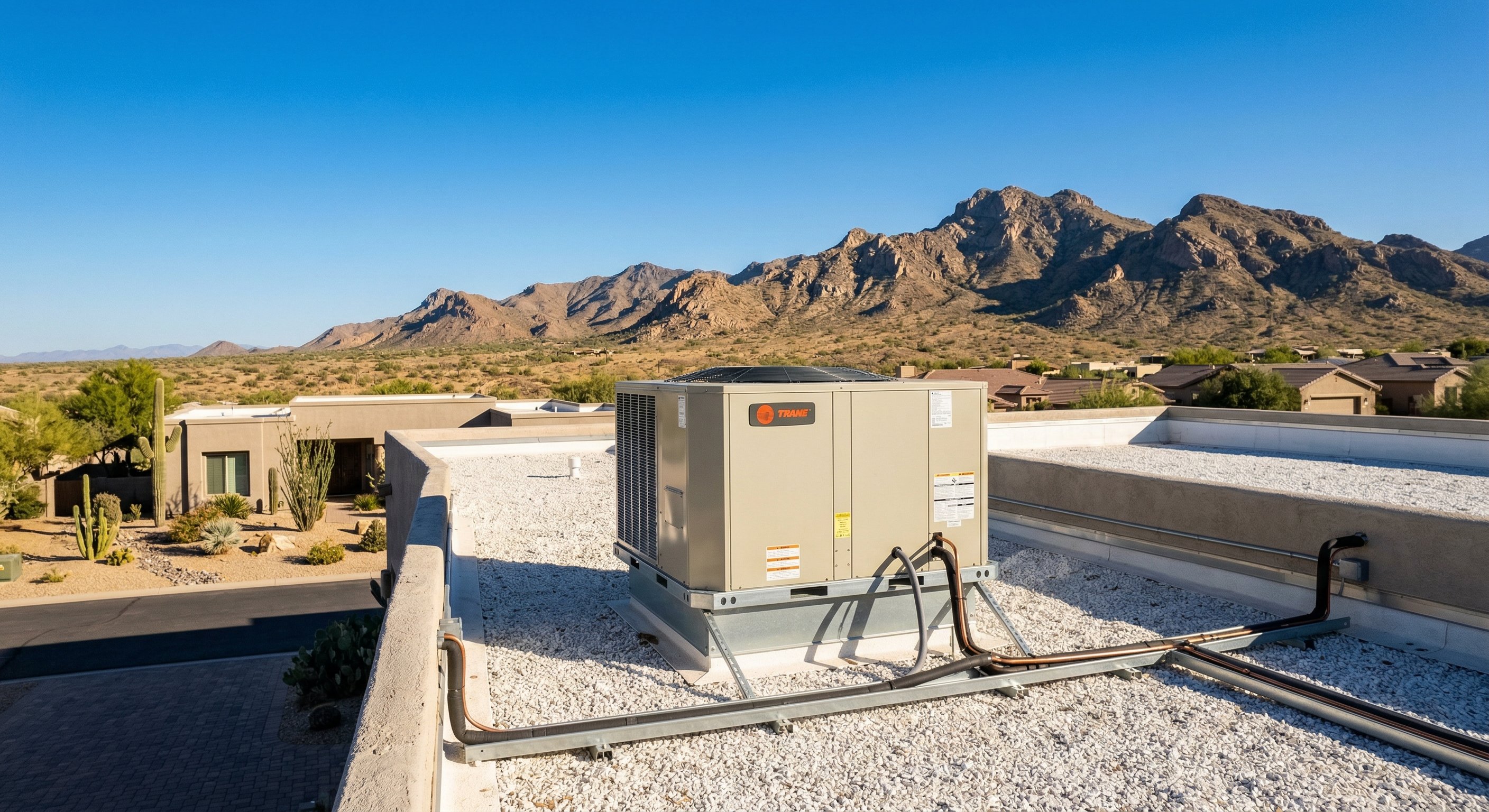
Flat-roof or rooftop package units: Common in older Glendale commercial-style homes and ranch properties. Package units (everything in one box on the roof) typically run $8,500–$14,000 installed. Rooftop work adds labor and crane costs in some cases. Make sure your contractor has specific experience with package unit installs — not every residential HVAC tech does.
APS rebates: APS offers energy efficiency rebates for qualifying equipment — $100–$600 depending on system type and SEER rating. Ask your installer or check APS's current rebate portal. The rebate won't cover the premium tier premium, but it reduces the sting.
What to Expect During the Install Day
A standard split-system AC replacement in a Glendale home takes 4–7 hours for an experienced crew. Here's roughly how the day goes:
- Disconnect and remove old unit (outdoor condenser + indoor air handler if full replacement)
- Inspect refrigerant lines — replace if corroded, upgrade size if moving to a higher-tonnage system
- Install new air handler in the attic or closet, reconnect to existing duct plenum
- Set outdoor condenser unit on concrete pad or rooftop, level and anchor
- Evacuate and charge refrigerant to manufacturer spec — this takes time and a qualified tech with EPA 608 certification
- Test and verify — thermostat programming, airflow balancing, verify all zones are reaching target temp
- City inspection (sometimes same day, sometimes scheduled separately)
Be home for the install. You'll need to sign the permit application, give access to the attic and electrical panel, and be available for the final walkthrough.
Financing Your Glendale AC Replacement
Nobody loves replacing their AC. It's not a remodel you can show off — it's a box behind your house that you'll never look at again until it breaks. But putting it on a high-interest credit card when you have $12,000 in unexpected expense is a worse outcome.
AC Rebel offers financing through GreenSky with payments starting as low as $47/month depending on system tier and term. Many homeowners choose 18-month or 36-month terms at 0% promotional APR — which effectively means paying for the unit over time at no additional cost, provided you pay it off before the promotional period ends.
If you're quoted $10,000 all-in from a traditional contractor, and AC Rebel can get you the same system for $7,500 with $47/mo financing, the math isn't complicated.
The Honest Bottom Line
Replacing your AC in Glendale is a $7,200–$13,500 decision depending on your home size, the system tier you choose, and how much equipment markup your contractor's keeping.
The single biggest variable you actually control is the markup. A licensed installer's labor is worth what it's worth — there's not much fat to cut there, and cheap labor on a $10,000 install is false economy. But the unit itself? You can buy that at near-wholesale pricing, pay a vetted contractor for the install, and keep several thousand dollars that would otherwise go to someone's quarterly bonus.
Ready to see what your Glendale AC replacement actually costs — without the markup? AC Rebel's 2-minute quote wizard shows you direct unit pricing and connects you with vetted Glendale-area installers. See your price at acrebel.com.
Frequently Asked Questions
Q: What's the average cost to replace an AC unit in Glendale, AZ?
Most Glendale homeowners pay between $8,500 and $11,000 for a full AC replacement including equipment and labor. The range is $7,200 to $13,500+ depending on home size (2.5-ton to 5-ton systems) and unit efficiency tier (14 SEER2 entry-level up to 20+ SEER2 variable-speed). Rooftop package units common in older Glendale homes tend to run $8,500–$14,000 installed.
Q: How long does an AC unit last in Glendale?
In Glendale's extreme heat climate, most central AC systems last 10–14 years — significantly shorter than the national average of 15–20 years. Systems that run 16+ hours a day in summer, contend with monsoon humidity, and sit in 150°F attics during July accumulate wear much faster. Annual maintenance (coil cleaning, filter changes, refrigerant checks) extends lifespan meaningfully.
Q: Is it cheaper to repair or replace my AC in Glendale?
The standard rule: if the repair cost exceeds 50% of a new system's cost AND your unit is more than 10 years old, replace it. In Glendale specifically, also consider: (1) if you're on R-22 refrigerant (phased out; recharges now cost $200–$600/lb), replacement is almost always cheaper long-term; (2) if your efficiency is below 14 SEER, a modern unit will likely cut your summer APS bill by $80–$150/month, paying for the upgrade within a few years.
Q: Does Glendale require permits for AC replacement?
Yes. The City of Glendale requires a mechanical permit for AC replacement work. Licensed contractors pull the permit as part of the job. Unpermitted HVAC work creates problems when you sell — buyers' home inspectors look specifically for this. Always confirm your contractor pulls permits, and ask for the permit number before they start work.
Q: Can I save money on a new AC in Glendale by buying the unit myself?
Yes — this is exactly how AC Rebel works. Traditionally, homeowners buy the unit through the contractor (at 40–60% markup) and pay separately for labor. AC Rebel lets you purchase the unit at near-direct pricing, then connects you with a vetted local installer who handles the labor. Most Glendale homeowners save $2,000–$4,000 compared to a traditional all-in contractor quote for the same equipment.
Ready to stop overpaying?
See Your Direct AC Price in 2 Minutes
Skip the dealer. Buy your AC unit at direct pricing and pay a vetted local installer only for the installation. No sales calls. No hidden markup. Most homeowners save $3,000–$5,000+ compared to a traditional quote.
Get My Direct Price — No Credit Card2-minute quote · Licensed installers · 10-year warranty options