
Undersized AC Unit in Phoenix? Here's What It Costs You Every Month

Undersized AC Unit in Phoenix? Here's What It Costs You Every Month
TL;DR: An undersized AC unit in Phoenix runs constantly, never reaches the thermostat setpoint on the hottest days, and drives your electric bill up by $75-$200 per month. The fix depends on the situation: better ductwork and airflow management helps some homeowners, but if your unit is genuinely too small for the cooling load, replacement is the only real solution.
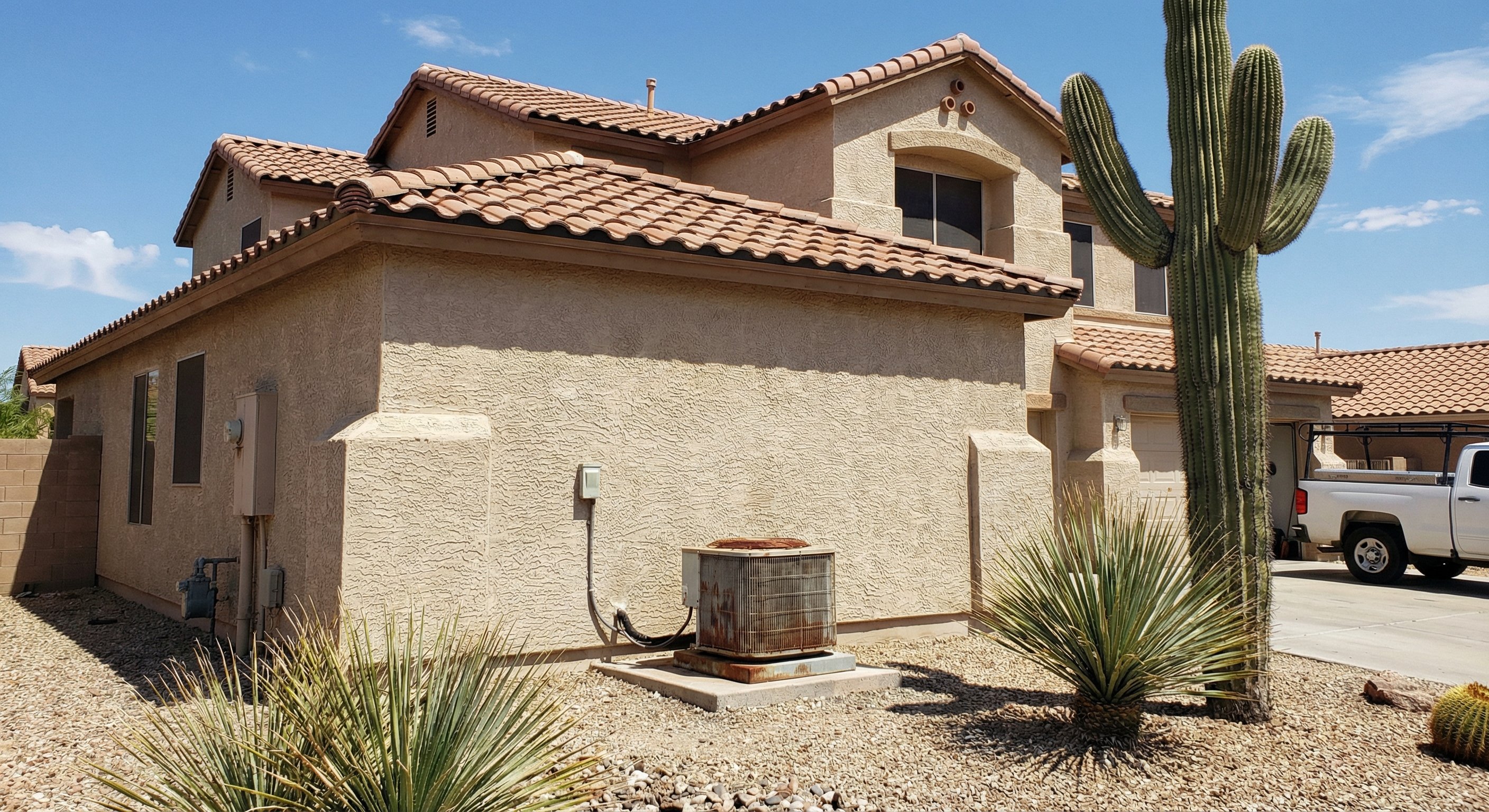
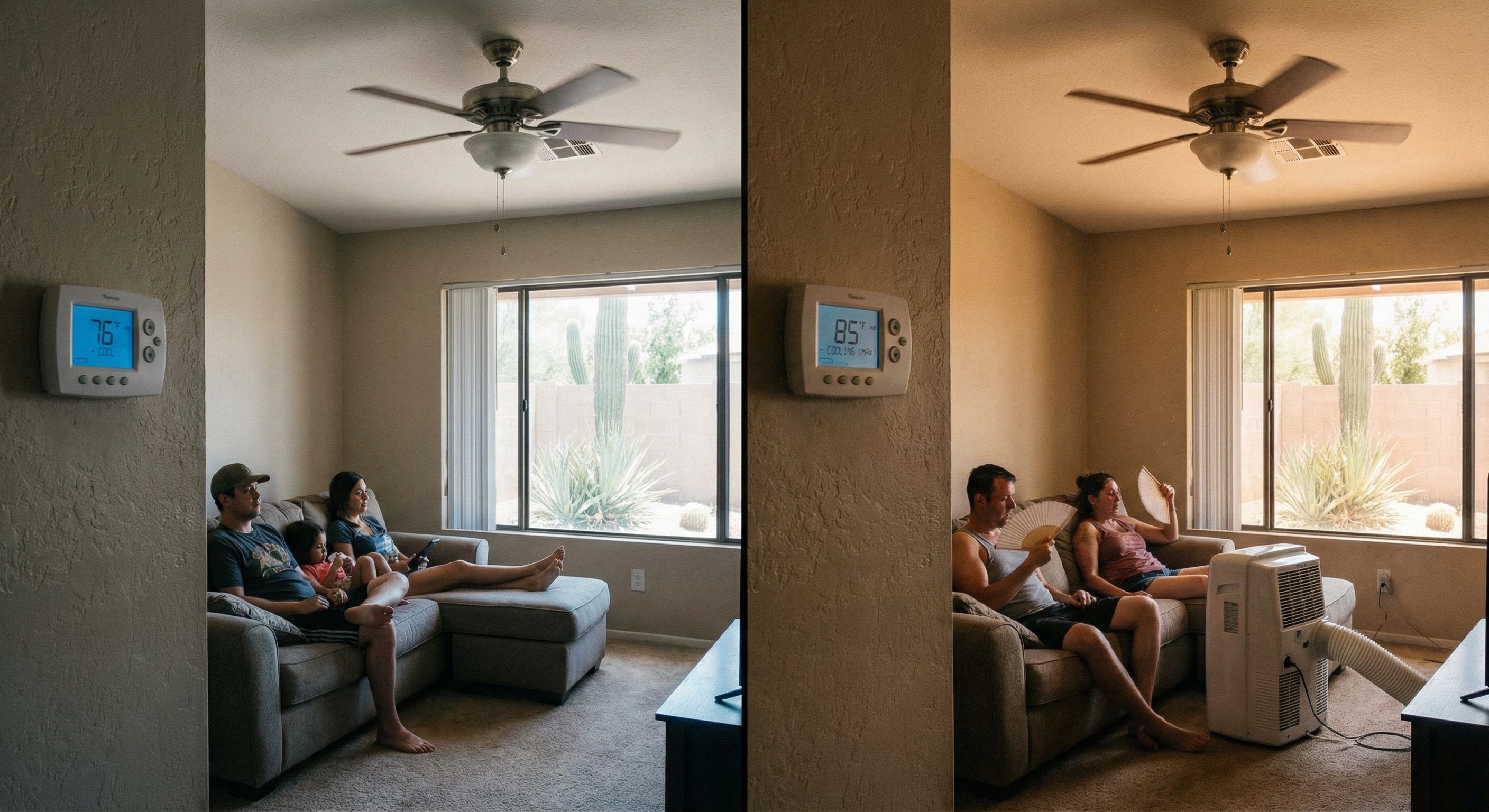
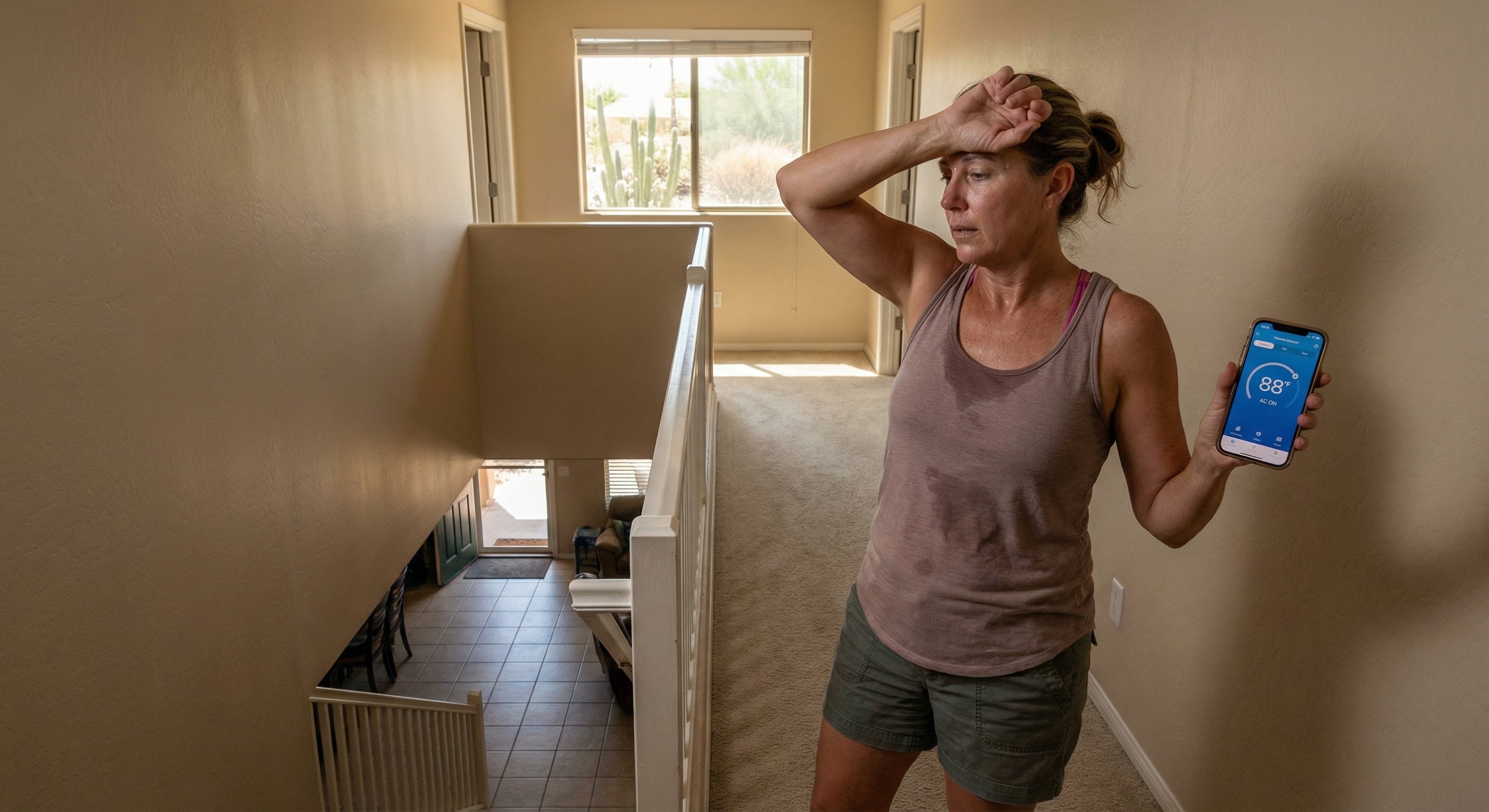
Your thermostat says 78. You know it feels hotter. The AC runs and runs, but that second floor does not cool down. Or the back bedrooms stay warm while the living room is freezing. You blame the unit, the brand, the age. Sometimes the real problem is simpler and harder to fix than any of those: you have an undersized AC unit in Phoenix, and no amount of maintenance makes a system that is too small for the job work right.
This is one of the most common problems we see in Phoenix homes, and one of the most misunderstood. Contractors have been selling the wrong sized units for decades. Here is what actually goes on.
Signs Your AC Is Too Small for Your Phoenix Home
Most homeowners with an undersized AC do not realize it. The unit runs constantly, so it must be working, right? Not exactly.
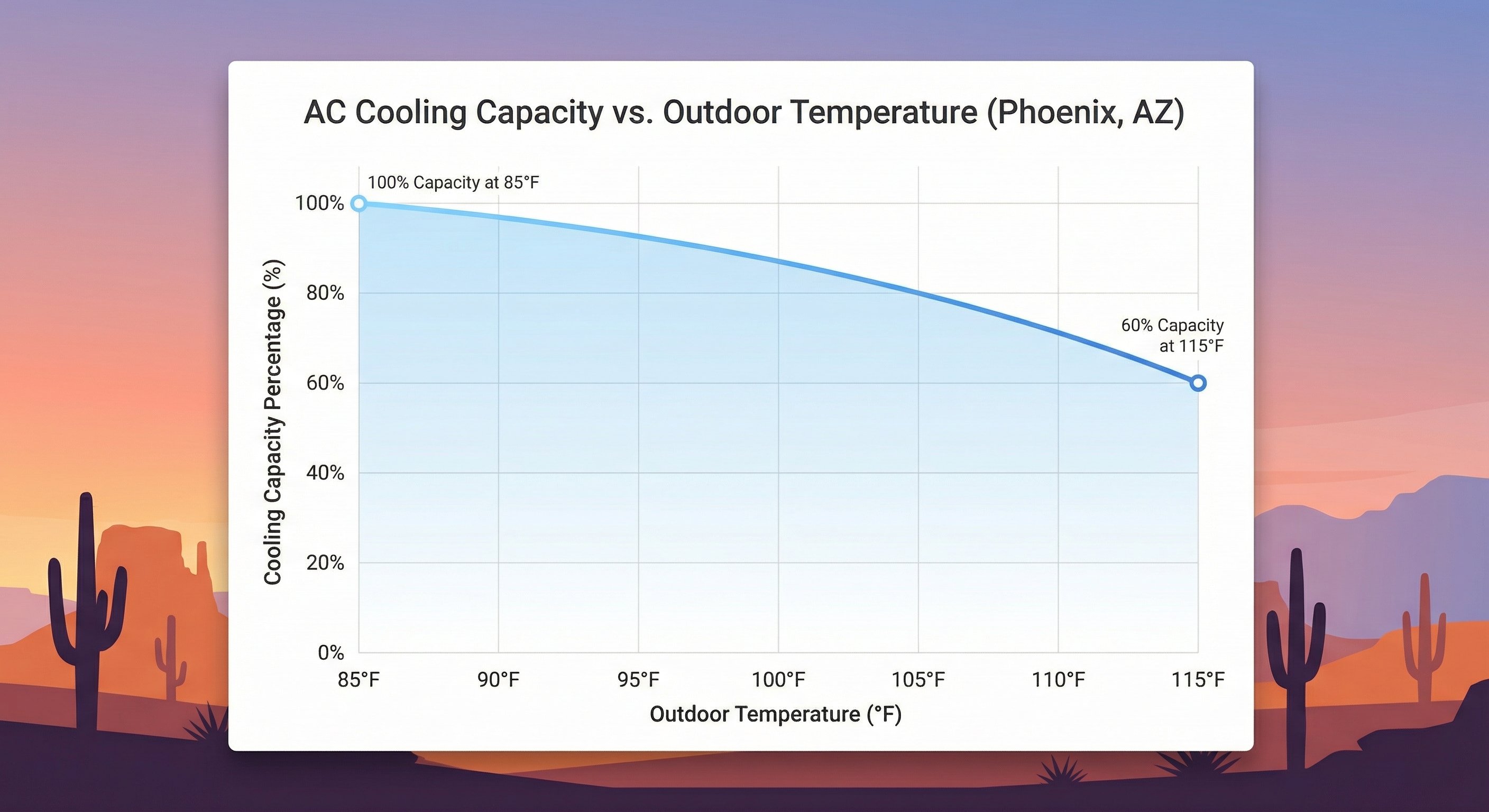
The AC runs but can never catch up. You set the thermostat to 76, and on a 108-degree afternoon it settles at 81 or 82. The unit never stops. The temperature inside drifts up whenever the outdoor temp climbs past 102.
The upstairs or back of the house never cools. In a two-story Phoenix home, the upstairs is always hotter. In a single-story, the bedrooms at the back of the house away from the airflow supply are noticeably warmer. This is not always a ductwork problem. If the unit is too small, it does not have the capacity to push cool air far enough to reach the whole house.
The electric bill spikes in May through September. An undersized unit runs flat out for five months straight. A correctly sized unit with the same SEER rating does not run like this. That difference shows up on your APS or SRP bill.
The coil freezes in spring. This surprises people. An undersized unit running flat out in March or April when outdoor temps are only in the 80s can freeze the coil because it is pulling indoor temperature down too fast without enough airflow across the coil to regulate it. That is not a refrigerant problem. That is a capacity mismatch.
The Math Behind AC Sizing in Phoenix
Contractors talk about tons. Homeowners do not know what that means. A ton of cooling is the ability to move 12,000 BTU of heat per hour. A 3-ton unit moves 36,000 BTU per hour.
The old rule of thumb is 1 ton per 500-600 square feet. That thumb was not built for Phoenix. Here is where it falls apart.
Phoenix design temperature is 108-115F. The cooling load that matters uses the hottest outdoor temperature your system will ever face, not the average summer temperature. A unit that looks correctly sized for a 95-degree day runs short in August in Mesa or Chandler.
Attic temperatures in Phoenix hit 140-150F in summer. That radiant heat loads the ceiling of your home significantly. A unit that looks right on paper does not have enough margin to handle the attic heat load on a Scottsdale home with a poorly insulated attic.
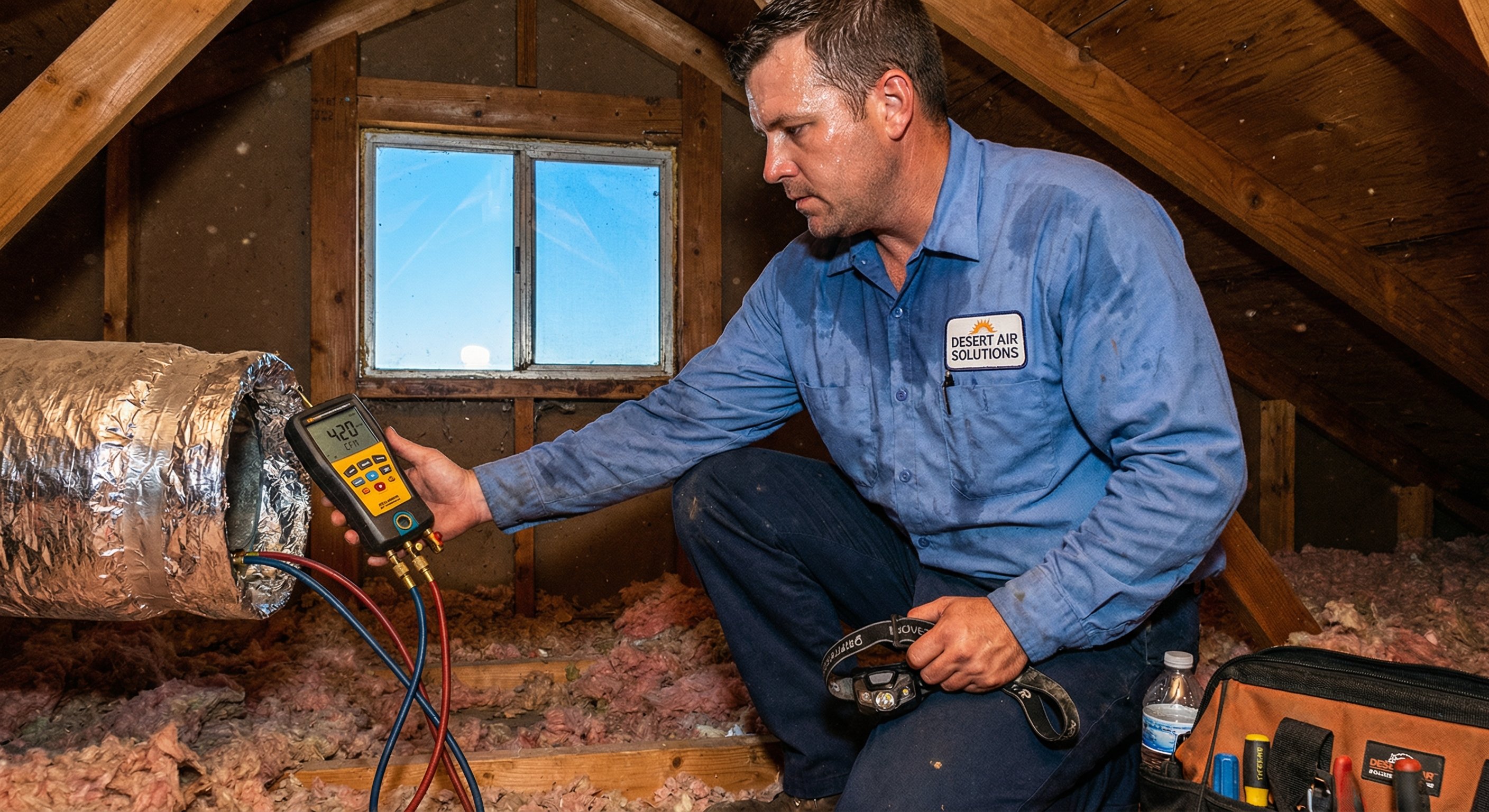
Ductwork in older Phoenix homes is often leaky. If the ducts run through the attic, which most Phoenix-area homes do, you lose a meaningful percentage of your cooling to duct leakage before the air reaches your rooms. That makes the effective capacity of your unit lower than its nameplate rating.
A Phoenix home with 2,200 square feet, moderate insulation, and ductwork in a vented attic needs at least a 4-ton unit as a baseline. A Gilbert home with cathedral ceilings and west-facing exposure might need 5 tons. There is no universal answer, which is why Manual J load calculations exist.
What Happens to an Undersized AC in Phoenix Heat
An AC removes heat from inside and dumps it outside. When the unit is too small, it removes heat more slowly than it accumulates. The unit is not defective. It is just outmatched.
The compressor works overtime. The compressor is the heart of your AC. Running flat out in Phoenix summers, a compressor that should last 12-15 years might give you 8-10. The strain of constant running is what kills them.
The coil can ice up. When an AC runs flat out in mild outdoor temps, the evaporator coil gets too cold because it is removing heat from the home quickly without adequate airflow regulation. Ice forms on the coil, which blocks airflow, reduces efficiency further, and can damage the compressor when the ice melts and liquid refrigerant floods back.
Indoor humidity stays high. AC units cool and dehumidify. When a unit is too small, it cools the air but does not run long enough to remove humidity properly. You end up with a clammy house in the morning after a night of the AC running flat out. That sticky feeling in a Phoenix home is usually indoor humidity your AC cannot pull down.
Your electric bill does not lie. An undersized unit running constantly uses roughly the same wattage as a correctly sized unit running in cycles. The difference is the undersized unit runs 22-24 hours a day in peak summer instead of 14-18 hours. That additional 4-10 hours per day translates to $75-$200 per month on your APS or SRP bill.
Skip the dealer markup
See What a New AC Actually Costs
AC Rebel shows you the real equipment price — no sales pitch, no inflated quote. Get matched with a licensed installer and keep $3,000–$5,000 in your pocket.
Get My Direct Price →Short Cycling: When the Problem Looks Like Oversizing
There is a related problem that gets confused with undersizing. Short cycling is when an AC turns on and off repeatedly, running only 10-15 minutes at a time instead of full cooling cycles.
Short cycling is usually caused by an oversized unit, not an undersized one. A unit that is too large cools the nearby air too quickly, satisfies the thermostat sensor, and shuts off before the rest of the house is cooled.
But an undersized unit can also appear to short cycle. If the ductwork is leaky, the air that reaches the thermostat may be cooler than the air in the rooms, triggering the unit off even though the system has not done its job. That is not true short cycling. That is a ductwork problem, and it is extremely common in older Phoenix homes.
The fix for true short cycling from an oversized unit is replacement with a correctly sized unit. The fix for apparent short cycling from duct leakage is duct sealing and airflow balancing. Different problems, different solutions.
How Contractors Get Sizing Wrong in Phoenix
The most common cause of an undersized AC in Phoenix is not a mistake. It is a choice.
Contractors who compete on price install the smallest unit that will technically work. A 3-ton instead of a 3.5-ton saves $300-$600 on equipment. Over the life of the unit, that saves the contractor the sale. It costs the homeowner thousands in higher electric bills.
Some contractors use a rule of thumb instead of a load calculation. The old "1 ton per 500 square feet" rule is still applied without adjustment for Phoenix-specific factors. An installer who has been working in Ohio and moved to Phoenix is especially likely to get this wrong.
The home was modified after the original installation. A room addition, a garage conversion, a new patio enclosure. These changes increase the cooling load without changing the size of the existing AC. Now the system is undersized.
Ductwork was not resized when the unit was replaced. A homeowner replaces a 3-ton with a new 3-ton. The old ducts were already marginal. After 20 years of settling and dust buildup, they now lose 25 percent of airflow to leakage. The new unit has the same nameplate capacity but less effective cooling.
How to Fix an Undersized AC Situation in Phoenix
The answer depends entirely on what is causing the undersized condition.
If the ducts are the problem, seal them first. A duct sealing job in Phoenix typically costs $600-$1,500 depending on the size of the system. That is a fraction of a new unit, and it can make a meaningful difference. If your unit is losing 25-30 percent of its capacity to duct leakage, sealing the ducts is equivalent to putting in a bigger unit without buying new equipment.
Add attic insulation if the problem is heat load. Many older Phoenix homes have R-19 or less. Adding blown-in insulation to R-38 costs $800-$1,500 for an average attic and reduces the cooling load meaningfully. That makes your existing unit more effective without spending $8,000-$14,000 on a new one.
Use ceiling fans to extend your AC reach. A ceiling fan in warm rooms makes them feel 3-4 degrees cooler through wind chill. Set the direction to counterclockwise in summer to push air down and create a wind chill effect.
Consider a zoning system if the problem is distribution. A ducted zoning system divides your home into two or three zones with separate dampers. You redirect airflow to the rooms that need it. Zoning systems in Phoenix typically cost $2,500-$4,500 installed.
If the unit itself is genuinely too small, replacement is the only real fix. Running a 3-ton in a home that needs 4 tons costs you every summer for as long as you own the home. A correctly sized 4-ton with a 16-18 SEER rating runs $8,500-$12,500 installed in the Phoenix market. The difference in monthly operating cost versus a straining 3-ton is $75-$150 per summer month. Over a 15-year ownership period, that gap is $13,500-$27,000 in additional electric bills. The math on replacement is straightforward.
Key Takeaways
- An undersized AC in Phoenix runs constantly, cannot keep up on the hottest days, and drives electric bills up by $75-$200 per month
- Signs: never catches up to setpoint, certain rooms always warm, high indoor humidity, spring freezing episodes
- Duct leakage is a common cause of effective undersizing even when the unit nameplate is adequate
- Fix options: duct sealing ($600-$1,500), attic insulation ($800-$1,500), zoning ($2,500-$4,500), or replacement ($8,500-$12,500)
- Short cycling is usually caused by an oversized unit, but duct leakage creates similar symptoms
- If the unit is over 12 years old and undersized, replacement is the most cost-effective long-term option
Get a free instant quote at acrebel.com
Frequently Asked Questions
How do I know if my AC is too small for my Phoenix home?
The most reliable sign is a unit that runs constantly on hot days but never reaches your thermostat setpoint. If you set it to 76 and it settles at 81 or 82, your unit is too small for the cooling load. Another indicator is when certain rooms stay warm while others are fine. A qualified HVAC contractor can run a Manual J load calculation to tell you exactly what size unit your home requires.
Can I add a second AC unit instead of replacing an undersized one?
In some cases, adding a ductless mini split to serve the zones your central AC cannot reach is practical. This is more common in older Phoenix homes where the existing ductwork cannot be modified. A new ductless unit costs $3,000-$6,000 installed, but it does not address the root problem if your central AC is too small for the whole house.
Does closing vents in unused rooms help an undersized AC?
It can make things worse. Closing supply vents increases air pressure in the ductwork, which increases leakage through unsealed ducts. If you want to redirect airflow, a zoning system with proper dampers is the right solution.
How much does a new AC cost in Phoenix for a typical home?
A correctly sized 3-to-4-ton central AC for an average Phoenix metro home runs $8,500-$12,500 installed, including the unit, labor, and any required ductwork modifications. Get a quote that includes a Manual J load calculation, not just a visual estimate.
Is a higher SEER rating worth it if my AC is undersized?
No. A higher SEER rating makes a unit more efficient but does not increase cooling capacity. A 21 SEER 3-ton in a home that needs 4 tons is still too small. Focus on getting the correct capacity first, then optimize for SEER rating within that size.
What causes an AC to be undersized from the start?
The most common causes are: a contractor who sized the unit on a rule of thumb instead of a load calculation, a home modified after the original installation, or a previous owner who chose a smaller unit to save on equipment cost. In Phoenix, inadequate attic insulation can also make a correctly sized unit perform like an undersized one.
Ready to stop overpaying?
See Your Direct AC Price in 2 Minutes
Skip the dealer. Buy your AC unit at direct pricing and pay a vetted local installer only for the installation. No sales calls. No hidden markup. Most homeowners save $3,000–$5,000+ compared to a traditional quote.
Get My Direct Price — No Credit Card2-minute quote · Licensed installers · 10-year warranty options